


This post was originally published on this site.
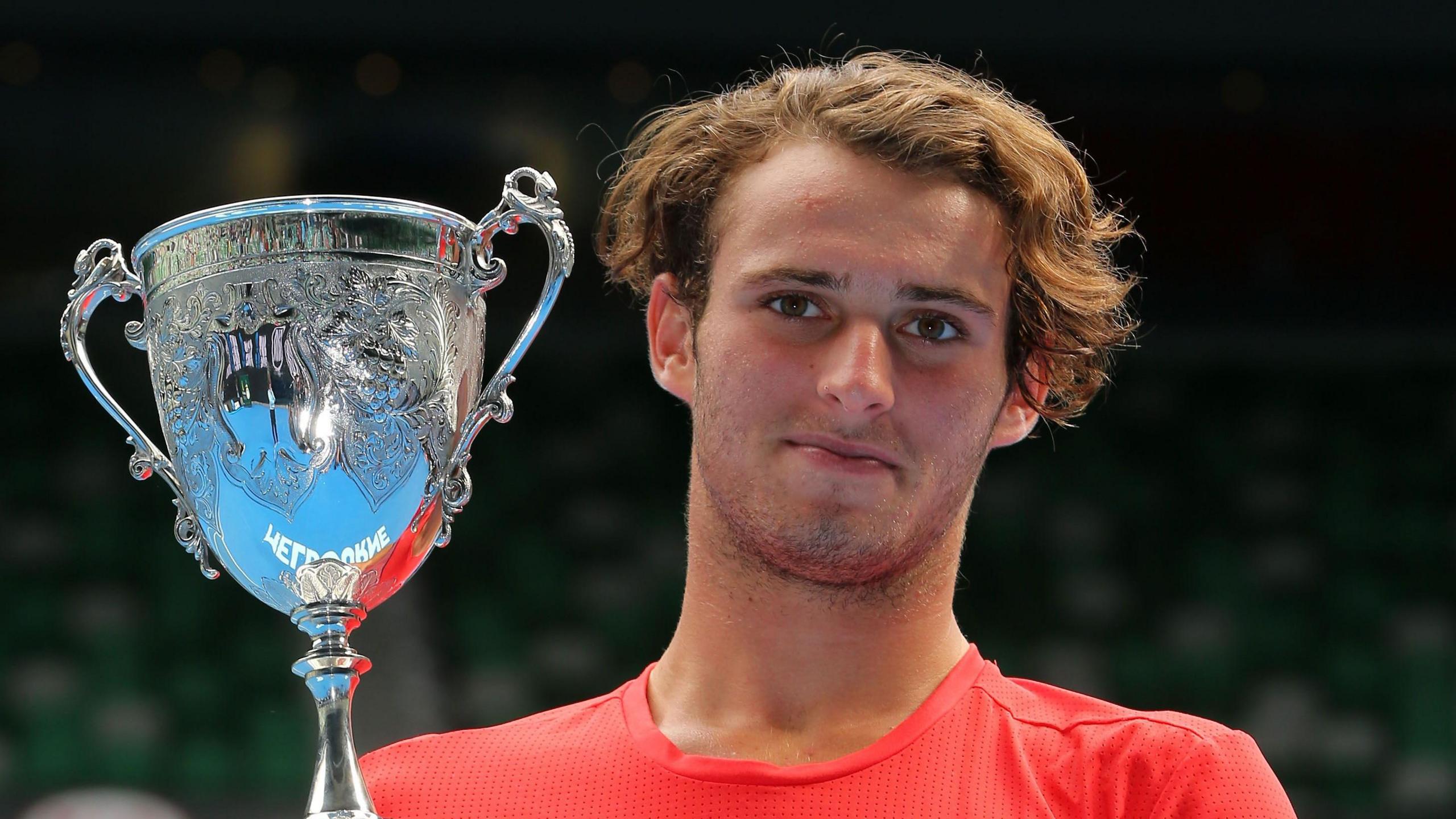 Getty Images
Realising undercover police officers were waiting off court was the moment Oliver Anderson knew he had been rumbled.
Anderson had just lost in the second round of an ATP Challenger tournament, but it was his previous match – a three-set comeback win – that sparked the attention of the authorities.
“Anyone who was watching that match would have instantly thought something was up,” the Australian recalls.
In January 2016, Anderson won the Australian Open boys’ singles title in front of a home crowd, demonstrating his potential in a field featuring future top-10 stars Stefanos Tsitsipas, Felix Auger-Aliassime and Alex de Minaur.
Nine months later, the Brisbane teenager was busted for throwing a set.
A decade on, the 27-year-old – who has returned to the professional ranks after being ignited by a “quarter-life crisis” – is still uncomfortable talking in depth about the details.
“It all happened very quickly. I was approached, decided it was doable, I’m doing it, then I’m walking off the court and I’m in serious trouble,” he tells BBC Sport.
Match-fixing syndicates, known for preying on vulnerable victims, contacted Anderson in the days leading up to the now-notorious Challenger event in Traralgon, Australia.
The teenager’s progress had been derailed by injury after his Melbourne victory and, having missed several months of income following surgery, he thought purposely losing a set would be an easy way to fulfil financial commitments.
Footage of the match is damning. Loopy, long second serves are followed by 704th-ranked Anderson casually batting easy returns into the net.
Fellow Australian Harrison Lombe was ranked outside the top 1,500 but won the first set – as planned by the conspirators – before Anderson fought back for a 4-6 6-0 6-2 victory.
Anderson says he does not know how police were tipped off. The Australian Broadcasting Corporation reported a betting company became suspicious when a punter tried to lump A$10,000 (£5,000) on Lombe taking the opener.
The following day – wracked with guilt and regret – Anderson got “absolutely wiped” in a 6-2 6-2 defeat by John-Patrick Smith.
“All I could think is ‘this is absolutely nuts and there’s only me who knows what going on’,” Anderson says.
“Then I was met by undercover police. I knew I’d made an absolute blunder.”
-
From 421st to top 10 – Bencic eyes Melbourne glory
-
19 hours ago
-
Anderson never received payment and co-operated fully with police. In May 2017, he avoided a conviction and was handed a two-year good behaviour bond by a magistrate in Victoria state.
Reflecting now, Anderson says he saw the opportunity as an escape route.
Tennis had been part of his life from a young age, hitting balls with a neighbour on his local court before working his way through the Australian elite system and eventually becoming a Grand Slam junior champion.
Yet the sport at which he excelled was not his true, obsessive love. Instead he wanted to be in a rock’n’roll band.
“I suppose I was a disgruntled mid-to-late teenager who was not really sure what he wanted to do in life,” Anderson remembers.
“In my mind [agreeing to match fix] was just a perfect seamless exit, even though it was completely the wrong thing to do.
“It felt wrong being in that situation and it was obviously hard being young and immature. It was pretty confronting. Looking back, it made me mature very quickly.”
In the aftermath, Anderson remembers being supported by his family, friends and close-knit tennis community, which he was not sure he “expected” and felt “fortunate” to receive.
Anderson was provisionally suspended while an investigation was conducted and the Tennis Integrity Unit (TIU) concluded the 19 months he had served was sufficient punishment.
Free to start playing again, Anderson decided to take his life in a different direction.
Swapping the racquet for a guitar – leaning into his love for riff-heavy British rock groups Cream, Black Sabbath and Deep Purple – was not going to pay the bills, though.
Instead he moved into fashion. Nowadays Anderson operates as a one-man band designing and manufacturing resortwear for independent retailers.
“My folks, grandparents and the generations before have all been textile designers so I slipped into learning from them and now I’m doing my own thing,” says Anderson, who still plays in a band around Queensland in “dingy” bars.
“The family business has got a few different brands, so I worked for them in 2017 and joined another fashion agency for a couple of years.
“After two years there I thought ‘I’m going to have a crack myself’. And it’s allowed me to blow my money on the Futures Tour.”
Anderson’s road back to the professional level took him by surprise.
He had only picked up a racquet “about five times” since the match-fixing scandal before hitting with his brother around Christmas 2023 to keep fit.
The enjoyment he drew encouraged him to ask friends of a higher standard for knocks, then led into practice sessions at the Tennis Australia National Academy.
Head coach Brent Larkham was impressed enough by Anderson’s level to offer a wildcard for a Futures event, where he won two matches to earn ITF points and provided a platform to start entering other tournaments on the third-tier tour.
A Race Across The World-style adventure began. Resourcefully travelling to tennis backwaters in Mexico, the Dominican Republic and Mozambique, Anderson signed into tournaments and built his ranking.
In Angola, he lifted a title. But the injuries which plagued him as a teenager stalled his progress and he is currently assessing his options while recovering from a quad tear.
“I could finish now and I’d consider it to be a great comeback,” says Anderson, who still harbours hope of making qualifying at a Grand Slam tournament.
“I met some great people, went to some awesome places, had some battles, had some tough times, had some good times.
“If I had to stop right now I’d still say it was a success. It feels like I could walk away feeling happy that I’d played again.”
Related topics
-
-
16 August 2025

-



