
This post was originally published on this site.
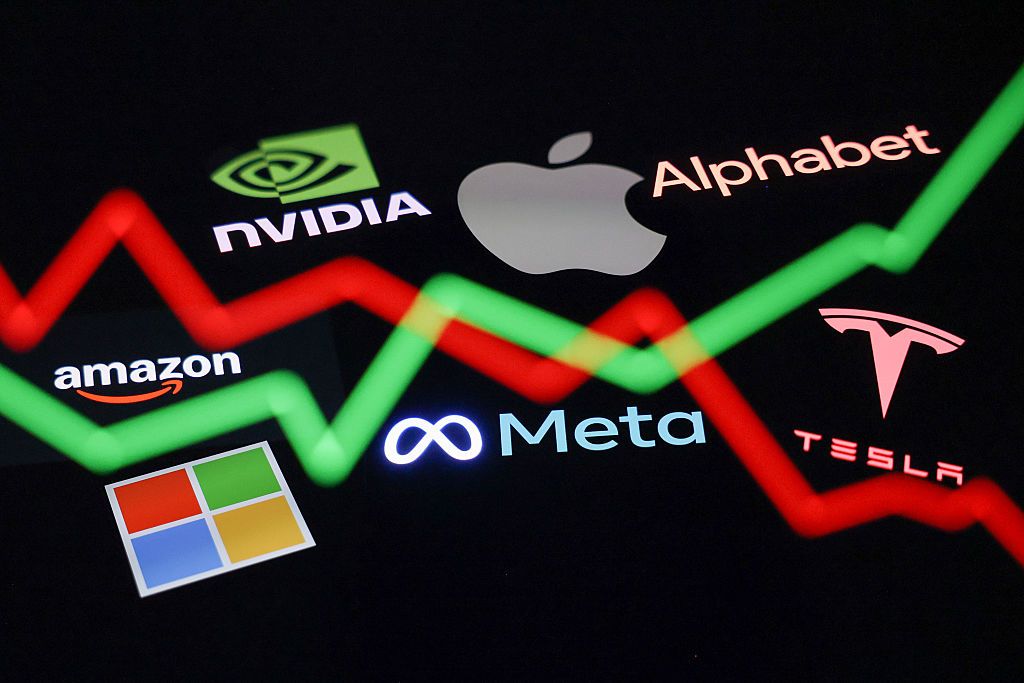
The Magnificent 7 stocks (Mag 7) are starting to look mediocre. The group, which is made up of Nvidia, Alphabet, Apple, Microsoft, Amazon, Tesla and Meta, has been in the vanguard of the AI boom. Between the beginning of 2023 and the start of this year, the seven US technology mega-caps added $15 trillion in value between them and grew to account for a third of the entire S&P 500 by market capitalisation, say Emily Herbert and Tim Bradshaw in the Financial Times. Yet over the past month, they have collectively lost $2.2 trillion in value. Many of these firms are “hyperscalers”, with plans to lavish about $1 trillion on AI data centres. Investors are increasingly sceptical about whether such huge sums will ever generate a meaningful return.
Microsoft’s and Meta’s shares are in a “bear market”, having fallen more than a fifth from their peak, says David Goldman on CNN. The others are down at least 10%. There are growing signs of nervousness about technology valuations. The Nasdaq index fell every day last week. Korea’s Kospi, which plays host to some major AI plays, has been on a wild ride this year, including another 10% plunge on 23 June.
Magnificent 7 stocks decline, but semiconductors soar
Yet while the Magnificent 7 stocks are falling out of favour, a boom in the firms selling computer chips to them at eye-watering prices has “more than made up the difference”. Micron’s shares have gained 265% this year, Samsung is up 144%, and Intel has surged 254%. The semiconductor industry alone now accounts for 19% of the S&P 500’s market value. The iShares Semiconductor exchange-traded fund (ETF) rocketed a staggering 110% in the first half of the year, says Ines Ferre for Yahoo Finance.
Sign up to Money Morning
Don’t miss the latest investment and personal finances news, market analysis, plus money-saving tips with our free twice-daily newsletter
Don’t miss the latest investment and personal finances news, market analysis, plus money-saving tips with our free twice-daily newsletter
That pushed the US technology sector to its best first-half performance in three years, the slump in the Magnificent 7 stocks notwithstanding. AI data centres require specialised computer kit, but there is now an acute shortage and “it takes years to build new production facilities” for chips, says James Mackintosh in The Wall Street Journal. The result has been soaring prices: Micron’s have “quadrupled” in the past year. Consumers have been caught in the crossfire, with Apple hiking prices for its computers. The net effect is “an enormous transfer of cash” from the AI hyperscalers to memory-chip makers. The problem for the AI industry is that firms such as ChatGPT-maker OpenAI were already loss-making (venture capital has been subsidising an expensive grab for market share). Now the maths looks even more challenging for the businesses that started the AI boom.
In retrospect, the best thing to do over the past six months would have been to go long chip stocks while shorting software firms, says John Authers on Bloomberg. Korea’s chip-dominated Kospi stock market index has almost doubled since 1 January, while the S&P 1500 software index is down 17.5%. US technology-related capital expenditure is now slightly above the 5% of GDP peak it reached in 2000 during the dotcom bubble. By attracting “more capital than they can productively use”, investment bubbles ultimately “sow the seeds of their own destruction”.
This article was first published in MoneyWeek’s magazine. Enjoy exclusive early access to news, opinion and analysis from our team of financial experts with a MoneyWeek subscription.