
This post was originally published on this site.

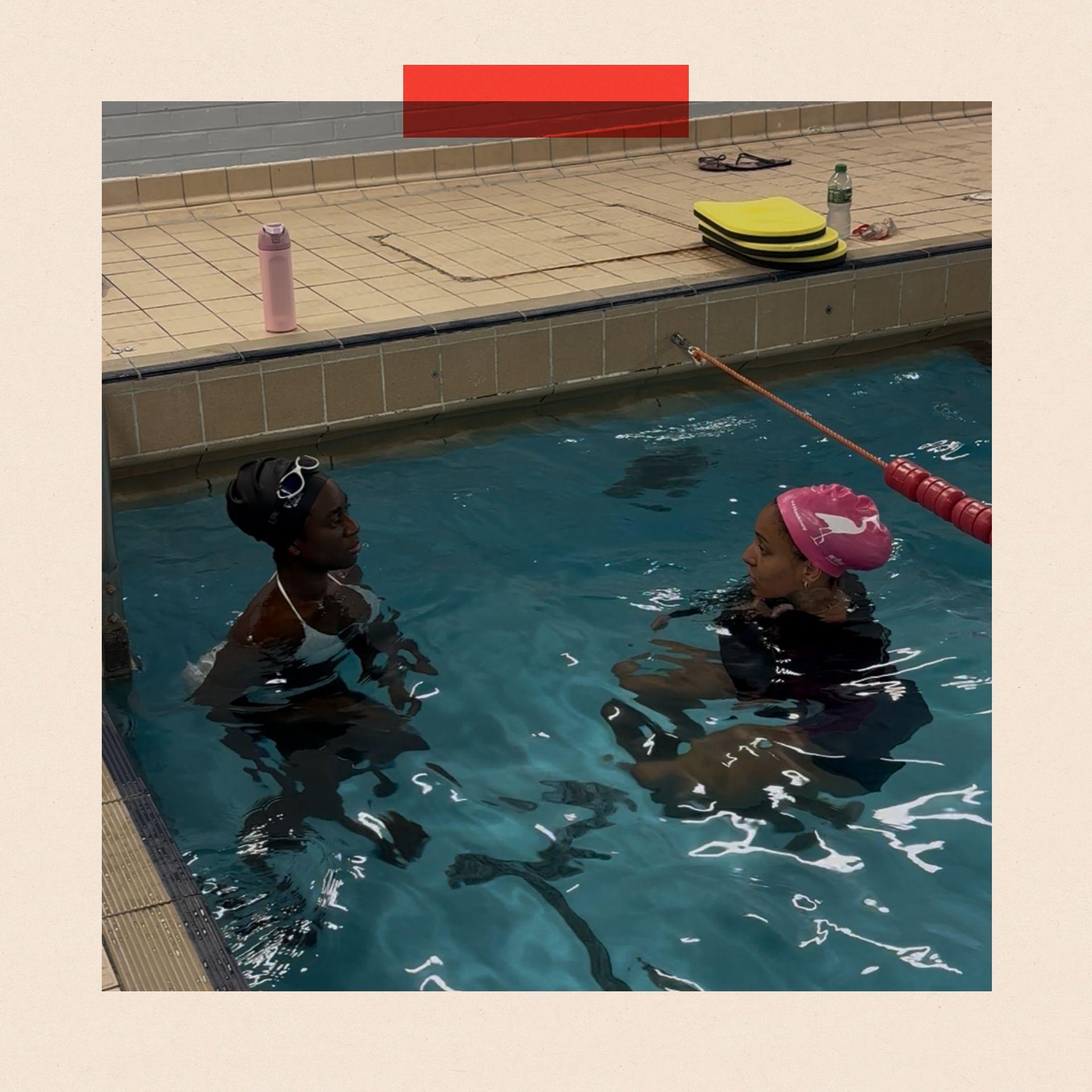
As I push through the doors, the smell of chlorine hits me. Instantly, I feel sick, and I remember why I don’t go swimming. I’m getting ready for my first swimming lesson in over 10 years, trying to convince myself it won’t be so bad.
Before I know it, I’m in the water.
I glance around the pool; I’m surrounded by other black women learning to swim, all at different levels. Some are confidently swimming lengths; others, like me, are learning how to feel at home in the water.
I’m learning to breathe properly, dunk my head under and let the water carry me, rather than fight against it. There are so many things to remember.
At the age of 27, I’m still unable to swim – and I’m far from alone.
Swimming ability is not spread evenly across the population; figures compiled by Swim England, swimming’s governing body, based on a survey of 4,500 people suggest poorer people, for example, are much less likely to be able to swim, as well as Muslims, people of South Asian descent and children known to social care.
As a black woman, it’s the figures for the black community that always jump out to me. Swim England’s figures suggest that 67% of black women and 44% of black men in England cannot swim 25 metres unaided – far higher than the national average, and far higher than the numbers for white people (17% of white women and 12% of white men cannot swim 25 metres). Behind those figures, published in 2022, are very different stories.
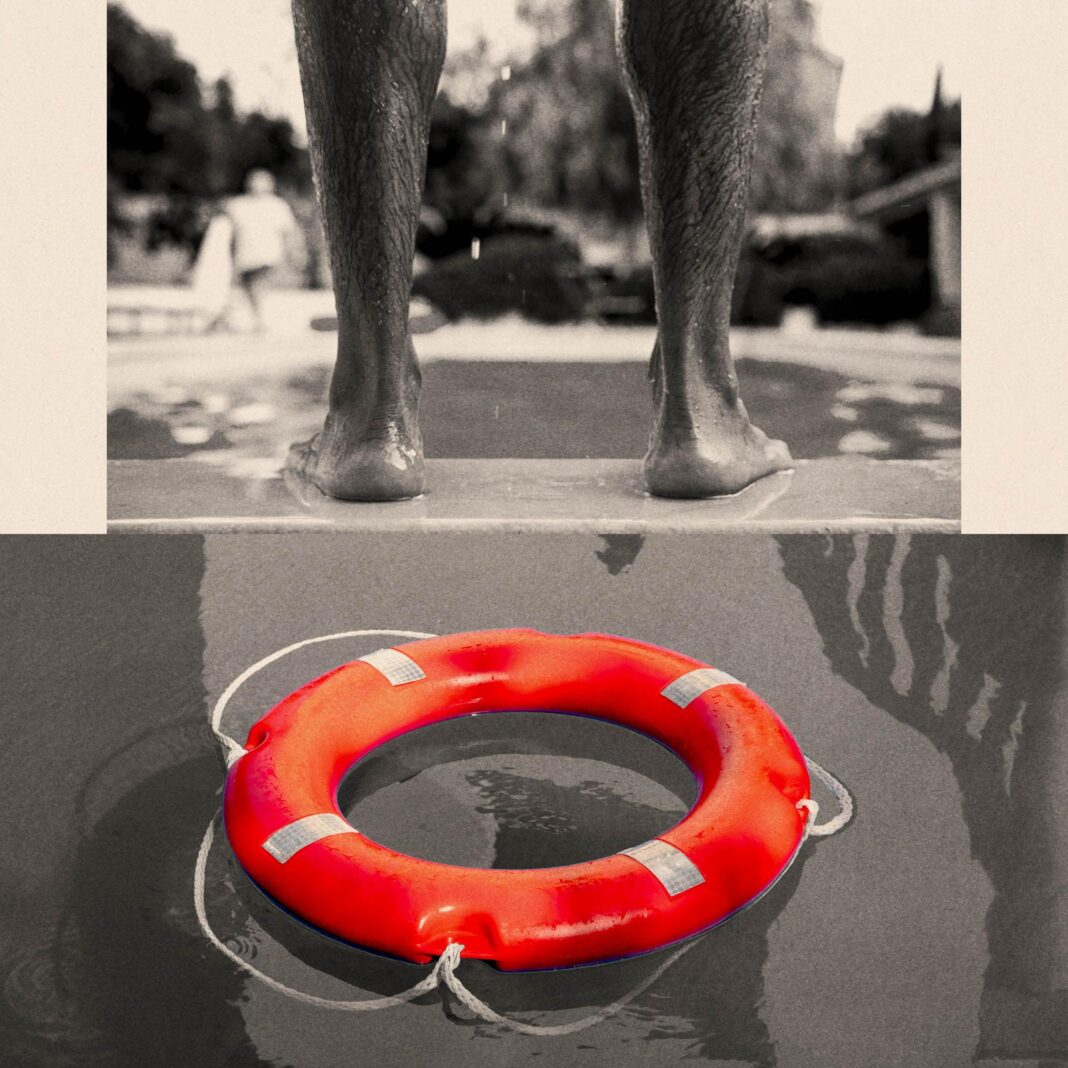
Over Britain’s record-breaking hot summer, we’ve seen a number of tragic deaths in lakes, rivers, and at sea, all of which will contribute to the UK’s annual total of drownings. There’s no official data yet for 2026, but in previous years we’ve seen black children and adults over-represented in the drowning figures (along with those other groups mentioned above).
I see this as a stark reminder: learn to swim. All children in the UK are supposed to leave primary school able to swim. But just why are there so many black people, like me, who can’t? It’s a trend that’s existed for decades, but one that has never been fully explained.
A myth with a long history
Everyone can float.
That was the conclusion of the University of Portsmouth, the Royal National Lifeboat Institution (RNLI) and the Black Swimming Association (BSA) in 2023; together, they set out to test one of the most persistent myths surrounding black people and swimming: that black people have denser bones than white people, which makes it harder to float.
It’s an idea with a long history. European accounts dating back to the 15th Century recorded that many west Africans were highly skilled swimmers and divers. But racial exclusion from pools in some countries, like the United States, helped to create the idea that black people were poor swimmers. In 1974, only a few years after the end of segregation in the US, an article by two white doctors in a respected US medical journal asked: “Can Blacks Float?”. They concluded that black people were simply less buoyant than white people.
In fact, the Portsmouth study found that bone density could not predict whether someone could float. Of the 101 participants in the study, 89 floated unassisted for two minutes.
The UK did not have the same system of formal segregation as the US in the 20th Century. But Alice Dearing, a former Olympic swimmer and co-founder of the BSA, thinks that the US’s history might have reverberated in parts of British culture too. Some black people have “ingrained within themselves to think that they can’t swim”, she says.
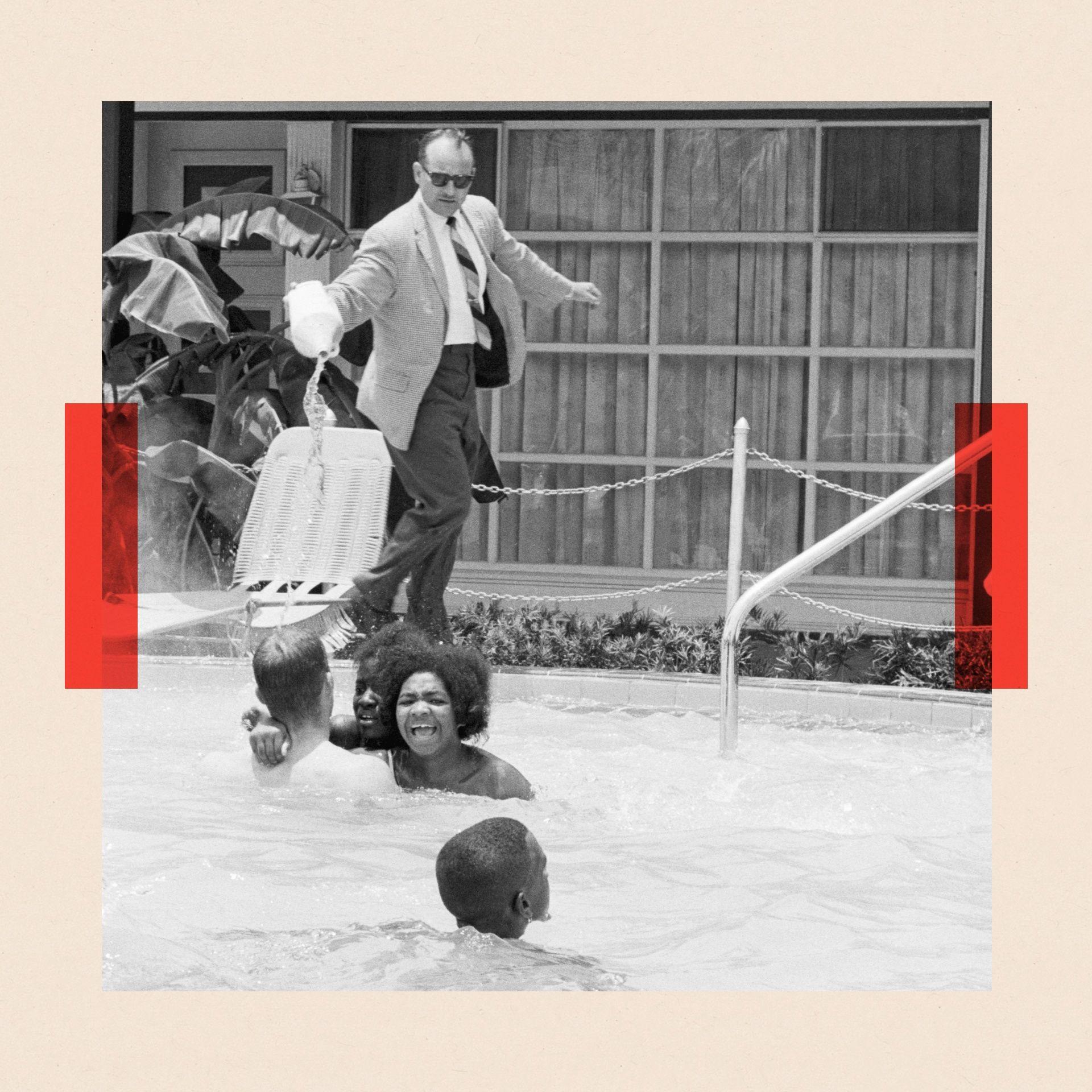 Image source, Getty Images
For Dearing, this is not just history. At 17, she says a coach used a racial slur about her to another swimmer. She later complained to her swimming club and school but ultimately decided not to take the matter further. “Why am I being victimised for swimming and for being black? It just didn’t make sense,” she says.
Experiences like these can shape how black people see themselves in the water. Heather Massey, a physiology professor at the University of Portsmouth who was involved in the floating study, says it’s important to challenge those myths.
“If people believe they can’t float, then they may be dismissing something that could eventually save their life,” she says. “We need to make sure that we get the right information out there.”
Parental influence
For most British children, swimming starts with their family. If parents swim, children grow up seeing the water as something familiar.
But if parents have not learned to swim – as is the case in some black families – then children are less likely to start swimming lessons at a young age.
I come from a family of non-swimmers: I’m one of five siblings and none of us can swim, neither can my parents. We still enjoyed days at the beach, but that usually meant walking along the coast or paddling in the shallows. Rarely did we go much deeper than knee height.
It’s a pattern seen by Nathaniel Cole, co-founder of Swim Dem Crew, a swimming group encouraging more people of colour to get into the water. He remembers coaching children whose parents could not swim, and encouraging them to get into the pool with their children after lessons.
“But then the parents would be like, ‘Well, I can’t swim’,” he says.
Cole says having parents who cannot swim can make the water seem dangerous. “Swimming underwater is something to be avoided. You don’t go in there, there’s danger. And unfortunately that’s driven from parents that can’t swim.”
Dearing’s experience was different. Her mother grew up swimming in the ocean in Accra, Ghana. “When she came over to the UK, she was going to make sure all of her children knew how to swim,” she says.
Swimming was passed down in Dearing’s family. In mine, it wasn’t.
For those who never learnt as children, Cole says starting later can feel particularly exposing. “To be a beginner swimmer, you are humbled by the water,” he says. “You have to be very vulnerable.”
The role of class
The barriers to swimming start long before you reach the water.
For Kevin Hylton, emeritus professor of equality and diversity in sport at Leeds Beckett University, that started with his childhood. “I grew up in a working-class Caribbean family where swimming wasn’t a thing that was done,” he says. “We had almost zero leisure as a family together. It was done through school.”
His three children had a very different experience. By then, he and his partner had more disposable income and lived closer to swimming facilities. He says the difference, in his case, was not ethnicity. “It’s because of class. And also because of location and the proximity to swimming facilities,” he says.
That gap is reflected in the figures. Sport England figures said that 47% of children and young people in the most deprived areas could swim 25 metres, compared with 69% in the least deprived areas.
Access to pools can make that gap harder to close. More than 500 public swimming pools have closed across the UK since 2010, with almost half closing since 2020, according to Swim England and ukactive, the trade body for gyms and leisure centres. The charity classes one-fifth of local authorities as “water deprived”, meaning they don’t have enough swimming pool space to match their population.
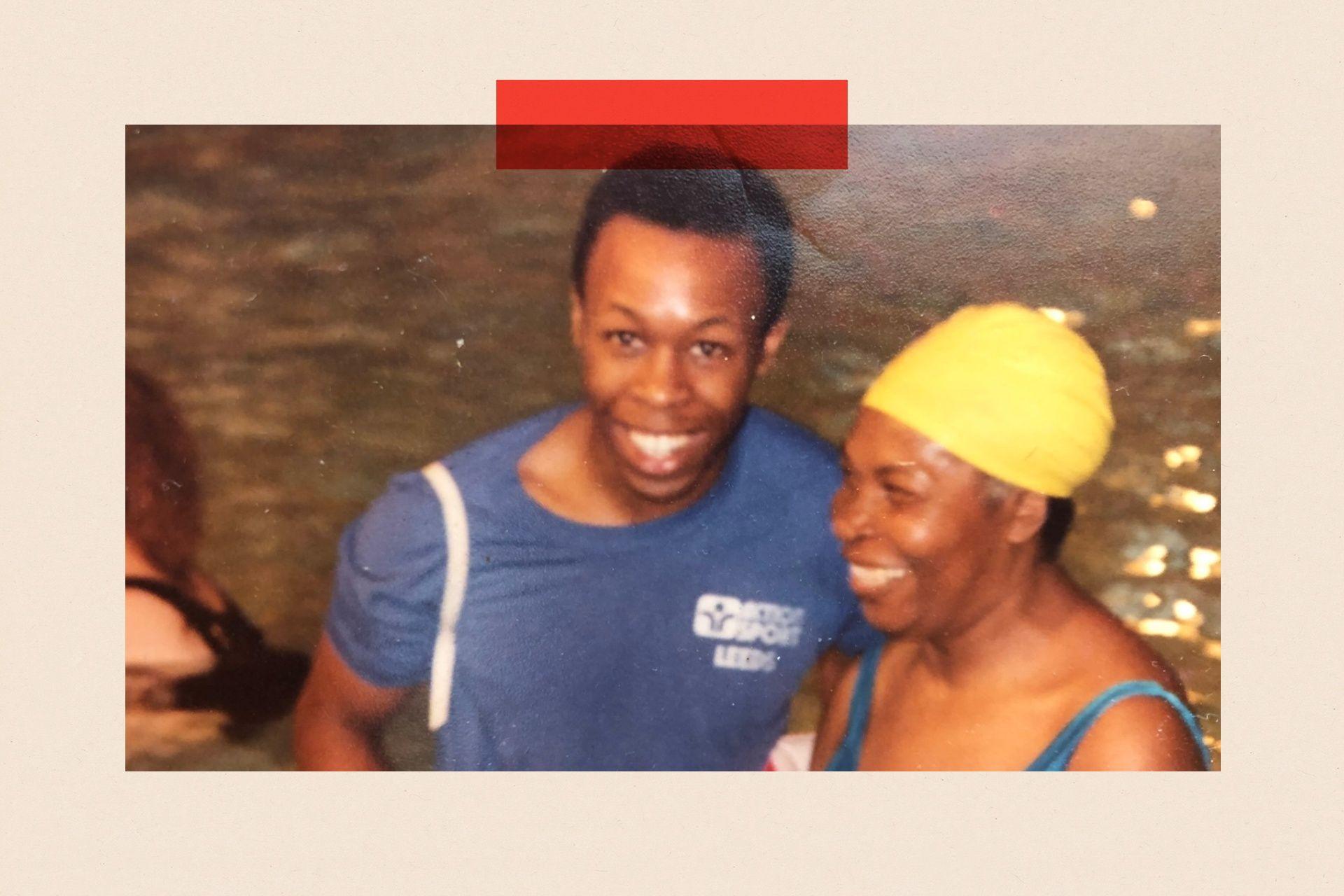 Image source, Kevin Hylton
But even when you take class into account, there’s still a particular problem among black people. In 2022 Swim England also looked specifically at those in the most deprived neighbourhoods. On average, 73% of adults living in those poorer neighbourhoods could swim 25 metres; but for black adults in those neighbourhoods, it was just 38%.
And there are other thorny cultural factors too. In a 2023 survey by the BSA of more than 1,400 people, 33% of black British respondents named issues around their hair as a barrier to getting in the pool. The BSA wrote that “traditional aquatic headwear”, like swimming caps, “doesn’t cater to children with longer, thicker afro hair, nor does it cater to traditionally Black hairstyles including braids, dreadlocks and twists with extensions”.
‘You’re floating’
Back at my swimming class, I’m still struggling to hold down my fear.
Then something changes.
I’m floating, first on my front and then on my back. I’m doing things I never thought I’d be able to do. And somehow, I’m enjoying myself.
My fear started in primary school when I had compulsory swimming lessons. I would arrive armed with what I liked to call my anti-drowning armour: armbands, floats, goggles, and a swimming hat.
But it still wasn’t enough to make me feel safe. There were dozens of children in the pool, all at various levels, and I remember feeling overwhelmed rather than taught. Swimming became something I associated with fear.
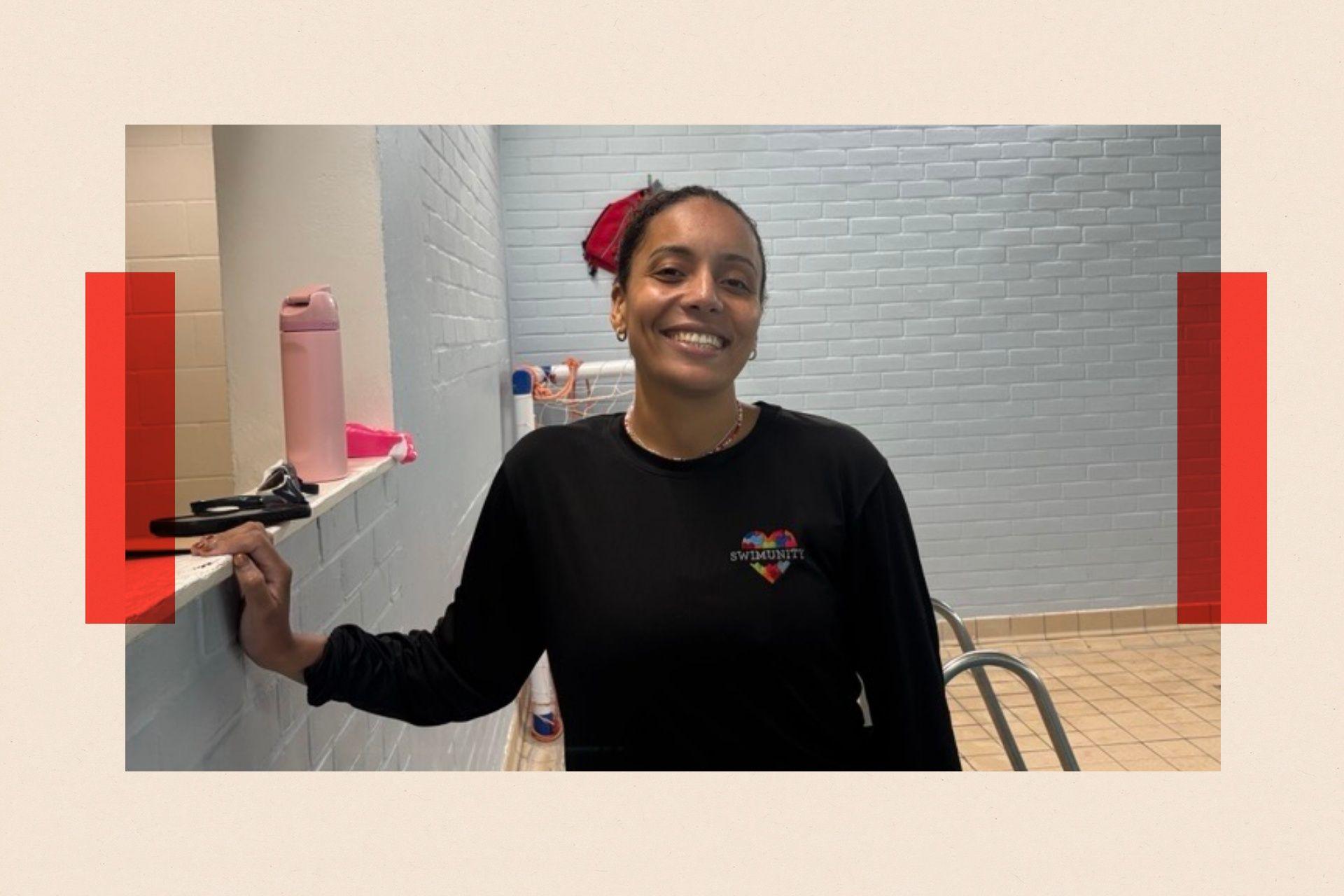
“See, you can do it, you’re floating,” my instructor, Omie Dale, tells me proudly.
Swimming is different from other sports; not learning the skill can have consequences far beyond missing out on exercise.
England’s National Child Mortality Database found that black children were over three times more at risk of drowning as white children between 2019 and 2025. Putting ethnicity aside, risk was also more than twice as high for children living in the most deprived areas compared with the least deprived.
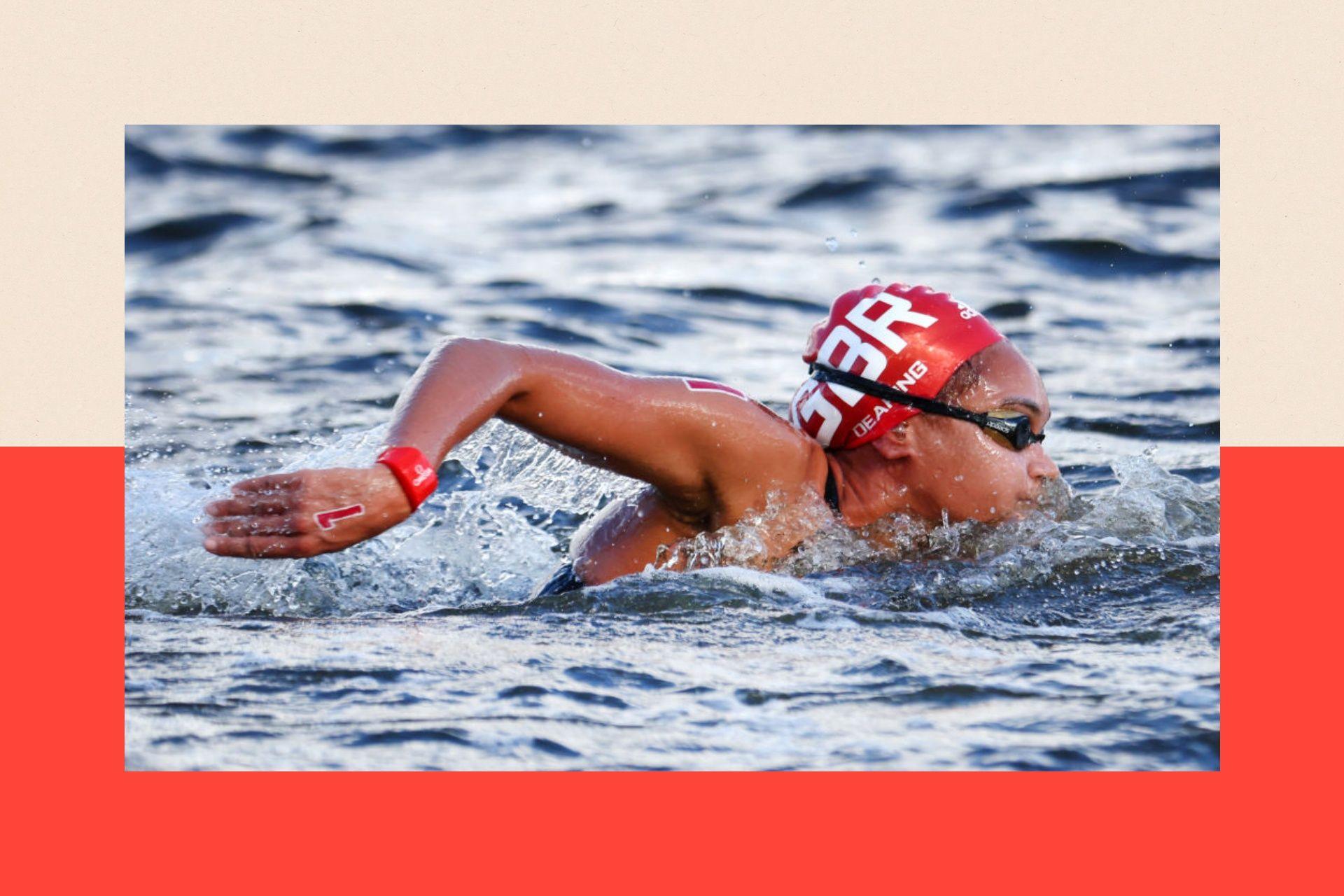 Image source, Getty Images
And Hylton points out another startling figure: 71% of children who drown (of any race) had been known to social care at some point in their lives, according to the Royal Life Saving Society UK (RLSS UK).
Hylton calls for more research into why these children are so much more likely to drown.
The cost of learning to swim
Standing at the edge of the pool, I wondered how different things might have been if I’d kept learning after school.
Dale says many of her students have also not had a lesson since primary school, leaving years to pass before they get another chance to build confidence.
Despite the fact that swimming is part of the national curriculum in England and Northern Ireland, financial pressures are making it tough; even just the cost of paying for a coach to a swimming pool is too much for some schools.
Dale believes getting black children into the water early, and giving them the chance to keep returning, can help. “We run free lessons and we get so many young people who are natural swimmers and just love the water. If we hadn’t been there at that stage, they could have grown up thinking they can’t swim.”
Seeing yourself in the pool
Seeing people like yourself in the water can make a difference. But at the highest levels of swimming, black representation remains low.
In 2019, the BBC found that of the 73,000 competitive swimmers registered with Swim England, just 668 – less than 1% – identified as black or mixed race. (About 4% of England’s population is black).
In 2020, Dearing became the first black British woman to represent Team GB in swimming at an Olympic Games, competing in Tokyo. Her achievement matters beyond the pool. Sport England research found that a lack of visible role models can reinforce negative stereotypes about the abilities of people from ethnically diverse backgrounds.
“No one wants to be the… only black person in the pool,” says Cole.
When I got out of the pool after my lesson, I felt something I hadn’t expected: I wanted to get back in. For years, I had accepted being unable to swim. It was easier to avoid the water than to confront something that had frightened me since childhood.
I’m still a long way from being a confident swimmer, but already the world feels a little more open to me: the sea, rivers and lakes; kayaking and paddleboarding.
Dale describes swimming as a “gateway”, saying that once you learn, “it opens a whole new world”.
At 27, I am not a swimmer. But I am ready to learn.
Top image credit: Getty.
More from InDepth
-
Why phones on loudspeaker may become just another noise
-
Published6 August
-
-
In the US, DEI is under attack. But under a different name, it might live on
-
Published2 March 2025
-

BBC InDepth is the home on the website and app for the best analysis, with fresh perspectives that challenge assumptions and deep reporting on the biggest issues of the day. Emma Barnett and John Simpson bring their pick of the most thought-provoking deep reads and analysis, every Saturday. Sign up for the newsletter here
Get in touch
Are you personally affected by the issues raised in this story?