
This post was originally published on this site.
 Getty Images
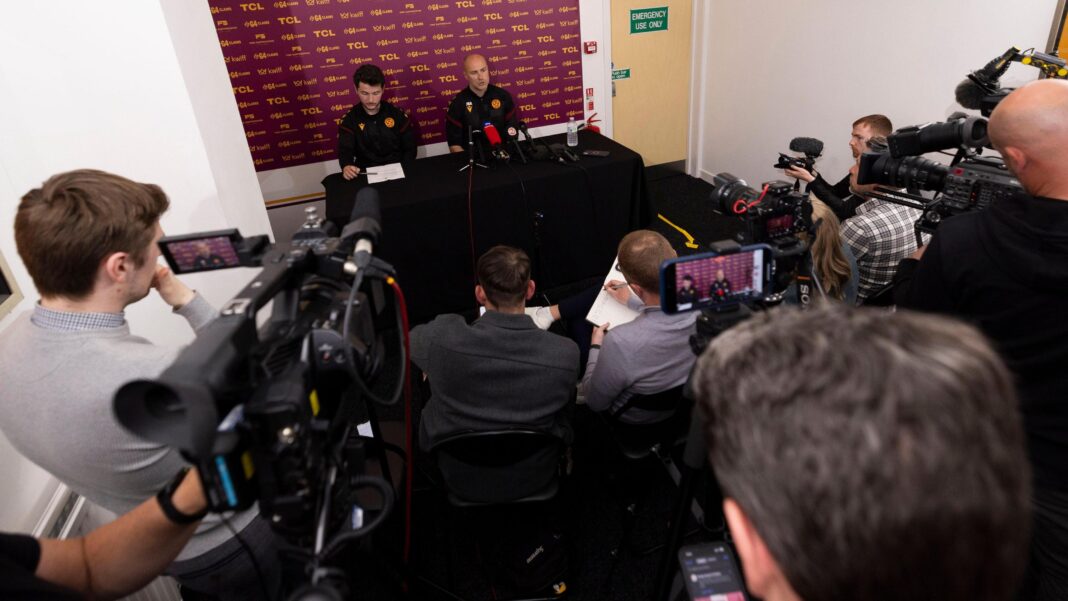
Jens Berthel Askou is on a video call addressing international members of the Well Society, who form a fraction of Motherwell’s 4,000-strong fan ownership group.
The 43-year-old Danish coach has just been asked how realistic it is for the modest Lanarkshire side to emulate the freakish success of Champions League last-16 club Bodo/Glimt or shock 2025 Swedish champions Mjallby.
“If we’re brave enough to be extremely consistent with the way we have identified possible advantages against better opponents with more resources, I think it’s possible,” he replies.
At that point in late October, Askou’s team were attracting attention with their bold and intense possession-based football, yet their ceiling appeared limited to a top-half push after securing only a second league win in nine matches.
Seven months on, Motherwell are on the brink of securing European qualification, playing what former Celtic striker Chris Sutton describes as the best football in the UK.
That reputation has earned Askou’s men the label of kingmakers in the Scottish Premiership title race – a billing they lived up to with a stunning win at Rangers two weeks ago.
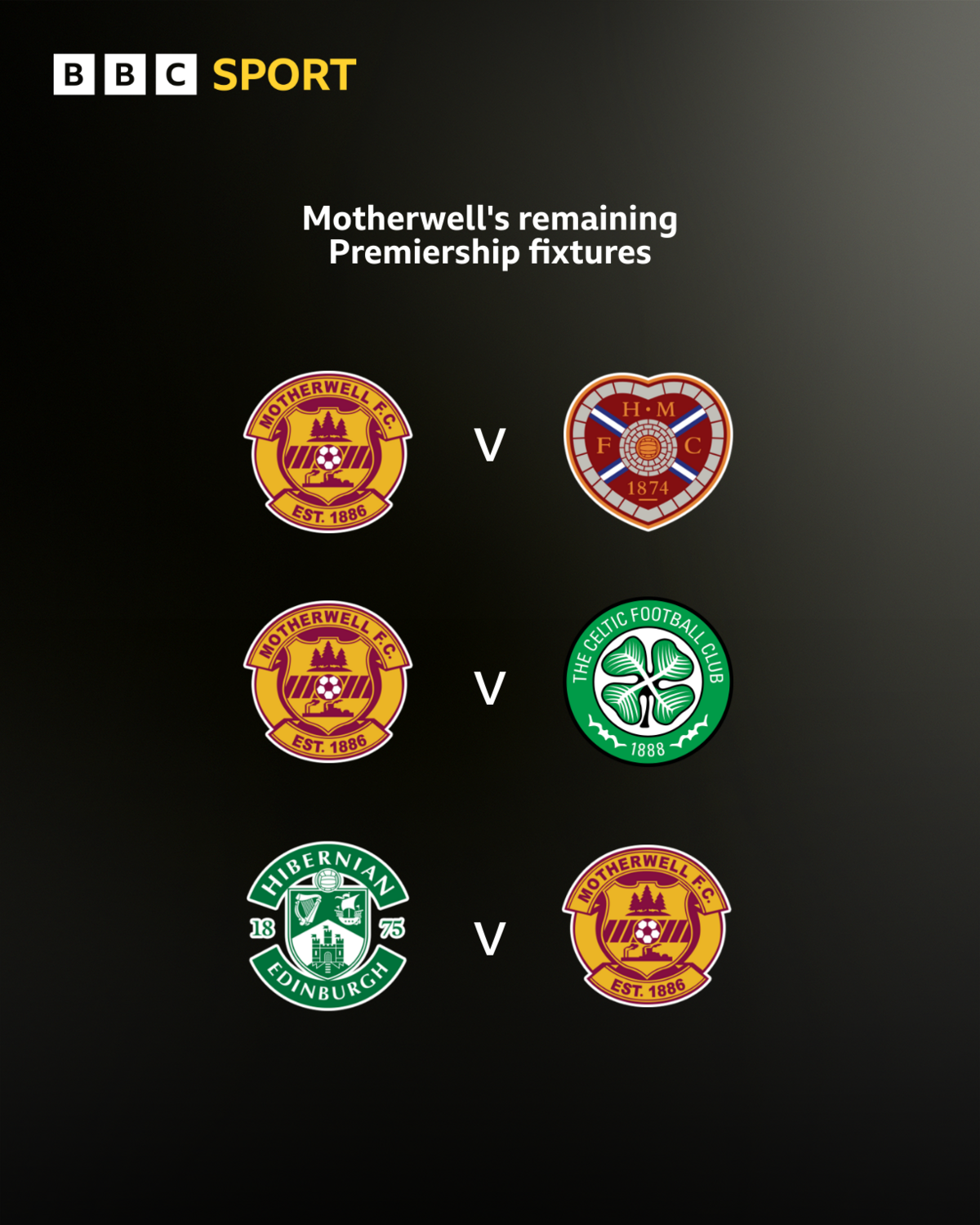
Leaders Hearts and second-placed Celtic are next to visit Lanarkshire, where Motherwell have lost just twice in 16 months, in a five-day spell that could decide the destination of the trophy.
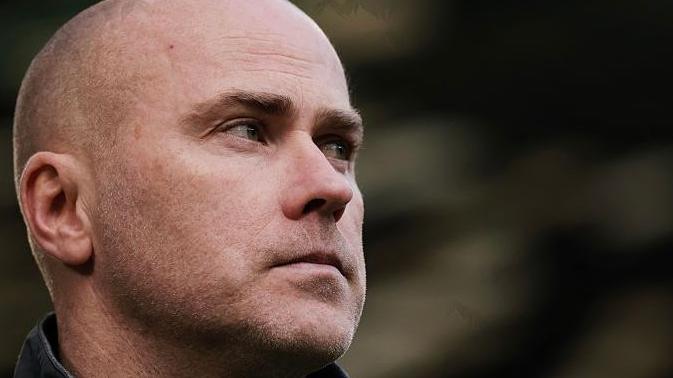
But who is the man leading the Fir Park revolution?
Demands, litter-picking & changing culture
 Getty Images
Motherwell’s form has tailed off after a remarkable run featuring just one defeat and 14 clean sheets in 20 league matches that had them in scarcely believable title contention.
Despite that, Askou’s nine-month Premiership journey has felt like a linear path to success, with a European spot in touching distance.
That does not apply to his managerial career, although demands have always been sky-high.
At Danish club Horsens, where Askou experienced top-flight promotion and relegation, day one of his two-and-a-half-year spell began with him scurrying about with a bin bag because he felt the facilities were not up to standard.
Sporting director Niels Erik Sondergaard, who had signed the former Norwich and Millwall defender as a player for Esbjerg a decade earlier, appointed him.
“He felt it was a little bit dirty. He always wanted things clean and organised around him,” Sondergaard tells BBC Scotland, recalling Askou dipping in and out of bushes to collect fast food rubbish.
“As a player he was not born with the biggest talent, but he made it through dedication, hard work and mentality. This is what we saw when he was head coach. I knew he would go on to bigger things.”
Mikkel Frankoch, who played under Askou at Vendsyssel and HB Torshavn, remembers his “demanding yet understanding” former coach setting the bar during pre-season training.
“He was always running in front, showing us how it should be done,” says the Midtjylland youth coach. “He’s a guy you look up to. He’s changed the culture at every club he’s been at.”
Frankoch views Askou as a coaching inspiration but recalls being savagely dropped as Vendsyssel closed in on promotion.
“He told me some things he wasn’t happy about,” he says. “When I was playing again I had this hunger to show him. I played my best games afterwards.
“He has a good understanding of who should play and why they should play. He has an impact on players, helping them to show the best versions of themselves.”
Tinkering, titles & bamboozling opposition
Tinkering is something Askou’s Motherwell squad have become accustomed to. It has been key to their unpredictability and relentless fitness levels.
A shift to a 4-2-4 formation would have earned a result at Tynecastle last month had the team taken their second-half chances.
Derek McInnes conceded his Hearts side “could have been beaten” in all three meetings with Motherwell this season.
A fortnight later at Ibrox, the system worked to perfection in a sensational first half. Motherwell cruised into a two-goal lead before their fearlessness helped them snatch a 3-2 victory.
That win marked the first time in more than 20 years that they have beaten both sides of the Old Firm in the same campaign.
For Hibernian’s visit in November, five changes and a surprise switch to a 3-4-3 caught even his own players off guard. Dogmatic this manager is not.
Askou explained the change was designed to expose deficiencies in Hibs centre-back Grant Hanley, who gave away a penalty before being sent off.
To play this video you need to enable JavaScript in your browser.
This video can not be played
It was his side’s best 90-minute display until they welcomed Wilfried Nancy’s Celtic a month later.
With top scorer Tawanda Maswanhise at the Africa Cup of Nations and on-loan centre-back Stephen Welsh ineligible, Askou’s back four consisted of three right-backs and a winger. The other six outfielders were midfielders.
In another 2-0 victory, they schooled Celtic in a way many pundits said they had never seen before from a non-Old Firm team.
Now under Martin O’Neill, that sobering evening will be in those players’ minds on Wednesday when they return to Fir Park – where only Falkirk have won this term.
For Motherwell, it was a night that confirmed to their fans that they are watching the best football they have seen from their side.
According to Frankoch, a similar story played out at Vendsyssel, where Askou moved from assistant to manager in 2018.
Top-flight promotion with a young team playing exciting football was followed by immediate relegation.
A play-off defeat by future employers Horsens led to Askou’s sacking from his first head coach role – a decision the players struggled to accept. The club have not been in the top tier since.
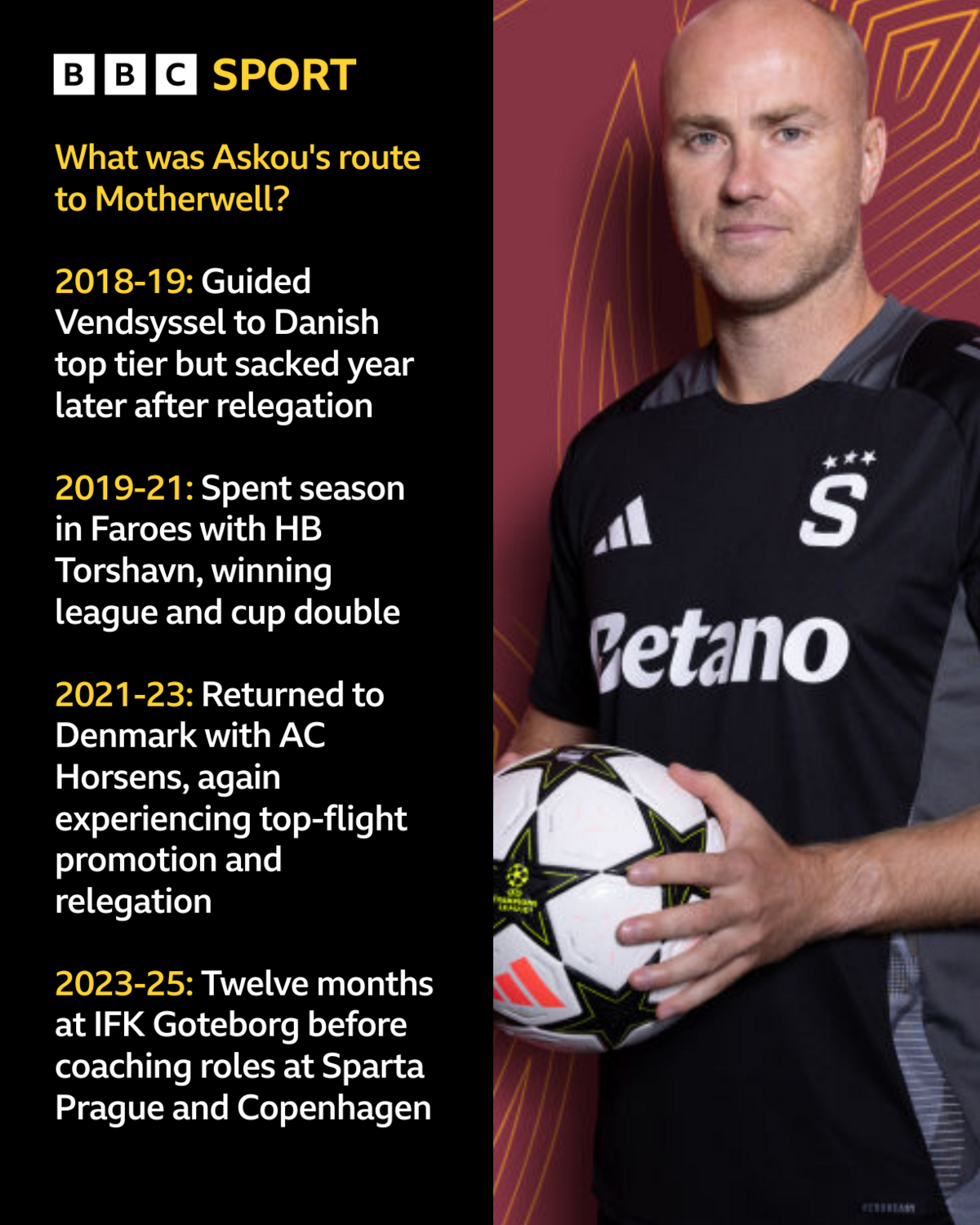
After a six-month break, Askou moved to Torshavn in the Faroe Islands. He won a league and cup double, losing just three of 32 domestic games. They have not won their top flight since he left.
“After we won the league I got a move to Norway and there were a lot of other guys who got sold,” Frankoch says.
“So he had a huge impact in making players better. Trophies are one thing, but he made me a better footballer.”
Champions League exposure & smashing records
Even with that track record, there was still a real air of mystery about Motherwell’s appointment of the Dane, who joined alone with no backroom team last June.
A revamp of the sports science department and the arrival of assistant coach Max Rogers followed.
A club video showed Askou introducing himself to his new players in mockumentary-esque style: intense handshakes and awkward small talk.
Later at his media unveiling, he expressed top-six aims while playing attractive football. Those targets have been smashed.
His CV made for curious reading, though. He joined IFK Gothenburg from Horsens for a year but left for an assistant role at Sparta Prague.
The fact Sparta’s sporting director – and former Arsenal midfielder – Tomas Rosicky referenced a poor defensive record when Askou departed now seems comical.
Motherwell have broken their clean-sheet record this term and are on course for the second-best defensive record in club history across a 38-game top-flight season.
Clearly, this is not normal for the Lanarkshire side, nor is it for teams with better resources and bigger budgets to leave Fir Park with nothing having had 30% of the ball.
They have also conceded just nine Premiership goals in 17 home games. Five of those have been scored by Falkirk, Motherwell’s kryptonite this season.
Scottish Premiership: Motherwell v Hearts
Saturday, 9 May (20:00 BST)
Fir Park, Motherwell
Listen to match commentary on BBC Sounds, watch highlights on BBC iPlayer, and follow live text updates on the BBC Sport website and app.
Askou’s assistant roles in Prague and at Copenhagen – where he worked at Champions League level – have been integral in shaping him.
Discussions with Motherwell took place while he was celebrating a league and cup double in the Danish capital 12 months ago.
The Fir Park club had lost ex-Austria Vienna boss Michael Wimmer after 12 games. He was homesick and left to join German third-tier outfit Jahn Regensburg.
The former Stuttgart coach had guided the team to top-flight survival while making them fitter and more dominant, providing Askou with something of a platform.
Wimmer’s shock exit was a new chapter in a period of upheaval. Stuart Kettlewell had resigned as manager just months prior, citing fan abuse.
Work was also ongoing to repair fractures within the club after a failed takeover attempt from a former Netflix vice-president.
Since then, the hierarchy has been refreshed, led by young chairman Kyrk Macmillan – a fashion businessman whose father-in-law is on the board of Hertha Berlin.
The club and their fanbase have craved stability. They are perhaps still waiting for that, given the dizzy heights Askou has taken them to.
Inside Askou’s Fir Park transformation
Talk of a title race while Easter eggs were on the shelves was silly business, but Askou challenged his players to be inspired by Bodo/Glimt’s rise in Norway.
Form has since dropped off in a gruelling end-of-season schedule, with Motherwell facing top-six opposition in each of their final nine games.
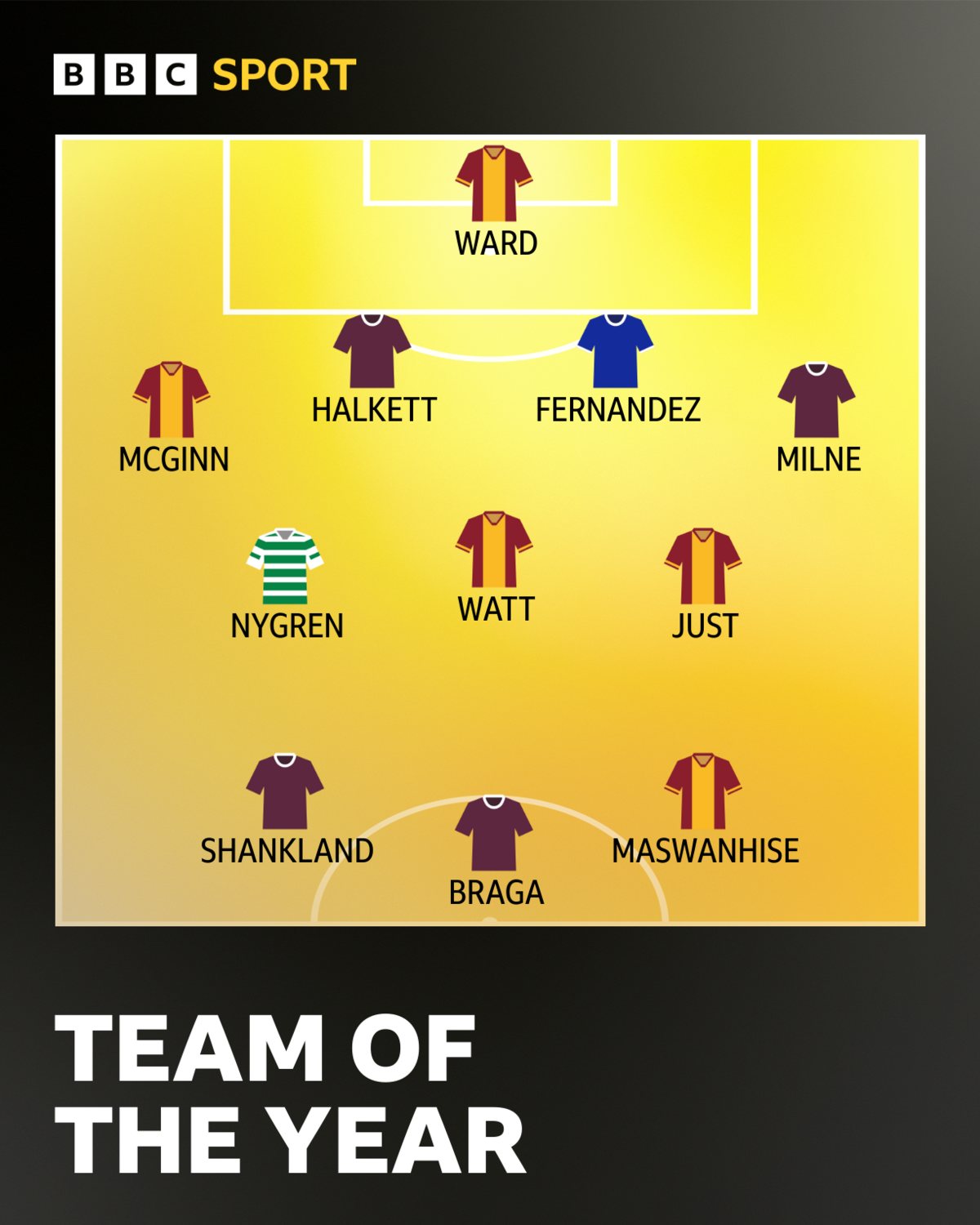
However, the selection of five of Askou’s players – Calum Ward, Paul McGinn, Elliot Watt, Elijah Just and Maswanhise – in the PFA Premiership team of the year only highlights his staggering body of work.
What also continues to boggle the mind is the sight of goalkeeper Ward standing 30 yards from his goal, studs on the ball, inviting pressure.
Fans were horrified when he was lobbed by a part-time Clyde striker early in Askou’s first match – a 2-2 League Cup group draw – but his superb response to those early-season teething issues has been symbolic of the team’s rise.
The support – and even the squad – were unconvinced during the summer months.
All the while, the board were negotiating the club record sale of Lennon Miller to Udinese. Boy, would he thrive in this side, but his absence has barely been felt.
An early wobble against Rangers in their league opener intensified the doubt, but an exhilarating second-half display secured buy-in from the fans and, crucially, the players.
“There have not been many teams in Scotland that dominate games the way this team do,” Motherwell midfielder Andy Halliday said of his side, who average the second-highest possession (59%) in the Premiership.
“It wasn’t exactly a fantastic start, but the performance levels were there.”
 Getty Images
Halliday credits Askou’s clarity of vision, repetitive training and a blame-free culture. Recruitment has also been impressive.
Watt failed to nail down a starting spot at St Johnstone. This season, no midfielder in the league has more accurate short or long passes per 90 minutes.
Fellow midfielders Lukas Fadinger, Ibrahim Said and Oscar Priestman are composed on the ball but relentless off it, contributing to the team being among the best sides in Europe for regaining possession.
Left-back Emmanuel Longelo has 14 goal contributions. Centre-back Welsh is arguably playing the best football of his career.
Attacking midfielder Just – who struggled under Askou at Horsens and is built like he would be blown away by a Lanarkshire gale – has been one of the Premiership’s standouts.
But the real stories lie in the improvements to inherited players. Maswanhise is the league’s top scorer, Ward has the most clean sheets, and only one player has more Premiership assists than Callum Slattery.
Meanwhile, the transformations in Scottish football veterans McGinn and Stephen O’Donnell have been like something out of Space Jam.
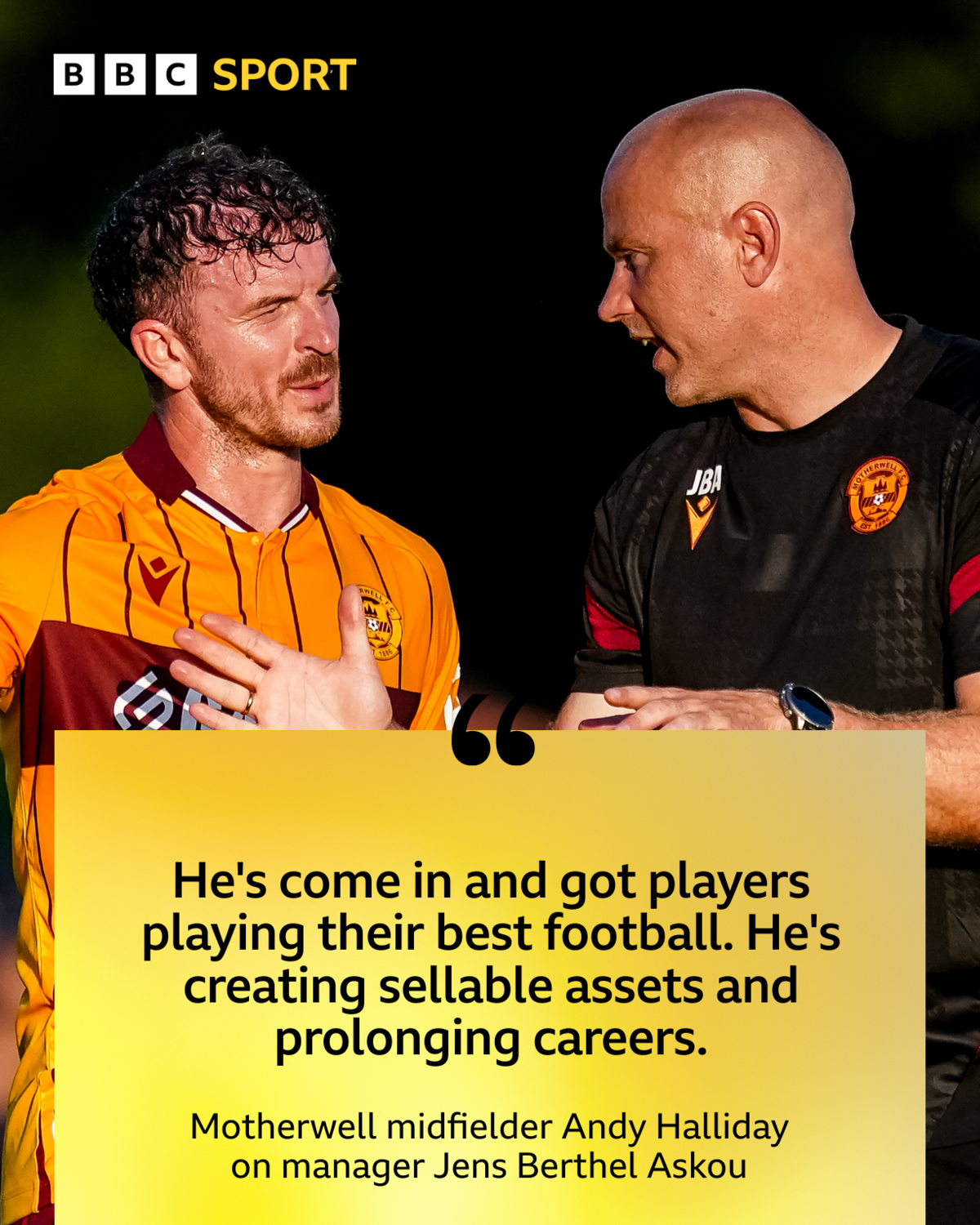
“Askou has come in and players who have played in Scotland for such a long period are playing the best football of their careers,” Halliday added.
“He’s creating sellable assets, and he’s going to prolong careers as well.”
‘We want this to be start of something’
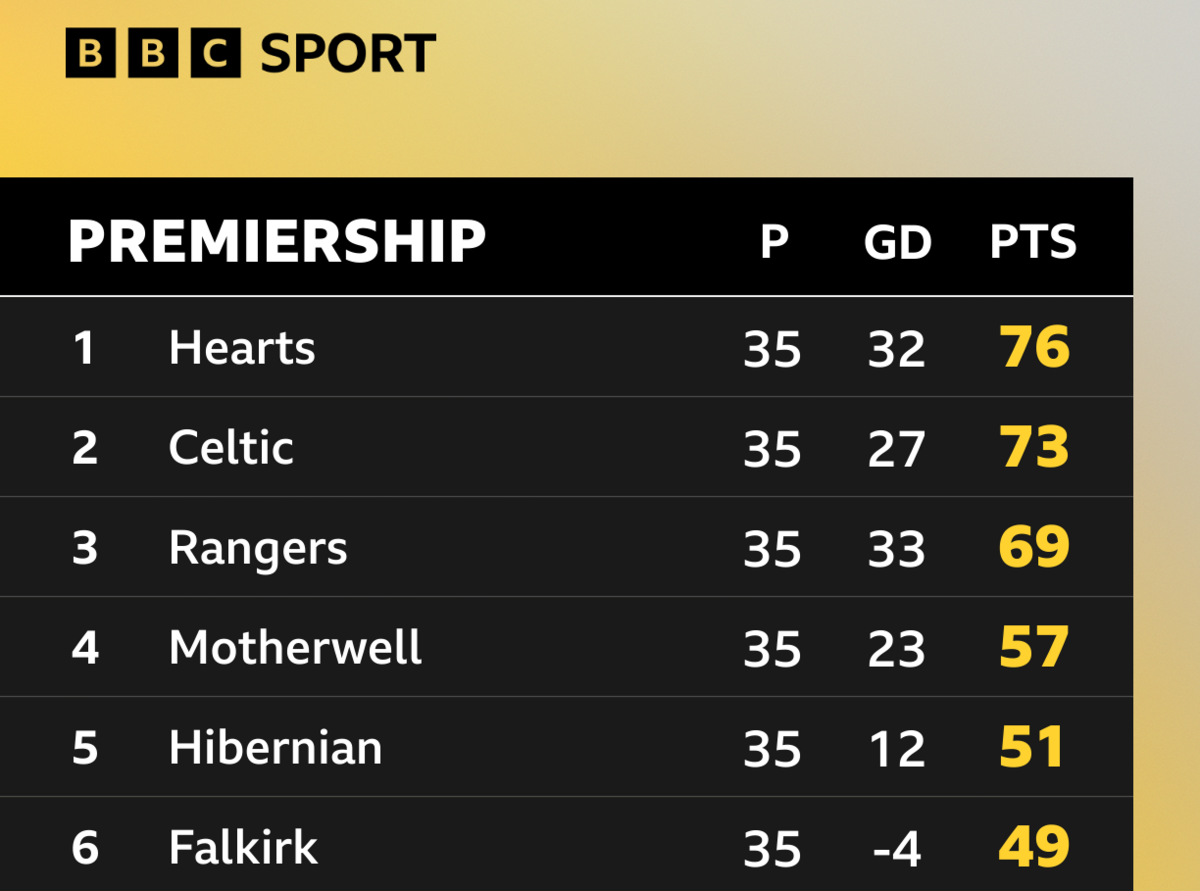
Motherwell could yet finish the season with their second-highest top-flight points tally. They have lost just eight Premiership games – fewer than in any of their past 30 league seasons.
Fans are almost certain to have at least one European trip this summer, yet there is a chance the campaign could feel like a missed opportunity. A League Cup semi-final thumping by St Mirren and a Scottish Cup exit at Aberdeen cut deep.
They have not won silverware since 1991, despite multiple league placings of second, third, and fourth throughout the past two decades. This season feels different, though.
The brand of football has spiked attendances and helped introduce a new generation of supporters to a fan-owned club in the shadow of Glasgow’s big two.
The glass-half-empty view is that many predict this will be the first and only iteration of Askou’s Motherwell, such is the quality of the job he has done.
But the club are determined to ensure that is not the case and instead want this to be something to build on.
“Hopefully this is the start of something,” says chairman Macmillan.
“We were quite clear that we had a model and playing identity we wanted to work to. No matter what happens in the future, it’s important we continue that journey.”