
This post was originally published on this site.
The secretive crypto firm backed by Farage’s biggest donor
-
Published
Who is the biggest purchaser of the world’s biggest safe haven asset – gold?
China? Japan? One of the Gulf countries, perhaps?
In fact, the single biggest buyer of the precious metal last year was a company you’ve probably never heard of – a crypto firm called Tether.
The El Salvador-based company runs USDT, the world’s biggest stablecoin, which is a form of crypto backed up by hard currency.
It serves as a conduit between riskier, volatile cryptocurrencies and the conventional finance system, essentially used as an offshore dollar.
Yet Tether bought more gold last year than anyone, according to European Central Bank data.
It keeps it stored in a James Bond-style Swiss former nuclear bunker, according to Tether’s boss.
Tether says it also owns as much US Government debt as some G20 nation states, some $135bn (£101bn), which is more than South Korea.
It is a huge player, almost taking on the characteristics of a private central bank. Yet it employs just 200 people.
It is also, perhaps inadvertently, entangled in the questions around the funding of Nigel Farage’s Reform party.
One of Tether’s significant shareholders is Christopher Harborne.
Last August, Harborne gave £9m in cash to Farage’s Reform party – the biggest party donation in British history. He gave a further £3m to Reform in October and an additional £3m in January. All the donations were declared.
Harborne had given £5m directly to Farage, a previously undisclosed personal gift which was the subject of parliamentary investigations, before Farage resigned as an MP.
Farage and Harborne have both said there were no strings attached to the personal gift, nor to the political donations to Reform.
The Bank of England’s governor Andrew Bailey recently confirmed that Farage raised the issue of cryptocurrency regulation and the related issue of central bank digital currencies with him in September last year.
He said Farage made his views “very clear”, but the “intervention” did not change the Bank’s policy, and that in general he could spot “lobbying” and knew how to discount it.
There was a specific issue Farage was concerned about – speculation that the Bank of England would push ahead with a limit on holdings of potential sterling stablecoins of between £10,000 and £20,000.
The industry was lobbying hard against it.
My understanding is that Farage did not raise Tether specifically with the governor, but he did talk about stablecoin regulation in general.
It raises reasonable questions about the precise details of that conversation and the scope for any possible benefit to Tether and its shareholders from shifts in Bank of England policy.
The Reform leader had already spoken openly about embracing cryptocurrencies.
“Tether is about to be valued as a $500bn company,” he told LBC presenter Nick Ferrari in September, the day before meeting Bailey.
“This world is enormous, and I’ve been urging for years that London should embrace it. We should become a global trading centre for this stuff under proper regulation.”
On the wider conversation, Farage’s team say that “his remarks to Andrew Bailey are consistent with his long-held belief that the UK should be a global hub for regulated cryptocurrency innovation and investment”.
To that end, last May when Reform was ahead in the polls, the only piece of draft legislation it had published was its Cryptoassets and Digital Finance Bill.
It had a fleeting reference to stablecoins, and no reference to the Bank’s existing plan to limit personal holdings.
I read it and downloaded it.
It has since disappeared from the Reform website and from the web generally.
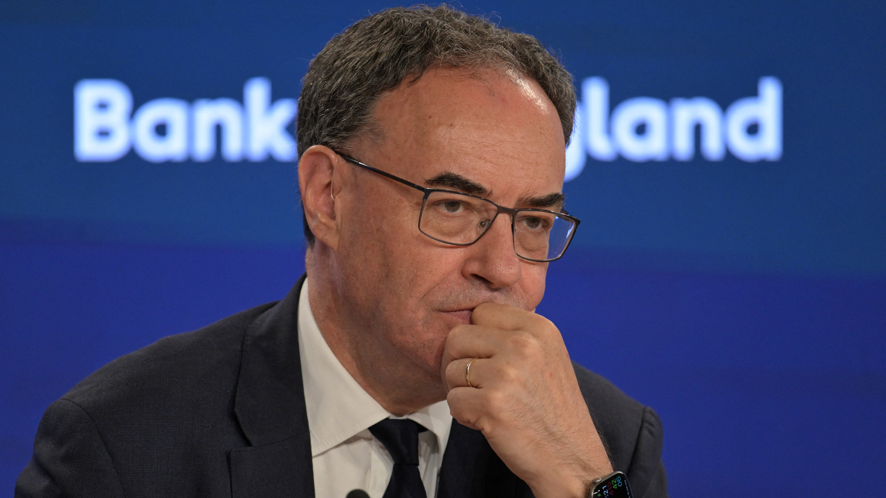 Image source, Reuters
Reform tells the BBC it is still party policy but that it regularly updates the website to highlight latest announcements.
Three months on from that stablecoin regulation becomes absolutely central to Reform’s priority discussions with the Bank of England, Reform says because the official consultation only opened up last November.
It’s important to note that Bailey is not just the man running the Bank of England.
He also chairs the international financial regulation body, the Financial Stability Board. So he is arguably the most important non-American in the world for the regulation of crypto and stablecoins, reporting directly to G7 and G20 summits.
He has expressed concern that stablecoins could be destabillising if they are considered to be a form of money without guarantees of holding their value.
This industry is extremely sensitive to financial regulation.
Some context lies across the Atlantic as to why.
Last July, the Trump administration passed the so-called Genius Act, essentially legitimising stablecoins, under certain regulation in the US.
On the back of this, one provider, called Circle, floated in New York, and it surged 10-fold in value in three weeks.
In turn, over this period Tether and its advisers prepared for a capital raise valuing the much larger stablecoin at $500bn.
In the same month Harborne donated a record £9m to Reform, relaxation of US stablecoin regulation drove up the value of his stake in Tether by several billion dollars.
Then the following month, Reform referenced Tether by name in public, to the radio station LBC, and raised stablecoins as a priority issue with the UK regulator.
The BBC understand that Harborne has no executive role at Tether, nor any control. He has a stake of around 13% in the firm.
Harborne was also a registered named lobbyist at the European Parliament for the Digital Currencies Governance Group, for which Tether was a founder member, for seven months from September 2020.
The DCGG regularly defends Tether by name in its submissions to various regulatory bodies.
Lawyers for Harborne declined to comment.
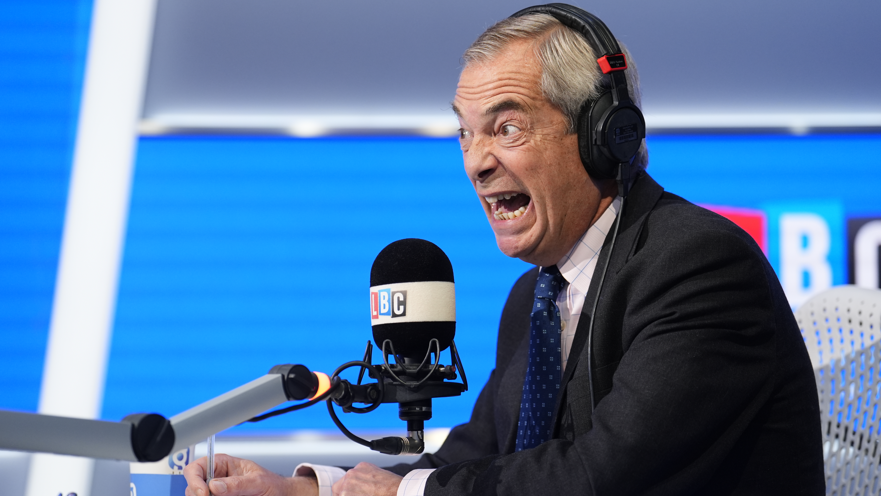 Image source, PA Wire
A Reform spokesman said that it was “false” to make any suggestion that policy development is connected to or influenced by individual donors, and that there was no requirement to discuss the financial interests of party donors at meetings such as with the Bank of England governor.
The Bank did row back on some stablecoin restrictions last month, it said because of recommendations from the House of Lords financial committee.
None of this contradicts Farage’s argument that there were no strings attached to Harborne’s personal gifts and political donations.
But this is a unique situation where a political party preparing for government has received £15m of donations from one individual over the past year, a clear majority of its registered donations from a single individual.
In addition, a year previously, its leader accepted a previously undisclosed £5m personal gift from the same individual.
The money flowed at the precise moment that changes to global regulation of stablecoins was transforming the value and prospects of that sector.
Never before has a table-topping political party been so dependent on donors connected to a narrow sector, which is in turn demonstrably extremely sensitive to live regulatory decisions.
If there is an early election in the next year, won by Reform, it would then also choose the next governor of the Bank of England, before the expiry of Bailey’s term in 2028.
Sir Charlie Bean, a former deputy governor at the Bank of England, told the BBC: “Stablecoins are only stable if they have the appropriate regulatory environment… . But there is right now an unsurprising regulatory race to the bottom amid the potential for greater profits.”
He added: “When funds are coming from major shareholders of such large financial institutions, there is a clear potential conflict of interest here, for example, in the appointment of a new Bank of England governor.
“Transparency is one solution.”
The questions crystallised by this unusual meeting last September are likely to remain with us.
-
-
Published5 days ago
-
-
-
Published5 days ago
-