
This post was originally published on this site.


Twenty-week-old Grayson easily could have become one of the tens of thousands of British babies left unvaccinated against polio.
His mother, Lily, agrees with the principle of immunisation. But overwhelmed by the early weeks of motherhood, and suffering from post-partum depression after a traumatic birth, she was daunted by the prospect of a long journey to a doctor’s surgery. “I’ve been through the trenches, awake all night. You don’t want to leave the house, or go to a different town.”
Weeks ticked by, and eventually Grayson missed the polio and diptheria jabs he was supposed to get at eight weeks old. By that point he was officially classed by the NHS as “overdue” for vaccination; effectively, he was on his GP’s naughty list.
Then Lily realised there was a clinic practically on her doorstep – at a location she hadn’t expected.
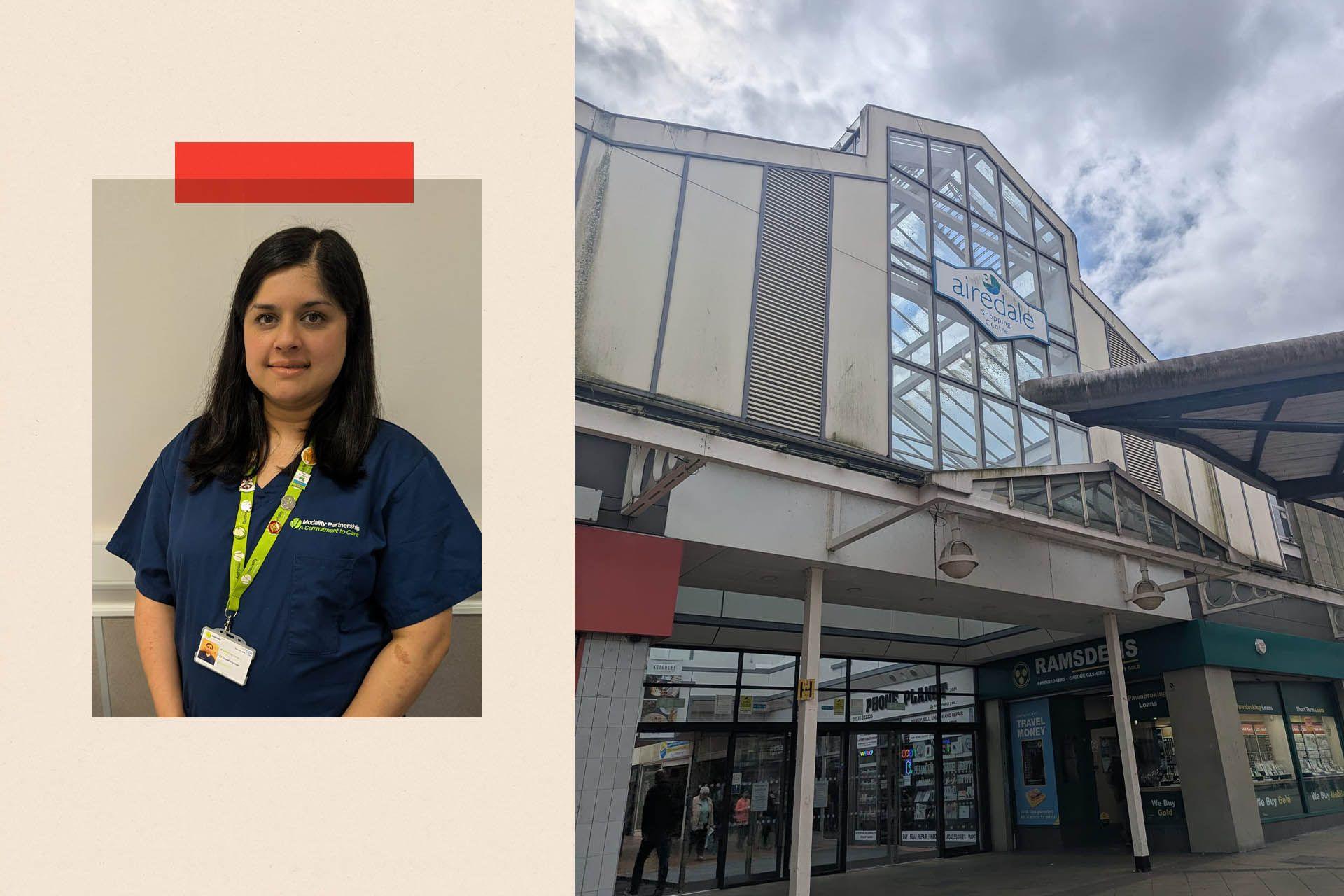
That clinic – in Keighley, west Yorkshire – runs from a vacant retail unit at the Airedale shopping centre, a 1960s-era precinct that locals say has fallen on hard times in recent years, with plenty of empty, boarded-up units. The staff who created the clinic thought: why not use one of those vacant units to administer vaccines?
“This was an empty shop; there was nothing here, the windows were all blacked out,” Flora Jennings, a local charity coordinator, tells me over the sound of a baby’s laughter, on the morning I visit the clinic.
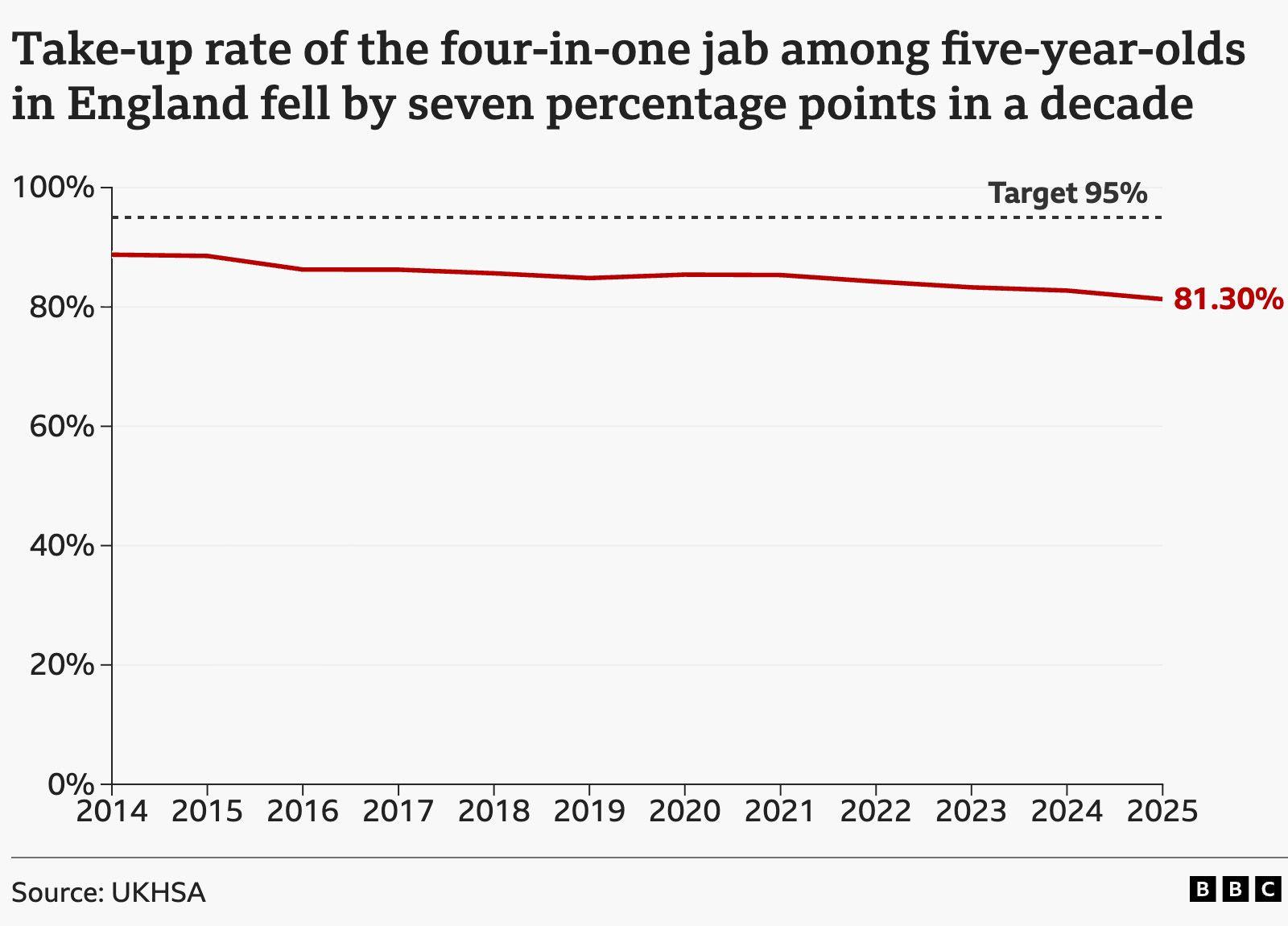
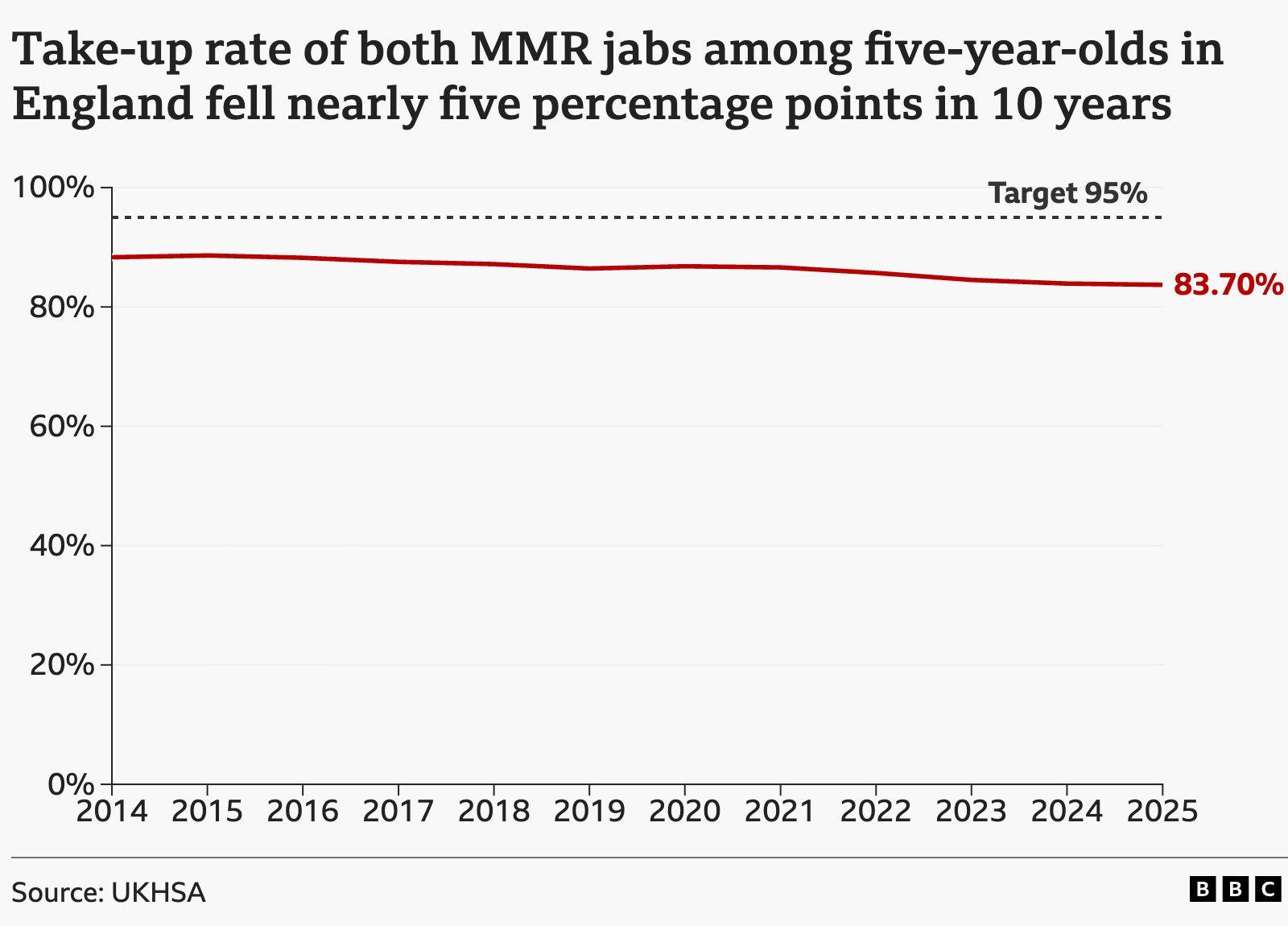
It’s an imaginative solution to a national problem. Over the last 15 years, childhood vaccination rates have fallen across Britain. The share of five-year-olds in England who have received a four-in-one jab (which protects against viruses like polio and tetanus) is now 81%, down from 89% in 2014. About 84% have received both of their recommended MMR (measles, mumps and rubella) jabs, down from 88% a decade ago.
“If you just look at the generalised population, the decline doesn’t look horrific,” says Prof Dan Hungerford, an epidemiologist at the University of Liverpool who gave evidence to Parliament on this topic. “But if you compare us to other nations, particularly our European neighbours, we are one of the worst-performing countries in terms of getting early-life vaccinations to children.”
Politicians are now asking how Britain – the country of Edward Jenner, the “father of immunology” – could have allowed its immunisation rates to drop so low, and what could fix it.
One Labour MP on the Health Committee has gone further, telling the BBC that it’s time to consider a policy that’s commonplace in some countries, but still something of a taboo in Britain: mandatory childhood immunisations.
Anti-vaxxers versus ‘casual refuseniks’
Before the 1800s, between 40% and 50% of children in Europe died before their 15th birthday. Now, in Britain that number is well below 1%, according to the UN.
Scientists broadly agree that vaccines were key to this improvement.
“Along with clean water and sanitation, immunisations have had a profound impact on keeping children alive,” says Ben Kasstan-Dabush, a lecturer in global health policy at the University of Edinburgh.
And that’s why some find it so worrying that Britain’s rates have slipped. Last year alone saw measles outbreaks in parts of Birmingham, Bristol, and north London; so far this year, two children in England have died of the disease.
In January, MPs on the Health Committee described the backslide as “national disgrace”.
Some blame the rise of misinformation on social media. Last year, a group of American scientists found that reading just one anti-vax Facebook comment about the HPV jab – given to teenagers – was enough to make some parents hesitate.
But all of the public health experts who spoke to the BBC said that whilst anti-vax social media sentiment plays its part, they don’t think it’s the main reason immunisation rates have slipped.
Instead, they point to something more mundane: they think that parents of young children simply have fewer face-to-face contacts with medical professionals than they did 10 or 15 years ago.
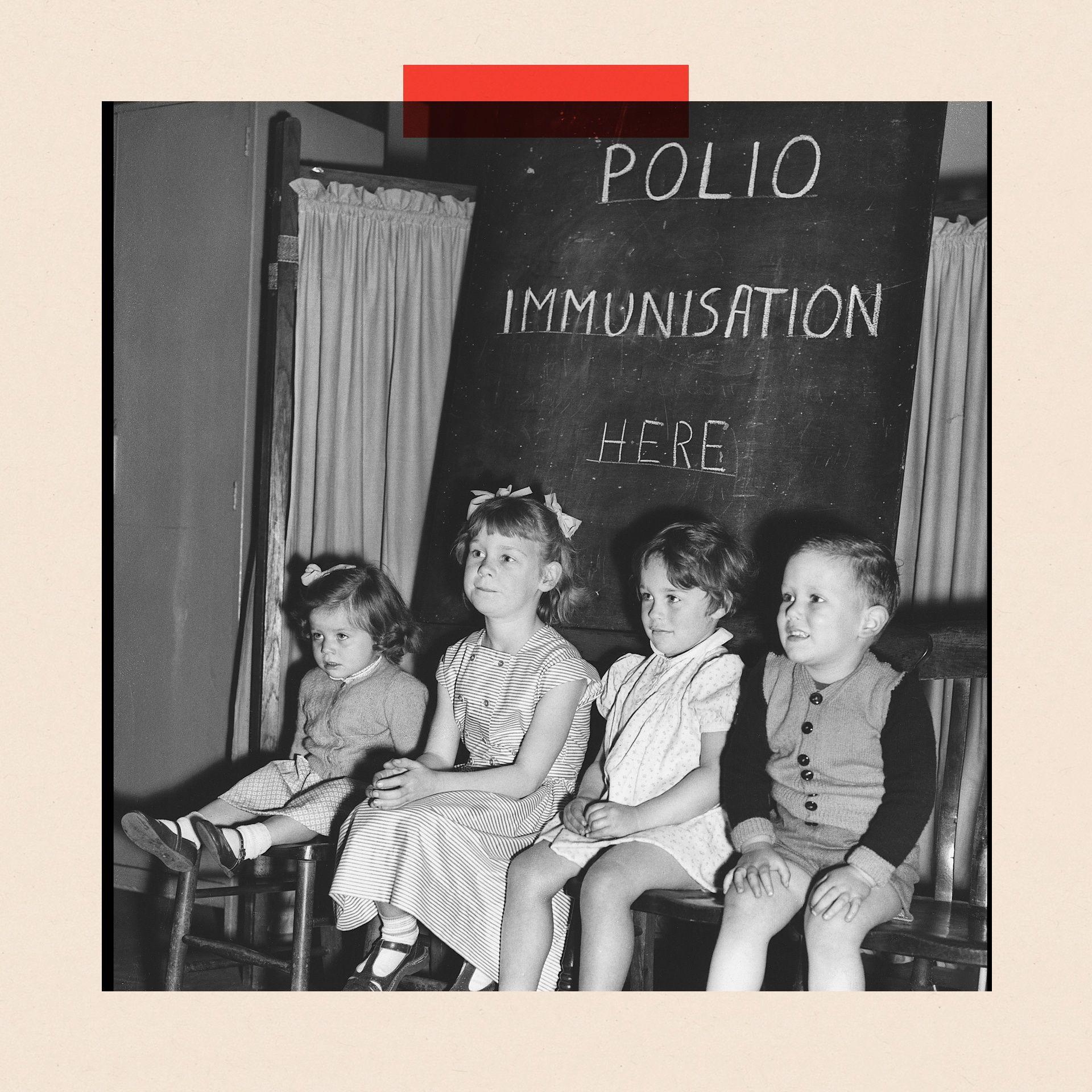 Image source, Getty Images
Beccy Baird, a senior fellow at the King’s Fund think tank, says that despite colourful media reporting around “anti-vaxxers”, most parents who turn down vaccination are not ideologically opposed to it. Convenience plays a big role, she says; vaccination rates are highest when parents regularly interact with medics, who can remind them to get their children jabbed and tell them exactly where to do it.
And those interactions have become rarer. England has seen a 45% decline over the last decade in the number of health visitors (nurses and midwives who treat young children at their home), according to BBC analysis. It’s part of a health visitor’s job to remind parents about vaccines and, in some cases, administer jabs directly.
And over roughly the same period, the number of fully trained GPs in England struggled to keep up with rising patient demand, according to British Medical Association data; while the Nuffield Trust think tank suggests that patients have become less likely to see the same GP on repeated visits – meaning families don’t build trusted relationships with doctors they recognise.
“Those touch points have become fewer,” says Kasstan-Dabush.
‘Bucking the national trend’
At Keighley’s shopping centre, inside the vaccination clinic, nurses are passing around biscuits.
“The kitchen’s there, the playpen’s there,” says Jennings as she points to a soft-play where parents can leave children while their siblings are vaccinated. “I wanted it to be really inviting, almost like you’re walking into someone’s home.”
The idea of opening a vaccination clinic inside a town centre shopping arcade seemed odd to some of the staff when it was first suggested.
Now, they say it’s key to the clinic’s success. “We need to make it simple, we need to put services where people come,” says Jennings. It means they can catch casual shoppers who “pop their head around the door” and decide on a whim to get their child vaccinated.
“We’re right in the centre. And down here it’s flat, so you don’t have to push a pram up a hill.” She says some parents simply won’t attend a clinic if it involves more than one bus.
And in the families come. Over the morning, the clinic vaccinates 10 infants, some of whom are classed by the NHS as “overdue”. In many cases, the parents actually turn up to use a different service, like baby weighing, but once they are inside, lead GP Dr Zoyah Hussain gently suggests an immunisation – and most parents say yes.
“I do get a lot of questions… ‘why do we need to give them jabs?’, ‘why don’t we just let nature manage itself?’,” Hussain says.
There’s Lily, the 18-year-old who finally gets her son Grayson his polio and diphtheria jabs. And there’s Keeley, an assistant in a ceramics shop, who arrives with her baby Luca, and is impressed by the clinic’s convenience, with no need for an 08:00 phone call or complicated online form. “It’s easy-peasy,” she says.
Most of the young mothers have come across online anti-vax posts. “I see these things on Facebook where it’s like, don’t give your child vaccines because it’s got ADHD in them,” says Lily. Indeed, Hussain says she still hears parents asking if the MMR jab causes autism, a full 28 years after a link was suggested in a now-discredited paper by the former doctor Andrew Wakefield.
The clinic – which serves a relatively poor community – has vaccinated hundreds of infants since 2023, helping to boost coverage in an area that’s historically had a low rate of immunisations. As of March this year, 88% of the children registered with Modality AWC (the GP practice that runs the clinic) now receive their first MMR dose by the age of 18 months, up from 78% three years ago.
“We are bucking that national trend,” says Bill Graham, a senior administrator at the practice.
Jabs in ‘Tesco car park’
So what can be done about falling vaccination rates across the rest of the country?
One option is to emulate the Keighley model, and open walk-in clinics in vacant retail units. Jennings argues there are crumbling shopping centres all over the country, hit by online shopping, that could do the job.
Baird, from the King’s Fund, agrees that vaccination works best when it’s carried out in small, easy-to-access local venues – like shopping centres – rather than large, intimidating vaccine hubs that might involve a long journey. In a paper, she studied the roll-out of Covid vaccines in Gloucestershire – and found that “vaccines delivered locally through… familiar community venues – instead of mass-vaccination centres – made access easier, more trusted”.
She says: “If you put it in Tesco car park, people will get it.”
But some experts are sceptical. Whilst schemes like Keighley’s can help on the margins, they say, at the national level a much bigger answer is needed. Hungerford says that child poverty is a key driver of vaccine refusal; parents who have to worry about bills often don’t have the brain space to think about immunisations, he says.
‘Opt out’ vaccines
And some are pushing for more radical solutions.
Labour MP Paulette Hamilton, a former nurse who was recently interim chair of Parliament’s Health Committee, tells the BBC it’s time for a “national conversation” on whether child vaccinations should be “opt out” rather than “opt in” (though she stresses she is not speaking on behalf of the committee).
“We were a country that was free of some of these childhood illnesses, and now it’s just getting really bad,” she says. “The conversation should be about, do you get a small payment [for getting your child vaccinated]? Do you make it mandatory, so you opt out rather than opt in? Is it that we need more education?.”
She didn’t specify what an “opt out” policy would look like, but various US states already do it. In Texas, a child needs certain vaccinations to attend school, unless their parent fills out a government-issued form explaining a moral, religious, or medical exemption. Supporters say these policies capture the “casual refuseniks” – people who aren’t particularly opposed to vaccination, but simply don’t make the effort to get their child jabbed.
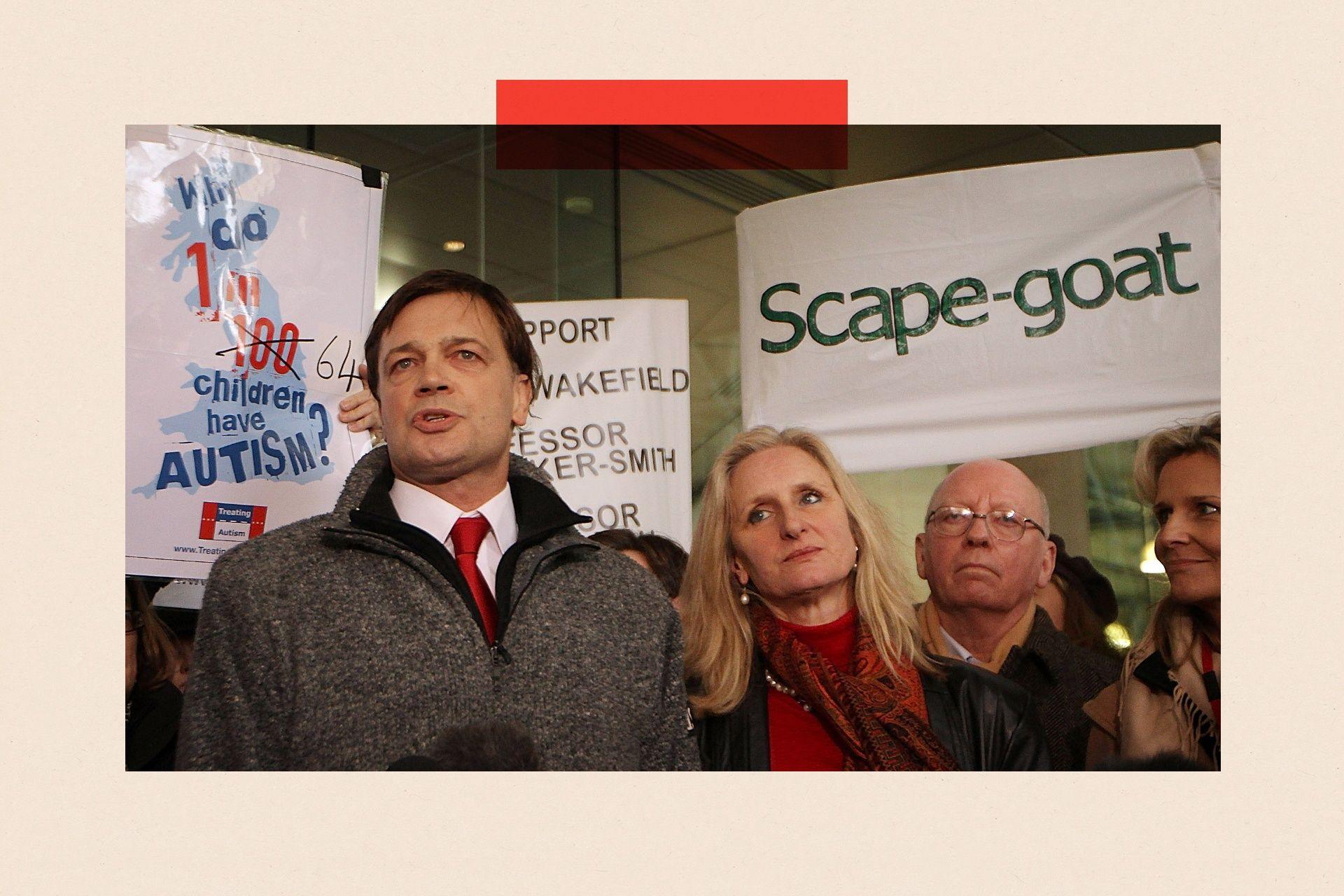 Image source, Getty Images
Other places go further. In Germany, parents can be fined if their children aren’t jabbed against measles. Under Australia’s “no jab, no pay” policy, parents who refuse immunisations are denied certain benefits.
But those tough, coercive policies leave some uncomfortable. “Mandatory vaccination has been steered away from in the UK for good reason,” says Hungerford. For one thing, he thinks, “you risk excluding vulnerable people from things like childcare.”
Others say that barring unvaccinated children from school is only likely to alienate their parents further from healthcare, amplifying their mistrust of authority.
At the Keighley shopping centre, Bill Graham says he doesn’t think a mandatory approach would work in his corner of Yorkshire. “I think it destroys trust. Healthcare in Britain is based on trust. Maybe the trust isn’t quite where it was again 10, 15 years ago, but we’re not going to build that up by mandating healthcare.”
Ongoing mysteries
All that said, experts stress that there’s still a degree of mystery about Britain’s vaccination problem.
Some parents who refuse jabs simply won’t say why – and they’re the same groups (poor, lower levels of educational attainment) who are hard to reach via surveys.
This becomes apparent towards the end of my morning at the clinic, when a couple in their thirties arrive to have their baby weighed. Hussain quickly notices that their 23-week-old hasn’t had any of his recommended jabs – and asks if they might consider it. The couple glance at each other and quietly shake their heads.
They don’t give a reason, and they turn down my request for an interview (the only parents who do so).
Still, Hussain hopes their conversation might have planted a seed. “I’ve sent her some information. Giving them a platform to speak about their concerns can help.
“It’s not us forcing it on anyone. This is a choice.”
Top image credit: Getty Images.
More from InDepth
-
NHS dentistry is rotting. Will the plan to fix it work?
-
Published25 March
-
-
I spent months trying to find out if boosting my gut health could help me age better
-
Published13 January
-
-
What the NHS can learn from the European country that helped more people survive cancer
-
Published12 September 2025
-

BBC InDepth is the home on the website and app for the best analysis, with fresh perspectives that challenge assumptions and deep reporting on the biggest issues of the day. Emma Barnett and John Simpson bring their pick of the most thought-provoking deep reads and analysis, every Saturday. Sign up for the newsletter here
Get in touch
Are you personally affected by the issues raised in this story?