
This post was originally published on this site.
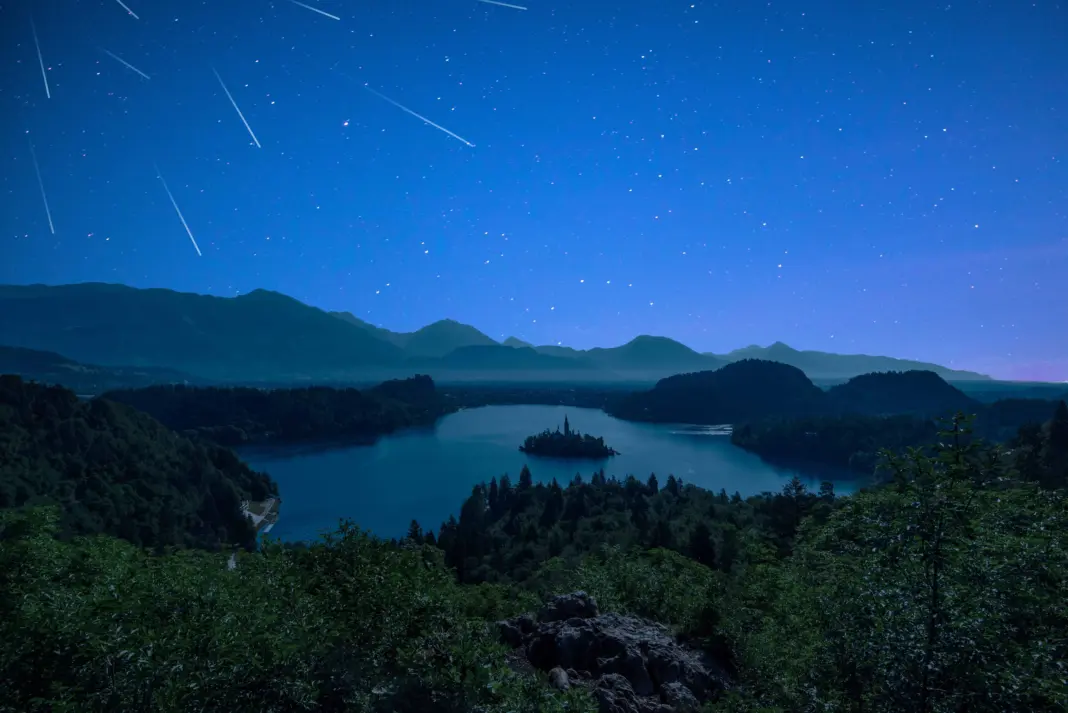
There are few sights that are as awe-inspiring as a sky suddenly alive with shooting stars. During the annual Perseid meteor shower, which occurs in August each year, bright streaks of white, amber, and the occasional emerald flash between familiar constellations, briefly illuminating the darkness before dissolving back into a sky so crowded with stars it hardly seems real. It’s one of nature’s most mesmerizing performances—and all you have to do is look up.
Under ideal dark sky conditions, observers can expect to see anywhere from 50 to 100 meteors an hour during the peak, with activity building after midnight and continuing until dawn. These so-called shooting stars are actually tiny fragments of ancient comet dust—many no larger than grains of sand—slamming into Earth’s atmosphere at roughly 37 miles per second. The result? A steady parade of swift meteors, many leaving glowing trains behind them, punctuated by the occasional dazzling fireball that burns brighter than the stars themselves.
The Perseid meteor shower is widely regarded as the Northern Hemisphere’s premier shooting star display—but this year, the timing just might be cosmic. This week, the shower’s peak will almost perfectly align with the new moon, promising some of the best viewing conditions in years. Here’s everything you need to know.
When is the 2026 Perseid meteor shower?
While the Perseid meteor shower is active from mid-July through late August, it will peak on the night of August 12 through the early morning hours of August 13, when Earth plows through the densest stream of debris left behind by Comet Swift-Tuttle. This year, that peak coincides almost perfectly with a new moon, leaving skies virtually free of moonlight and allowing even faint meteors to shine.
If you can’t get away for Wednesday’s show, this weekend will still offer favorable viewing conditions under the faint light of the crescent moon. That means you can still transform the experience into a last-minute summer road trip, national park day trip, or countryside escape for an unforgettable evening under the stars.

Professional astrologer Steph Koyfman reads your August 2026 horoscope—and spells out how it may shape your travels.
Where can I see the Perseids 2026?
Artificial light remains the single greatest obstacle to seeing the Perseids at their best, as light pollution washes out fainter meteors and dims the Milky Way overhead. But if you leave city lights behind, the night changes dramatically. Suddenly, constellations will sharpen into view, and meteors appear far more frequently. Basically, the darker your surroundings, the richer the experience becomes.
Across the Northern Hemisphere, travelers are spoiled for choice: In the United States, some of the country’s most celebrated dark skies can be found at Bryce Canyon National Park in Utah, Big Bend National Park in Texas, Cherry Springs State Park in Pennsylvania, and Headlands International Dark Sky Park in Michigan.
In Canada, one of the best places to see the Perseids will be from Jasper National Park in Alberta. Meanwhile, Europe is home to internationally recognized dark-sky landscapes, including Galloway Forest Park in Scotland, Bannau Brycheiniog (Brecon Beacons) National Park in Wales, and Portugal’s Alqueva Dark Sky Reserve. Together with hundreds of other accredited parks, reserves and communities recognized by DarkSky International, these destinations preserve the natural darkness that allows the Perseids to truly shine.
Where to stay
Where to book in the US:
Where to book outside of the US: