
This post was originally published on this site.
Thousands evacuated in Crete as Europe battles wildfires
-
Published
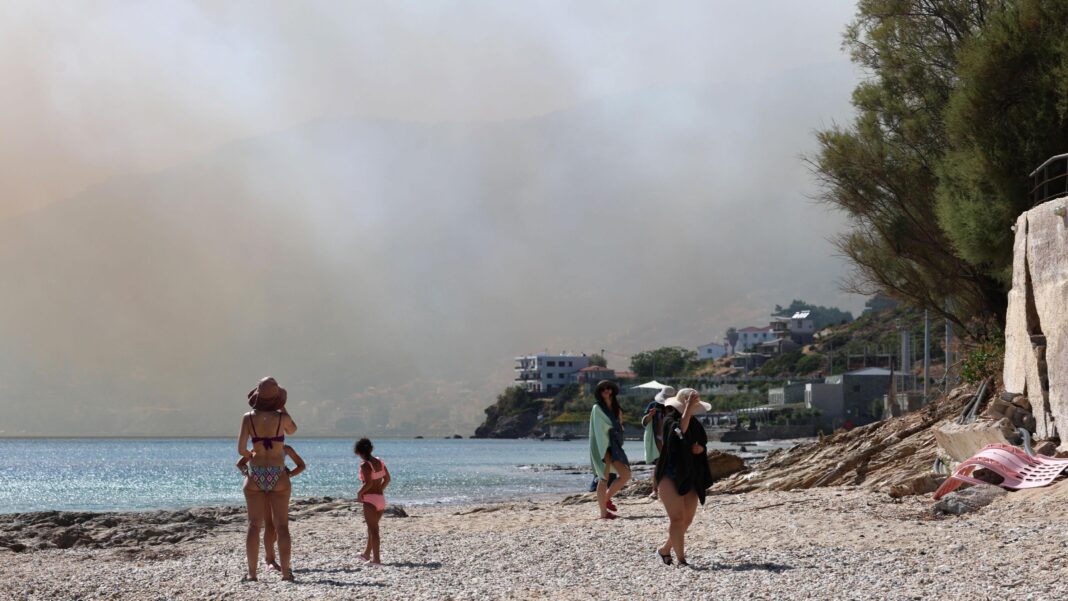
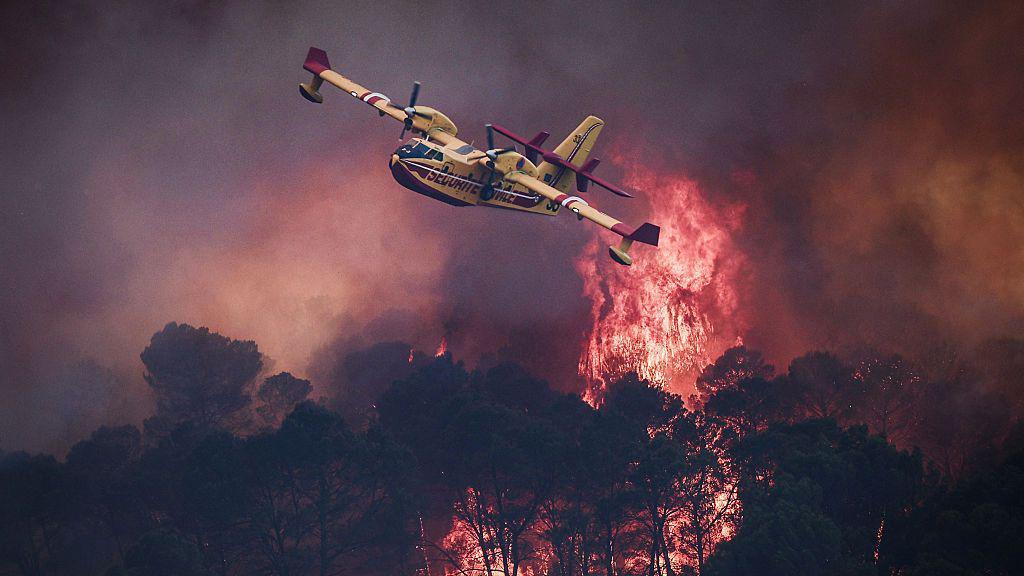
Thousands of people have been evacuated on the Greek island of Crete as wildfires fanned by strong winds menace tourist resorts and villages.
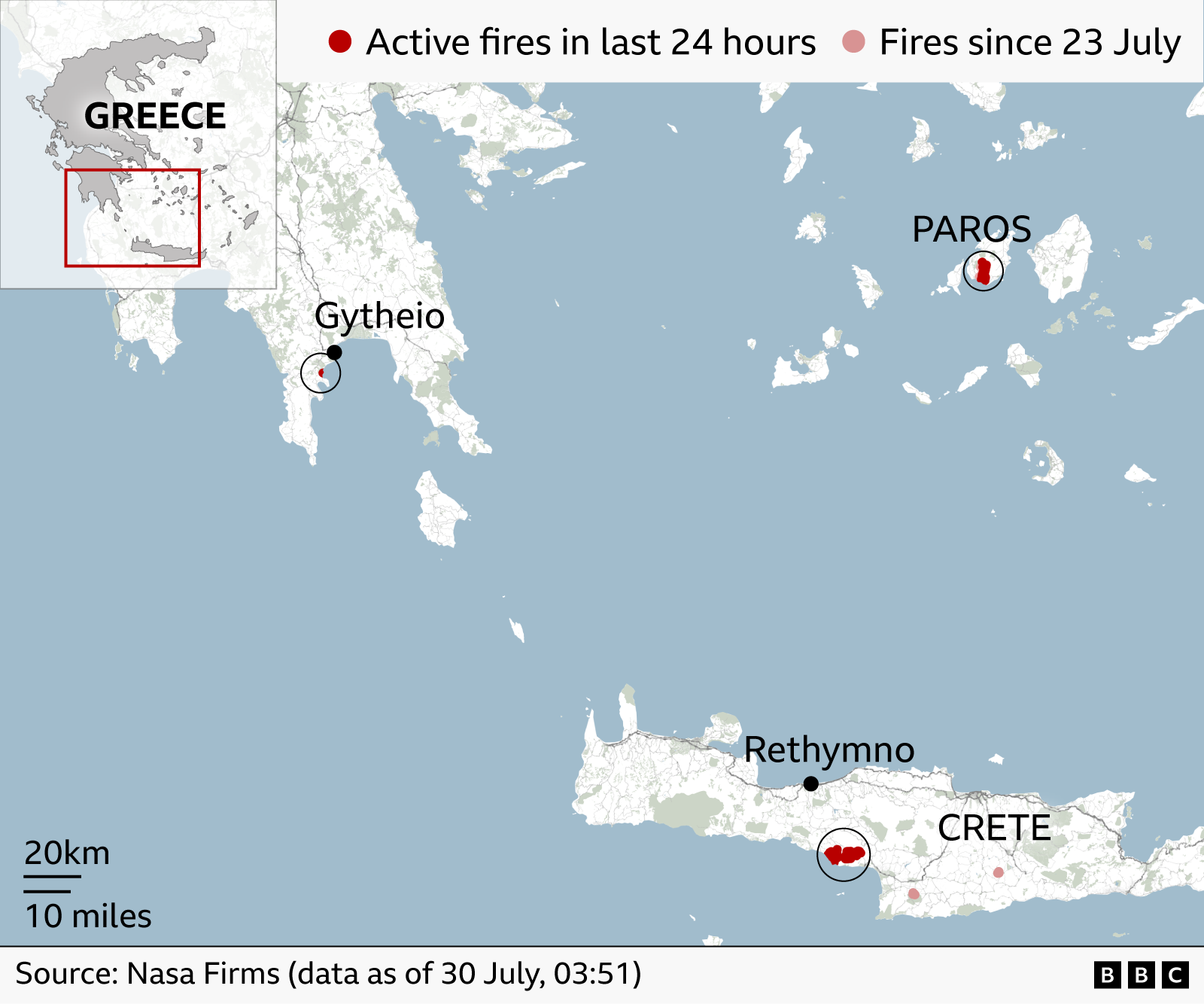
Two firefighters died on the island on Wednesday when they became trapped while tackling a fire near Krya Vrysi in the Rethymno region. A third firefighter died on the Greek mainland, near the port town of Gytheio in the Peloponnese.
As gusts reached 125km/h (77mph) on the island, around 8,000 people were evacuated from their homes overnight but were later allowed to return.
Greece is among many European countries facing devastating fires and drought.
Several fires have continued to burn in Spain and Portugal, although Spanish Prime Minister Pedro Sánchez declared an end to the national emergency for wildfires in the Ávila and Madrid regions.
In south-west France some residents have been able to return to their homes after a major wildfire in the Gironde region.
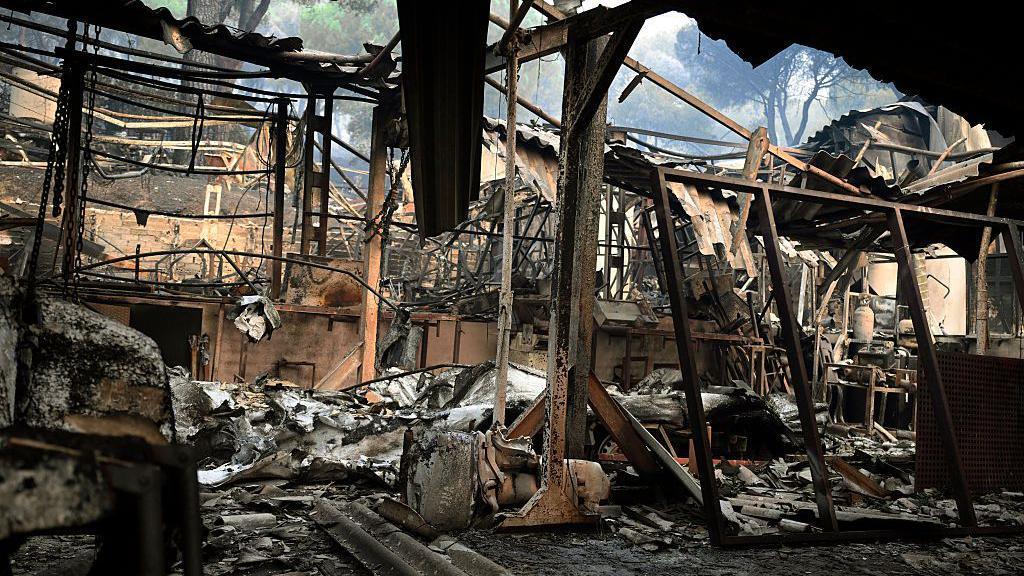
The fire raging in Crete broke out in the Rethymno region on Wednesday and has since spread rapidly, destroying homes and agricultural land. It remains one of the biggest fires currently active on the island and is still burning out of control.
There was no clear picture of the destruction so far, Rethymno’s deputy regional governor Maria Lioni said, adding that containing the fire was the main priority.
Lioni described Wednesday as a “dark day” for the region and said gusts overnight reached up to 11 on the Beaufort scale – a wind force categorised as “violent” – fanning the flames and hampering containment efforts.
Some of those evacuated in Rethymno were moved into a temporary shelter.
“It was frightening,” British tourist Peter Wood told news agency Reuters the shelter. “We could see the flames in the hills above the village, and the police and firefighters were just telling everyone to leave straight away.”
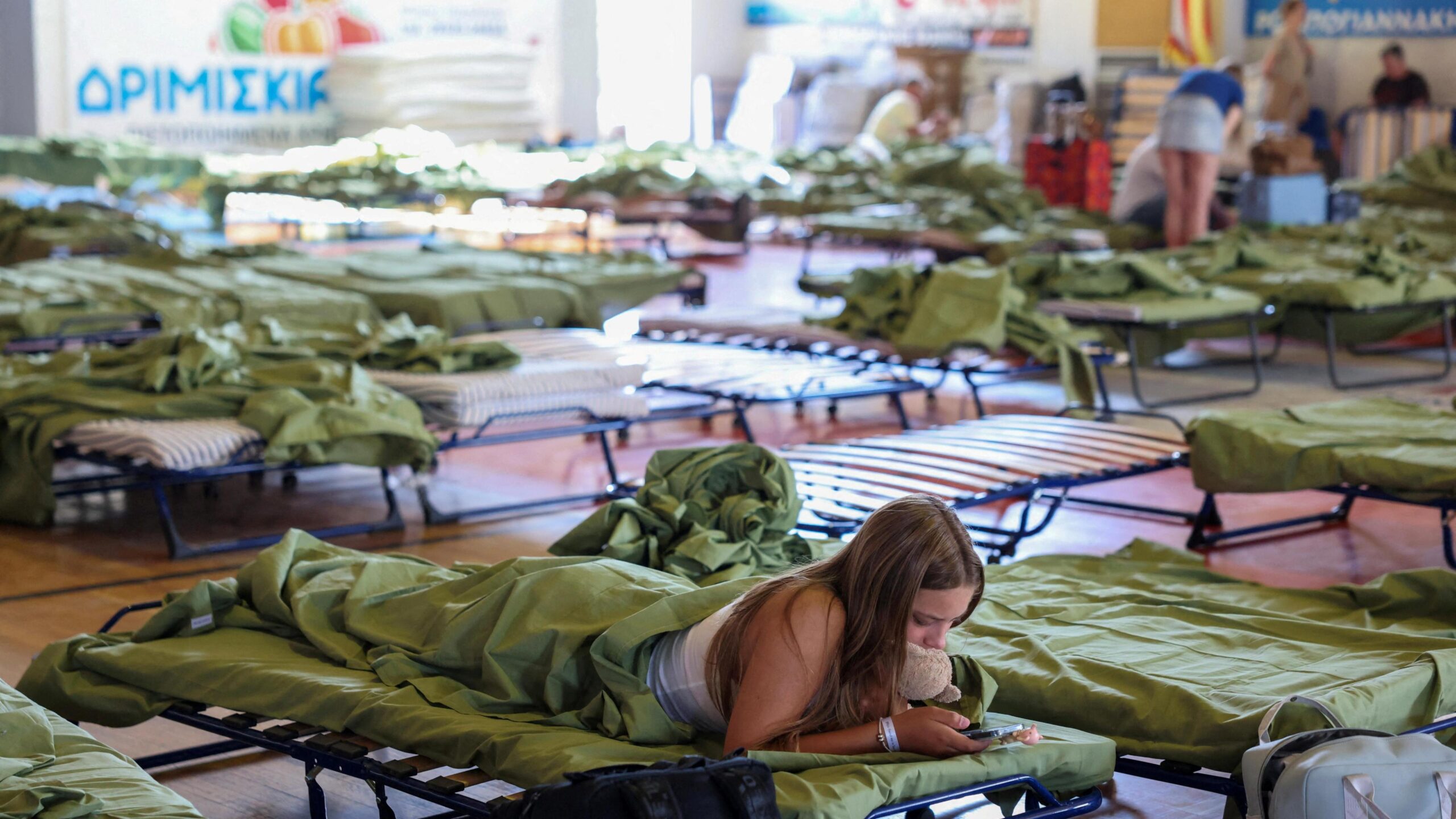 Image source, Reuters
The large fire occurs during one of Crete’s busiest months for tourism. Hundreds of firefighters have been deployed to the region to battle the blaze.
Hellenic Fire Service chief Theodoros Vagias expressed his condolences for the two firefighters who died on Wednesday, naming them as 58-year-old Emmanouil Stratidakis and Pantelis Diamantakis, 25.
Both will be buried on Thursday, the statement added.
-
Three Greek firefighters die as wildfires threaten parts of southern Europe
-
Published11 hours ago
-
-
France and Spain wildfire witnesses describe ‘wall of flames’, fear and stress
-
Published2 days ago
-
Meanwhile, wildfires have erupted in the north-western Spanish provinces of Zamora and León, not far from the border with Portugal, with more than 1,000 people evacuated.
Five people were injured in a fire in the eastern town of Valpaços in Portugal, according to local reports.
A major fire that consumed an area in excess of 66,000 hectares to the west of the Spanish capital, Madrid, and caused tens of thousands of people to be evacuated has stopped spreading, allowing some residents to return home.
As he ended the national emergency in the area, Pedro Sánchez urged “extreme caution” during the fourth heatwave of the summer in Spain.
The fire in Ávila, which has burned more than 43,000 hectares over the past week, is now considered the largest recorded wildfire in Spanish history.
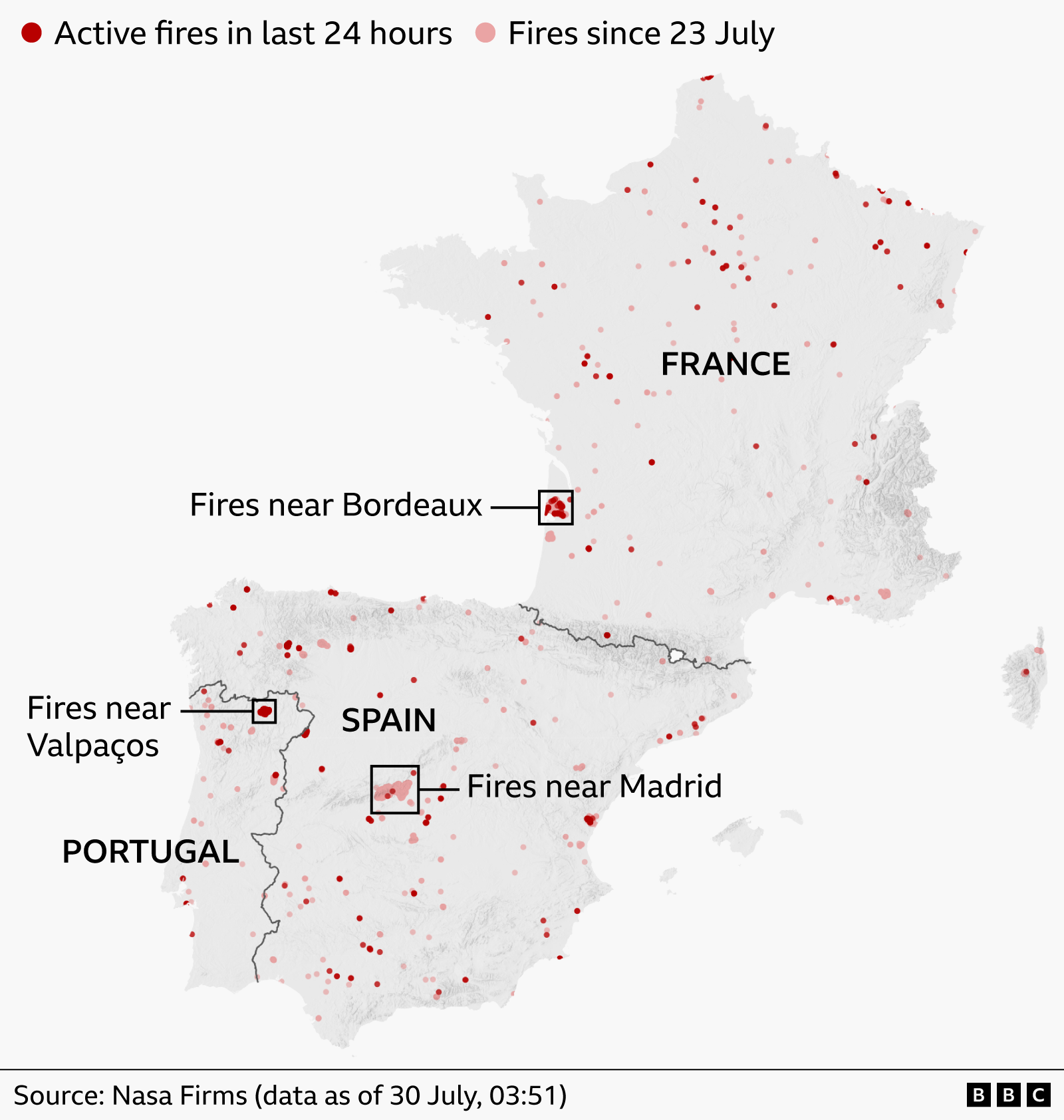
A small amount of rain fell near Bordeaux in France on Thursday, raising hopes that the Gironde wildfire that has burned an area larger than the US city of Detroit and destroyed 240 homes might soon be over.
The region’s fire service said it was “reasonably optimistic” given that the fire had not grown in size since the weekend.
Around 84,000 of the 220,000 displaced residents were allowed to return home on Thursday, according to French reports.
It is estimated that more than 90,000 hectares of land across France have burnt this year – higher than any other year on record, according to data from the European Forest Fire Information Service.
In Spain, more than 200,000 hectares have burnt in 2026 – roughly five times above the average for the time of year. The area of land ravaged in Portugal is also higher than usual for this point in July.
The European fire season typically extends into August and September – and with more hot weather on the way in the coming days, these figures are likely to keep rising.
Most wildfires are started by humans, whether deliberately or accidentally, but climate change is strengthening weather conditions conducive to fires spreading.
Last winter was mild and wet, encouraging vegetation growth, which has then dried out in successive heatwaves, generating tinder-dry fuel for wildfires.
Some researchers have also warned that the Mediterranean’s forests and scrublands are not being properly managed – leaving plenty of vegetation as fuel for fires.
Forecasters say fire-prone conditions are expected to spread towards central Europe, with Greece and Turkey among the countries worst affected.
In Turkey, hundreds of homes have also been evacuated but the majority of fires that have broken out mainly in the south have been brought under control, authorities say.
Get in touch
Are you in an affected region? If it’s safe to do so, get in touch.
-
-
Published1 day ago
-
-
-
Published1 day ago
-