

This post was originally published on this site.
Transplanted pig kidney works in US man’s body for record 271 days
 Image source, Kate Flock/Massachusetts General Hospital
-
Published
A kidney transplanted from a pig has worked inside a patient for 271 days – the longest on record, say US doctors.
Tim Andrews said the transplant gave him “hope” and spared him months of needing to go to hospital to have his blood filtered by a dialysis machine.
The team at Mass General Brigham hospital say their work shows pig organs can be used as a “bridge” until a human transplant becomes available.
But the pig organ eventually failed and was removed so Andrews needed a short bout of dialysis before a donor was found.
Doctors and scientists are exploring xenotransplantation – using organs from other species – due to shortages of organs for transplants.
In the US, around 100,000 people are waiting for a kidney while only 25,000 transplants occur each year. More than 7,000 people in the UK are on the kidney transplant list.
Andrews was told it could take seven years to get to the top of the list, but that people live only five years, on average, on dialysis.
“I had a little bit of a shortage of time… it becomes very depressing,” he said.
But he described the idea of a pig transplant as “hope” and the “light at the end of the tunnel”.
“Hope is the biggest thing, the chance to be free from the [dialysis] machine and live your life.”
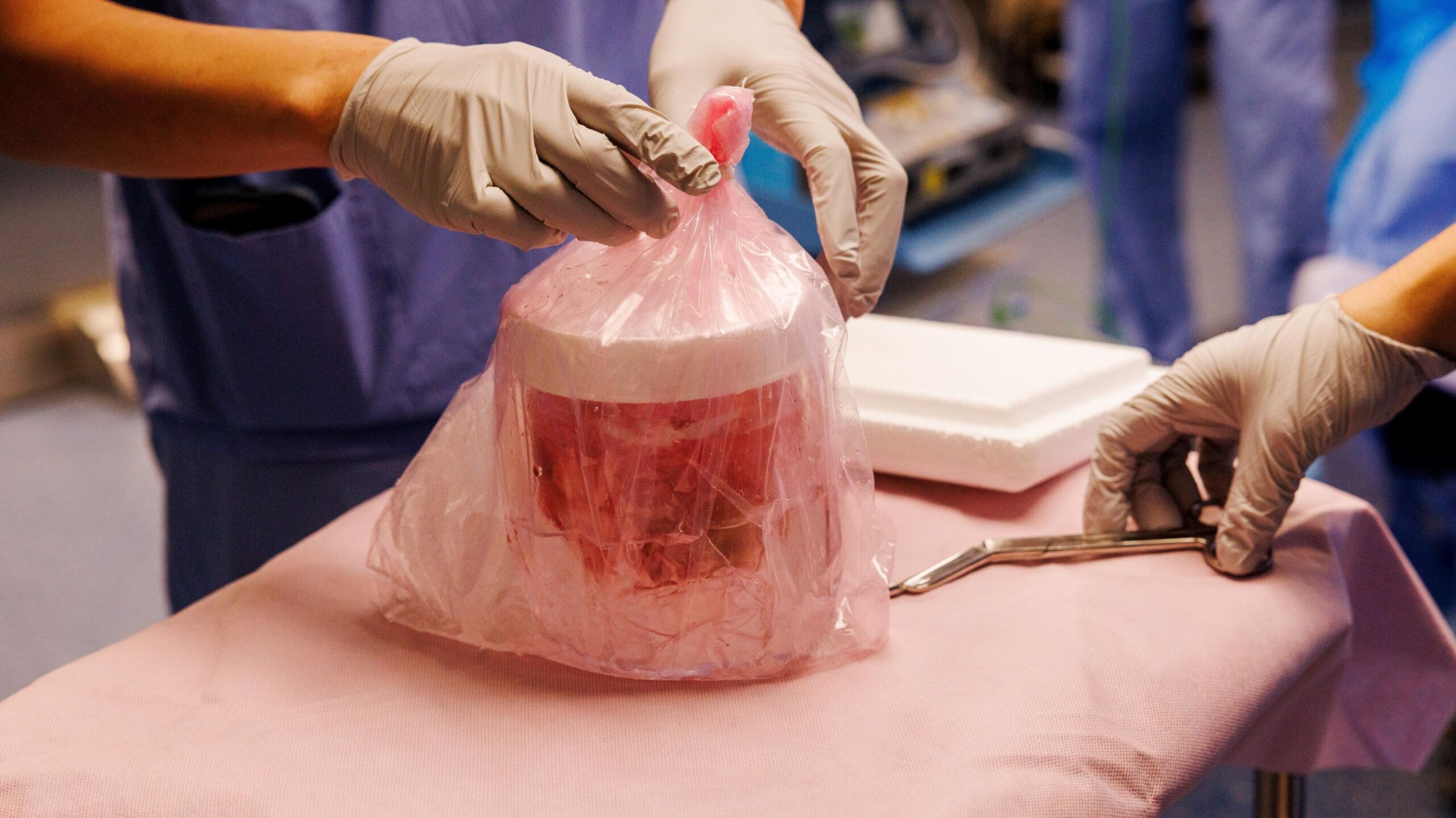 Image source, Kate Flock/Massachusetts General Hospital
 Image source, Kate Flock/Massachusetts General Hospital
 Image source, Kate Flock/Massachusetts General Hospital
Pigs are seen as the ideal animal for xenotransplantation. Their organs are roughly the right size and there have been years of experience farming them.
But you cannot just pop down to the farm and take a kidney from a pig and put it into a person. The human body would immediately identify the organ as foreign and launch a devastating immune assault that would destroy the kidney. It would turn black in minutes as holes are ripped in every cell and the organ clots from the inside.
So researchers have developed Yucatan miniature pigs that have gone through 69 genomic modifications to “humanise” their organs.
These modifications strip out some features of pig cells that our immune system spots and attacks; add some human DNA that acts like camouflage netting to help hide the pig tissue from the immune system and further tweaks disable viruses that hide inside pig DNA to prevent infection.
-
Are pigs the future of organ transplants?
-
Published13 March 2022
-
Andrews had end stage kidney disease as a result of type 2 diabetes and his kidney’s were failing.
He was 66 years old when he had the xenotransplant on January 25, 2025.
The transplanted pig kidney worked immediately, according to details just published in the Lancet medical journal, external.
The kidney continued to function for 271 days until it was removed in October that year. Tim then needed dialysis for 82 days until he had an organ from a donor in January of this year. That organ has been working well.
Dr Leonardo Riella, from the centre for transplantation sciences at Mass General Brigham said the shortage of organs available for transplant meant ” we are in a crisis”.
“We are working really hard to bring hope and we truly feel that xenotransplantation can be an alternative for patients who don’t have a living donor where we could potentially bypass dialysis and get them to a transplant,” he said.
-
Man who received first pig kidney transplant dies
-
Published12 May 2024
-
There were early signs Andrews’ organ was being rejected by the immune system, but that was successfully treated by adjusting his medication.
However, after around six months the blood vessels in the kidney started to become damaged and the organ inflamed and then it started to fail.
It is not clear exactly why as there were no signs of antibodies attacking the pig kidney.
In their Lancet write-up the doctors state: “This case illustrates both the promise and the remaining challenges of clinical kidney xenotransplantation.”