
Treasury will not commit to reducing welfare bill before next election
To play this video you need to enable JavaScript in your browser.
This video can not be played
-
Published
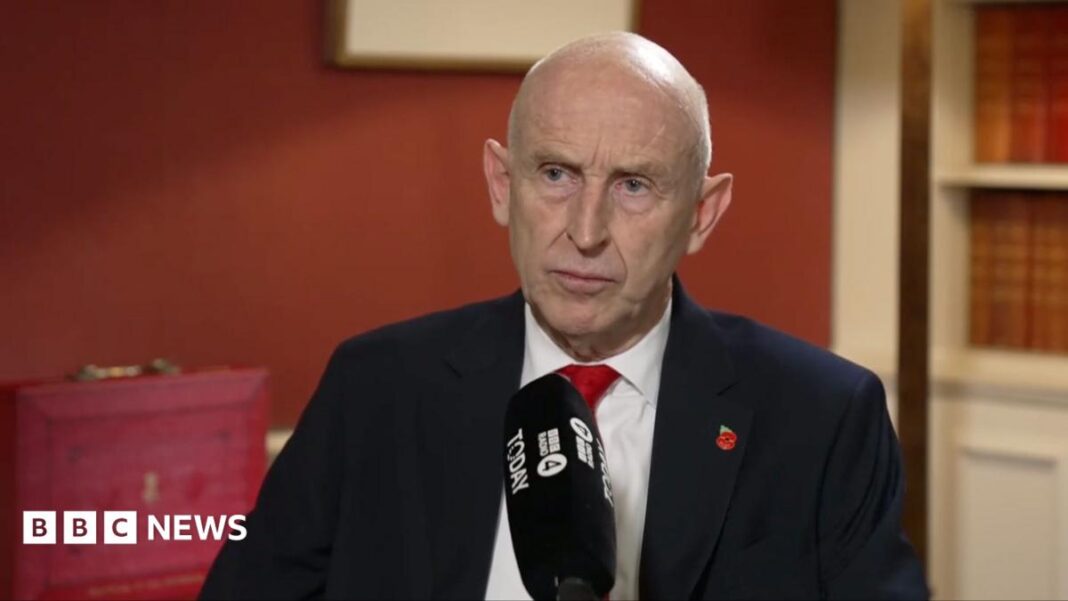
The Treasury is disputing that Chancellor John Healey suggested to the BBC that the benefits bill will be cut before the next general election.
When Healey was asked by the Today Programme on Radio 4 whether there would be a cut in the bill before polling day, he said: “There will be, there will be a reduction in the benefits bill, we’ll do that in a Labour way.”
But several Treasury sources took issue with this being interpreted as a promise to do so by the next election, with one suggesting Healey was explicitly attempting to avoid that impression being left.
This suggests, instead, that ministers are not committed to cutting the benefits bill by the next election.
The chancellor told Today: “I have said clearly and the prime minister has said as well, we have to bring the benefits bill down. You don’t do that by crude cuts, especially when people are feeling the cost of living pressures.”
He said two “big reports” next month would help the government “map out the way that we need to change the system for the long run” and the government has “been reducing the rate of increase in the welfare bill”.
Healey said the current system was “unsustainable” and the government had a “moral duty” to help the almost one million young people out of work, education or training.
He said young people would be expected to take up offers of work or training “and that’s the way we can take welfare bills down in the long term”.
-
Budget 2026: Key points at a glance
-
Published20 hours ago
-
-
What the Budget offers for under 25s – and what it leaves out
-
Published17 hours ago
-
Asked whether would be cuts in welfare before the next election, the chancellor said: “There will be a reduction in the benefits bill, we’ll do that in a Labour way and we’ll do that because it is simply not good for Britain or progressive to have a bigger and bigger benefits bill.
“And I feel a moral duty to deal with these youngsters that have been written off by previous governments.”
A review of disability benefits co-chaired by Labour minister Sir Stephen Timms and one on young people not in education, employment or training (Neet) led by former minister Alan Milburn will be published in November.
The government is then expected to respond by the end of the year and publish a policy document setting out proposals, and legislation next year.
The Conservatives accused Labour of being “addicted to welfare”, while Reform UK said the Budget did not address the “ballooning” benefits bill. Welfare spending is forecast to rise this year by £19bn to £353bn.
Watchdog and forecaster the Office for Budget Responsibility (OBR) said this figure is expected to rise to £431bn in 2031/32, driven primarily by health-related and pensioner benefit spending.
Of the figure forecast for 2031/32, £209.8bn is on pensioners, including the state pension and winter fuel payments, while £110.7bn is on universal credit and legacy equivalents and £69.6bn is on disability benefits such as personal independence payments.
The government has already pledged to reform the existing state pension triple lock from 2030, and more proposals and changes to the welfare system are expected to emerge in the coming months.
‘Out-of-control welfare system’
The chancellor’s remarks came after Conservative Party leader Kemi Badenoch responded to the Budget by saying the benefits bill was “going up by tens of billions of pounds because this government has put welfare first”.
She said the country was “overspent, overborrowed, overtaxed, and drowning in an out-of-control welfare system”, adding that the Budget was “not bold enough”.
Liberal Democrat leader Sir Ed Davey said welfare reform “needs to be done right”, adding this should involve “cutting the bill by helping people into work and giving people the care and support they need so that they can work”.
Helen Miller, director of the Institute for Fiscal Studies, noted the government still has “many difficult decisions” to take after not fleshing out several big issues, including disability benefits and support for young people.
-
Your pay, energy bills and savings: How the Budget affects you
-
Published20 hours ago
-
-
Tories would prevent long-term jobless spending benefits on alcohol and cigarettes
-
Published24 September
-

Sign up for our Politics Essential newsletter to keep up with the inner workings of Westminster and beyond.