
This post was originally published on this site.
Trust, grief and betrayal: Inside the Legacy funeral case
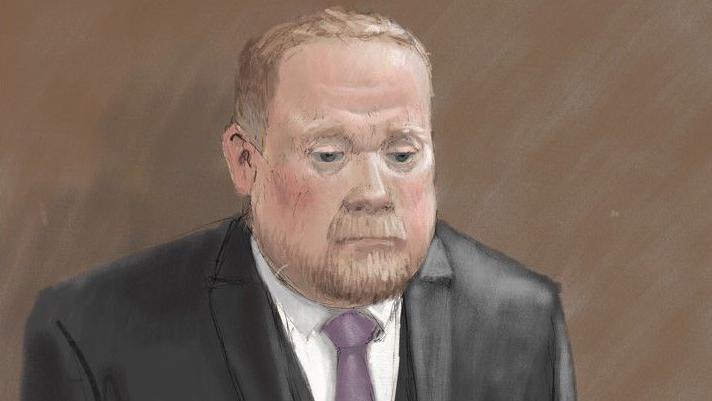 Image source, Nick Lewis
-
Published
This story contains details some might find distressing.
I’ve reported on many criminal cases before, but nothing like that of undertaker Robert Bush.
Now the case is over, we can report on what it was like to follow a story that began when whistleblowers raised concerns about Legacy Independent Funeral Directors with Humberside Police in March 2024.
Bush, the former owner of Legacy in Hull, admitted 67 offences, including fraudulent trading, denying 30 people a decent and proper burial, and giving some bereaved relatives the ashes of strangers.
The scale of Bush’s offending was extraordinary. Police identified 300 victims.
Some were families who had paid Bush for funeral plans and services.
Others were relatives left questioning whether the ashes they had received really belonged to their loved ones.
There were also the deceased, whose bodies he had been trusted to bury or cremate with dignity.
Bush’s scores of victims meant seats in courtroom four at Hull Crown Court for his five-day sentencing were in high demand.
Every day, diligent ushers stood like bouncers at the court’s heavy, soundproof doors. They ensured families were given priority to see the man who wronged their loved ones face justice.
Court staff escorted them in with boxes of tissues, paper cups of water and a kind hand on their arms. Some were wiping away tears before they even walked into the room.
Fearful of what they were about to hear.
Their worries were not misplaced. The details of Bush’s crimes were harrowing.
Among them, discarding stillborn premature baby Sunny Beverley-Conlin on the floor in a paper bag, and abandoning one victim naked on the floor to “let nature take its course”.
They are descriptions one grieving mother said “will never leave me”.
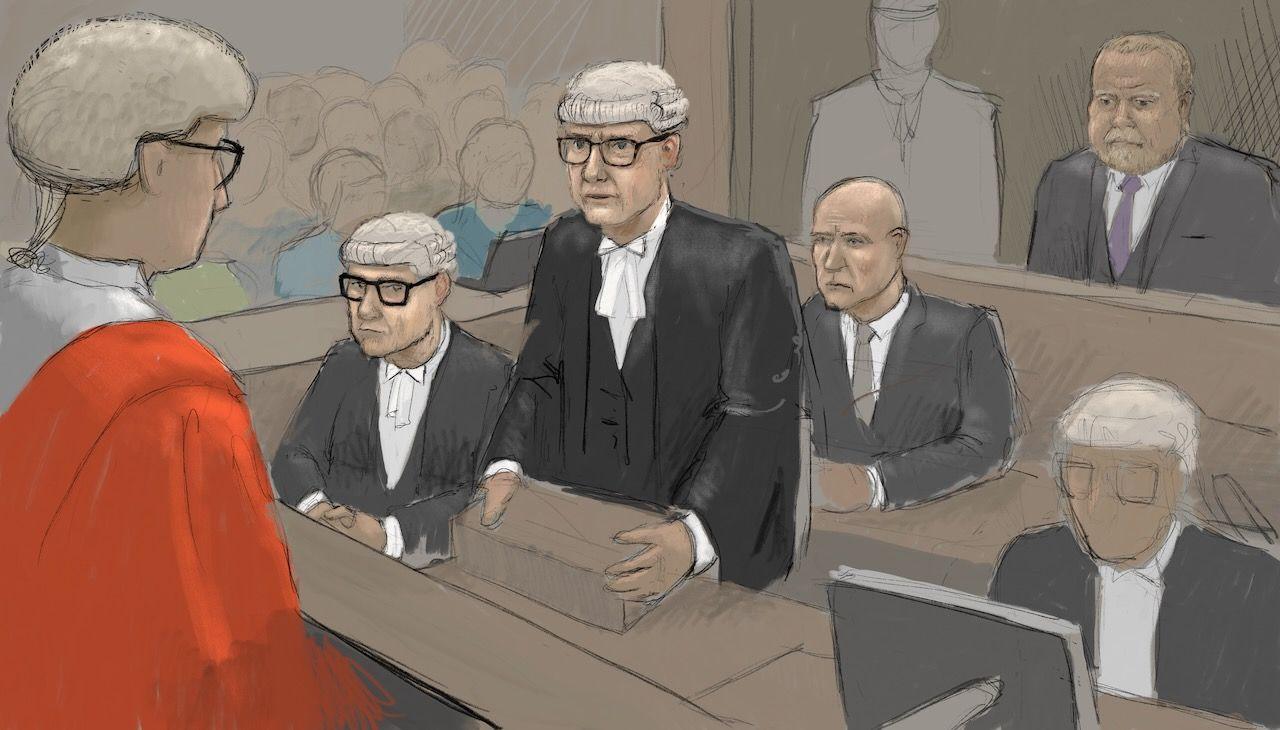 Image source, Nick Lewis
Judge Mr Justice Hilliard admitted when sentencing Bush there was no precedent for the case – probably why, among the gathered news journalists last week, there were TV producers planning to pitch shows to major streaming platforms.
Members of the press from across the world were dispatched by news channels, radio programmes, podcasts and newspapers to catch a glimpse of Bush, who until the first day of his sentencing hearing, did not break his silence.
Most journalists were sent to a nearby courtroom to watch proceedings on a large television screen, making more space for the affected families.
Throughout the case, police officers and the justice system appeared determined to place families affected by Legacy at the heart of proceedings.
Bush failed to give the families similar consideration.
-
Moment police officers set foot in ‘horror scene’ funeral home
-
Published3 days ago
-
-
Police fear further victims in funeral home horror
-
Published1 day ago
-
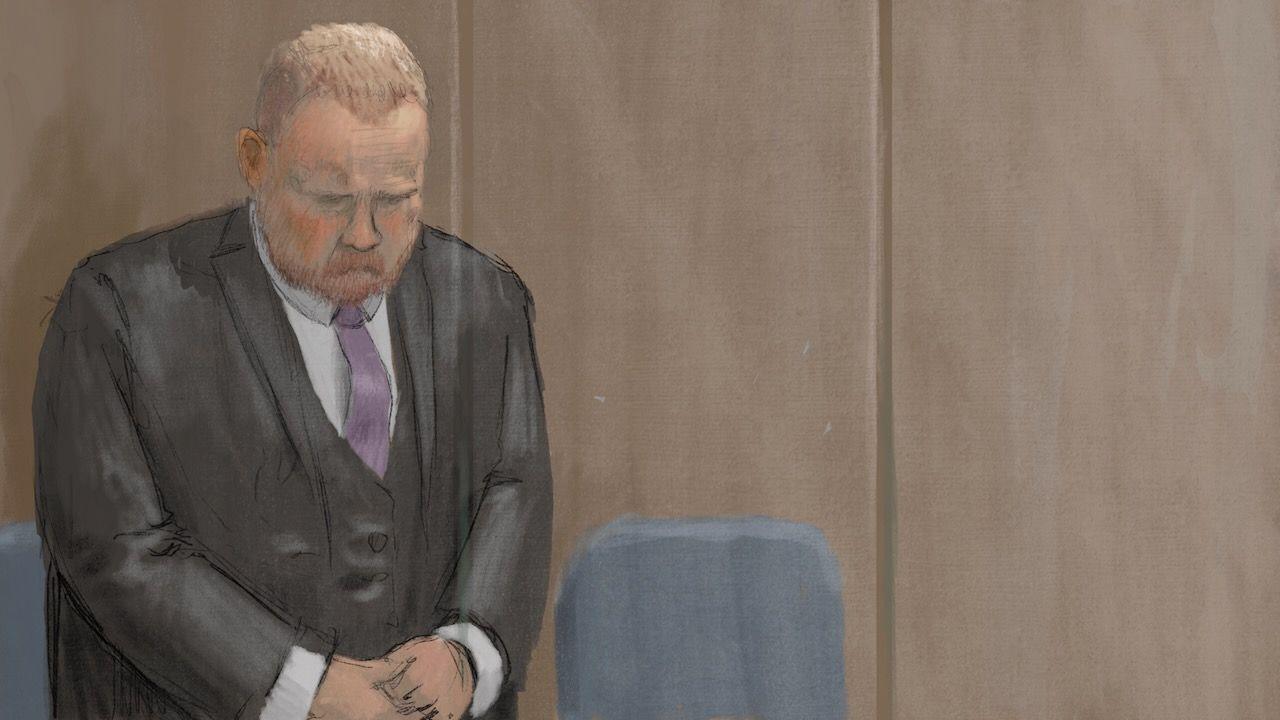 Image source, Nick Lewis
In his sentencing remarks, the judge acknowledged Bush “caused anguish and pain on a scale beyond comprehension”.
“The defendant was so preoccupied with his own enrichment that he behaved in a shocking and disgraceful way,” he said.
Bush’s apparent detachment was striking throughout all the court proceedings I witnessed.
The family man appeared disconnected from the pain he inflicted on his victims, from the grieving families he betrayed and from the local community who saw him fraudulently obtain hundreds of thousands of pounds to fund a luxurious lifestyle of holidays, expensive hobbies and jewellery.
In October 2025 Bush pleaded guilty to about half of the 67 charges.
In simple terms, he admitted defrauding families out of genuine funerals and giving them the wrong ashes. But – at the same time – denying he had failed to provide their loved ones with a proper burial.
It left families, and journalists, scratching their heads.
How could both be true?
It left families facing an eight-week trial which was scheduled for October 2026.
Attempts to stop the trial
In a court hearing in December 2025, Bush’s legal team tried to persuade the judge to throw his case out.
They claimed he could never have a fair trial because the sheer number of funerals he had conducted meant an unbiased jury could not be assembled.
Bush had hosted 2,000 funerals, they said.
But the judge demanded to know the postcodes where Bush had conducted funerals and explored whether jurors could be brought in by coach from outlying areas.
It was not Bush’s only attempt to evade justice.
His team’s next move was to argue intense media attention meant a fair trial was impossible and the proceedings should be stopped.
The judge unequivocally rejected those arguments and said the coverage had been “fair, accurate and within the rules”.
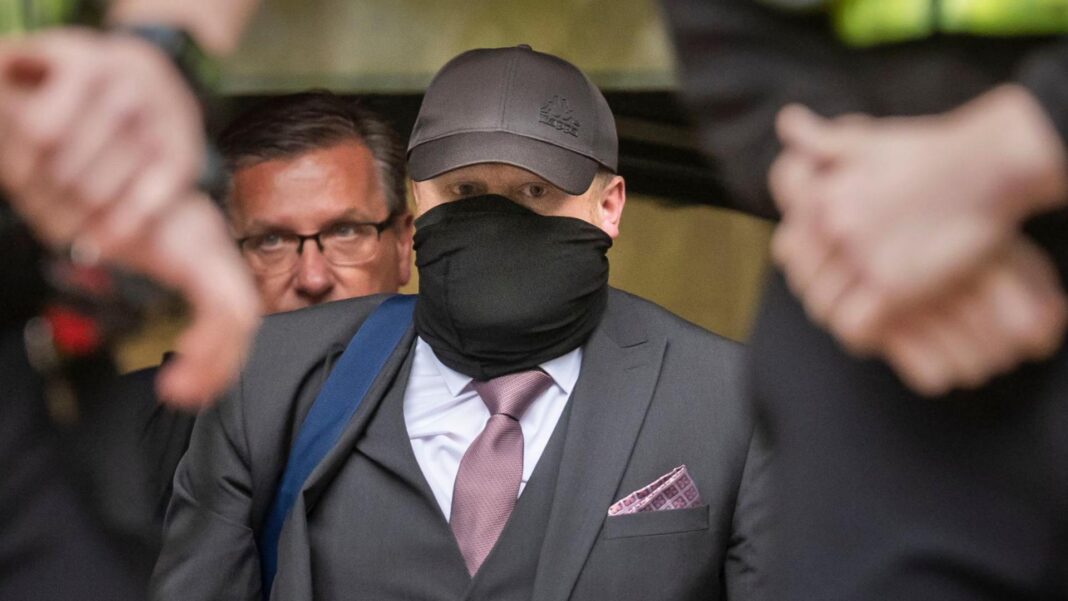
When Bush changed his plea to guilty to all 67 charges in April 2026, he walked into court as he had at every previous hearing – refusing to let families see his face.
He wore a black ski snood and a black baseball cap, masking so much of his face that only his eyes were visible.
One family member told me this left them feeling “utterly disrespected that he refused to look me in the eyes”.
While some families were relieved they would be spared the ordeal of a trial, others told me they had wanted to see him questioned in court about what had happened to their loved ones.
For journalists covering the case, the prospect of a late change of plea was rarely far from our minds. At hearing after hearing, we arrived with preparations for multiple outcomes.
Unanswered questions
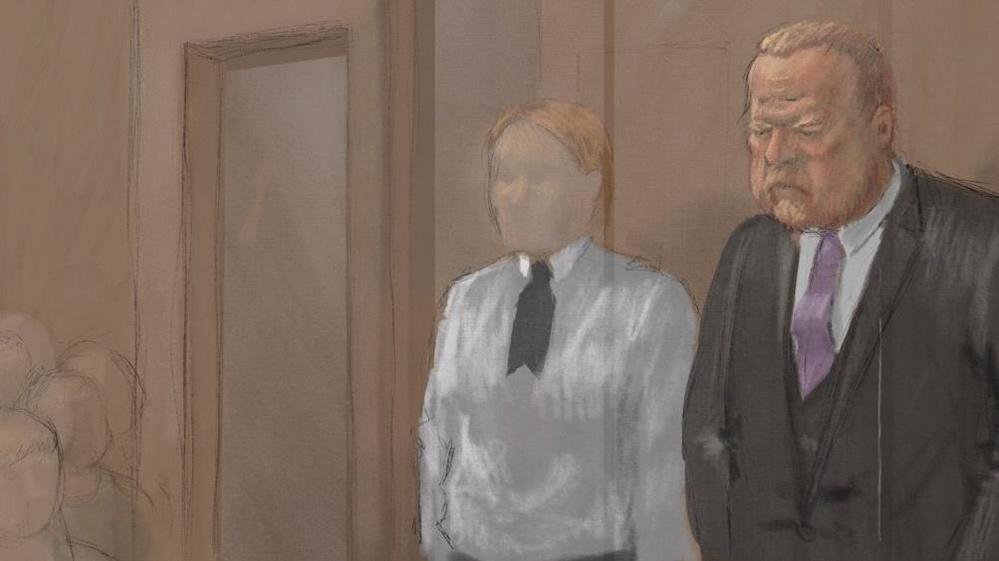 Image source, Nick Lewis
Bush’s guilty pleas brought the case closer to a conclusion, but many wondered whether the sentencing hearing would provide answers.
This was the point at which his legal team would present mitigation and explain the circumstances behind his offending.
Outside court on the first day of the hearing Bush said he was sorry to a BBC reporter, an apology which was repeated by his defence in court.
Throughout the five-day sentencing hearing, which began on 27 July, Bush looked down at the floor for the majority of the time.
Again, he seemed detached from the emotions of those delivering victim impact statements in front of him.
In the courtroom he spoke only to confirm his name on the first day.
Bush’s own barrister Richard Wright KC said “greed, incompetence and an inability to keep up with his own failings” had driven the crimes.
After three-and-a-half days of victim impact statements the mitigation was brief.
The sentencing was a monumental day for the families and I have to admit feeling nervous for them after talking to them since the day the story broke nearly two-and-a-half-years ago.
Their anticipation was palpable.
I wondered how they would react – and would any sentence be enough?
As the judge passed down a 20-year prison sentence, he said he did not think he had “ever known offences affect so many people – and so many people so deeply”.
Betrayed at most vulnerable
What stayed with those who heard the evidence was not the criminal offences alone that hurt families – it was how Bush betrayed them at their most vulnerable.
He behaved in a way utterly at odds to their expectations of a funeral director.
As Jasmine Beverley, mother of stillborn Sunny told him: “I trusted you. I have to live with that.”
Hull Crown Court is an unassuming setting for such high drama.
There is no oak panelling, no green leather-bound legal textbooks like the courtrooms you see on TV dramas.
But while the setting was ordinary, the consequences of this case were not.
It highlighted an unregulated funeral industry in England, Wales and Northern Ireland and raised questions about whether two local authorities fulfilled all of their responsibilities regarding the registration of deaths.
It prompted comment from the prime minister and a promise to review laws governing the funeral industry.
And after sentencing, the families’ dignified conduct was remarked on by the judge.
Outside court they hugged and supported each other and stood shoulder to shoulder demanding regulation.
A community united in grief, and in hope. Hoping others never have to endure their pain.
If you have been affected by issues surrounding bereavement, information is available via BBC Action Line, including contact details of organisations that can help.