
This post was originally published on this site.
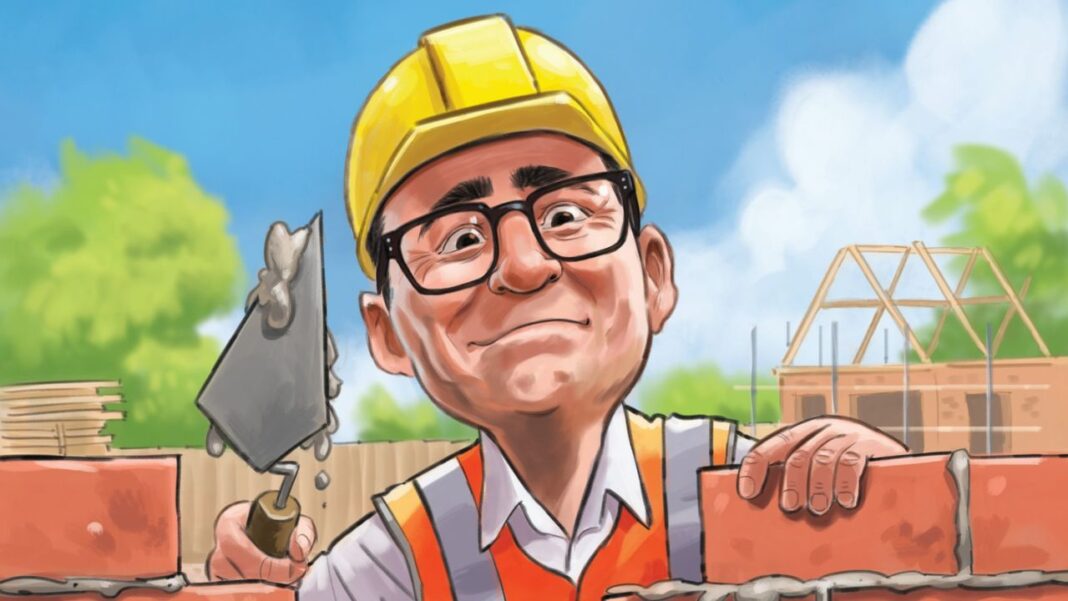
The past few years have been very tough for UK housebuilders and their shareholders, says Jo Rands, a portfolio manager on the UK Equity Income, UK Managers’ Focus and UK Rising Dividends strategies at ClearBridge Investment. The government has pledged to build 1.5 million homes in five years, but various headwinds, including cost increases and higher interest rates, have caused UK housebuilders’ shares to plunge over the past two years. Yet with Andy Burnham entering No. 10 with talk of building more council houses, and even bringing back a form of Help to Buy, their shares have rallied recently. Will this continue?
Why are UK housebuilders struggling?
At the core of the British housing crisis is the fact that we’re simply not building enough housing, either in the public or the private sphere. David Crosthwaite, chief economist of the Building Cost Information Service, notes that housebuilding peaked in 1970, with nearly 400,000 homes completed, of which just under half were council houses. Fast-forward half a century and only 200,000 homes were built last year, of which just 4,000 were council housing. Essentially, “you have a diminishing supply of housing, particularly social housing, at a time when the population is continuing to grow at a strong rate”.
Unsurprisingly, the gap between housebuilding and population increase has created a huge backlog. There are several ways of estimating this unmet demand, says Edward Clarke, an associate director at planning consultancy Lichfields UK. When you take into account what statisticians call “concealed households” – people who would like to start a household, but are currently “sofa surfing”, or living with their friends and parents – then “we really need to build two million more homes”. That might seem like a shockingly large number, but Clarke thinks it could even be an underestimate. Getting the homes-to-population ratio in line with continental Europe would require even more construction – around 2.4 million additional homes.
Sign up to Money Morning
Don’t miss the latest investment and personal finances news, market analysis, plus money-saving tips with our free twice-daily newsletter
Don’t miss the latest investment and personal finances news, market analysis, plus money-saving tips with our free twice-daily newsletter
It isn’t just young people, and those on the margins, who are suffering as a result. The shortfall in supply means that houses in the UK are less affordable, in terms of the ratio of prices to incomes, than they are in countries such as France and Germany, as Jeremy Matallah, co-founder of rent-to-own company Keyzy, notes. Just to meet the immediate needs of the market, “we should be building around 300,000 homes a year”, roughly a 50% increase from the 200,000 homes a year that we are building at the moment.
Hoarding land and restrictive planning rules
Most experts agree that the big factor behind the lack of supply is the planning system. In 2024, the Competition and Markets Authority, the competition regulator, was called in to investigate allegations that builders and developers were hoarding land excessively, says Paul Smith, managing director at The Strategic Land Group. It found that the market for land was not working properly and that the planning system was such a fundamental barrier to the delivery of new houses that it felt compelled to talk about it, even though this was outside its original remit.
The planning system acts as a block on development in two main ways, says Smiths. Firstly, there simply isn’t enough land earmarked for development, with only a third of councils in England even bothering to have up-to-date local plans. Worse, the process for dealing with individual planning applications, which is supposed to act as a “safety valve” given the lack of local plans, is too subjective (and therefore unpredictable) as well as increasingly complex.
Even when decisions are made, the process is getting ever slower due to a shortage of town planners. Indeed, “applications for new homes take more than three times longer to be approved than they did a decade ago, with the median time around 349 days”, says Smith. This matters, as even putting in a planning application can be expensive for a developer, costing around £150,000-£200,000 per application, even if the application is not successful. “If the process was speeded up and the outcome was more predictable more developers would be willing to take the risk.”
The plethora of rules and regulations make the planning system dysfunctional. Section 106 agreements, for example, which oblige builders to help contribute to additional development-related infrastructure, have been around for decades, but their scope has been broadened to the extent that you now see local police forces asking developers to contribute money so they can buy more laptops, says Smith. The Future Homes Standard rules on carbon emissions also “typically add around £7,000 to £8,000 per home in extra building costs”.
The Building Safety Act, approved in 2022, which significantly increased the safety requirements for tower blocks, is particularly contentious. The intention, to avoid a repeat of the Grenfell Tower disaster, is of course understandable, but the legislation “feels like a bit of a sledgehammer to crack a nut, reducing the appetite that anybody has to actually build flats”, says Adam Murray, CEO of planning and development consultancy Urbana. Indeed, developers in Germany and the US are safely able to build high-quality tower blocks “without having to follow rules such as having to have two staircases”, says William Reeve, chief executive of property technology company Goodlord. Loosening these rules is key if we are not to end up depending solely on single-family homes.

(Image credit: Ben STANSALL / AFP via Getty Images)
A blizzard of other problems for UK housebuilders
Poor planning rules aren’t the only constraint on housebuilding. Even when development is allowed, buying land can be difficult when a site is owned by multiple parties, says Matt Beckley, partnerships director at Keon Homes. Remediation of former industrial land to make it fit for housing can also prove expensive. The government provides some support in the form of grants, but “there needs to be a good, hard look at the amount of funding that’s available and how that is financed”, says Beckley.
Housebuilders are also “contending with a notable skills shortage, which means builds are taking longer to complete and projects are stalling”, says James Anderson, a construction supply-chain expert at Catnic. The National Audit Office has estimated that as many as 755,000 workers are needed to help meet housebuilding targets, even before factoring in those leaving the sector. The industry, including Catnic, is providing training, but additional help will be required.
The demand side is a problem too, says David Smith, portfolio manager of Henderson High Income trust. Elevated mortgage rates and political uncertainty over tax issues have weighed on consumers’ sentiment, leading to a “lacklustre number of transactions”. Higher inflation and borrowing costs are also having a negative impact, says Ronnie George of Volution. He believes some form of subsidies for those buying a home, along the lines of Help to Buy, could be useful.
Andy Burnham’s challenge
New prime minister Andy Burnham clearly faces a significant challenge. But many are optimistic that he can really make a difference, given his record as mayor of Greater Manchester between 2017 and 2026. His achievements in that time in office were far from perfect, says Smith, and he didn’t quite hit the ambitious housebuilding targets that he set himself – he ended up making some concessions to those who opposed greenbelt development. But he deserves credit for going out and creating his own plan for local development rather than just “kicking the can down the road”, as local leaders in other parts of the country did.

(Image credit: Gary Oakley/Getty Images)
As mayor of Manchester, Burnham at least showed an “understanding of the problem and a willingness to try and address it”, says Matallah, who is impressed that Burnham has promised to go beyond the existing commitment to invest £39 billion over ten years in affordable housing by tackling the “structural undersupply of social housing for the past 40 years”. There are indications that Burnham may be willing to allow councils to keep more of the revenue that they make from the sale of council houses, to use public lands for development and even take on debt in order to build more houses.
Burnham’s “Manchesterism” – the belief that growth can be boosted by “devolving power to give mayors and councils the power and resources to make decisions” – could work, says Terry Woodley, managing director of development finance at Shawbrook. “Of course, there needs to be some sort of national strategy put in place, with regular monitoring to make sure that the councils are using these powers to boost development,” but decentralisation, combined with Burnham’s enthusiasm, represents “the best chance to boost housebuilding levels that we have seen in over a decade”.
And it’s not as if Burnham is starting with a blank slate, says Clarke. Over the last two years, the Starmer government put a lot of effort into reforming the system in order to meet their targets of building 1.5 million homes in five years. This was expressed in their proposed reform of the National Planning Policy Framework (NPPF), a draft version of which was circulated last December (with further revisions in May). As well as trying to make the process more rules-based and hence predictable, the new NPPF encourages councils to free up more sites by pushing them to allow development in the “greybelt” – that is, lower-quality greenbelt sites. The NPPF has also raised overall targets for home building in various areas.
Signs of an uptick in the housebuilding sector
Already many in the sector are starting to become more upbeat about the prospects for an increase in the number of homes built. “You’ve always got to be optimistic in this game,” says Smith, and there are a number of “easy wins” the government can make to help remove “the grit from the system”. Smith is particularly happy that Matthew Pennycook, the minister of state for housing and planning, has been kept on and elevated to a Cabinet role.
“We have at last moved away from a situation where there wasn’t a proper housing minister, and if there was, they were moved on every 12 months,” says Bleckley. It feels “like there is now a will to get more houses built than there has been for more than ten years”. This doesn’t mean the government will hit its targets for housebuilding over the next five years (although Bleckley hopes he’s wrong about this), but “I do think that there will definitely be an uptick”.
There are “many uncertainties”, says Clarke, but there has recently been an increase in the number of planning submissions made, which is a good leading indicator of future activity. We “should expect to see more homes being built if the market conditions allow for it”. Similarly, despite his concerns about the shortage of planners, Woodley is starting to see that “some of the developers that we work with are getting approvals” more rapidly.
The housebuilding market may be about to turn
The market may now have reached the point where it is too negative about the housebuilders, says Jack Fletcher-Price, an equity analyst for Morningstar, but things are unlikely to improve until something happens to shift investors’ perceptions. If (or when) such a catalyst appears, things could change quickly. Shares in housebuilders shoot up, sometimes by as much as 5% in a day, every time there is a rumour that the government is going to bring back some kind of Help-to-Buy scheme, for example.
If there is an uptick in housebuilding, the big housebuilding firms will be best placed to profit “because they tend to have stronger balance sheets, established land banks and greater access to funding, allowing them to respond more quickly if market conditions improve”, says Guiseppe Scozzaro, a partner with chartered accountants and business advisers Goodman Jones. Any uptick would “also benefit a much broader range of firms, from planning consultants and specialist lenders, to building-materials suppliers and infrastructure providers”. We take a look at some of the most promising investment ideas below.

(Image credit: Jason Alden/Bloomberg via Getty Images)
The most promising housebuilding investments to buy now
One of the most attractive housebuilders is Persimmon (LSE: PSN). Its relatively high exposure to the north of England, compared with London and the southeast, “was previously seen as a negative, but it is now viewed as a positive, as you’re seeing much better house-price growth up there”, says Morningstar’s Jack Fletcher-Price. David Smith of Henderson High Income also likes that the firm is “one of the most vertically integrated UK housebuilders, with in-house brick, tile and timber-frame manufacturing operations, helping to improve cost control, efficiency and security of supply”. Persimmon trades at 11 times 2027 earnings and on a yield of 5.8%.
If snapping up a bargain is your priority, then you might want to think about Barratt Redrow (LSE: BTRW). It is even cheaper relative to its fundamentals than Persimmon, says Fletcher-Price, although he thinks that Persimmon has the more attractive business. The stock is trading at just a touch more than half its book value (the value of its net assets). Barratt also appears cheap on other metrics, trading at 12 times 2027 earnings and offering an attractive yield of 3.97%.
If you’re willing to take on a bit more risk, then Vistry (LSE: VTY) is even more of a bargain, trading at an even greater discount of more than 70% to its book value, and at only 6.4 times its 2027 earnings, following a series of scandals over understated costs, followed by poor results. The company has a unique model, says ClearBridge’s Jo Rands. It partners with local authorities on projects and so “could possibly do well from a greater emphasis on affordable housing”.
As well as housebuilders, businesses exposed to drainage, piping, insulation, heating systems and other construction inputs could see stronger demand if housing output increases, says Smith. One promising play on that theme is Genuit (LSE: GEN), which provides water, climate and ventilation systems for buildings. The firm has enjoyed solid growth, with revenue climbing by a third between 2020 and 2025, and profits doubling during the same period. Despite this, the stock trades at less than ten times 2027 earnings and on a dividend yield of 4.9% Volution (LSE: FAN) also specialises in ventilation systems. It has had an even stronger record of growth than Genuit.
Aided by a series of acquisitions, the company has nearly doubled its revenues and tripled its profits over the five years to 2025. Chief executive Ronnie George thinks that greater awareness of the importance of good ventilation, especially following the Covid pandemic and several tragic cases where people have died from asthma triggered by mould, will drive further demand for its systems. The bulk of its business used to come from retrofitting old buildings, but new-builds account for around half of revenue. Volution trades at 15.8 times 2027 earnings and offers a dividend yield of 2.1%.
Another company that should do well from any uptick in UK housebuilding is Ibstock (LSE: IBST), which makes bricks and concrete for the UK construction industry. Revenue has been volatile since 2020, but the long-term trend is upwards, with both sales and profits expected to keep increasing over the next few years. Two new brick factories have been completed, which should help to keep revenue growing. Ibstock trades at 16.4 times expected 2027 earnings and offers a dividend yield of 2.8%.
This article was first published in MoneyWeek’s magazine. Enjoy exclusive early access to news, opinion and analysis from our team of financial experts with a MoneyWeek subscription.