
This post was originally published on this site.
UK wasted £10bn on PPE that left NHS staff poorly protected, Covid inquiry finds
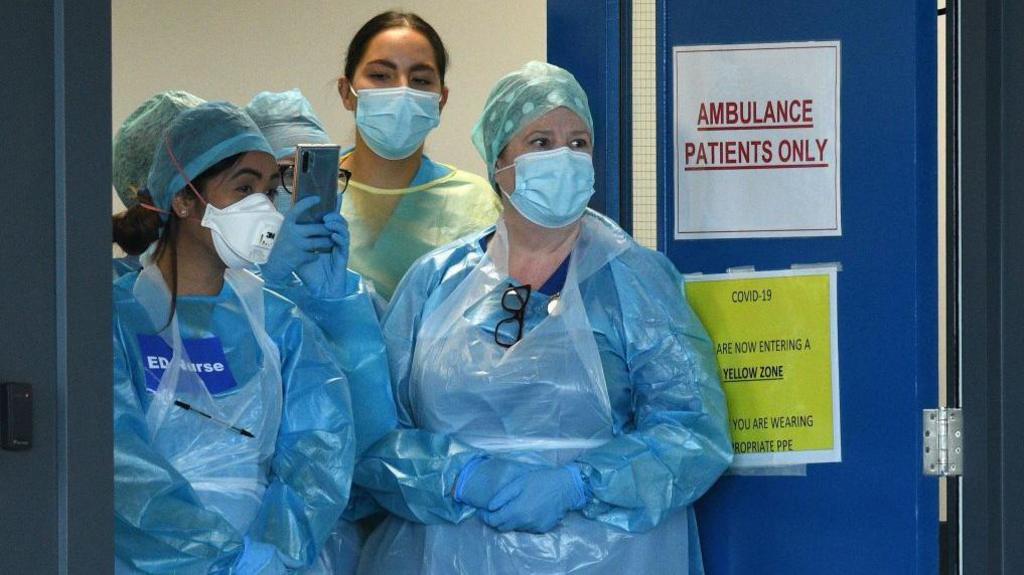 Image source, Getty Images
-
Published
The lives of NHS staff and patients were put at risk in the pandemic because of a lack of adequate personal protective equipment (PPE), with almost £10bn of taxpayers money wasted in a scramble to buy more, the Covid inquiry has said.
The chair Baroness Hallett described the “vast” waste in pandemic procurement, amounting to £9.9bn – two-thirds of the £14.9bn the UK and devolved governments spent on PPE.
The country entered the pandemic with its stockpile of masks, gowns and gloves in a “perilous state” and was “simply not ready to compete” in the global race to secure new supplies, added the chair.
She criticised the controversial “VIP lane”, which prioritised offers of PPE from those with political connections, as a “misguided” policy which undermined public confidence.
But she said there was “no evidence of cronyism or corruption” by ministers or other officials when awarding the final contracts.
When the cost of home testing kits and other equipment, such as ventilators, was included, the total amount spent by the government between January 2020 and June 2022 exceeded £42bn, the inquiry found.
The UK’s emergency stockpile of PPE, meant to last at least 15 weeks before being replenished, was running out by the end of March 2020 as demand from hospitals soared.
Only a third of the masks in England’s pandemic stockpile were usable, the inquiry found, while Scotland had no supplies of high-grade respiratory masks used in hospitals.
At the time, care homes, GP surgeries and pharmacies were all expected to source their own PPE, something the report described as a “major failure in planning”.
-
Covid inquiry PPE report – key findings
-
Published1 hour ago
-
-
What is the UK Covid inquiry and how does it work?
-
Published16 April
-
-
Covid inquiry turns to PPE deals and the ‘VIP lane’
-
Published3 March 2025
-
-
Covid inquiry rejects last-minute bid from Michelle Mone
-
Published3 March 2025
-
In total the UK government was forced to write off £9.9bn worth of PPE that was either unused or out of date, as well as £157m for unused healthcare equipment.
The “ventilator challenge” programme, where suppliers were asked to develop breathing equipment at short notice, led to another £143m charge for designs that never made it into production.
In Scotland approximately £8mn of healthcare equipment, including PPE and testing kits, was written off.
In Wales £18m was spent on unused PPE and in Northern Ireland £43m of masks, gowns and gloves were at risk of expiry before they could be used.
The inquiry said that, although it was better to have purchased too much PPE in a pandemic than too little, it would “clearly have been better if supply had been calibrated more closely with demand”.
“Better planning would have resulted in fairer, faster and less costly procurement decisions,” the report concluded.
Government contingency plans had “never been stress tested” and officials and ministers were “forced to improvise, establishing new emergency procurement and distribution systems within days”.
VIP lane failures
In England, a so-called “VIP lane” – officially known as the high priority lane – was set up in the pandemic to award government PPE contracts.
Introduced in April 2020, the idea was to treat offers to supply PPE with greater urgency if they came with a recommendation from ministers, MPs, members of the House of Lords, or other senior officials.
At the time, the government said there was a “desperate need” to protect health and social care staff, and argued swift action was required to secure healthcare equipment.
The inquiry criticised that policy as a “misguided attempt at prioritisation” that “embedded unfairness in emergency procurement”.
Some suppliers received favourable treatment because they had connections to the then Conservative government which “undermined trust at a moment when it needed it most”.
“The high priority lane should not have been established and must not be repeated,” the report concluded.
But Baroness Hallett said she had not identified cronyism or corruption on the part of ministers and officials when PPE contracts were finally awarded.
PPE Medpro contracts
In February 2025, the inquiry spent a day taking evidence about PPE Medpro, the firm linked to the businessman Doug Barrowman and his wife Baroness Michelle Mone.
Both Barrowman and Mone have denied any wrongdoing in relation to those contracts that were worth more than £200m.
Baroness Hallett ordered that testimony from senior government officials had to be heard behind closed doors so as not to prejudice an ongoing criminal investigation by the National Crime Agency (NCA).
A section of the inquiry’s findings related to PPE Medpro was also removed from the final report and will only be published “following the conclusion of any criminal proceedings”.
No criminal charges have been brought to date with the NCA saying that its “ongoing investigation remains a priority for the agency”.
In total, 48 witnesses gave oral evidence for this part of the inquiry in February and March 2025, including former health secretary Matt Hancock and cabinet minister Michael Gove.
The recommendations made include:
-
a “radical overhaul” of the emergency system for buying PPE and distributing it before the next pandemic
-
drawing up a “domestic industry strategy” which treats key healthcare equipment as a strategic national asset”
-
improving the state of the pandemic stockpile which is held in a giant warehouse in Merseyside
The Prime Minister’s Spokeswoman said the report made for difficult reading
“The pandemic had a profound and lasting impact across our society and this government is committed to learning the lessons of the Covid inquiry so that we are protected and prepared for the future.
“And we will of course carefully consider the inquiry’s recommendations in detail and we will respond in due course.”