
This post was originally published on this site.
Comprehending financial statements is crucial for anyone involved in business or investing. These documents, like the income statement and balance sheet, reveal a company’s performance and financial stability. By grasping their components, such as revenues, expenses, and assets, you can make informed decisions. This knowledge isn’t just for accountants; it’s important for stakeholders at all levels. So, how do these statements really impact your choices and strategies in the business world?
Key Takeaways
- Financial statements summarize a company’s financial activities, including income, assets, liabilities, and cash flow, providing a comprehensive overview of performance.
- The income statement indicates profitability by detailing revenues, expenses, and net income over a specific period.
- The balance sheet offers a snapshot of a company’s financial position, displaying assets, liabilities, and equity to assess financial health.
- Cash flow statements reveal cash movements, showing liquidity and ability to fund operations, investments, and debt repayment.
- Analyzing financial statements supports informed investment decisions and promotes effective communication among stakeholders regarding financial health.
What Are Financial Statements?

Financial statements are crucial tools that provide a clear picture of a company’s financial health.
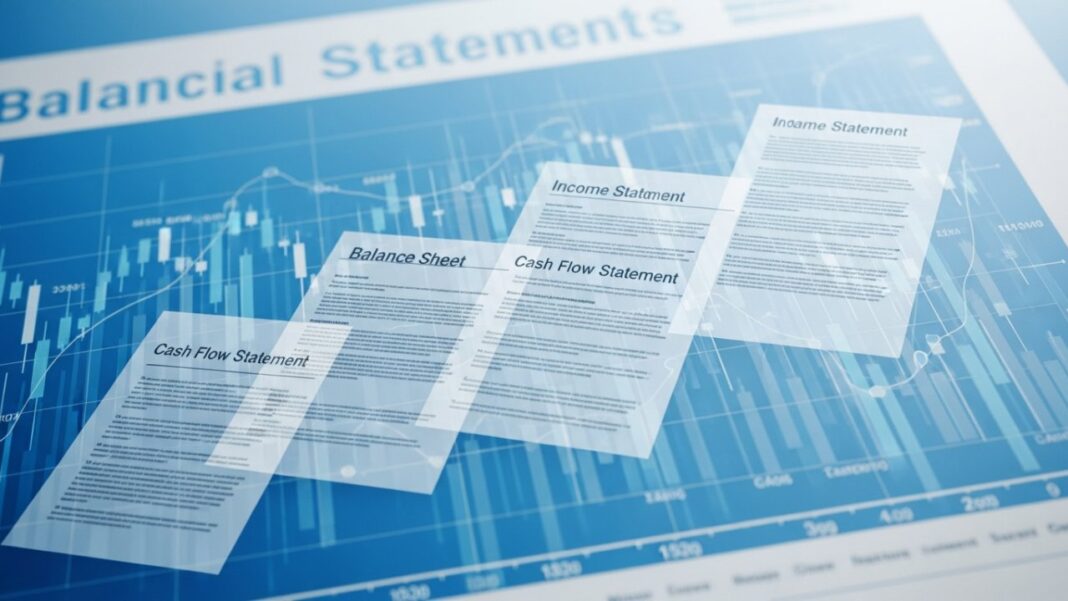
So, what’re financials? They comprise formal documents summarizing a company’s financial activities and performance, typically including an income statement, balance sheet, and cash flow statement.
Each of these statements offers unique insights: the income statement highlights profitability over a specific period, the balance sheet presents a snapshot of assets, liabilities, and equity at a given time, and the cash flow statement tracks cash movements into and out of the business.
Financial statements are governed by accounting standards like Generally Accepted Accounting Principles (GAAP) in the U.S. and International Financial Reporting Standards (IFRS) elsewhere, ensuring consistency and comparability.
Together, these statements help answer key questions about a company’s profitability, liquidity, solvency, and operational efficiency, making them crucial for stakeholders such as investors, creditors, and management.
Importance of Financial Statements

Grasping the importance of financial statements is essential for anyone involved in business or investing.
These documents help you assess a company’s financial health, guiding your investment decisions and strategic planning.
Assessing Financial Health
How can you truly gauge a company’s financial health? Evaluating financial health involves analyzing various financial performance reports.
Here are four crucial components to contemplate:
- Balance Sheet: It reveals assets, liabilities, and equity, helping you evaluate net worth and stability.
- Income Statement: This summarizes revenues and expenses, allowing you to evaluate operational efficiency and profit margins.
- Cash Flow Statement: It tracks cash inflows and outflows, highlighting the company’s ability to manage cash for operations and investments.
- Financial Ratios: Use ratios like liquidity, profitability, and solvency to gain deeper insights into financial performance.
Informed Investment Decisions
When you’re considering where to invest your money, do you ever wonder how to make the best choices? Comprehending financial statements is crucial for informed investment decisions.
Financial reports for dummies often simplify complex data, but knowing the basics is vital. The income statement shows a company’s profitability, detailing revenues and expenses over time, which helps you gauge operational efficiency.
The balance sheet provides a snapshot of assets, liabilities, and equity, allowing you to assess financial health. Meanwhile, the cash flow statement reveals actual cash movements, clarifying liquidity.
Analyzing these statements empowers you to identify risks and opportunities, enhancing your overall investment strategy and ensuring you make choices based on solid financial data.
Strategic Business Planning
Financial statements play a pivotal role in strategic business planning, providing the foundational data that executives and stakeholders need to make informed decisions.
Comprehending financial statements allows you to:
- Assess financial performance through standardized formats.
- Evaluate financial stability using the balance sheet to analyze assets, liabilities, and equity.
- Monitor profitability trends via the income statement, guiding operational adjustments.
- Guarantee liquidity and cash management through the cash flow statement, essential for meeting obligations.
Types of Financial Statements

Comprehending the different types of financial statements is essential for evaluating a company’s performance and stability. There are four primary types of financial statements: the balance sheet, income statement, cash flow statement, and statement of shareholders’ equity. Each serves a unique purpose in determining a company’s financial health.
The balance sheet gives you a snapshot of assets, liabilities, and equity at a specific date, showcasing the company’s net worth.
The income statement summarizes revenues, expenses, and net income over a period, helping you gauge profitability and operational efficiency.
The cash flow statement tracks cash movement through operating, investing, and financing activities, revealing liquidity and cash management effectiveness.
Finally, the statement of shareholders’ equity outlines changes in equity, including retained earnings and stock, reflecting shareholders’ residual interest.
Grasping these types of financial statements equips you with the knowledge needed to make informed financial decisions.
Understanding the Balance Sheet

The balance sheet acts as a crucial financial document that provides a clear overview of a company’s financial position at a specific point in time. It details assets, liabilities, and shareholders’ equity, giving you insight into the company’s overall health.
Here are four key elements you should know about the balance sheet:
- Assets: These are divided into current (convertible to cash within one year) and non-current (long-term) assets, such as cash, accounts receivable, and inventory.
- Liabilities: This section includes current liabilities (due within one year) and non-current liabilities (long-term obligations), showcasing the company’s debts.
- Shareholders’ Equity: This represents the net worth of the company, calculated as total assets minus total liabilities.
- Accounting Equation: The balance sheet adheres to the formula: Assets = Liabilities + Shareholders’ Equity, ensuring accuracy in financial reporting.
Key Components of the Income Statement

Grasping key components of the income statement is essential for evaluating a company’s financial performance over a specific period. The income statement measures profitability by calculating net income, derived from total revenue minus total expenses.
Key components of the income statement include revenue, cost of goods sold (COGS), gross profit, operating expenses, and net income. Revenue represents the total sales a company generates, whereas COGS indicates the direct costs associated with producing goods sold.
[embedded content]
Gross profit, calculated as revenue minus COGS, shows how much is available to cover operating expenses. Operating expenses, which encompass selling, general, and administrative costs, are subtracted from gross profit to reveal operating income.
Finally, the bottom line of the income statement displays net income, the final profit after all expenses, including taxes and interest, have been deducted from total revenue. Comprehending these components helps you assess a company’s financial health effectively.
Analyzing the Cash Flow Statement

When you analyze the Cash Flow Statement, you’ll notice it breaks down cash movements into three main categories: operating, investing, and financing activities.
Comprehending these categories is essential for grasping how a company manages its cash and meets its financial obligations.
Cash Flow Categories Explained
Grasping cash flow categories is essential for anyone looking to analyze a company’s financial health effectively. The cash flow statement divides cash movements into three main categories:
- Operating Activities: Cash generated or used in daily operations, including sales receipts and payments to suppliers.
- Investing Activities: Cash flows related to acquiring or disposing of long-term assets, like property and equipment.
- Financing Activities: Cash from transactions involving debt and equity, such as issuing stock or repaying loans.
Understanding these categories helps you assess a company’s liquidity and financial stability.
Unlike the income statement, which focuses on profitability, the cash flow statement offers a clearer picture of actual cash management efficiency. This analysis is critical for making informed decisions.
Importance of Cash Management
Analyzing a company’s cash management practices is crucial for comprehending its overall financial health, especially when you consider the insights provided by the cash flow statement.
This statement categorizes cash movements into operating, investing, and financing activities, giving you an extensive view of cash generation and utilization. The cash generated from day-to-day operations reveals a company’s ability to maintain liquidity and fund ongoing activities, underscoring the importance of cash management.
Investing activities indicate growth strategies, whereas financing activities help assess capital structure and financial obligations. By analyzing discrepancies between net income and cash flow, you can better understand how effective cash management guarantees operational stability and long-term sustainability, making it a critical component of any successful business.
Analyzing Cash Flow Trends
How can you effectively analyze cash flow trends to evaluate a company’s financial health? By examining the cash flow statement, you can gain valuable insights into a business’s operations.
Here are four key steps to weigh:
- Evaluate Operating Activities: Focus on cash generated from core operations; this shows sustainability without external financing.
- Compare Periods: Look at cash flows over multiple periods to identify trends and patterns in generation and expenditures.
- Monitor Positive Trends: A positive cash flow indicates the company can fund growth, pay down debt, and distribute dividends.
- Analyze Ratios: Use cash flow ratios, like cash flow to sales, to assess efficiency in converting sales into cash.
Statement of Shareholders’ Equity

The Statement of Shareholders’ Equity is a crucial financial document that captures the changes in equity accounts over a specific reporting period, providing a clear view of a company’s financial dynamics.
This statement summarizes key components like common stock, preferred stock, additional paid-in capital, retained earnings, and treasury stock.
It offers insights into how profits are either reinvested in the company or distributed as dividends, reflecting the company’s profit management strategy.
Limitations of Financial Statements

Financial statements serve as vital tools for evaluating a company’s financial performance, yet they come with notable limitations that can impact their usefulness. Here are some key limitations of financial statements:
- Historical Focus: They primarily report past data, which may not reflect future performance because of market fluctuations and economic changes.
- Non-Financial Factors: Important aspects like brand reputation and employee morale aren’t included, potentially overlooking significant indicators of a company’s health.
- Inflation Effects: Assets and liabilities are recorded at historical costs, which can distort the actual financial position over time, especially in inflationary environments.
- Subjectivity in Reporting: Variability in reporting periods and management estimates can complicate comparisons, and subjective judgments in areas like revenue recognition can introduce inconsistencies.
Understanding these limitations of financial statements is fundamental for making informed assessments about a company’s true financial health.
How to Read Financial Statements

To effectively read financial statements, start by comprehending their key components, like the income statement, balance sheet, and cash flow statement.
Each statement reveals critical insights about a company’s profitability, financial position, and cash management, which are vital for making informed decisions.
Furthermore, analyzing financial ratios, such as gross profit margin and current ratio, allows you to evaluate performance trends and compare financial health against industry standards.
Key Components Explained
Reading financial statements can seem intimidating, but comprehending their key components is critical for evaluating a company’s performance and stability. Here’s a breakdown of the fundamental elements:
- Balance Sheet: Shows assets, liabilities, and equity at a specific date, detailing liquidity and categorizing liabilities.
- Income Statement: Summarizes revenues, expenses, and net income over a period, highlighting profitability through figures like gross profit.
- Cash Flow Statement: Categorizes cash movements into operating, investing, and financing activities, offering insights into liquidity.
- Statement of Shareholders’ Equity: Tracks changes in equity, revealing factors like retained earnings that affect net worth.
Understanding profit and loss statements is indispensable for grasping these components and evaluating a company’s financial health accurately.
Analyzing Financial Ratios
Analyzing financial ratios offers a clear and efficient way to assess a company’s performance and financial health. These financial measures provide insights into various aspects of a business. Key ratios include:
| Ratio | Calculation | Significance |
|---|---|---|
| Current Ratio | Current Assets / Current Liabilities | Indicates ability to cover short-term debts |
| Debt-to-Equity Ratio | Total Liabilities / Shareholders’ Equity | Shows reliance on debt for financing |
| Return on Equity (ROE) | Net Income / Average Shareholders’ Equity | Measures profitability from equity investment |
Global Standards in Financial Reporting

Global financial reporting standards play a fundamental role in how businesses communicate their financial health, with over 140 jurisdictions adopting the International Financial Reporting Standards (IFRS) for publicly traded companies.
Comprehending these global standards in financial reporting is imperative for investors and analysts. Although U.S. Securities and Exchange Commission companies typically follow Generally Accepted Accounting Principles (GAAP), IFRS provides a common language that improves comparability and transparency.
Here are some key differences you should know:
- Revenue recognition principles vary between GAAP and IFRS.
- Financial instruments are treated differently under each standard.
- Lease accounting shows distinct approaches in both frameworks.
- The financial statement analysis report doesn’t include aspects like overall income in GAAP.
These differences can greatly impact how financial statements are presented, making it important to grasp these standards for informed decision-making across international markets.
Financial Literacy for Stakeholders

Comprehending financial literacy is fundamental for stakeholders, as it enables you to interpret financial statements effectively and make informed decisions about a company’s performance and stability. By grasping the key components of financial statements—like the income statement, balance sheet, and cash flow statement—you can analyze profitability, liquidity, and operational efficiency. This knowledge helps you identify trends and assess risks, allowing for strategic business decisions based on accurate financial data.
Furthermore, being financially literate is critical for compliance with regulations, as it guarantees that stakeholders, including accountants and company leadership, adhere to accounting standards and report accurately.
Financial literacy additionally nurtures better communication among stakeholders, promoting a shared awareness of the company’s financial health. This clarity is significant for collaborative decision-making and strategic planning, eventually enhancing the company’s overall effectiveness and success.
In relation to financial management, leveraging the right tools and resources can greatly improve your decision-making process.
Here are some crucial tools and resources for financial management to take into account:
- Accounting Software: Automate processes and gain real-time insights into your financial performance, simplifying statement management.
- Budgeting and Forecasting Tools: Effectively plan and manage your finances by projecting future revenues and expenses.
- Expense Tracking Applications: Monitor your spending and maintain financial health through efficient tracking.
- Consulting with Professionals: Engage with accountants or outsourced CFOs for customized guidance and strategic advice, helping you navigate complex financial environments.
Frequently Asked Questions
How Often Should Financial Statements Be Prepared and Reviewed?
You should prepare and review financial statements regularly to maintain a clear comprehension of your financial position.
Monthly reviews are ideal for businesses, allowing you to spot trends and make timely decisions. For personal finances, quarterly reviews may suffice.
Regardless of the frequency, guarantee you analyze income statements, balance sheets, and cash flow statements.
Consistent evaluation helps you identify discrepancies and adjust your strategies, leading to better financial health and informed planning.
Who Is Responsible for Preparing Financial Statements?
You’re responsible for preparing financial statements if you’re a business owner or manager. This task often falls to an accountant or a finance team, depending on your organization’s size.
[embedded content]
They gather data from various sources, ensuring accuracy and compliance with standards. Regular collaboration among departments is essential, as it helps in obtaining necessary information.
In the end, accurate financial statements reflect your organization’s financial health and guide decision-making processes effectively.
Can Financial Statements Be Manipulated or Misrepresented?
Yes, financial statements can be manipulated or misrepresented. Companies might use accounting techniques, like aggressive revenue recognition or improper expense categorization, to present a more favorable financial position.
Whereas some practices are legal, they can mislead investors or stakeholders. You should be aware of red flags, such as unusual trends or inconsistencies, which can indicate potential manipulation.
[embedded content]
Always analyze financial statements critically to guarantee you’re making informed decisions based on accurate information.
What Software Can Help in Creating Financial Statements?
To create financial statements, you can use software like QuickBooks, Xero, or Microsoft Excel.
QuickBooks offers user-friendly templates customized for small businesses, whereas Xero provides online access and automation features.
Excel allows for customization and flexibility, enabling you to create detailed statements from scratch.
Other options include FreshBooks and Zoho Books, which likewise cater to various business needs.
Choosing the right software depends on your specific requirements and level of expertise.
How Do Financial Statements Affect Stock Market Performance?
Financial statements greatly influence stock market performance by providing investors with essential insights into a company’s financial health.
When you analyze income statements, balance sheets, and cash flow statements, you gauge profitability, liquidity, and overall stability. Positive results can boost investor confidence, leading to increased stock prices, whereas negative results often result in declines.
Market analysts frequently use these statements to evaluate trends, helping you make informed decisions about buying or selling stocks.
Conclusion

In summary, comprehending financial statements is essential for evaluating a company’s performance and making informed decisions. By familiarizing yourself with the balance sheet, income statement, and cash flow statement, you can assess financial health and identify growth opportunities. Embracing global reporting standards improves transparency, whereas financial literacy equips stakeholders with the skills to interpret these documents effectively. Utilizing available tools and resources further supports sound financial management, eventually contributing to sustainable business practices and strategic success.
Image via Google Gemini