
This post was originally published on this site.
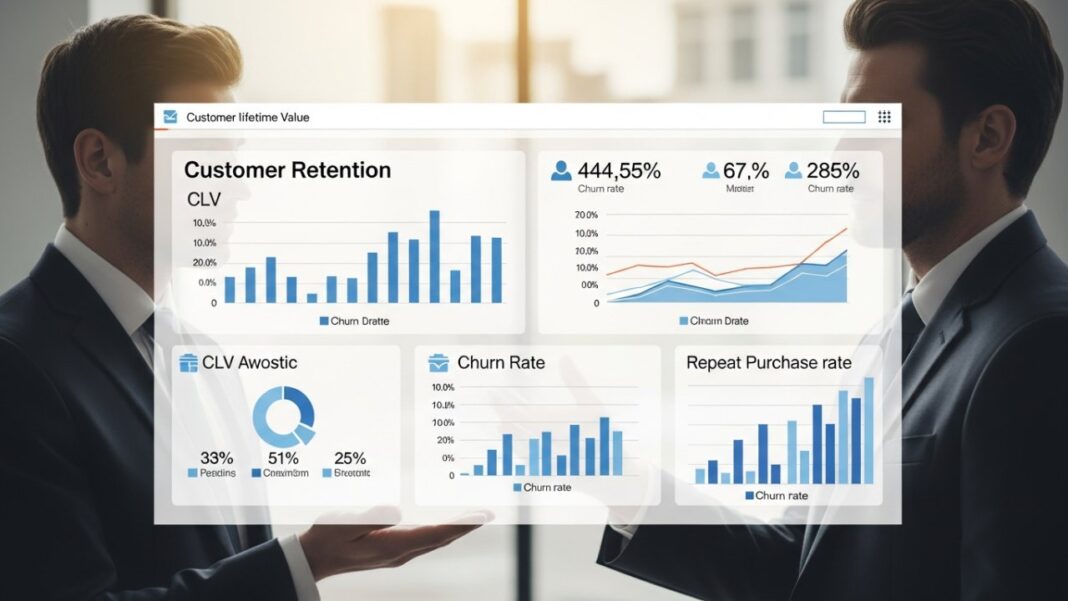
Tracking key customer retention metrics is crucial for grasping your business’s health and growth potential. Metrics like Customer Retention Rate (CRR) reveal how well you’re keeping customers over time, whereas Repeat Purchase Rate (RPR) indicates the frequency at which they return. Moreover, monitoring Customer Churn Rate helps identify those who stop using your service. Comprehending these metrics can guide your retention strategies, but there are more factors to reflect upon.
Key Takeaways
- Customer Retention Rate (CRR) measures the percentage of customers retained over a specific period, indicating loyalty levels.
- Repeat Purchase Rate (RPR) tracks the percentage of existing customers making additional purchases, reflecting customer satisfaction and product appeal.
- Customer Churn Rate quantifies the percentage of customers who discontinue using a service, helping identify retention issues early.
- Customer Lifetime Value (LTV) estimates the total revenue expected from a customer throughout their relationship with the business, guiding marketing strategies.
- Net Promoter Score (NPS) gauges customer loyalty by measuring the likelihood of customers recommending the business to others.
Understanding Customer Retention Metrics

Comprehending customer retention metrics is crucial for any business aiming to cultivate loyalty and drive revenue growth.
Key metrics include Customer Retention Rate (CRR), which measures the percentage of customers retained over time. You can calculate CRR using the customer retention rate calculation formula: ((End number of customers – New customers gained) / Starting number of customers) x 100.
Furthermore, the Repeat Purchase Rate (RPR) shows how many existing customers make further purchases, with an average of 28.2% across industries.
The Customer Churn Rate indicates customer loss, ideally between 3% and 8% for SaaS businesses, whereas Customer Lifetime Value (LTV) estimates the total revenue a customer generates during their relationship with your company.
Regularly monitoring these retention KPIs informs improvement strategies.
Importance of Customer Retention Metrics

Grasping the significance of customer retention metrics is crucial for any business looking to nurture long-lasting relationships with its clientele.
Recognizing the importance of customer retention not only aids in evaluating your business’s effectiveness but furthermore improves your overall profitability.
Here are three key points to contemplate:
- High retention rates indicate satisfied customers, leading to increased loyalty and revenue.
- Retaining existing customers is considerably more cost-effective than acquiring new ones, with acquisition costs being 5 to 25 times higher.
- Monitoring customer retention KPIs, like Churn Rate and Customer Retention Rate (CRR), allows you to identify dissatisfaction early and improve customer experiences.
Customer Retention Rate (CRR)

The Customer Retention Rate (CRR) is a crucial metric that quantifies the percentage of customers a business retains over a specific period.
To calculate the customer retention rate, use the formula: ((End number of customers – New customers gained) / Starting number of customers) x 100.
A CRR of 95% is considered good for SaaS companies, reflecting strong customer loyalty and satisfaction.
Monitoring retention metrics like CRR over time helps you identify trends and potential issues in customer experience that may lead to churn.
If your CRR is low, it may signal problems in the purchasing or product usage process, prompting you to investigate customer needs and feedback for improvement.
Repeat Purchase Rate (RPR)
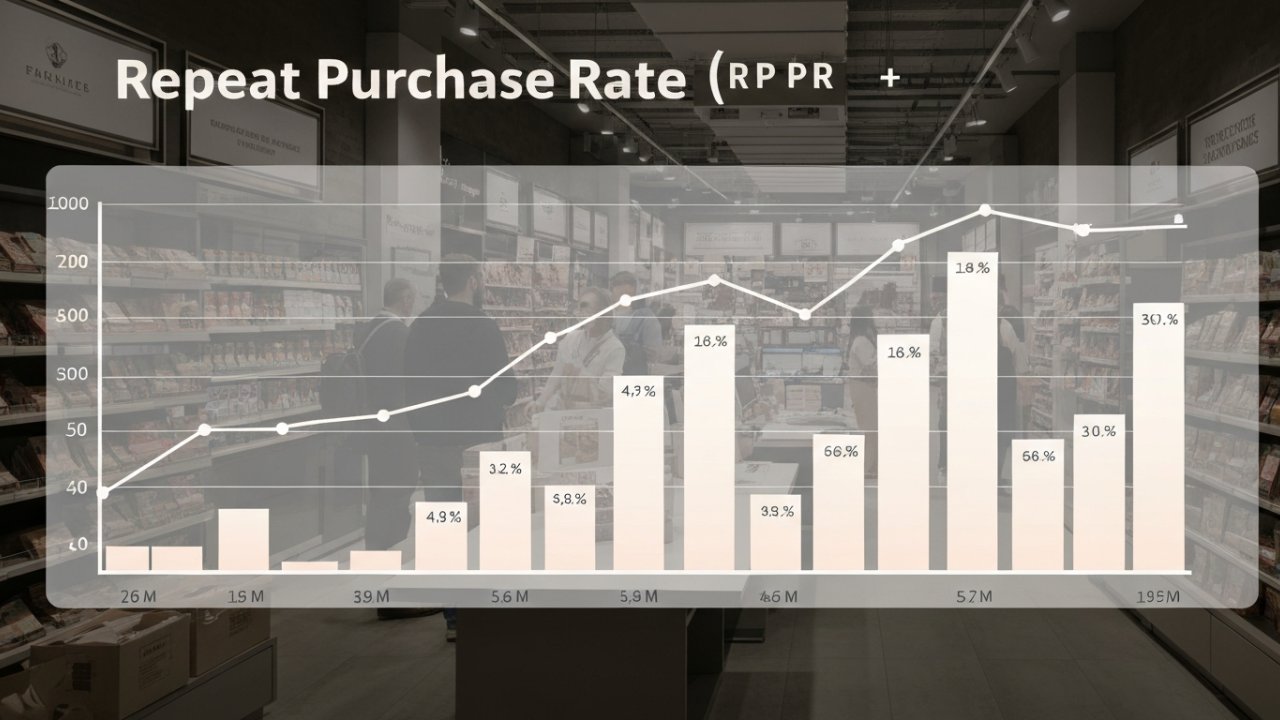
The Repeat Purchase Rate (RPR) is an essential metric that measures the percentage of your existing customers who make additional purchases, calculated by dividing the number of customers who bought more than once by the total number of customers.
Comprehending your RPR is imperative for nurturing customer loyalty, as a higher rate often leads to increased revenue, considering that existing customers typically spend considerably more than new ones.
Calculation Methodology Explained
Calculating the Repeat Purchase Rate (RPR) is essential for comprehending customer loyalty and identifying effective retention strategies.
To measure RPR accurately, you can use the following client retention formula:
- Identify the number of customers who made more than one purchase during a specific timeframe.
- Determine the total number of customers within that same timeframe.
- Apply the formula: (Number of customers who made more than one purchase / Total number of customers) x 100.
Importance for Loyalty
Grasping the significance of the Repeat Purchase Rate (RPR) is vital for businesses aiming to improve customer loyalty. The RPR measures the percentage of existing customers who make additional purchases, calculated as (Number of customers who made more than one purchase / Total number of customers) x 100.
On average, RPR across industries stands at 28.2%. High customer retention rates are found by analyzing RPR, which indicates greater customer satisfaction and engagement.
When RPR is low, it could signal issues with product quality or customer service, making it imperative to investigate. Comprehending why customer retention is important allows businesses to implement targeted strategies, enhancing overall customer experience and boosting loyalty through improved retention rate definition measures.
Customer Churn Rate

Customer churn rate measures the percentage of customers who stop using your service during a specific period, and calculating it’s crucial for comprehending customer retention.
You can determine your churn rate using the formula: (Number of customers who left / Total number of customers at the start of the period) x 100.
Identifying the causes of churn, such as dissatisfaction or unmet expectations, allows you to implement effective strategies to reduce it and improve customer loyalty.
Churn Rate Calculation
Comprehending churn rate calculation is vital for evaluating customer retention effectiveness within your business. The churn rate reflects the percentage of customers who leave during a specific period.
To calculate it, use the formula:
- Identify the number of customers lost during the period.
- Determine the total number of customers at the start of that period.
- Apply the formula: (Customers lost / Total customers at start) x 100.
This metric provides valuable insights into user retention metrics. When you know how to find customer retention rate, you can effectively measure retention rate and identify trends over time.
A good churn rate for SaaS businesses typically ranges between 3% and 8%, and regular tracking can uncover underlying issues affecting customer loyalty.
Causes of Churn
Comprehending the causes of churn is essential for any business looking to improve customer retention and boost overall performance. A churn rate between 3% and 8% is typically healthy for SaaS companies, but higher rates can signal serious issues.
Common causes of churn include poor customer support, insufficient product value, and competitive offerings. To effectively address these issues, you must regularly monitor client retention metrics, as they highlight trends and patterns in customer behavior.
Gathering customer feedback through surveys can provide insights into why customers leave, helping you understand how do we measure retention. By identifying these underlying reasons, you can develop targeted strategies to improve customer satisfaction and reduce churn effectively.
Reducing Churn Strategies
To effectively reduce churn, businesses must implement targeted strategies that address customer dissatisfaction and improve overall experience.
[embedded content]
Focusing on customer feedback is crucial; it helps identify pain points and areas needing improvement. Here are three effective strategies:
- Regularly Collect Feedback: Use surveys and session replays to gain insights into customer experiences and identify trends that may lead to churn.
- Personalize Interactions: Tailor customer interactions based on their preferences and behaviors, which can greatly improve satisfaction and retention.
- Monitor Churn Rates: Keep an eye on churn rates and analyze the reasons behind customer departures to proactively address issues and enhance retention efforts.
Revenue Churn Rate

Revenue Churn Rate is a crucial metric for businesses, particularly within the SaaS industry, as it quantifies the percentage of recurring revenue lost from existing customers over a specific period. You can calculate it using the formula: {[(MRR at the beginning – MRR at the end) – upsells] / MRR at the beginning} × 100. A healthy Revenue Churn Rate is typically less than 5%, indicating effective customer retention strategies. Monitoring this metric helps you identify high-impact customer segments and comprehend how customer loss affects overall revenue.
| Metric | Healthy Range | Importance |
|---|---|---|
| Revenue Churn Rate | Indicates retention effectiveness | |
| Customer Lifetime Value | > $1000 | Guides marketing strategies |
| Monthly Recurring Revenue | Increasing | Shows growth trends |
Customer Lifetime Value (LTV)

Comprehending Customer Lifetime Value (LTV) is essential for businesses aiming to optimize their marketing strategies and improve customer retention efforts. LTV estimates the total revenue a business can expect from a customer throughout their relationship.
Here are three key points to reflect on:
- E-commerce Calculation: LTV is determined by multiplying the average order value by the average number of purchases per year and the average customer lifespan in years.
- SaaS Calculation: For SaaS, LTV is calculated by dividing the monthly average revenue per account by the monthly churn rate, offering insights into long-term profitability.
- Importance of Monitoring: Tracking LTV trends allows businesses to make informed decisions on customer acquisition costs and retention strategies, in the end driving growth and profitability.
Customer Satisfaction Score (CSAT)

Customer Satisfaction Score (CSAT) is a key metric that measures how satisfied customers are with your product or service.
You calculate it by dividing the total number of positive scores by the number of respondents, and scores above 90% typically indicate high satisfaction.
Comprehending the importance of high CSAT scores can greatly impact your retention strategies, as satisfied customers are more likely to return and recommend your brand to others.
Calculation Methodology Explained
To accurately assess customer satisfaction, businesses often rely on the Customer Satisfaction Score (CSAT), which gauges how well a product or service meets customer expectations.
You can calculate CSAT by following these steps:
- Collect Responses: Ask customers to rate their satisfaction on a scale, typically from 1 to 5 or 1 to 10.
- Identify Positive Ratings: Count the total number of positive responses, which are ratings of 4 or 5 on a 5-point scale or 8-10 on a 10-point scale.
- Calculate the Score: Divide the number of positive responses by the total number of responses, then multiply by 100 to get the percentage.
A CSAT score above 90% indicates high customer satisfaction and effective service or product delivery.
Regular tracking helps identify pain points in the customer experience.
Importance of High Scores
High scores in the Customer Satisfaction Score (CSAT) are crucial indicators of how well a business meets the needs and expectations of its clients. A CSAT score above 90% typically signals high customer satisfaction, reflecting effective service delivery.
Regularly tracking CSAT allows you to identify pain points in the customer experience and adapt strategies to improve overall satisfaction. Furthermore, high CSAT scores correlate strongly with increased customer loyalty and retention, as satisfied customers are more likely to make repeat purchases and refer others.
Impact on Retention Strategies
Measuring customer satisfaction using the Customer Satisfaction Score (CSAT) plays a pivotal role in shaping effective retention strategies. High CSAT scores directly correlate with customer loyalty and reduced churn rates.
To implement effective retention strategies, consider the following:
- Regularly Collect CSAT Data: Gather feedback immediately after customer interactions to identify pain points and areas for improvement.
- Monitor Trends Over Time: Track CSAT scores to assess the effectiveness of your retention efforts and make necessary adjustments.
- Focus on High-Scoring Areas: Identify which aspects of the customer experience contribute to high satisfaction, and improve those elements to drive loyalty.
The Net Promoter Score® (NPS) serves as a crucial metric for comprehending customer loyalty and satisfaction. By asking customers how likely they are to recommend your product or service on a scale from 0 to 10, you can classify them into promoters, passives, and detractors. A positive NPS of 60 or above indicates strong satisfaction, whereas a negative score highlights areas for improvement. Calculating NPS involves subtracting the percentage of detractors from the percentage of promoters, providing a valuable snapshot of customer sentiment.
| Category | Score Range | Description |
|---|---|---|
| Promoters | 9-10 | Loyal customers, likely to refer others |
| Passives | 7-8 | Neutral, can easily be swayed |
| Detractors | 0-6 | Unhappy customers, may harm your brand |
Customer Effort Score (CES)

Customer Effort Score (CES) is an essential metric that measures how easy it’s for you to complete a task or resolve an issue with a company.
By focusing on reducing customer friction during interactions, businesses can improve your overall experience, leading to higher satisfaction and loyalty.
Aiming for a CES score of 5 or lower on a 7-point scale can highlight areas where improvements are needed, eventually making your purchasing process smoother and more enjoyable.
Measuring Purchase Ease
How easy is it for your customers to complete a purchase or use your service? Measuring Purchase Ease through the Customer Effort Score (CES) can provide valuable insights. A higher CES indicates that customers find the purchasing process less strenuous, which correlates with increased satisfaction and retention.
Here are three key points to evaluate:
- CES Calculation: Ask customers to rate their experience on a scale from 1 to 7, where lower scores signify easier experiences.
- Impact on Loyalty: Customers who find the process easy are 96% more likely to repurchase and 88% more likely to recommend your business.
- Ongoing Monitoring: Regularly tracking CES helps identify pain points and allows for targeted improvements to improve customer experience.
Reducing Customer Friction
Reducing customer friction is crucial for improving the overall experience and satisfaction during interactions with your business. The Customer Effort Score (CES) helps you measure how easy it’s for customers to engage with your company. By asking customers to rate their effort on a scale, you can identify areas that require improvement.
Research shows that lower CES scores lead to higher customer satisfaction and loyalty, as customers prefer seamless interactions. Companies with low CES often experience reduced churn rates, as customers are less likely to leave when their experiences are smooth.
Regularly monitoring CES will provide insights into pain points in the customer experience, enabling you to implement targeted improvements that improve overall satisfaction and retention.
Daily, Weekly, and Monthly Active Users (DAU, WAU, MAU)

Comprehending Daily, Weekly, and Monthly Active Users (DAU, WAU, MAU) is crucial for evaluating user engagement and retention within your product or service.
These metrics provide insights into how often users interact with your offering, helping you identify trends and areas for improvement.
- DAU: Measures the number of unique users engaging with your product daily, indicating immediate user engagement levels.
- WAU: Tracks unique users over a week, allowing you to spot behavioral patterns and engagement fluctuations.
- MAU: Counts unique users over a month, serving as a key indicator of overall user retention and long-term engagement.
Engagement Rate by Channel and Segment
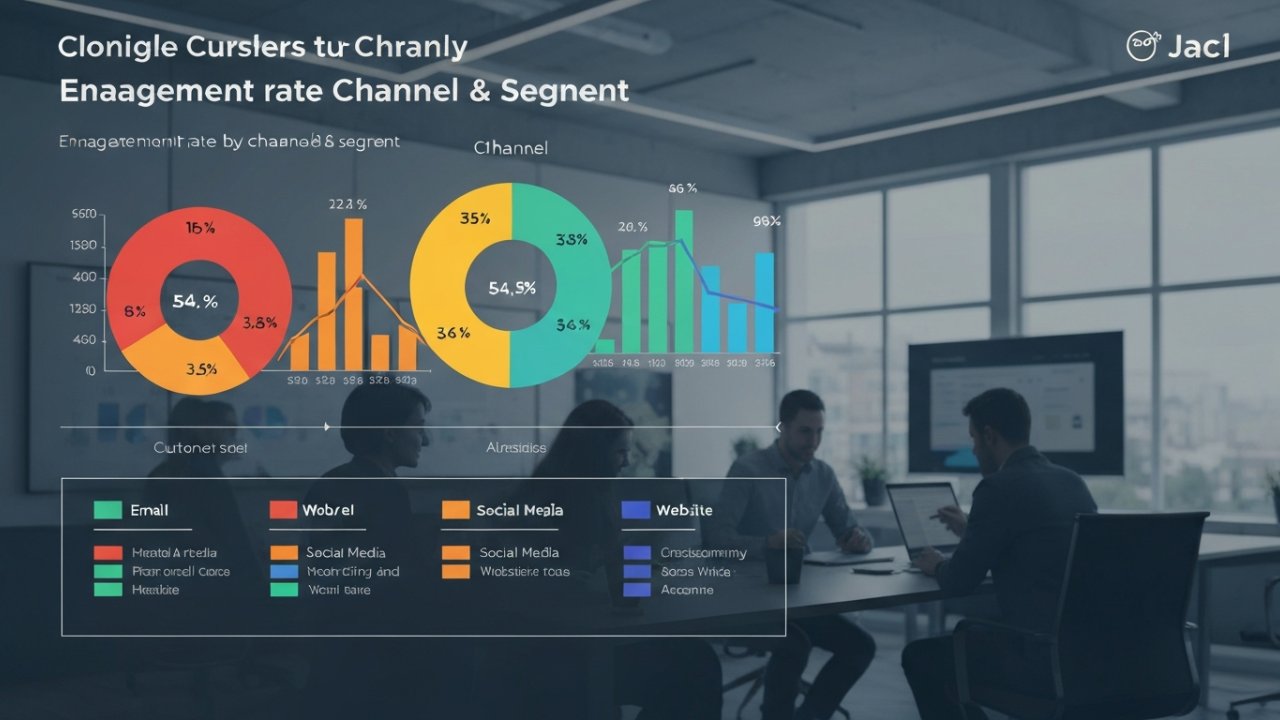
Engagement rates by channel are crucial metrics that help businesses assess how effectively different communication methods, such as email, social media, and direct messaging, capture and sustain customer interest.
Higher engagement rates indicate successful outreach, whereas segmenting these rates allows you to analyze performance across various demographics or behavior patterns. This reveals which customer groups respond best to specific channels.
For example, a good email engagement rate is over 20%, whereas social media engagement typically ranges from 1% to 5%, varying by platform.
Regularly tracking these metrics helps identify underperforming channels and informs necessary adjustments to your communication strategies. In the end, this optimization improves customer retention by tailoring content to suit the preferences of different segments.
Reactivation and Renewal Rates
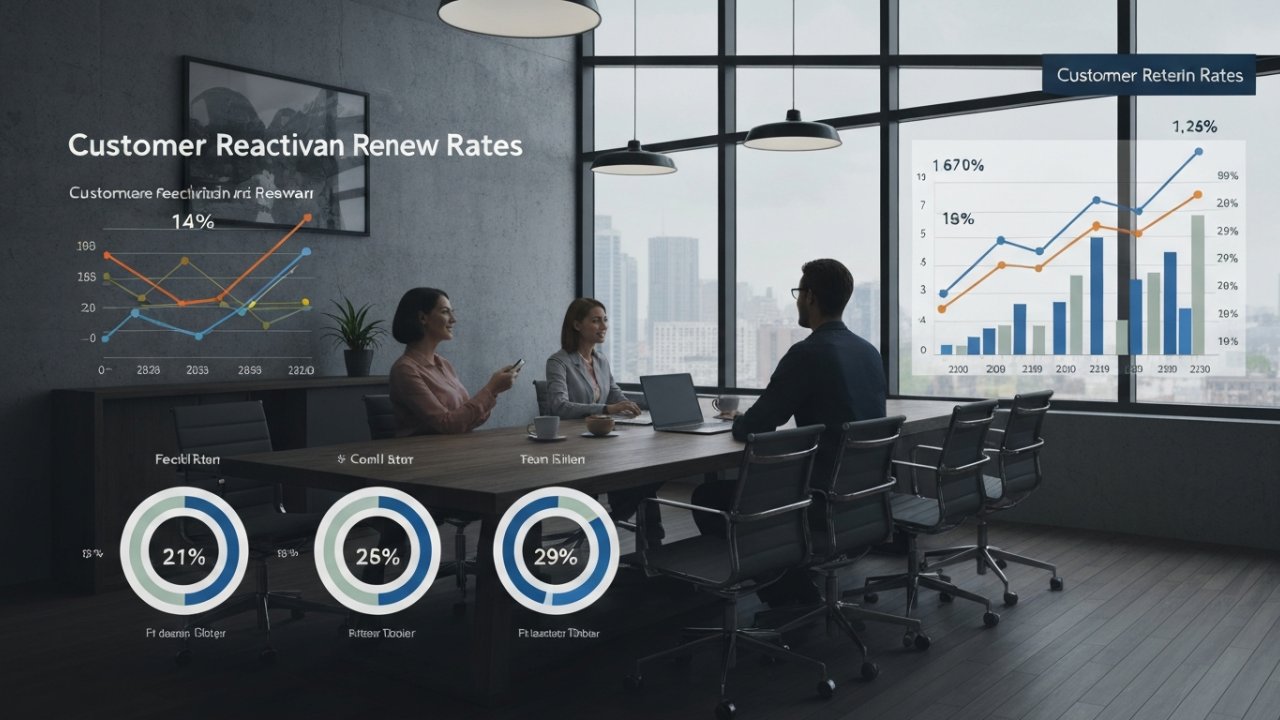
Reactivation and renewal rates are essential metrics that can profoundly influence a company’s customer retention strategy. Monitoring these rates helps you understand customer behavior and the effectiveness of your re-engagement efforts.
Here are three key points to take into account:
- Reactivation Rate: This measures the percentage of previously churned customers who return to make a purchase. Use the formula: (Number of churned customers who returned / Total number of churned customers) × 100 to evaluate your win-back strategies.
- Renewal Rate: Especially crucial for subscription businesses, it reflects the proportion of customers renewing their subscriptions. Calculate it by dividing the number of customers who renewed by those up for renewal.
- Trend Analysis: Tracking both rates identifies patterns, enabling customized strategies to boost customer loyalty and reduce churn.
Analyzing Customer Feedback for Insights

Analyzing customer feedback is crucial for gaining insights that can greatly improve your retention strategies. By utilizing surveys and tools like Voice of Customer, you can capture qualitative data at critical points in the customer experience. This information complements quantitative metrics, offering a deeper comprehension of customer experiences and satisfaction levels.
Regularly collecting and analyzing feedback helps identify pain points and areas for improvement. For instance, addressing specific concerns raised by customers can lead to increased repeat purchase rates, as customers are more likely to engage with a brand that listens and responds.
Furthermore, grasping the reasons behind customer churn allows you to implement targeted strategies, ensuring you retain valuable clientele and improve overall satisfaction.
Frequently Asked Questions

What Are the Metrics for Customer Retention?
To measure customer retention effectively, you’ll want to track several key metrics.
Start with Customer Retention Rate (CRR), which calculates the percentage of retained customers over a specific period.
Next, consider the Repeat Purchase Rate (RPR) to gauge loyalty by identifying customers who make additional purchases.
Monitor Customer Churn Rate to understand how many customers leave, and assess Customer Lifetime Value (LTV) to estimate the total revenue generated from each customer during their relationship with your business.
What Are the 5 Key Performance Indicators for Customer Service?
To measure customer service effectiveness, focus on five key performance indicators (KPIs):
First Response Time (FRT), which indicates how quickly your team responds to inquiries;
Resolution Rate, showing the percentage of issues resolved on first contact;
Customer Satisfaction Score (CSAT), reflecting customer satisfaction levels;
Net Promoter Score (NPS), which gauges customer loyalty;
[embedded content]
and Customer Effort Score (CES), evaluating how easy it’s for customers to interact with your service.
[embedded content]
What Are the 8 C’s of Customer Retention?
The 8 C’s of customer retention are crucial for building strong relationships with your customers. They include Clarity, ensuring customers understand product value; Convenience, simplifying the purchasing process; Consistency, maintaining quality across touchpoints; Connection, nurturing relationships; Communication, keeping feedback channels open; Community, creating a sense of belonging; Commitment, showing dedication to customer needs; and Customer-Centricity, focusing on the customer’s experience.
Together, these elements augment loyalty and satisfaction, in the end improving retention rates.
What Are the 5 Key Factors That Drive Retention?
To drive customer retention, focus on five key factors: grasping customer needs, providing excellent service, delivering consistent quality, personalizing experiences, and engaging customers regularly.
By actively listening to feedback, you can tailor your offerings to meet their expectations.
Guarantee your service team is responsive and helpful, maintain high product standards, and utilize data to personalize interactions.
Regular check-ins and targeted communications can strengthen relationships, in the end encouraging customers to remain loyal.
Conclusion

In summary, tracking key customer retention metrics like Customer Retention Rate, Repeat Purchase Rate, and Customer Churn Rate is crucial for comprehending your business’s performance. By analyzing these metrics, along with engagement rates and customer feedback, you can identify areas for improvement and develop targeted strategies to improve customer loyalty. Monitoring these indicators not just helps retain existing customers but additionally contributes to long-term profitability and growth, ensuring your business remains competitive in the market.
Image via Google Gemini