

This post was originally published on this site.
Operating expenses, or OpEx, are the costs a business incurs during its daily operations, essential for grasping financial health. These expenses include salaries, rent, utilities, marketing, and research costs. Categorizing OpEx in the chart of accounts allows for better budget management and financial analysis. By tracking these expenses effectively, companies can identify trends and optimize spending. But how exactly do you record and manage these expenses for maximum efficiency?
Key Takeaways
- Operating expenses (OpEx) are costs associated with daily business operations, recorded in the chart of accounts for financial clarity.
- In the chart of accounts, personnel expenses typically start with the digit ‘6’, while non-personnel costs begin with ‘7’.
- Categorizing OpEx helps in tracking and managing costs effectively, ensuring compliance and strategic alignment.
- Regular review of operating expenses in the chart aids in optimizing spending and improving operational efficiency.
- Tracking OpEx contributes to calculating the operating expense ratio (OER), which benchmarks efficiency against industry standards.
Definition of Operating Expenses
Operating expenses, often referred to as OpEx, are the vital costs that businesses incur to maintain their daily operations. These expenses include important items like salaries, rent, and utilities, which are necessary for running a company smoothly.
In your accounting chart of accounts pdf, you’ll typically find operating expenses categorized under specific account numbers, making it easier for you to track and report financial performance. They’re recorded on the income statement below gross profit and are subtracted from revenue to determine operating income, giving you insight into how efficiently your business operates.
Common types of operating expenses, found in the chart of accounts operating expenses section, include selling, general, and administrative (SG&A) costs, such as marketing and office supplies.
Properly categorizing these expenses in your chart of accounts pdf supports better financial management and helps you analyze and control costs effectively, finally improving profitability.
Importance of Operating Expenses in Business Operations
Comprehending the significance of operating expenses is essential for any business aiming to thrive in a competitive environment. Operating expenses, or OpEx, cover critical costs like salaries, rent, and utilities, directly impacting your day-to-day operations. Managing these expenses effectively not only improves your competitive edge but also guarantees operational efficiency without sacrificing quality.
Tracking OpEx allows you to calculate the operating expense ratio (OER), a significant metric that reflects your financial health. Remember, operating expenses are often tax-deductible if they’re deemed ordinary and necessary, providing potential cash flow benefits.
[embedded content]
Continuous assessment of your OpEx helps prevent excessive costs that can strain your budget, contributing to long-term financial sustainability.
| Benefit | Description |
|---|---|
| Operational Efficiency | Streamlined processes without sacrificing quality |
| Financial Health | Insight into your business’s operational efficiency |
| Tax Advantages | Potential deductions to improve cash flow |
Types of Operating Expenses
When managing your business’s operating expenses, it’s imperative to understand the different types that impact your bottom line.
Payroll and labor costs often account for a significant portion of your budget, whereas rent and utilities are required for maintaining your physical space.
Furthermore, marketing and advertising expenses play a critical role in promoting your products and services, making effective tracking indispensable for financial success.
Payroll and Labor Costs
Payroll and labor costs are fundamental components of a business’s operating expenses, often representing a significant portion of total revenue. Typically, these costs account for 20-30% of revenue, varying by industry.
They include salaries, wages, bonuses, commissions, and employer contributions to employee benefits like health insurance and retirement plans. You’ll find labor costs categorized as direct labor, linked directly to production, and indirect labor, covering support staff not involved in production.
Properly tracking these expenses in your chart of accounts is critical for effective budgeting, forecasting, and calculating key metrics such as the labor cost ratio.
Regularly reviewing compensation structures and workforce efficiency helps you manage payroll and labor costs, aligning them with your operational goals.
Rent and Utilities
Rent and utilities are vital operating expenses that every business must navigate, as they directly influence both operational efficiency and overall financial health.
Rent typically represents one of the largest fixed operating expenses, remaining constant regardless of production levels. Conversely, utilities like electricity, water, heating, and internet services are variable costs that fluctuate based on usage, impacting your monthly expenses.
Both are important for maintaining a physical presence and supporting daily operations, consequently affecting productivity. In financial statements, you’ll find rent and utilities categorized under occupancy expenses, deducted from gross profit to determine operating income.
[embedded content]
To control these costs, consider renegotiating lease terms or implementing energy-saving measures, which can lead to significant savings over time.
Marketing and Advertising Expenses
After addressing the fixed costs of rent and utilities, it’s important to contemplate another significant category of operating expenses: marketing and advertising.
These expenses are essential for promoting your products or services and can directly affect your business’s profitability. Consider tracking these costs closely to measure return on investment (ROI) and the effectiveness of your marketing strategies.
Here are some common marketing and advertising expenses to monitor:
- Digital marketing software subscriptions
- Content creation costs
- Sponsorship fees for events
Personnel Expenses

Personnel expenses represent a significant portion of an organization’s overall budget, encompassing various costs related to employee compensation. These expenses are vital for effective budgeting and financial reporting. Typically categorized under a specific numbering system that often starts with the number 6, they allow for easy tracking within financial statements.
| Expense Component | Description | Example |
|---|---|---|
| Salaries and Wages | Regular compensation for employees | Monthly salary payments |
| Bonuses | Additional compensation for performance | Year-end bonuses |
| Payroll Taxes | Taxes paid on employee earnings | Social Security, Medicare |
| Health Insurance | Employer contributions to health plans | Monthly premium payments |
| Retirement Contributions | Funds for employee retirement savings | 401(k) match |
Accurate tracking of personnel expenses is fundamental for comprehending labor costs, evaluating staffing efficiency, and ensuring compliance with labor laws. Organizations often create sub-accounts to differentiate between roles, providing detailed financial insights.
Occupancy Expenses

When managing operating expenses, occupancy expenses play a significant role in the overall financial picture of a business. These costs are fundamental for maintaining a physical location and typically include:
- Rent and lease payments
- Utilities, such as electricity and water
- Property taxes and maintenance fees
Occupancy expenses are typically fixed, meaning they remain constant regardless of how much you produce, making them a substantial part of your operating expenses.
You usually allocate these expenses on a monthly basis, which helps in budgeting and cash flow management. Although most costs stay stable, some, like property taxes and specific maintenance fees, might vary slightly each month.
Consequently, it’s critical to regularly review and adjust your financial planning accordingly. Accurately tracking these expenses in your chart of accounts is crucial for evaluating operational efficiency and spotting potential cost-saving opportunities.
Administrative Expenses
Administrative expenses are vital costs that support your business’s overall operations, covering everything from office supplies to staff salaries.
Comprehending the types of administrative expenses, tracking these costs effectively, and budgeting for them can greatly impact your financial health.
Types of Administrative Expenses
Comprehension of the various types of administrative expenses is crucial for effective business management.
These expenses play a key role in the everyday operations of your business. Here are some common types you should be aware of:
- Salaries of administrative personnel: This includes payments to office staff and managers who support daily functions.
- Office supplies and utilities: These cover costs for necessary items and services, like electricity and water, required to maintain an office environment.
- Professional services fees: Businesses often incur charges for legal, accounting, or consulting services that facilitate smooth operations.
Understanding these administrative expenses is crucial, as they can greatly impact your company’s profitability and financial health if not managed efficiently.
Regular review is necessary for optimizing these costs.
Tracking Administrative Costs
Effectively tracking administrative costs is essential for maintaining your business’s financial health. These expenses are important for supporting your organization’s management functions and include office supplies, salaries, and professional fees. Accurately tracking them helps in budgeting and financial reporting, allowing you to understand their impact on profitability. You can manage these costs by regularly reviewing contracts, consolidating software tools, and optimizing staffing levels.
Here’s a helpful breakdown of common administrative expenses:
| Expense Type | Examples |
|---|---|
| Office Supplies | Paper, pens, and stationery |
| IT Services | Software subscriptions, support |
| Rent and Utilities | Office space, electricity |
| Communication Costs | Phone services, internet |
Importance of Budgeting
Managing administrative costs effectively sets the stage for comprehending the importance of budgeting in this area.
Budgeting for administrative expenses is crucial for maintaining financial health and ensuring efficient operations. It allows you to manage cash flow, avoid overspending, and identify cost-saving opportunities.
Here are key aspects to reflect on:
- Allocate a percentage of revenue: This creates a benchmark for spending aligned with your organizational goals.
- Regularly review and adjust: Adapting your budget helps you respond to changes, especially as new technologies emerge.
- Redirect resources for growth: Effective budgeting enables you to invest in strategic initiatives that promote long-term success.
Marketing and Advertising Expenses
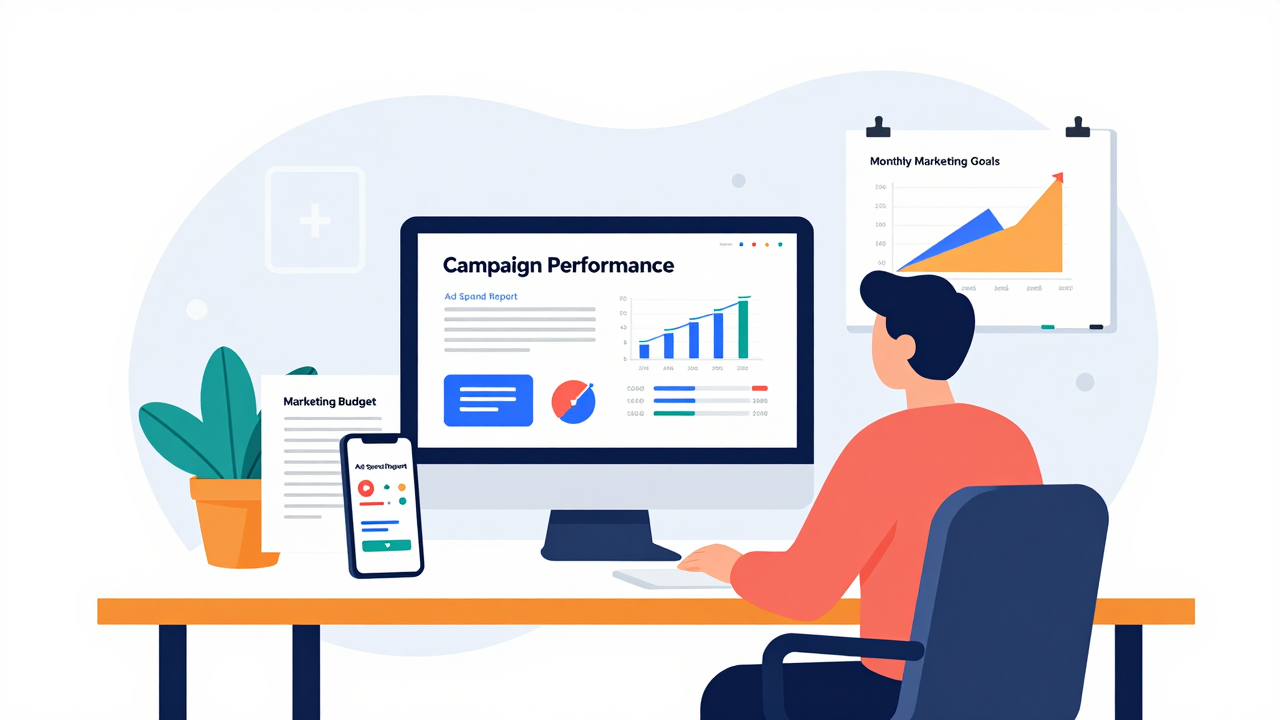
Marketing and advertising expenses play an important role in a company’s overall operating costs, encompassing a variety of expenditures aimed at promoting products or services. These expenses include paid advertisements, content creation, and market research, and they can fluctuate greatly based on your campaign strategies and target audiences.
Managing your budget effectively is vital for optimizing return on investment.
Common types of marketing expenses consist of digital marketing costs, print advertising, public relations fees, and sponsorships, all of which contribute to brand visibility and customer engagement.
By tracking these expenses, you can assess the effectiveness of your advertising campaigns and make informed decisions about future spending.
In addition, analyzing the impact of marketing and advertising expenses on overall operating costs using metrics like customer acquisition cost (CAC) and return on advertising spend (ROAS) helps gauge financial efficiency, ensuring that your marketing efforts align with your business goals.
Research and Development (R&D) Expenses

Research and Development (R&D) expenses play an essential role in driving innovation and maintaining a competitive edge in today’s fast-paced markets.
These costs can include salaries for R&D staff, lab supplies, and materials needed for testing new products or services.
Moreover, comprehending the types of R&D costs and potential tax incentives can greatly impact your company’s financial strategy and future growth.
Importance of R&D Expenses
Although many businesses may overlook the significance of Research and Development (R&D) expenses, they play an essential role in driving innovation and maintaining competitive advantage. By investing in R&D, you can improve your product offerings and stay ahead of competitors.
Consider the benefits of tracking R&D expenses effectively:
- It encourages innovation by developing new products and improving existing ones.
- It often leads to tax incentives, allowing you to reduce your overall tax liability.
- It provides insights into your company’s innovation effectiveness, helping assess the return on investment.
Understanding the importance of R&D expenses can guide your strategic decisions, ensuring that you allocate resources wisely to support future growth and competitiveness in your industry.
Types of R&D Costs
When you think about Research and Development (R&D) costs, it’s important to recognize that they can be categorized into various types, each serving a specific purpose in the innovation process.
First, there are direct costs like salaries for research staff, lab supplies, and prototype materials.
Then, you have costs associated with intellectual property development, including patent application fees and legal expenses for protecting your innovations.
Companies typically allocate a percentage of their total revenue for R&D, which varies by industry, often ranging from 5% to over 20% in sectors like technology and pharmaceuticals.
These expenses are essential for promoting innovation, helping you develop new offerings and improve existing products, ultimately maintaining your competitive edge.
R&D Tax Incentives
R&D tax incentives play a vital role in supporting businesses that invest in innovation and development. These incentives allow companies to claim tax credits or deductions for eligible R&D expenditures, considerably reducing their overall tax liability.
In the United States, businesses can benefit from a credit of up to 20% of qualified research expenses.
Eligible R&D expenses typically include:
- Employee wages for R&D staff
- Supplies used in research activities
- Contract research expenses
However, the application of these incentives can vary by jurisdiction, so it’s important to guarantee compliance with specific criteria and documentation requirements.
Depreciation and Amortization
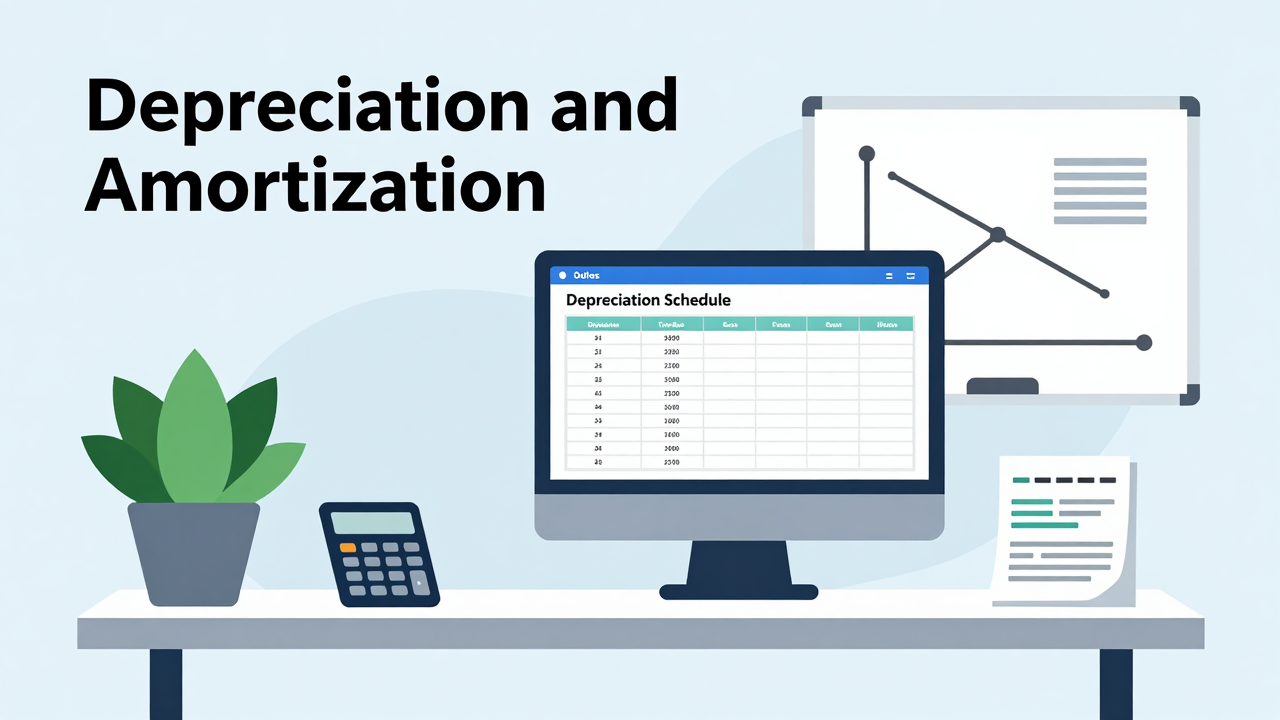
Depreciation and amortization are significant accounting processes that help businesses allocate the cost of their assets over time. Depreciation deals with tangible assets, like machinery, whereas amortization focuses on intangible assets, such as patents. Both are recorded as non-cash operating expenses on your income statement, meaning they affect your net income but don’t impact cash flow.
Here’s a breakdown of key aspects:
| Term | Definition | Common Method |
|---|---|---|
| Depreciation | Allocating costs of tangible assets over their life | Straight-line method |
| Amortization | Gradually writing off costs of intangible assets | Straight-line method |
| Importance | Crucial for financial reporting and tax compliance | Influences profits and tax liabilities |
Accurate tracking of these expenses in your chart of accounts is crucial, as it guarantees compliance and helps paint a clearer picture of your business’s financial health.
Fixed vs. Variable Operating Expenses
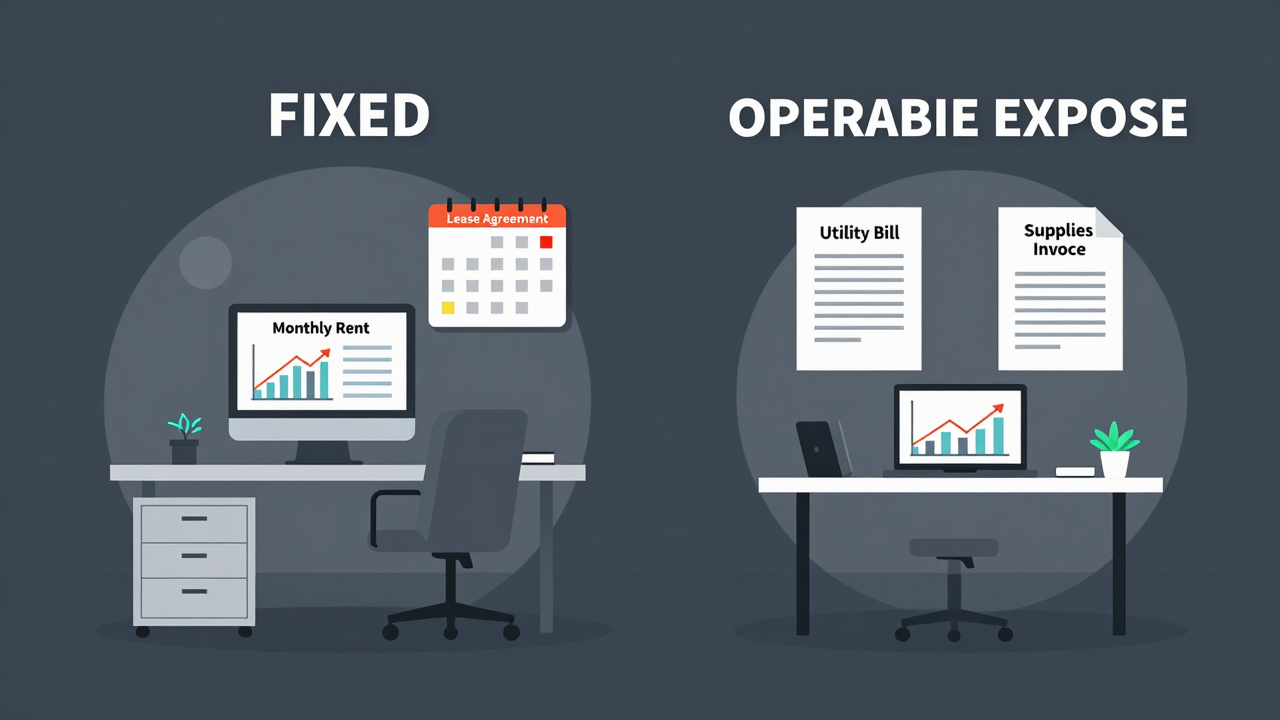
Grasping the differences between fixed and variable operating expenses is essential for managing your business’s finances effectively, especially as these costs influence your budgeting and forecasting strategies.
Fixed operating expenses remain constant regardless of your business activity levels. These include costs like:
- Rent and insurance
- Salaried employee wages
- Equipment leases
On the other hand, variable operating expenses fluctuate in direct relation to your business activity. Common examples are:
- Utility costs that rise with production
- Shipping expenses that increase with sales volume
- Sales commissions tied to performance
Some costs can even exhibit both characteristics; for instance, certain wages may be fixed but include variable components like overtime pay based on workload.
Grasping and monitoring these expenses helps guarantee your financial health, as excessive fixed costs can be risky during downturns, whereas high variable costs may impact profitability during fluctuating demand periods.
Operating vs. Non-Operating Expenses
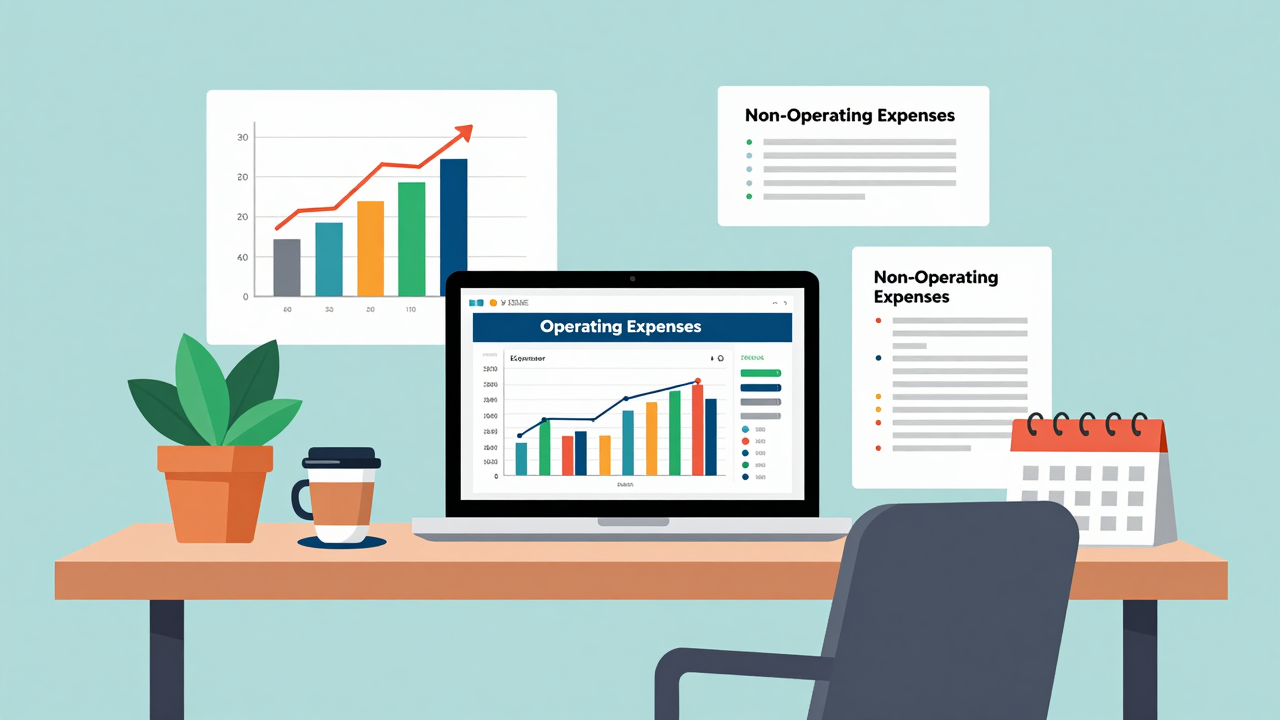
Comprehending the distinction between operating and non-operating expenses is vital for anyone managing a business, as it directly affects financial analysis and reporting.
Operating expenses, or OpEx, are the costs you incur through normal business operations, such as payroll, utilities, and rent. These expenses are typically tax-deductible if they’re considered ordinary and necessary.
Conversely, non-operating expenses are unrelated to your core activities and may include interest charges, depreciation, or losses from asset sales. Unlike OpEx, non-operating expenses typically don’t qualify for tax deductions.
Recognizing this distinction is significant since OpEx directly impacts your operating income, providing a clearer picture of financial performance.
Properly categorizing these expenses on your financial statements not only aids in analysis but also guarantees compliance with accounting standards, allowing for more accurate evaluations of your business’s profitability and operational efficiency.
Recording Operating Expenses in the Chart of Accounts
When recording operating expenses in your chart of accounts, it’s essential to structure them effectively for clarity and organization.
You should categorize these expenses under specific account numbers, often starting with the digits 6 for personnel costs and 7 for non-personnel costs, allowing for better tracking and reporting.
Expense Account Structure
An effective expense account structure in your chart of accounts is crucial for accurately recording and reporting operating expenses. To achieve this, you should categorize your expense accounts with numbers typically starting with 6 or 7. Each account should clearly represent its respective expense type, such as:
- Salaries and wages
- Rent and utilities
- Marketing and advertising
Moreover, consider grouping non-personnel expenses into categories like occupancy, office supplies, and travel for easier tracking.
For program-specific expenses, use the 76xx range to facilitate detailed cost analysis. Maintaining a structured account hierarchy not merely complies with reporting standards but also improves clarity for stakeholders reviewing your financial statements, making it easier for everyone involved to understand your financial situation.
Categorizing Operating Expenses
Categorizing operating expenses accurately in your chart of accounts is vital for effective financial management and reporting. In your chart, operating expenses typically fall under specific account numbers, with personnel expenses starting at ‘6’ and non-personnel expenses at ‘7’.
Each account should clearly represent its expense type, such as occupancy, administrative, marketing, or research and development. It’s important to separate program-specific expenses into distinct accounts to enable precise performance-to-budget analysis and return on mission calculations.
Consistently record accrued and recurring expenses to guarantee your financial statements are accurate and comply with accounting standards. Regularly updating your chart of accounts to reflect changes in operations and expense types improves overall financial management and reporting efficiency.
Tracking and Reporting
To effectively track and report operating expenses in your chart of accounts, it’s crucial to implement a systematic approach that captures all relevant costs as they occur.
Start by categorizing expenses under specific account numbers, typically beginning with a range like 6 or 7. Each type of operating expense should have distinct sub-accounts for clarity.
Consider these steps for effective tracking:
- Record costs as they’re incurred to guarantee accuracy in financial reports.
- Regularly review and reconcile your operating expense accounts to identify spending patterns.
- Align your chart of accounts with compliance requirements and strategic goals for better management.
Following these practices will help maintain oversight and accuracy in your operating expense reporting.
Calculating Operating Expenses
Calculating operating expenses is an important process for any business aiming to maintain financial health and operational efficiency. To determine these expenses, you’ll need to sum all recurring costs necessary for daily operations, such as salaries, rent, utilities, insurance, and marketing expenses.
You can likewise use the formula: Operating Expenses = Total Revenue – Operating Income – Cost of Goods Sold (COGS) to derive this figure.
It’s important to distinguish between fixed costs, like rent and salaries, which remain constant, and variable costs, such as utilities and sales commissions, that fluctuate with business activity.
Reviewing your general ledger or expense reports helps in identifying and totaling all operational costs that don’t relate directly to producing goods or services. Accurate calculation and categorization of these expenses on the income statement are fundamental for evaluating operational efficiency and profitability, affecting key financial ratios like the Operating Expense Ratio (OER).
Best Practices for Managing Operating Expenses

Managing operating expenses effectively is crucial for maintaining a business’s financial stability and ensuring long-term growth. To achieve this, consider these best practices:
- Regularly review and categorize your operating expenses in the chart of accounts. This helps clarify financial data and identify cost reduction areas.
- Implement a consistent numbering system for expense accounts, like starting with 6 for personnel and 7 for non-personnel. This organization streamlines reporting and analysis.
- Monitor recurring expenses closely. Small costs can add up over time, impacting overall efficiency and profitability.
Additionally, utilize budgeting tools to set spending limits for various categories, aligning expenditures with financial goals.
Regularly analyze the Operating Expense Ratio (OER) to assess efficiency, aiming for a lower ratio as you consider industry benchmarks.
Frequently Asked Questions
What Are Examples of Operating Expenses?
Examples of operating expenses include salaries for employees, rent for office space, utility bills for electricity and water, and costs for office supplies like paper and pens.
You’ll likewise find marketing expenses, such as paid advertisements and promotional materials, in addition to software subscriptions necessary for daily operations.
Furthermore, research and development costs aimed at product innovation are considered operating expenses, reflecting crucial business functions that support overall operations.
What Category Is Operating Expenses?
Operating expenses fall under the category of expenses in financial accounting. They typically include costs necessary for running your business, like salaries, rent, and utilities.
You’ll often find these expenses classified in subcategories such as selling, general, and administrative expenses. Accurate categorization helps you track spending, assess profitability, and guarantee compliance with accounting standards.
[embedded content]
Are Operating Expenses an Asset?
Operating expenses aren’t considered assets; they’re costs incurred to run your business.
Unlike assets, which provide long-term benefits, operating expenses, like salaries, rent, and utilities, are recorded on the income statement. These expenses are deducted from your revenue to calculate operating income, affecting your profitability.
Comprehending this distinction is essential for accurate financial reporting, ensuring you manage your costs effectively during the evaluation of your company’s overall financial health.
Where to Record Operating Expenses?
To record operating expenses, you should use specific accounts within your Chart of Accounts. Typically, these accounts are grouped into categories like Personnel Expenses, Occupancy Expenses, and Administrative Expenses, which helps maintain organization and clarity.
Each expense account is assigned a unique number, facilitating easy tracking. Furthermore, program-specific expenses should be separated into distinct accounts to evaluate performance effectively against your budget and guarantee accurate financial reporting.
Conclusion
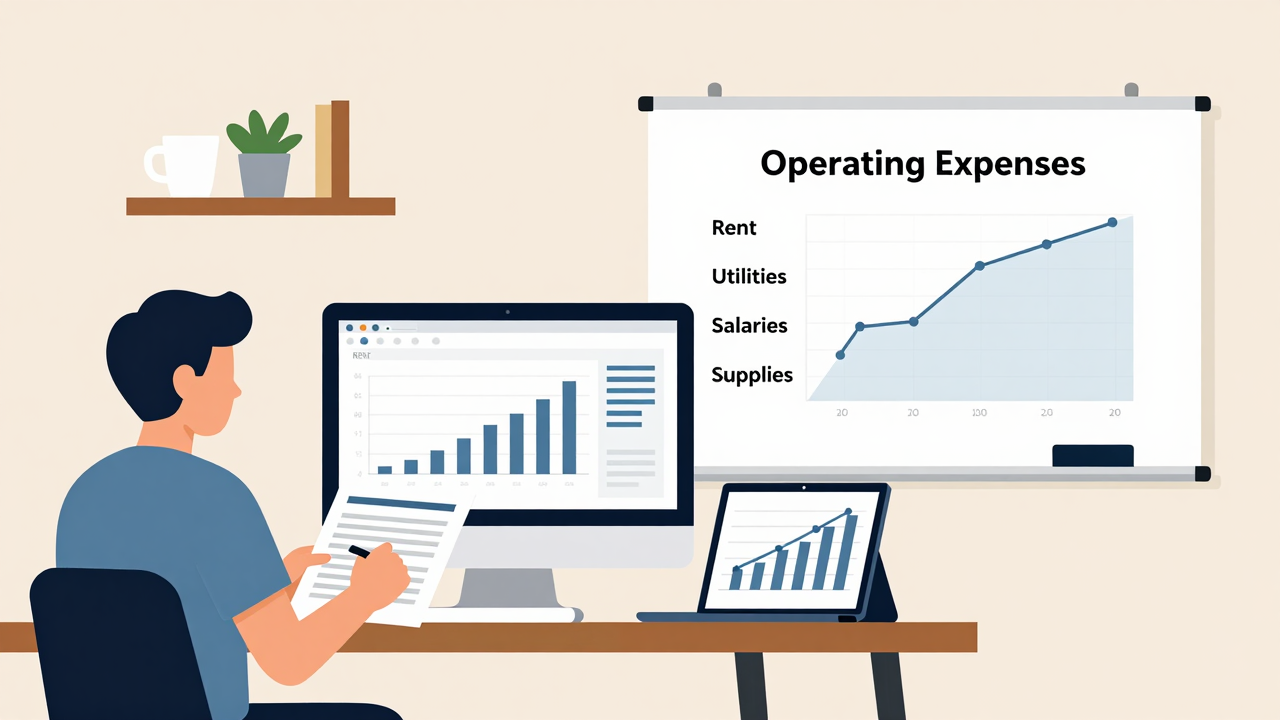
In conclusion, comprehending operating expenses is essential for any business’s financial health. By categorizing these costs in the chart of accounts, you can effectively track spending and make informed decisions. Recognizing the different types of operating expenses, such as personnel and occupancy costs, helps you manage your budget efficiently. Implementing best practices for recording and calculating these expenses guarantees a clearer picture of your overall financial performance, eventually aiding in strategic planning and operational efficiency.
Image via Google Gemini and Small Business Trends