
This post was originally published on this site.
A Chart of Accounts (COA) in Excel is vital for organizing your business’s financial data. It categorizes accounts into key areas like Assets, Liabilities, and Revenue, which aids in financial tracking and reporting. To create one, you’ll set up a table with specific columns for account numbers and names. Comprehending how to structure this document can vastly improve your financial management. Let’s explore the critical components and steps to develop an effective COA.
Key Takeaways
- A Chart of Accounts (COA) is a structured list categorizing all financial accounts to manage a business’s finances effectively.
- It typically includes five primary categories: Assets, Liabilities, Equity, Revenue, and Expenses, each with unique account numbers.
- To create a COA in Excel, download a template and set up columns for account number, name, type, and descriptions.
- A well-structured numbering system enhances clarity, allowing for easy identification and organization of accounts.
- Regularly review and update your COA to reflect changes in business operations and ensure accurate financial reporting.
Understanding the Chart of Accounts
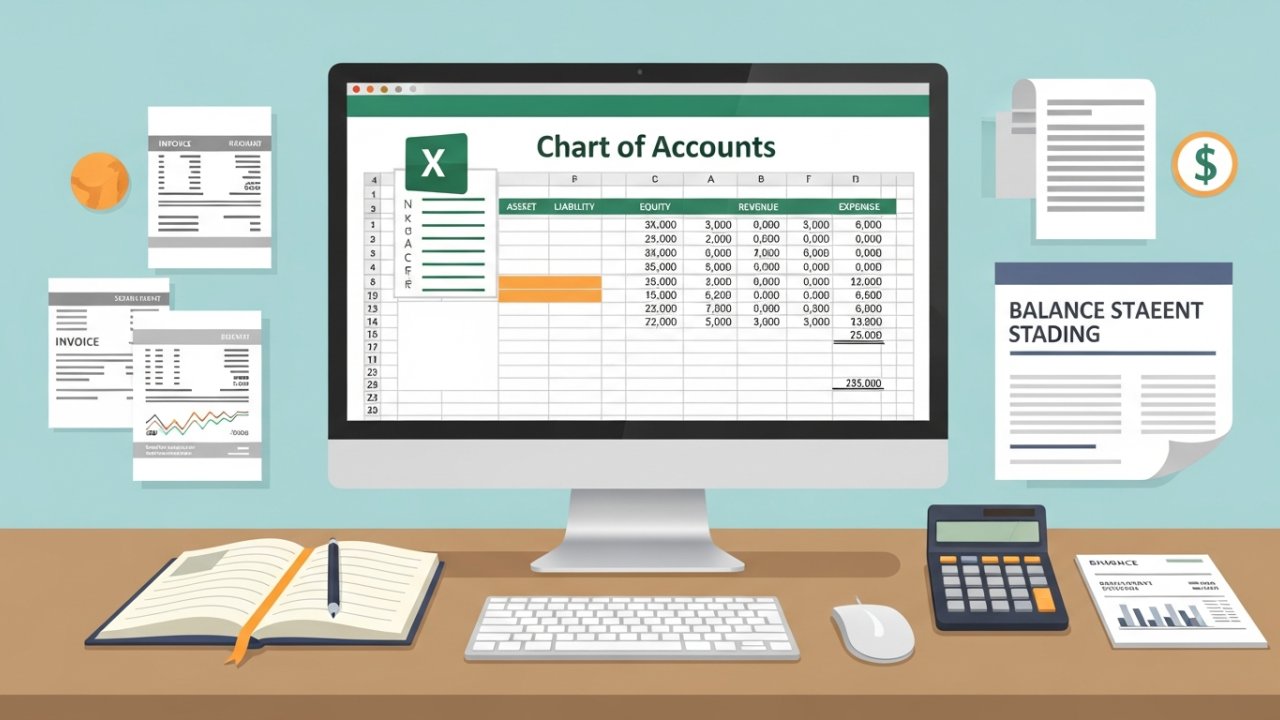
Comprehending the Chart of Accounts (COA) is crucial for effective financial management in any business. The COA is a structured list that categorizes all financial accounts, providing a clear overview of your financial scenery.
You can easily set up a chart of accounts in Excel using a chart of accounts excel format that organizes accounts into assets, liabilities, equity, revenue, and expenses. For guidance, a sample chart of accounts excel can serve as a valuable reference.
When creating your own chart of accounts example excel, make sure each account has a unique numerical code for easy identification. This organization aids in separating and analyzing income and expenses, facilitating accurate financial reporting and compliance with tax standards.
Key Components of a Chart of Accounts
When you create a Chart of Accounts, comprehending the different account types is essential for effective financial management.
You’ll notice categories like assets, liabilities, and expenses, each playing an important role in tracking your organization’s financial health.
Furthermore, a well-structured numbering system not just helps in identifying accounts quickly but likewise supports organized financial reporting by indicating the relationship between main categories and their sub-accounts.
Account Types Overview
A well-structured Chart of Accounts (COA) is vital for any business, as it categorizes financial accounts into five primary types: Assets, Liabilities, Equity, Revenue, and Expenses.
Comprehending these categories helps you manage your finances effectively. Here’s a brief overview:
- Assets: Resources owned by your business, like cash and inventory.
- Liabilities: Debts or obligations, including loans and accounts payable.
- Equity: Ownership interest in your business, such as common stocks and retained earnings.
- Revenue: Incoming payments for goods and services, important for evaluating profitability.
When creating a chart of accounts template in Excel, make certain you categorize these account types clearly, as they provide a structured overview of your financial position.
[embedded content]
Numbering System Importance
Establishing a clear numbering system in your Chart of Accounts (COA) is crucial for maintaining efficient financial management. This system assigns unique codes to each account, making identification and data entry straightforward.
Typically, the first digit indicates the major account category, like Assets or Liabilities, whereas subsequent digits detail subcategories, creating a hierarchical structure. An organized numbering scheme improves clarity and reduces reporting errors, allowing for quick navigation within the COA.
Furthermore, a well-structured system accommodates future growth by leaving gaps for new accounts without disrupting the order. Consistency in your numbering aligns with standard accounting practices, supporting accurate tracking of financial transactions across departments, ultimately enhancing your financial oversight and decision-making.
Steps to Create Your Chart of Accounts

Creating a Chart of Accounts (COA) is essential for organizing your financial information effectively. Here are the steps to create one:
- Download a COA Excel template: This gives you a structured format to work with.
- Create a table: Include columns for account number, account name, and account type, assigning each account a unique number for easy identification.
- Classify accounts: Organize them into primary categories like assets, liabilities, equity, revenue, and expenses to maintain clarity and facilitate analysis.
- Add descriptions: Provide brief explanations for each account type to clarify their purpose and guarantee consistent usage across your organization.
Regularly review and update your COA to reflect any changes in your business, making sure it remains relevant and effective for financial management.
Utilizing a Chart of Accounts Template in Excel
Utilizing a Chart of Accounts template in Excel can greatly improve your financial management process. A typical template includes columns for account number, account name, and account type, providing a structured layout to organize your financial accounts.
You can easily download a pre-designed template that guides you in categorizing accounts and naming conventions. Each account should have a unique number following a logical scheme for quick identification.
Customizing the template allows you to tailor the account names and structures to meet your specific financial tracking needs while adhering to standard accounting principles.
Importing Your Chart of Accounts Into Quickbooks

When you’re ready to import your Chart of Accounts into QuickBooks, start by logging in and guiding to the gear menu where you’ll find the “Import Data” option.
Follow these steps for a successful import:
- Upload your COA Excel or CSV file.
- Verify the columns in your spreadsheet are mapped correctly to the corresponding QuickBooks fields for accurate data entry.
- Review all the data for accuracy to prevent errors in your financial reporting.
- After confirming that mappings are correct, click “Import” to complete the process and integrate your Chart of Accounts into QuickBooks.
QuickBooks supports specific account types, verifying proper categorization for your balance sheet and income/expense accounts.
Advantages of a Well-Structured Chart of Accounts

A well-structured Chart of Accounts (COA) plays a pivotal role in improving the overall financial management of a business. It provides a clear framework for categorizing all financial transactions, which increases financial reporting accuracy.
By allowing for detailed tracking of income and expenses, it facilitates effective budgeting and forecasting, leading to better decision-making. Furthermore, a thorough COA guarantees compliance with accounting regulations, reducing the risk of errors.
You can analyze the performance of different business segments by distinguishing between various accounts. In addition, it saves time and resources by streamlining the accounting process, allowing for easier navigation of financial data.
Finally, a well-structured COA bolsters both clarity and efficiency in your financial management efforts.
Frequently Asked Questions
How to Create a Chart of Accounts in Excel?
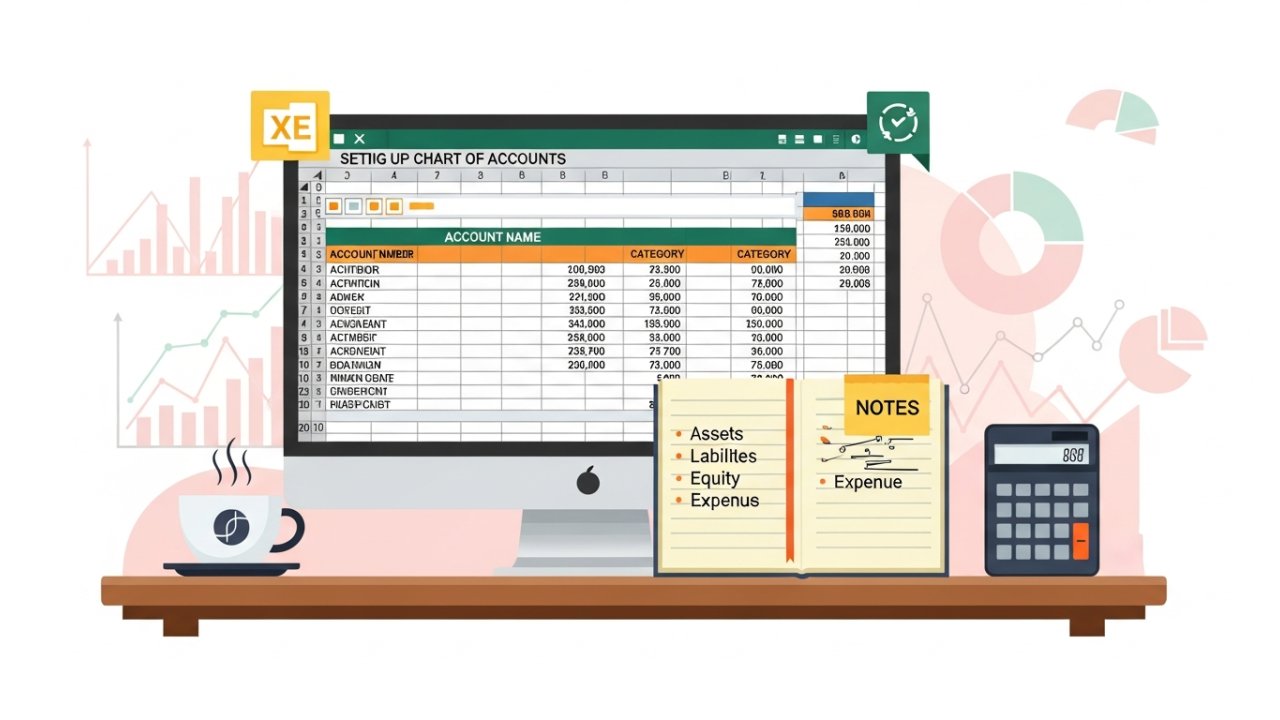
To create a chart of accounts in Excel, start by setting up a table with columns for account number, account name, and account type.
Use a logical numbering scheme, where the first digit indicates the major category, like assets or liabilities. Classify accounts accordingly and add brief descriptions for clarity.
Regularly review and update your chart to reflect any changes in your business structure or financial reporting needs. This keeps your financial tracking accurate and organized.
What Is a Chart of Accounts and How to Create One?
A Chart of Accounts (COA) is an essential organizational tool that categorizes all financial accounts, making it easier for you to track income and expenses.
It typically includes five main categories: Assets, Liabilities, Equity, Revenue, and Expenses.
To create one, set up a table with columns for account numbers, names, and types. Make sure each account has a unique code, and regularly update the COA to maintain its relevance and accuracy for financial reporting.
How to Make a Chart in Excel Step by Step?
To make a chart in Excel, start by selecting the data range you want to visualize.
Next, go to the “Insert” tab on the ribbon and choose a chart type, like a column or pie chart. If you’re unsure, use the “Recommended Charts” feature for guidance.
After inserting the chart, customize it by adding titles, legends, and data labels through the “Chart Design” tab.
[embedded content]
Right-click to edit data or formatting as needed.
How to Create an Account in Excel?
To create an account in Excel, start by opening a new spreadsheet. You should label your columns clearly, such as “Account Number,” “Account Name,” and “Account Type.”
Next, input unique numerical codes for each account, ensuring they follow a logical sequence. For instance, use ‘1000’ for assets and ‘2000’ for liabilities.
Regularly update this list to reflect any changes in your financial structure, ensuring accuracy for effective management and reporting.
Conclusion
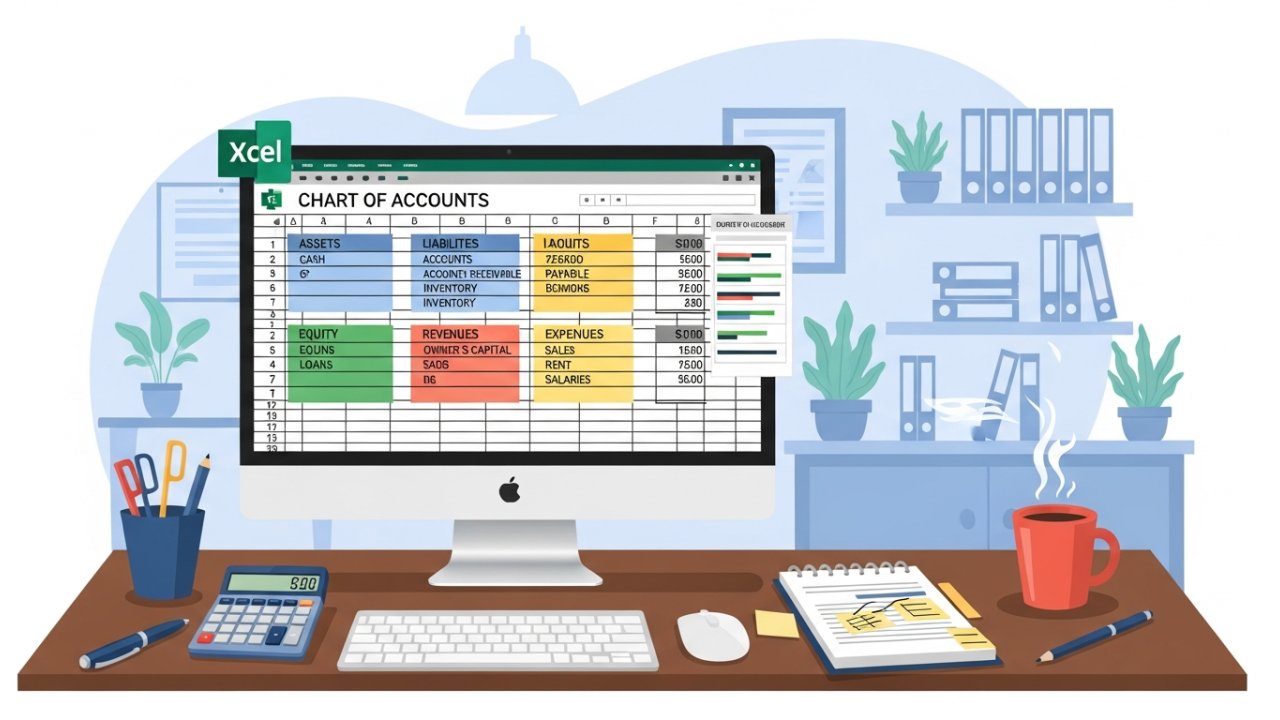
In summary, a well-structured Chart of Accounts in Excel is crucial for effective financial management. By organizing accounts into clear categories like Assets and Expenses, you can improve reporting accuracy and compliance. Following the steps outlined, including utilizing templates and importing data into accounting software like QuickBooks, simplifies the process. Regularly updating your COA guarantees it reflects any business changes, eventually leading to better financial tracking and decision-making for your organization.
[embedded content]
Image via Google Gemini