

This post was originally published on this site.
A Free Franchise Disclosure Document (FDD) is essential for anyone considering a franchise opportunity. It provides detailed information about the franchisor, including costs, fees, and responsibilities. By law, this document must be given to you at least 14 days before you sign any agreements or make financial commitments. Comprehending what’s included in the FDD can greatly impact your decision. So, what are the key elements you should pay attention to in this important document?
Key Takeaways
- A Free Franchise Disclosure Document (FDD) is a legal document that provides essential information about franchise opportunities.
- FDDs must be made available to potential franchisees at least 14 days before signing contracts or making payments.
- The FDD includes 23 sections detailing the franchisor’s background, financial obligations, and litigation history.
- Accessing a free FDD can often be done through state-specific portals or franchise databases.
- The FDD promotes transparency and informed decision-making for potential franchisees regarding their investment.
Definition and Purpose of the Franchise Disclosure Document (FDD)

A Franchise Disclosure Document (FDD) is an important legal document that the Federal Trade Commission (FTC) requires franchisors to provide to potential franchisees.
This document offers vital information about a franchise opportunity in the U.S., helping you understand what to expect. You’ll receive the FDD at least 14 days before signing any contracts or exchanging money, ensuring you have time to review it thoroughly.
The FDD consists of 23 sections, covering the franchisor’s background, fees, obligations, and any litigation history.
It’s important to note that the FDD isn’t a promotional tool; instead, it serves as a factual resource designed to protect you and promote transparency in franchise agreements.
You can often find a free franchise disclosure document online for review.
Requirements and Structure of the FDD
The Franchise Disclosure Document (FDD) is structured to include 23 key items that provide crucial information about the franchise opportunity.
You’ll find sections covering the franchisor’s background, financial performance, and details about the initial investment and ongoing fees.
Comprehending these requirements is fundamental for making an informed decision before committing to a franchise.
FDD Structure Overview
Understanding the structure of the Franchise Disclosure Document (FDD) is critical for anyone considering a franchise opportunity, as it lays out fundamental information in a clear format.
The FDD is organized into 23 sections, mandated by the Federal Trade Commission (FTC), covering important details like the franchisor’s background, fees, obligations of both parties, litigation history, and financial performance from existing franchisees.
It’s essential you receive the free FDD at least 14 days before signing any contract or exchanging money, ensuring you can make informed decisions.
The FDD serves as a thorough guide, clarifying your responsibilities and costs associated with franchise ownership as well as outlining potential risks, helping you navigate your investment wisely.
Key Requirements Explained
When considering a franchise opportunity, comprehending the key requirements of the Franchise Disclosure Document (FDD) is crucial for making informed decisions.
The FDD must be provided to you at least 14 days before signing any binding contract or exchanging money, giving you ample time to review it. This document is structured into 23 sections, covering significant aspects like the franchisor’s background, fees, and obligations.
You’re entitled to receive a copy after submitting your application, ensuring transparency. Each item must adhere to the Federal Trade Commission (FTC) regulations, promoting consistency.
Key items include financial performance representations, litigation history, and a breakdown of costs, which you can access through the franchise disclosure document database to evaluate the franchise’s viability.
Key Items and Importance of the FDD
Comprehending the key items in the Franchise Disclosure Document (FDD) is critical for anyone considering a franchise opportunity.
The FDD contains 23 key items that provide fundamental insights into what to expect. Key items include:
- Initial investment and ongoing costs
- Financial performance representations
- Details about current and former franchisees
- Franchisor’s background and obligations
Understanding these elements helps you evaluate the financial commitment and potential earnings of the franchise.
By utilizing the fdd database, you can access significant information that guarantees transparency and informed decision-making.
This foundational document is designed to protect you, as it must be provided at least 14 days before any contract signing or payment, allowing ample time for evaluation.
Public Access and 14-Day Waiting Period
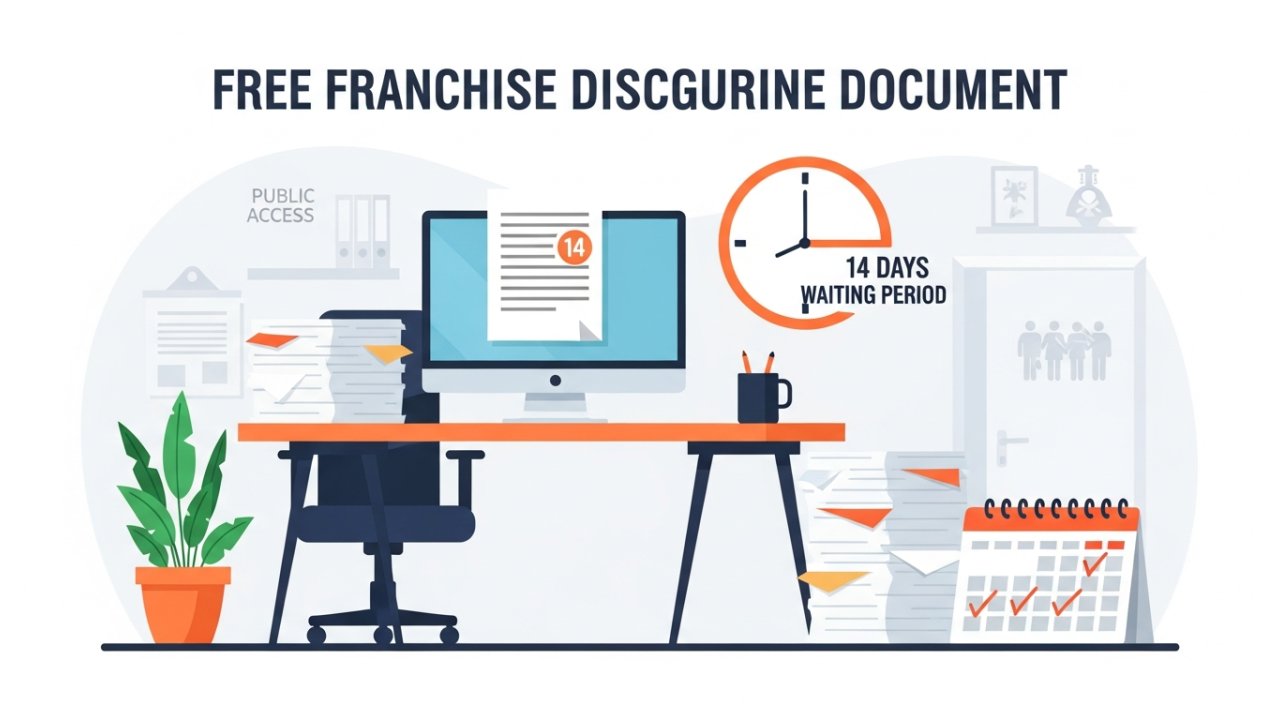
Even though potential franchisees may be eager to plunge into a new business opportunity, comprehending the limitations surrounding the public access of the Franchise Disclosure Document (FDD) is important.
Franchises aren’t required to provide an FDD except you request it, meaning public access is somewhat restricted. You can conduct an FDD search, but it relies on your interest level in a franchise.
In addition, the FDD must be presented to you at least 14 days before any contract signing or financial exchange. This waiting period is significant, as it guarantees you have ample time to review the FDD, which outlines critical information like the franchise’s history, fees, obligations, and litigation records, aiding in your investment decision.
Understanding Franchise Trends
Comprehending franchise trends is vital for anyone looking to invest in or expand a franchise. By staying updated on these trends, you can identify emerging opportunities and make informed decisions.
Here are some key aspects to contemplate:
- Monitor shifts in consumer preferences
- Utilize market analysis to stay competitive
- Adapt your franchise model to industry standards
- Leverage insights from competitor evaluations
A proactive approach, including a thorough franchise disclosure document search, can help you position your business effectively in the market.
Recognizing these trends allows you to innovate and adapt your strategies, ensuring you maintain a competitive edge.
In the end, comprehending franchise trends will greatly influence your investment decisions and improve your franchise development strategies.
Resources for Obtaining Franchise Disclosure Documents

In regard to obtaining Franchise Disclosure Documents (FDDs), there are several reliable resources available that can help you access this vital information.
You can start by checking state-specific portals, which often provide free access to FDDs. For instance, in California, enter the franchisor’s legal name and select “Uniform Franchise Registration Application” to download the FDD.
In Indiana, choose “Franchise” as the registration type and input the legal name along with effective dates for accurate results. Similarly, the Minnesota Commerce Department allows you to search by selecting “Franchise Registrations.”
Furthermore, you may explore a franchise FDD database, which aggregates these documents for easier access. Utilizing these resources will streamline your search for important franchise information.
Frequently Asked Questions
How to Get a Franchise Disclosure Document for Free?
To get a Franchise Disclosure Document (FDD) for free, start by visiting your state’s specific database.
For instance, in California, enter the franchisor’s legal name on the Department of Business Oversight website.
In Indiana, select “Franchise” on the Secretary of State’s portal and provide the necessary details.
Minnesota requires you to choose “Franchise Registrations,” whereas Wisconsin lets you search by brand name and download the FDD directly.
What Is a Franchise Disclosure Document?
A Franchise Disclosure Document, or FDD, is an essential legal document that franchisors provide to you before signing any agreements.
It outlines 23 key items, including the franchisor’s experience, potential litigation, and financial performance.
This document helps you understand your rights, obligations, and costs associated with the franchise.
Is an FDD Legally Required?
Yes, an FDD is legally required in the U.S. for franchisors.
They must provide it to potential franchisees at least 14 days before any contract signing or payment.
This document includes 23 specific items mandated by the Federal Trade Commission, ensuring transparency about the franchisor’s business, fees, and obligations.
If franchisors fail to comply with these requirements, they may face legal penalties or lawsuits, emphasizing the importance of adhering to the rules.
[embedded content]
How Do I Get a FDD?
To get a Franchise Disclosure Document (FDD), you can access state-specific databases.
Start by entering the franchisor’s legal name into the appropriate search tool for your state. For example, in California, use the “Uniform Franchise Registration Application” for a free download.
In Minnesota, select “Franchise Registrations,” and specify the type.
Each state has unique requirements, so make sure you follow the correct process to obtain the FDD you need.
Conclusion

In conclusion, a Free Franchise Disclosure Document (FDD) is vital for anyone contemplating a franchise opportunity. It provides detailed information about the franchisor, costs, and obligations, ensuring you make informed decisions. Remember, you must receive the FDD at least 14 days before any financial commitment. Various state-specific resources offer free access to these documents, allowing you to research potential franchises thoroughly. Comprehending the FDD is fundamental for maneuvering the franchise environment effectively.
Image via Google Gemini