
This post was originally published on this site.
Just-in-Time (JIT) inventory is a strategy that helps you align your material orders with production schedules. By keeping inventory levels low, you can cut holding costs and boost cash flow. To make JIT work, focus on accurate demand forecasting, build strong relationships with suppliers, and guarantee your logistics are reliable. For instance, using a Kanban system can streamline your inventory tracking. Want to know how to implement JIT effectively and explore its benefits?
Key Takeaways
- Just-in-Time (JIT) inventory minimizes holding costs by synchronizing raw material orders with production schedules to reduce excess stock.
- JIT relies on accurate demand forecasting, utilizing historical data and advanced analytics for precise inventory management.
- The Kanban system facilitates timely replenishment based on actual usage, promoting efficient inventory turnover.
- Strong supplier relationships and reliable logistics networks are crucial for avoiding disruptions and ensuring timely deliveries.
- JIT enhances operational efficiency and cash flow, but requires careful planning to mitigate risks like stockouts and supply chain vulnerabilities.
What Is Just-in-Time (JIT) Inventory?
Just-in-Time (JIT) inventory management is a strategy designed to streamline your production process by syncing raw material orders with your production schedules. This approach minimizes inventory levels, helping you reduce holding costs and avoid excess stock.
To implement just-in-time inventory management effectively, focus on accurate demand forecasting and build strong relationships with your suppliers. This guarantees that materials arrive precisely when you need them, preventing delays and wasted resources.
For example, car manufacturers like Toyota order parts only after receiving vehicle orders, showcasing the system’s efficiency. By adopting JIT, you can respond quickly to market changes and customer demands, enhancing your operational efficiency.
To get started, assess your current inventory practices, identify your suppliers, and establish communication channels. Streamlining your processes won’t only save costs but also free up cash flow, making your business more agile and responsive.
How Does JIT Work in Inventory Management?

To effectively manage inventory, synchronize your raw material orders with your production schedules, guaranteeing materials arrive exactly when needed.
By using just in time inventory management software, you can track inventory levels in real-time, allowing for precise ordering. This software helps you forecast demand accurately, reducing the risk of stockouts or excess inventory.
Implement the Kanban system to trigger replenishment orders based on actual usage, enhancing efficiency and minimizing waste.
Maintain strong communication with your suppliers to guarantee reliable deliveries, as JIT relies heavily on their consistency.
Additionally, keep your logistics network robust, enabling frequent, smaller shipments. This approach not only optimizes storage space but also helps improve cash flow by lowering holding costs.
Core Principles of Just-in-Time Inventory Management
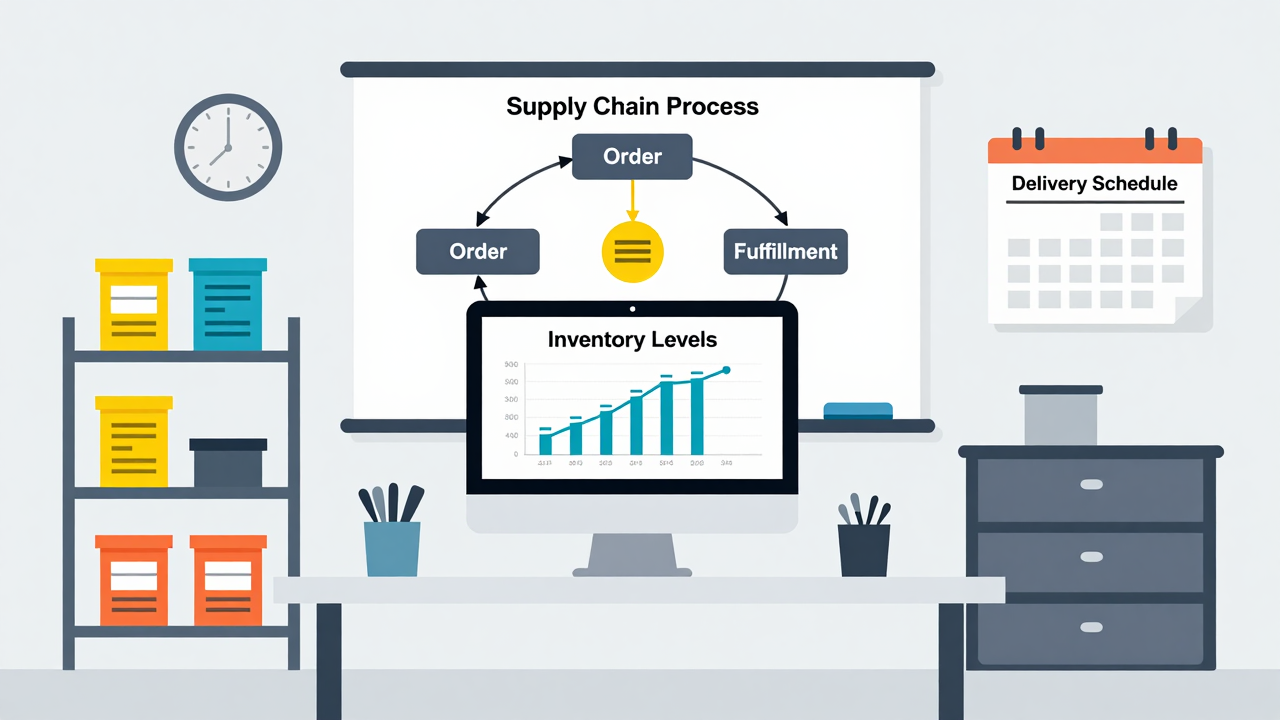
To effectively manage Just-in-Time inventory, you need to prioritize demand forecasting accuracy, ensuring you understand your customers’ needs.
Strong supplier coordination is essential, as it allows you to receive materials exactly when required, preventing delays and excess stock.
Finally, lean production techniques help streamline your processes, making it easier to adapt to changes without wasting resources.
Demand Forecasting Accuracy
Effective demand forecasting is essential for minimizing excess inventory and guaranteeing that your material orders align with actual production needs.
By using JIT inventory management software, you can analyze real-time data and historical sales trends to make informed predictions about future demand. This accuracy allows you to order raw materials and components just in time, reducing storage costs and waste. A small percentage increase in forecasting accuracy can lead to significant savings.
Implementing a Kanban system can visually track inventory levels and trigger reorder points based on consumption rates.
Finally, maintain open communication with your suppliers to assure materials arrive precisely when needed, avoiding production delays and enhancing overall efficiency.
Supplier Coordination Importance
Supplier coordination plays an essential role in Just-in-Time (JIT) inventory management, as it guarantees materials arrive exactly when needed for production.
To implement effective supplier coordination, establish strong partnerships that foster trust and open communication. This guarantees your suppliers understand your production schedules and can deliver materials promptly.
Utilize tools like the Kanban system to signal when inventory needs replenishing, helping you avoid stockouts or excess inventory.
Monitor supplier performance regularly to identify any potential disruptions early. Remember, even small issues can impact your entire operation, as shown by the 1997 Aisin fire’s effects on Toyota.
Lean Production Techniques
Maintaining strong supplier relationships is just the start when implementing lean production techniques in Just-in-Time (JIT) inventory management.
First, focus on synchronizing your production schedules with actual customer demand, ensuring raw materials arrive just in time for manufacturing.
Use the Kanban system to visualize inventory levels and trigger replenishment orders effectively.
Continuous improvement is key; regularly evaluate your processes to enhance efficiency and quality.
Strong demand forecasting helps avoid excess inventory, keeping costs low.
Always emphasize value from the customer’s perspective, delivering high-quality products quickly.
Ultimately, foster a culture of collaboration among your team and suppliers, as this will improve agility and responsiveness in your JIT practices.
The Role of Demand Forecasting in JIT

To effectively implement Just-in-Time (JIT) inventory management, you must prioritize demand forecasting as a core component of your strategy. Accurate demand forecasting helps you determine when and how much raw material to order, aligning production with customer needs while minimizing excess inventory costs.
Use historical sales data and market trends to make informed predictions. Advanced analytics and AI technologies can enhance your forecasting precision, leading to better synchronization between supply and production schedules.
To avoid stockouts, regularly review your forecasts and adjust inventory levels accordingly. Remember, fluctuations in demand can disrupt your supply chain, so robust forecasting techniques are essential.
A 2019 study showed that JIT practices reduced inventory holding costs by up to 30%, greatly improving cash flow.
Advantages of Implementing JIT Inventory

Implementing a Just-in-Time (JIT) inventory system can transform how you manage your resources, especially if you’re looking to cut costs and improve efficiency. With JIT, you can minimize excess stock, reducing holding costs and freeing up warehouse space. By purchasing materials only as needed, you enhance cash flow, allowing for better investment in other areas of your business.
Here’s a quick overview of the advantages:
| Advantage | Description |
|---|---|
| Cost Reduction | Lower storage expenses |
| Improved Cash Flow | Capital is available for other uses |
| Increased Efficiency | Timed deliveries align with production |
| Enhanced Customer Satisfaction | Faster response to demand |
| Quality Control | Easier detection of defects |
To fully leverage these benefits, consider using JIT inventory software to streamline your processes, ensuring your production schedules sync seamlessly with your supplier deliveries.
Disadvantages and Risks of JIT Inventory Management
While Just-in-Time (JIT) inventory management offers many advantages, it also comes with notable disadvantages and risks that you need to evaluate. Here are three key concerns:
- Supply Chain Vulnerability: Delays from suppliers can halt your production, leading to costly disruptions.
- Demand Fluctuations: A sudden spike in demand can result in stockouts, leaving you unable to meet customer orders and harming your reputation.
- Forecasting Challenges: Precise demand forecasting is essential; inaccuracies can lead to costly errors and missed opportunities.
To mitigate these risks, consider establishing strong relationships with reliable suppliers, implementing robust forecasting tools, and maintaining a small buffer stock.
Regularly review your inventory management practices and adapt as needed. By being proactive and addressing these disadvantages, you can better navigate the complexities of just in time inventory management, ensuring smoother operations and improved customer satisfaction.
Real-World Examples of JIT in Action

Just as businesses aim for efficiency, many have successfully adopted Just-in-Time (JIT) inventory systems to streamline their operations.
For instance, Toyota pioneered JIT by synchronizing parts delivery with production schedules, minimizing waste and costs.
Dell Computers assembles its products only after receiving customer orders, ensuring that inventory stays low while allowing for customization.
In the fast-food industry, chains like McDonald’s utilize JIT to deliver fresh ingredients just in time for meal preparation, cutting down on spoilage.
Boeing coordinates with suppliers to get aircraft components delivered only when needed on the assembly line, optimizing efficiency.
Fashion retailer Zara rapidly produces and delivers limited stock based on current trends, enabling quick responses to market demands.
These just in time inventory examples highlight effective strategies you can adopt to improve your operations, reduce costs, and enhance customer satisfaction.
Consider how JIT can work for your business model to streamline processes and meet demand effectively.
Enhancing Operational Efficiency With JIT
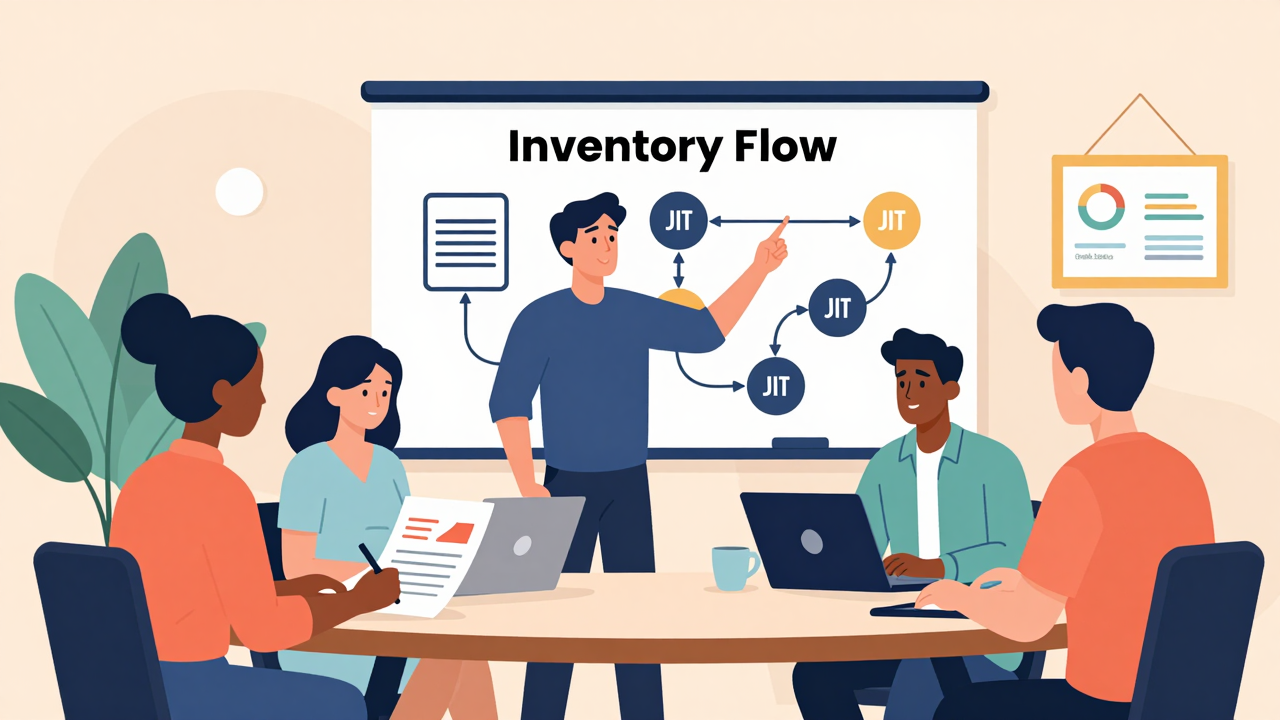
To enhance operational efficiency with JIT, start by streamlining your material flow, guaranteeing that supplies arrive just in time for production.
Focus on waste reduction strategies, like minimizing excess inventory and optimizing storage space, to cut costs and improve resource use.
Finally, strengthen your relationships with suppliers to secure timely deliveries, as their coordination is essential for maintaining smooth operations and preventing disruptions.
Streamlined Material Flow
Streamlining material flow is essential for enhancing operational efficiency with a Just-in-Time (JIT) inventory system.
To achieve this, focus on these key actions:
- Implement the Kanban System: Use Kanban to track real-time inventory levels, guaranteeing materials arrive only as needed.
- Strengthen Supplier Relationships: Maintain open communication with suppliers to secure timely deliveries and reduce delays.
- Enhance Demand Forecasting: Use accurate forecasting techniques to anticipate customer needs, allowing you to adjust inventory levels promptly.
Waste Reduction Strategies
While focusing on waste reduction is essential for enhancing operational efficiency with a JIT inventory system, you’ll find that simple, actionable strategies can make a significant difference.
Start by implementing just-in-time inventory management, which synchronizes your material orders with production schedules. Use the Kanban system to trigger inventory replenishment based on real-time usage, preventing overproduction.
Regularly review your processes for continuous improvement, identifying areas where waste occurs, like excess handling or long storage times. Encourage a culture of operational excellence by training your team to prioritize waste elimination.
Finally, maintain strong communication with suppliers to guarantee timely deliveries, which reduces holding costs and enhances cash flow, keeping your operations lean and efficient.
[embedded content]
Supplier Coordination Importance
Supplier coordination is essential for a successful Just-in-Time (JIT) inventory system because it directly impacts operational efficiency.
When you effectively manage supplier relationships, you can:
- Guarantee raw materials arrive precisely when needed.
- Respond quickly to demand changes without excess inventory.
- Utilize technologies like Electronic Data Interchange (EDI) for real-time communication.
Why Do Supplier Relationships Matter in JIT?

Strong relationships with your suppliers are essential for a successful Just-in-Time (JIT) inventory system. These partnerships help guarantee that materials arrive on time, reducing the risk of production delays. Effective communication fosters quick adjustments to orders, accommodating fluctuating demand.
| Benefits | Impact on JIT |
|---|---|
| Timely deliveries | Minimizes stockouts |
| Enhanced coordination | Adapts to demand changes |
| Trust and collaboration | Improves quality control |
| Long-term partnerships | Strengthens supply chain resilience |
To thrive in a just-in-time supply chain, invest in relationship management. Regularly engage with suppliers, share forecasts, and discuss potential challenges. This proactive approach builds trust, guaranteeing smoother operations and better inventory management. Remember, a reliable supplier can be the difference between seamless production and costly delays.
Effective Strategies for Sustaining a JIT Inventory System

To sustain an effective Just-in-Time (JIT) inventory system, it’s crucial to implement several key strategies that enhance efficiency and minimize waste.
- Use a Kanban System: This helps you track inventory and trigger replenishment orders based on real-time usage, reducing excess stock and improving workflow.
- Foster Strong Supplier Relationships: Building solid connections guarantees timely deliveries, minimizing risks from supply chain disruptions, which can be critical for JIT success.
- Leverage Just in Time Inventory Software: Advanced software can enhance demand forecasting accuracy, allowing you to make proactive decisions about ideal inventory levels.
Additionally, establish contingency plans to handle unexpected disruptions and regularly conduct performance audits to assess the effectiveness of your JIT practices.
These strategies will help maintain operational efficiency and adaptability in your inventory system.
Common Challenges When Using JIT Inventory

When using a Just-in-Time (JIT) inventory system, you’ll face some common challenges that can impact your operations.
First, supply chain vulnerabilities can disrupt production, so it’s vital to establish strong relationships with reliable suppliers and have contingency plans ready.
Second, accurate demand forecasting is essential; regularly review your data and adjust your strategies to avoid stockouts and maintain customer satisfaction.
Supply Chain Vulnerabilities
Supply chain vulnerabilities can pose significant challenges for businesses using Just-in-Time (JIT) inventory systems. To navigate these challenges, consider the following:
- Supply Disruptions: Be aware that any delay in material delivery can halt production, as seen with Toyota during the 1997 Aisin fire.
- Demand Fluctuations: Prepare for sudden spikes in customer demand that can lead to stockouts, damaging your relationships with clients.
- Supplier Dependence: Relying on a few key suppliers increases risk; a delay from one can disrupt your entire operation.
To mitigate these vulnerabilities, strengthen communication with suppliers, diversify your supplier base, and invest in accurate demand forecasting.
Demand Forecasting Accuracy
How can you guarantee demand forecasting accuracy in a Just-in-Time (JIT) inventory system? Start by using reliable data and advanced analytics to predict market trends. Remember, even a 10% forecasting error can lead to significant financial losses. Here’s a quick look at some key challenges:
| Challenge | Impact |
|---|---|
| Unpredictable market trends | Stockouts or excess inventory |
| Relying on historical data | Misleading forecasts |
| Seasonal changes | Variability in demand |
| Limited use of analytics | Inaccurate predictions |
To improve accuracy, constantly monitor market changes and adjust forecasts accordingly. Investing in predictive analytics tools can also help, as only 30% of businesses use these effectively. Keep refining your approach to guarantee your just in time inventory aligns with actual demand.
Linking Just-In-Time Inventory With Lean Manufacturing
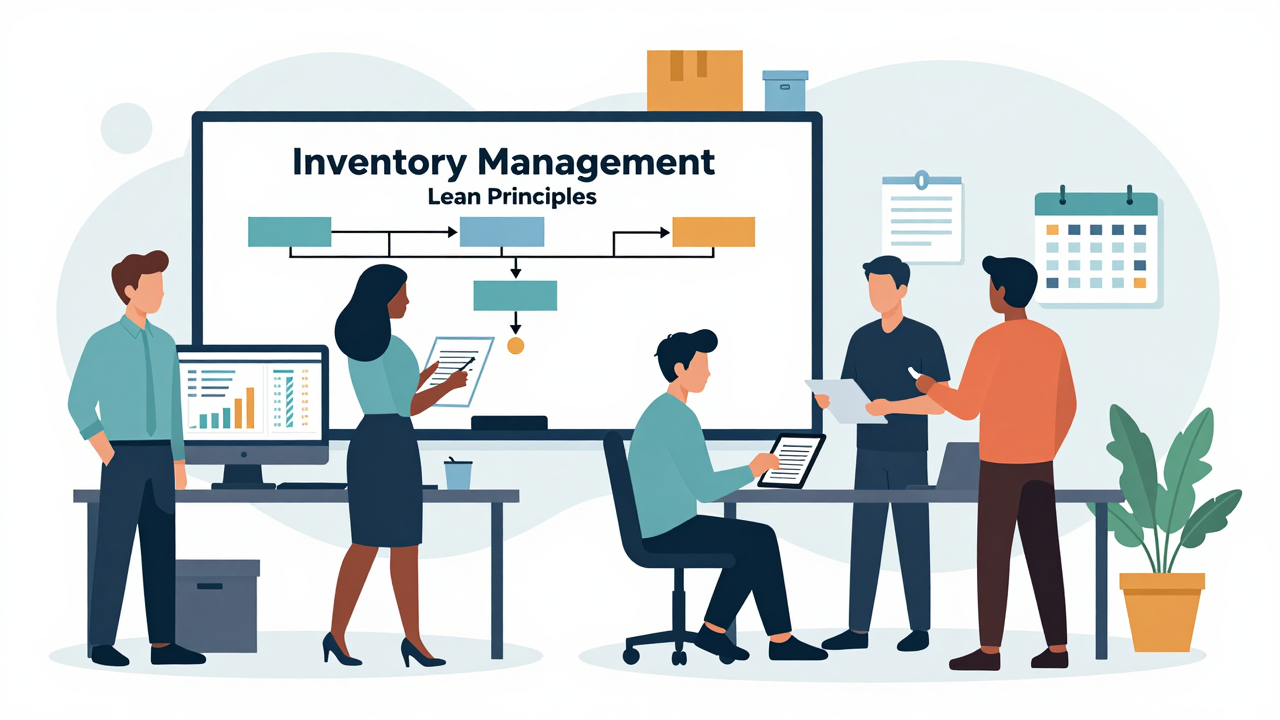
Linking Just-in-Time (JIT) inventory with Lean Manufacturing creates a powerful approach to minimizing waste and optimizing production.
Here’s how you can effectively integrate these concepts:
- Reduce Excess Inventory: By synchronizing material orders with your production schedules, you can cut down on storage costs and free up capital for other investments.
- Enhance Supplier Relationships: Strong connections with suppliers are critical. Make sure they understand your demand needs to maintain a steady flow of materials.
- Utilize the Kanban System: This visual tool helps signal when to reorder materials based on real-time usage, aligning perfectly with Lean practices.
The Impact of Technology on JIT Systems

As you integrate Just-in-Time (JIT) inventory practices with Lean Manufacturing, it’s important to recognize the transformative role technology plays in enhancing these systems.
Implementing electronic data interchange (EDI) allows real-time communication with suppliers, ensuring timely deliveries essential for JIT inventory management.
Utilize advanced forecasting tools like AI to improve demand predictions, reducing stockouts and boosting efficiency.
Incorporate IoT devices to monitor inventory levels continuously, alerting you when to reorder materials. This helps maintain ideal stock without excess.
Additionally, consider automation in your warehousing operations; robotic process automation (RPA) can streamline logistics, minimizing delays.
Finally, cloud-based inventory management systems enable seamless integration across your supply chain partners, enhancing coordination and responsiveness to market changes.
Measuring JIT Effectiveness
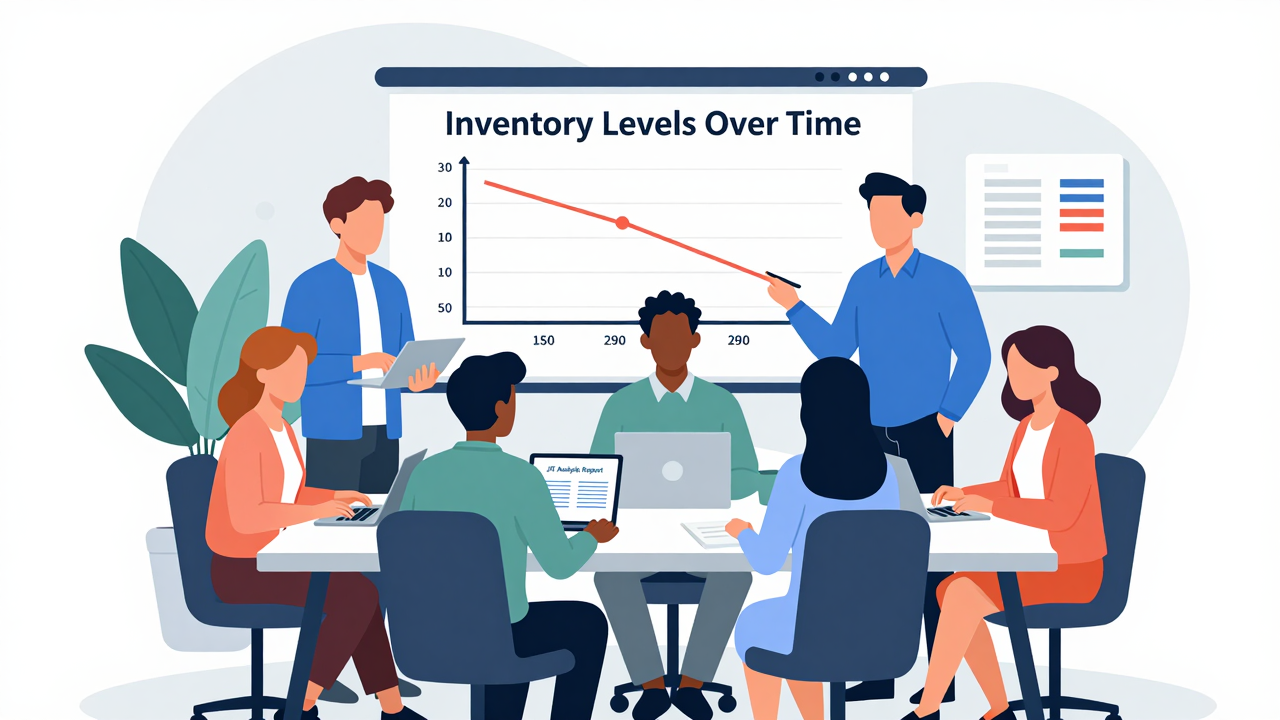
To measure JIT effectiveness, start by tracking your inventory turnover ratio, which shows how quickly you’re selling and replacing stock.
Next, analyze lead times to identify how long it takes from order to delivery, aiming for less than one week to keep production smooth.
Inventory Turnover Ratio
Measuring the effectiveness of your Just-in-Time (JIT) inventory system hinges on the inventory turnover ratio. This ratio shows how often your inventory is sold and replaced, indicating how well your JIT strategies are working.
To improve your inventory turnover, consider these steps:
- Calculate the ratio by dividing the cost of goods sold (COGS) by your average inventory.
- Aim for a ratio above industry benchmarks, which signals effective JIT implementation.
- Monitor trends over time to identify potential overstocking or inefficiencies.
For instance, a ratio of 6 means you sell and replace your inventory six times per year, reflecting strong demand and efficient supply chain coordination.
Regularly evaluating this ratio helps optimize your just in time inventory management.
[embedded content]
Lead Time Analysis
Understanding lead time analysis is essential for ensuring that your Just-in-Time (JIT) inventory system runs smoothly. It measures the time from placing an order to receiving materials, which helps you maintain production flow and avoid stockouts. To optimize your JIT strategy, regularly assess and monitor lead times. Here’s a simple breakdown:
| Lead Time Component | Measurement | Optimization Tip |
|---|---|---|
| Order Placement | Days | Choose reliable suppliers |
| Processing Time | Days | Streamline internal processes |
| Shipping Duration | Days | Work with local providers |
| Receipt Inspection | Days | Implement quality checks |
| Total Lead Time | Days | Set benchmarks and review |
Industries That Benefit Most From JIT Inventory
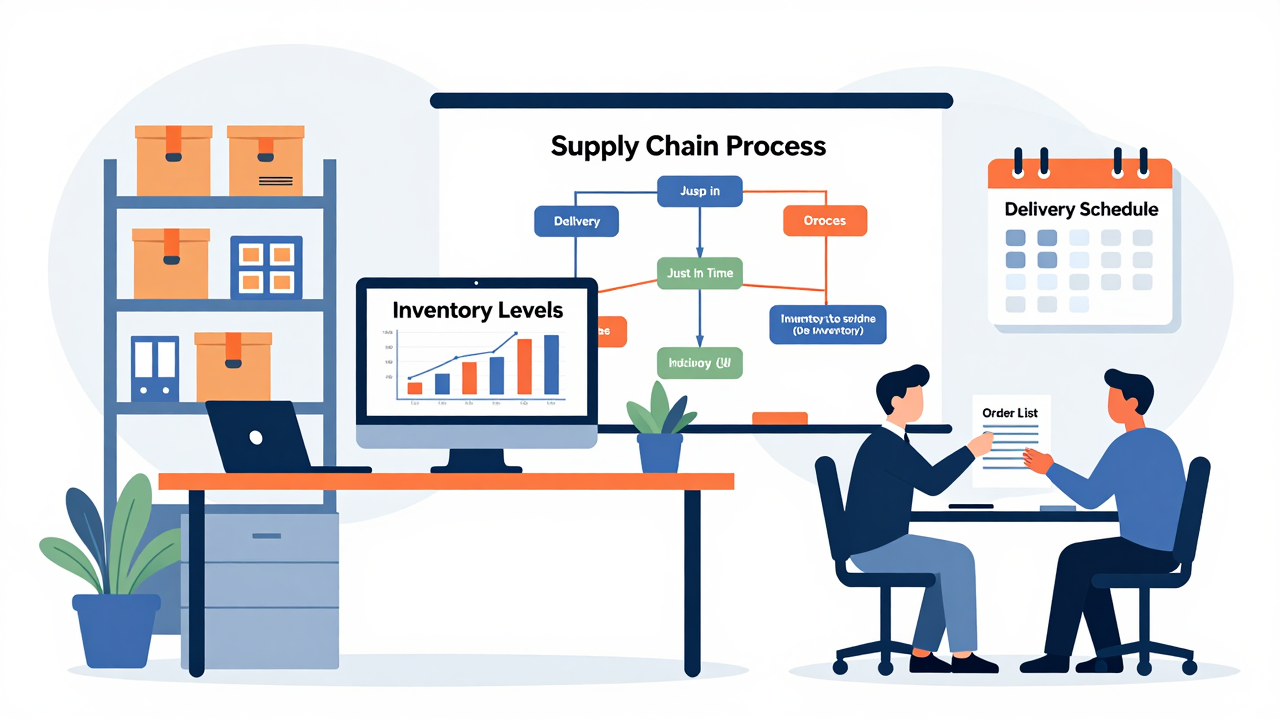
Many industries can greatly benefit from Just-in-Time (JIT) inventory systems, as they streamline operations and cut costs.
If you’re looking to enhance efficiency and reduce waste, consider these sectors:
- Manufacturing: Automotive companies like Toyota synchronize parts delivery with production schedules, reducing inventory costs.
- Retail: Retailers such as Walmart maintain low inventory levels, enabling quick responses to consumer demand while improving cash flow.
- Healthcare: Hospitals use JIT to guarantee medical supplies are available when needed, minimizing storage costs without excess stock.
Comparing JIT With Traditional Inventory Methods
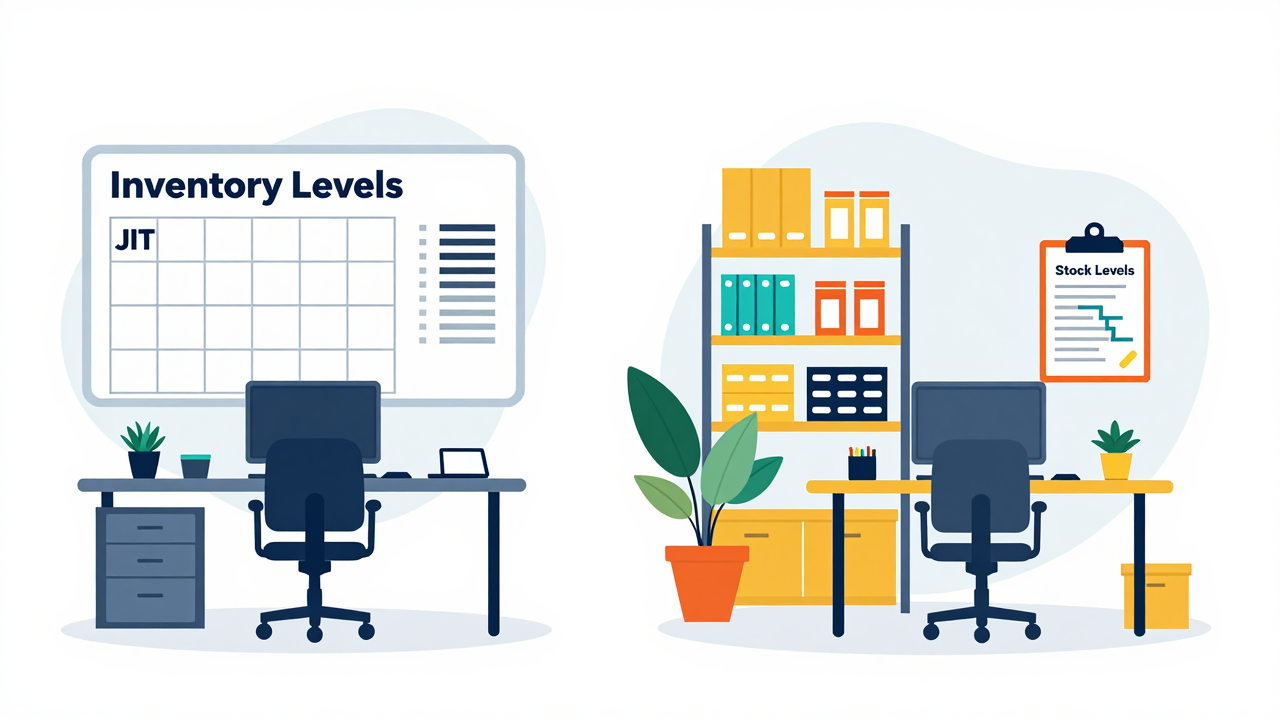
While traditional inventory methods often lead to excess stock and inflated holding costs, Just-in-Time (JIT) inventory management offers a more streamlined approach. With JIT, you produce goods only as needed, which reduces the capital tied up in unsold inventory.
In contrast, traditional systems often require bulky stockpiles, increasing storage expenses. Instead of relying on bulk purchases, JIT emphasizes precise forecasting and close supplier coordination, allowing you to place smaller, more frequent orders.
Moreover, traditional methods can lead to product obsolescence, while JIT keeps your inventory fresh and aligned with current customer demand.
To implement just-in-time inventory management effectively, focus on building strong relationships with suppliers, utilize real-time data for decision-making, and continuously assess your inventory levels.
Future Trends in Just-in-Time Inventory Management

As businesses navigate the evolving landscape of inventory management, embracing future trends in Just-in-Time (JIT) systems can greatly enhance operational efficiency.
Here are three key trends to contemplate:
- Increased Automation: Implement robotic process automation and AI tools to streamline your inventory management, reducing human errors and improving accuracy.
- Real-Time Data Utilization: Leverage IoT devices for real-time data analytics. This helps you make precise demand forecasts and adjust inventory levels dynamically.
- Enhanced Supplier Collaboration: Use digital platforms to strengthen your relationships with suppliers. This guarantees timely deliveries and enhances transparency throughout your supply chain.
Best Practices for Maintaining a JIT Inventory System

To maintain an effective JIT inventory system, focus on strong supplier coordination and smart inventory management techniques.
Build solid relationships with your suppliers to guarantee timely deliveries, and use demand forecasting tools to keep your stock levels just right.
Additionally, adopting a Kanban system can help you visualize inventory needs, allowing for smoother production scheduling and fewer disruptions.
Supplier Coordination Strategies
Effective supplier coordination is essential for maintaining a Just-in-Time (JIT) inventory system, so you need to prioritize building strong relationships with your suppliers.
Here are three key strategies to implement:
- Utilize Technology for Coordination: Implement tools like Electronic Data Interchange (EDI) to streamline order processing and enhance real-time communication.
- Conduct Regular Supplier Reviews: Regularly evaluate supplier performance regarding delivery times and quality. This helps identify areas for improvement and mitigate risks.
- Develop Contingency Plans: Prepare backup strategies, such as alternative suppliers or emergency inventory, to safeguard against unexpected disruptions.
Inventory Management Techniques
Maintaining a Just-in-Time (JIT) inventory system requires a solid strategy to manage stock effectively and keep operations running smoothly. Here are some best practices to take into account:
[embedded content]
| Technique | Description |
|---|---|
| Kanban System | Visual tool for managing inventory levels. |
| Strong Supplier Relationships | Guarantee timely deliveries and minimize delays. |
| Inventory Management Technology | Use EDI to streamline order processing. |
| Continuous Demand Monitoring | Track customer needs to avoid stockouts. |
| Contingency Plans | Prepare for supply chain disruptions. |
Frequently Asked Questions
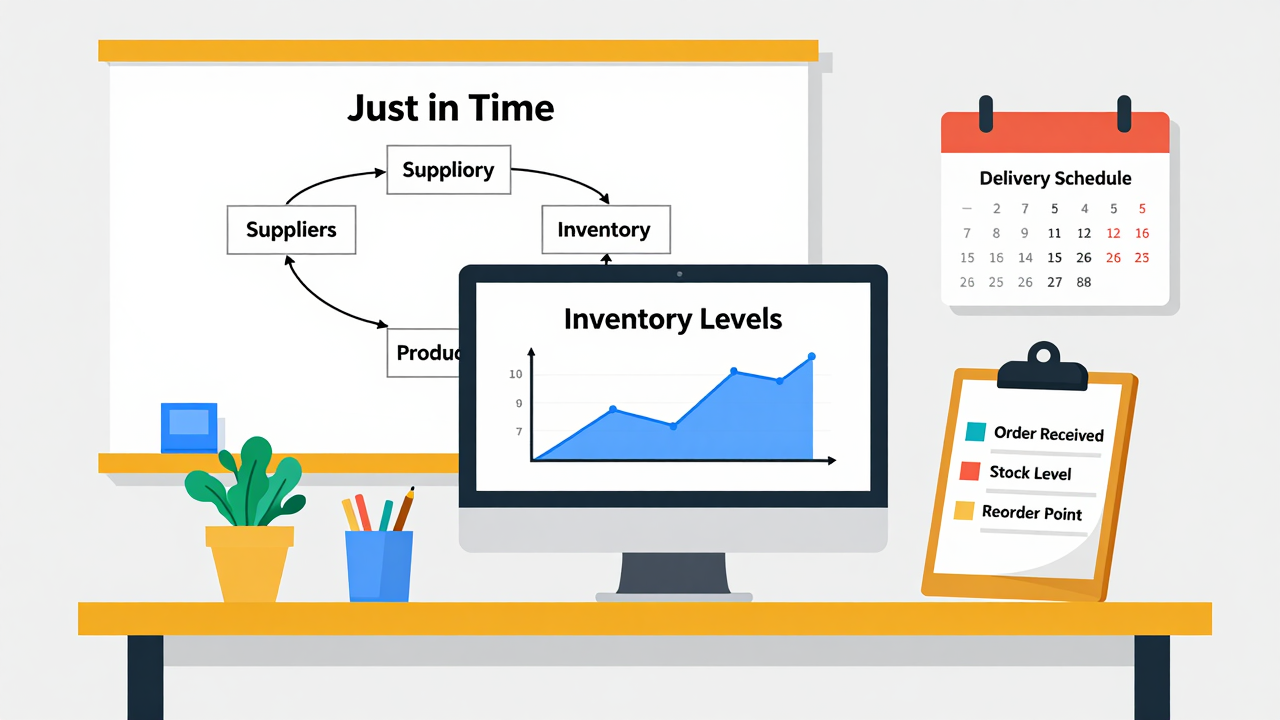
How Does the Just-In-Time Inventory System Work?
The Just-in-Time (JIT) inventory system works by scheduling raw material deliveries to coincide precisely with production needs.
You’ll want to forecast demand accurately and coordinate closely with suppliers to prevent excess inventory. Order materials only as needed, reducing storage costs and waste.
Implement a Kanban system to trigger orders based on real-time usage. This method enhances efficiency, but be cautious of supplier reliability, as any disruption can halt your production.
What Are the Drawbacks of JIT?
JIT has several drawbacks you should consider. It’s vulnerable to supply chain disruptions, so if a supplier fails, your production can halt.
You also rely heavily on accurate demand forecasting; unexpected spikes can lead to stockouts and lost sales. Additionally, the system demands strong coordination between departments and suppliers, increasing complexity.
To mitigate these risks, maintain buffer stock for emergencies and establish solid relationships with multiple suppliers for reliability.
Does Amazon Use JIT or Jic?
Amazon uses both Just-in-Time (JIT) and Just-in-Case (JIC) strategies.
For most products, it relies on JIT, ordering stock based on real-time demand to minimize storage costs.
However, during peak seasons or for high-demand items, it also adopts a JIC approach, ensuring items are available when needed.
To implement this, monitor sales data regularly, adjust inventory levels accordingly, and maintain communication with suppliers to keep stock flowing smoothly without overstocking.
Is JIT Good for Small Businesses?
Yes, JIT can be great for small businesses. It helps you reduce holding costs by buying only what you need, which improves cash flow.
Start by building strong relationships with reliable suppliers to guarantee timely deliveries. Use accurate demand forecasting to avoid stockouts.
Implement an efficient inventory management system to track materials closely. This approach enhances your agility in responding to market changes, giving you a competitive edge over larger businesses relying on excess inventory.
Conclusion

Incorporating Just-in-Time (JIT) inventory can streamline your operations and improve cash flow. To get started, assess your demand forecasting methods, strengthen supplier relationships, and implement a Kanban system for real-time tracking. Focus on minimizing waste and maintaining flexibility in your logistics. Regularly review your inventory levels and adjust as needed to stay responsive to market changes. By following these steps, you can effectively leverage JIT to enhance your inventory management and overall efficiency.
Image via Google Gemini and Small Business Trends