

Lean operations management focuses on maximizing customer value while cutting out waste. You can start by identifying what your customers truly want and looking for non-value-added activities in your processes. Streamlining these steps not only boosts efficiency but also enhances product quality. By involving your team and adopting a pull system based on real demand, you can adapt quickly to market changes. Want to see how to implement these strategies effectively?
Key Takeaways
- Lean operations management maximizes customer value by eliminating waste and streamlining processes, ensuring efficient production and service delivery.
- Originating from the Toyota Production System, lean methods like JIT and Kaizen have evolved across various industries to enhance efficiency.
- Key principles include identifying customer value, prioritizing waste elimination, and fostering a culture of continuous improvement among employees.
- Organizations benefit from significant cost savings, productivity increases, and improved employee morale, positioning them to adapt to market changes.
- Future trends involve leveraging technology like AI and IoT for real-time insights and a focus on sustainability and employee collaboration.
Understanding Lean Operations Management
Lean operations management is all about maximizing customer value while cutting down on waste. To understand this approach, focus on the lean principles of production: identify what your customers truly value, and eliminate anything that doesn’t add to that value.
Start by mapping your current processes to spot inefficiencies. Create a smooth flow by organizing tasks logically, reducing delays and waiting times. Establish a pull system where you produce based on actual customer demand, ensuring you’re not overstocking or wasting resources.
Pursue perfection by continuously seeking improvements, involving your team in discussions and feedback. This not only boosts productivity but also enhances employee satisfaction.
Implementing these practices can lead to reduced lead times and improved quality across various industries, making lean operations management a crucial strategy for success. Remember, the goal is to streamline workflows while keeping your customers’ needs at the forefront.
The Origins of Lean Operations Management: A Historical Perspective

To understand the origins of lean operations management, you’ll want to start with the Toyota Production System, which was developed after World War II to cut waste and boost efficiency in car manufacturing.
From there, lean principles evolved beyond just the automotive sector, influencing healthcare, retail, and service industries.
Toyota Production System Origins
Emerging from the challenges of post-World War II, the Toyota Production System (TPS) reshaped manufacturing by focusing on efficiency and waste reduction. This lean management system introduced essential concepts that are still relevant today.
- Just-In-Time (JIT) production minimizes inventory.
- Jidoka emphasizes automation with a human touch.
- Continuous improvement (Kaizen) involves all employees in problem-solving.
- TPS sets a global benchmark for operational excellence.
To implement lean production effectively, consider adopting these principles.
Encourage employee involvement in identifying waste, streamline processes, and focus on delivering customer value.
This method not only enhances efficiency but can lead to significant cost savings and improved customer satisfaction.
2. Evolution Beyond Automotive
As businesses sought efficiency in the decades following the 1950s, the principles rooted in the Toyota Production System began to resonate far beyond the automotive industry.
Lean operations found applications in healthcare, construction, and service sectors, showcasing their versatility. You can look at lean management examples in companies like Boeing and Intel, which adopted these practices to streamline production and improve quality.
By the 1990s, lean methodologies, including Just-In-Time (JIT) production and continuous improvement (kaizen), were integral to various industries.
As of 2020, over 50% of Fortune 500 companies reported using lean operations to enhance efficiency and customer satisfaction.
Embrace these principles to optimize processes and drive significant improvements in your organization.
3. Lean Principles Integration
Building on the evolution of lean principles beyond automotive applications, understanding the origins of lean operations management is essential for effective implementation in various sectors.
To successfully integrate lean principles, consider these steps:
- Learn the Lean Management Definition: Understand the core idea of maximizing customer value while minimizing waste.
- Embrace Continuous Improvement: Adopt the Kaizen mindset, encouraging small, incremental changes that empower your team.
- Utilize Value Stream Mapping: Visualize your processes to identify waste and improvement opportunities.
- Adapt Beyond Manufacturing: Apply lean principles in healthcare, construction, and service industries for broader efficiency.
Core Principles of Lean Operations

To effectively implement lean operations, start by focusing on the core principles that drive success. First, identify customer value by understanding what your customers are willing to pay for. Align your processes to deliver that value effectively.
Next, prioritize waste elimination by systematically identifying non-value-added activities, such as defects and excess inventory. Use value stream mapping to visualize the flow of materials and information, helping you distinguish between value-added and non-value-added steps in your processes.
Additionally, adopt a pull production system, where you produce based on actual demand rather than forecasts. This minimizes inventory costs and enhances responsiveness to customer needs.
Finally, foster a culture of continuous improvement, encouraging all employees to contribute ideas for enhancing processes and efficiency. By focusing on these principles, you can streamline operations and create a more efficient workflow.
How Lean Operations Create Customer Value

Lean operations create customer value by enhancing product quality and streamlining service delivery.
You can start by identifying areas in your process where waste occurs, which might involve reviewing feedback from customers to pinpoint their needs.
Enhancing Product Quality
Enhancing product quality starts with a commitment to continuous improvement, which is central to lean operations. By focusing on this principle, you can greatly boost your product standards.
Here are some effective strategies:
- Utilize lean management tools and techniques like value stream mapping to identify process inefficiencies.
- Implement Just-In-Time (JIT) production to reduce excess inventory and align production with actual demand.
- Train employees regularly, empowering them to take ownership of quality and address defects at the source.
- Foster a culture of collaboration, encouraging teams to share feedback and swiftly resolve quality issues.
Streamlining Service Delivery
When you focus on streamlining service delivery, you’re not just improving efficiency; you’re actively enhancing customer value.
By using lean operations tools like value stream mapping, you can identify and eliminate non-value-added activities. This approach guarantees that every step in your process contributes to a better customer experience.
Implement just-in-time principles to respond quickly to customer demands, reducing wait times and boosting service efficiency.
Encourage continuous improvement through regular feedback loops, allowing your team to adapt and refine their processes.
Empower your employees with training and resources, fostering a culture of proactive problem-solving.
Understanding lean management meaning helps you create a service environment that prioritizes customer satisfaction and drives engagement.
Waste Reduction Strategies in Lean Management
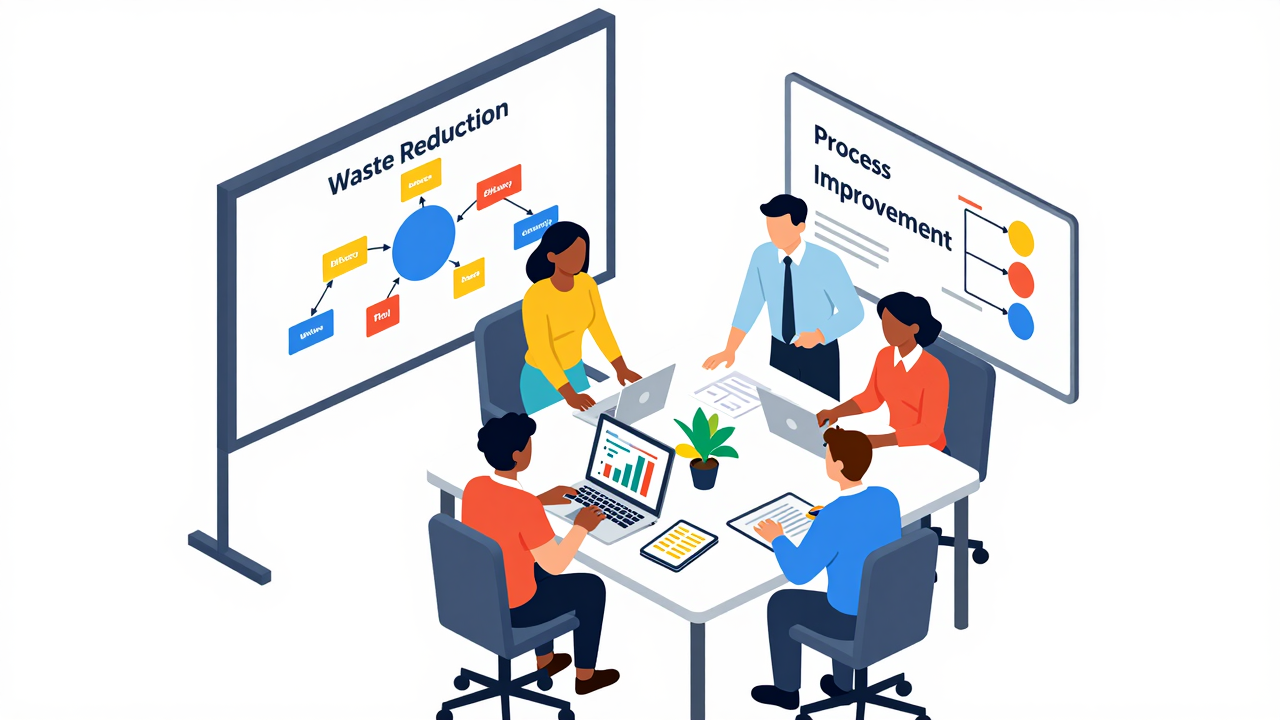
To effectively reduce waste in your operations, start by identifying the eight types of waste: defects, overproduction, waiting, transportation, inventory, motion, over-processing, and underutilized talent.
Focusing on these can greatly enhance your efficiency in manufacturing.
- Utilize value stream mapping to visualize processes and pinpoint non-value-added activities.
- Implement Just-In-Time (JIT) production to align schedules with customer demand, minimizing excess inventory.
- Adopt the 5S methodology (Sort, Set in order, Shine, Standardize, Sustain) to organize your workspace and cut down on motion waste.
- Engage in continuous improvement practices, like Kaizen events, to empower employees in identifying and solving waste-related issues.
How Continuous Improvement Drives Lean Operations

Continuous improvement is essential for driving lean operations, as it helps you identify inefficiencies and implement practical solutions.
By empowering employees to suggest changes and participate in regular assessments, you create a culture of collaboration that enhances overall performance.
Use techniques like value stream mapping and feedback loops to pinpoint waste and streamline processes, ensuring you’re always moving towards greater efficiency and customer satisfaction.
Key Principles of Continuous Improvement
Embracing continuous improvement, or Kaizen, is essential for driving lean operations effectively. By focusing on gradual enhancements, you can eliminate waste and boost efficiency.
Here are key principles to contemplate:
- Engage all employees in the improvement process.
- Use tools like value stream mapping to identify wastes.
- Conduct regular assessments to track progress.
- Create a culture that values innovation and problem-solving.
Understanding the 7 types of waste in lean—overproduction, waiting, transport, extra processing, inventory, motion, and defects—helps you pinpoint areas needing attention.
2. Employee Empowerment Strategies
Employee empowerment plays an essential role in driving lean operations, and implementing effective strategies can transform your workplace.
Start by providing thorough training and resources, enabling your team to actively contribute to continuous improvement initiatives.
[embedded content]
Foster a culture of multiskilling; this allows employees to adapt quickly to various roles, minimizing downtime and maximizing productivity.
Encourage regular feedback and collaboration, as this helps identify lean management wastes and implement effective solutions.
Additionally, instill a commitment to quality by helping employees understand their impact on outcomes, motivating them to take ownership of their work.
Finally, conduct regular check-ins to create accountability, allowing employees to track their progress and engage in ongoing improvement efforts.
3. Techniques for Waste Reduction
To effectively reduce waste in your operations, adopting techniques that promote continuous improvement is key.
By focusing on lean waste, you can tackle the 7 wastes of lean manufacturing head-on. Here are some actionable techniques you can implement:
- Value Stream Mapping: Visualize your processes to pinpoint non-value-added activities.
- Just-In-Time (JIT) Production: Align production with actual customer demand to minimize inventory waste.
- 5S Methodology: Organize your workspace to enhance efficiency and reduce unnecessary motion.
- Regular Training and Feedback: Empower your employees to adopt lean practices through ongoing education and constructive feedback.
These strategies not only streamline your operations but also foster a culture of continuous improvement, making your team integral to reducing waste and enhancing productivity.
Why Just-In-Time Production Is Crucial for Lean Success
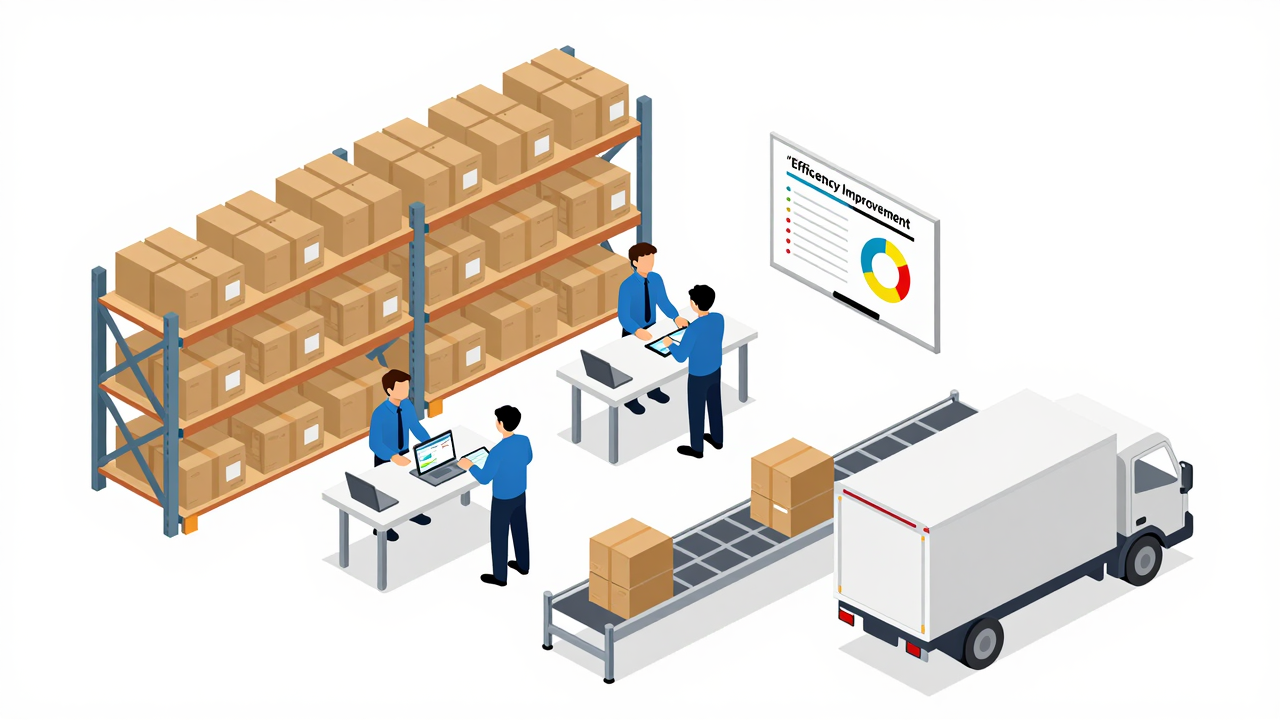
Just as a well-timed clock keeps everything in sync, Just-In-Time (JIT) production guarantees your operations run smoothly by minimizing inventory costs. By producing only what you need, when you need it, JIT reduces waste and enhances cash flow.
To implement JIT effectively, assess your production schedules and align them closely with customer demand. This approach allows you to adapt quickly to market changes, improving responsiveness.
Aim for a 20-50% reduction in inventory levels, which can lead to significant savings on storage costs. Foster a culture of continuous improvement, or Kaizen, where your teams regularly evaluate processes to identify inefficiencies.
Learn from leaders in lean manufacturing, like Toyota, which uses a pull system to avoid overproduction. Incorporating JIT not only streamlines your operations but also strengthens your overall lean strategy, making your organization more agile and efficient.
Value Stream Mapping: Visualizing Efficiency

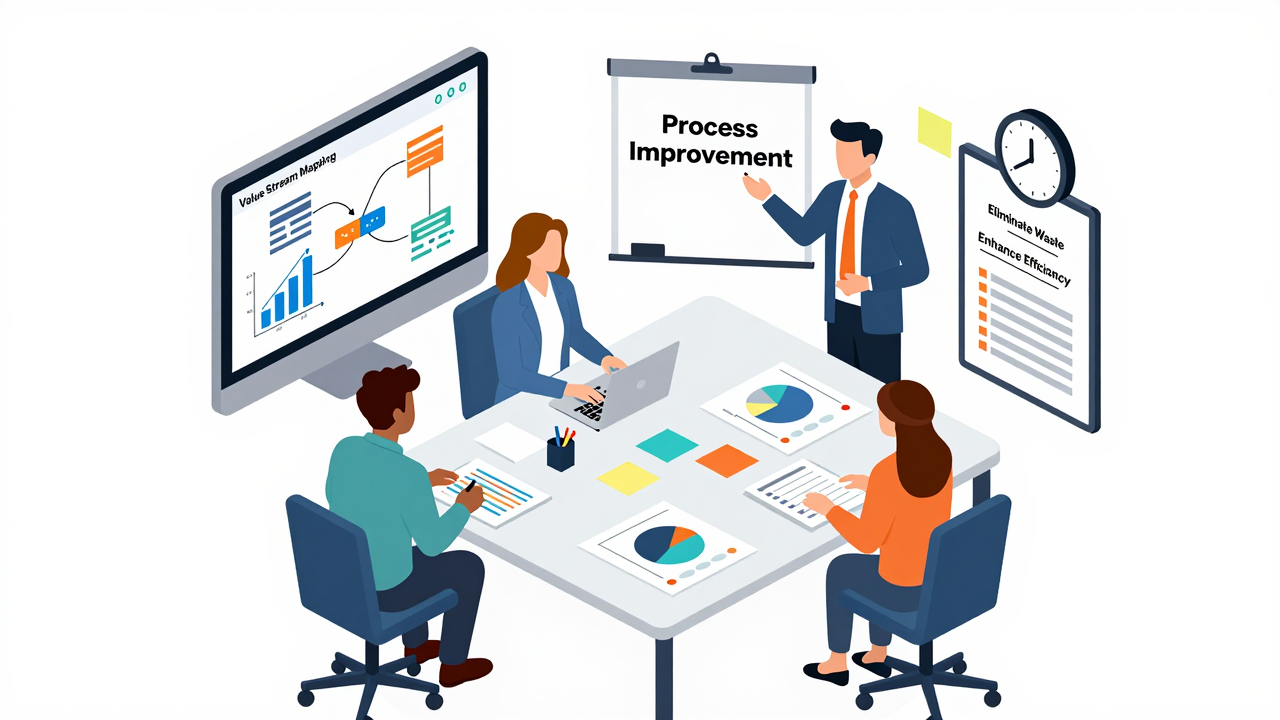
Value Stream Mapping (VSM) is a powerful tool for visualizing how materials and information flow through your processes. By employing VSM, you can identify inefficiencies and streamline operations to enhance lean efficiency.
Here are some key benefits of using this technique:
- Identify Bottlenecks: Pinpoint areas causing delays in your workflow.
- Highlight Waste: Clearly see non-value-added activities that can be eliminated.
- Facilitate Communication: Use visual maps to guarantee everyone on your team understands the process flow.
- Improve Lead Times: Aim to reduce lead times by up to 50% through targeted improvements.
To get started, create a detailed map of your current processes, marking both value-added and non-value-added activities.
Analyze each step, and collaborate with your team to brainstorm solutions for inefficiencies. Implementing these changes can greatly boost productivity and customer satisfaction, driving your lean initiatives forward.
Empowering Employees Through Lean Practices
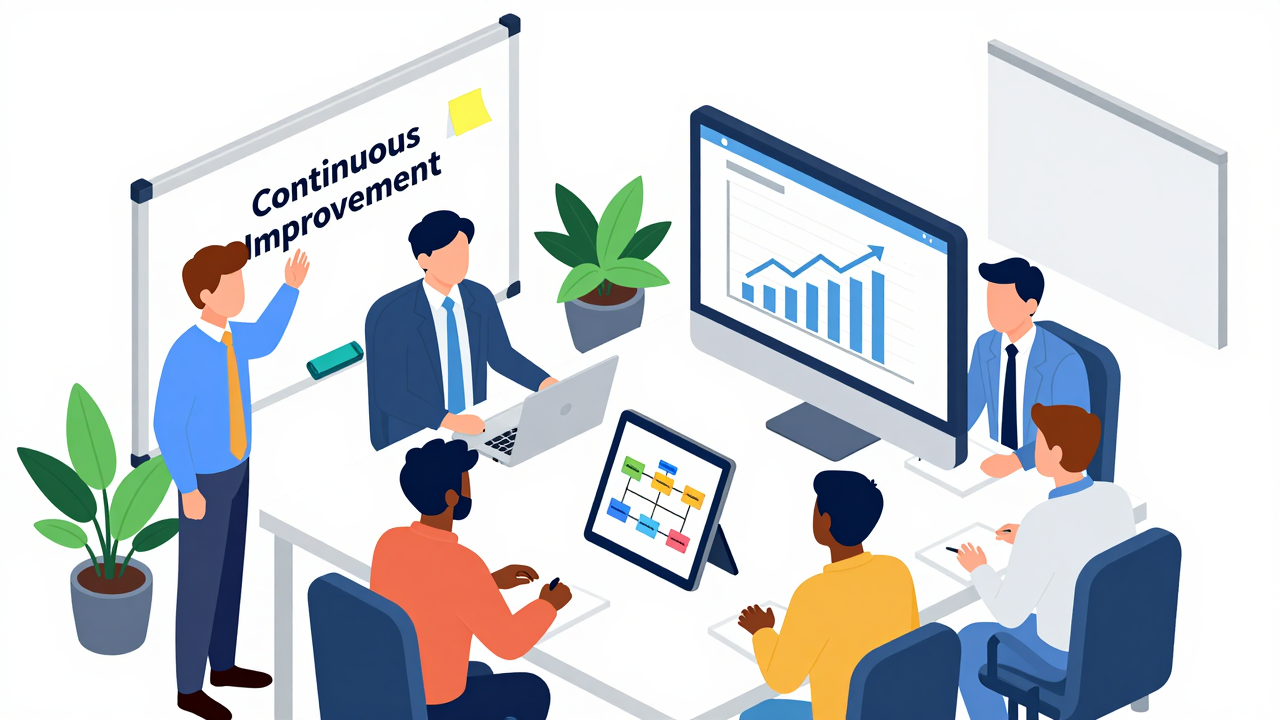
To empower your employees through lean practices, start by ensuring they’ve access to proper training and resources.
This not only boosts their ability to contribute but also encourages multiskilling, allowing them to adapt to various roles as needed.
When employees understand their importance in maintaining quality, they become more engaged and committed to the organization’s goals.
Training and Resources Availability
Effective training and access to resources are essential when it comes to empowering employees through lean practices. When you focus on training and resources availability, your team can better identify waste and enhance efficiency.
Here are some key elements to evaluate:
- Conduct regular workshops that promote real-world applications of lean principles.
- Provide digital tools and documentation to help employees implement lean methods effectively.
- Encourage feedback during process redesigns to boost engagement and commitment.
- Promote multiskilling to allow flexibility in roles, minimizing downtime.
2. Multiskilling for Flexibility
When you embrace multiskilling in your workforce, you not only enhance flexibility but also boost overall operational efficiency.
By training employees to perform multiple roles, you reduce downtime and create a more agile organization. This approach allows your team to quickly adapt to changing demands, ensuring smooth operations even during peak times.
Encourage a culture of continuous improvement by empowering employees to identify and solve problems from various perspectives.
As your workforce becomes more multiskilled, you’ll likely see increased employee satisfaction, as workers feel valued for their diverse capabilities.
Plus, multiskilling cuts costs by minimizing the need for temporary hires and streamlining training processes, making it a core strategy in lean management.
3. Quality Commitment Empowerment
Empowering employees through lean practices means equipping them with the training and resources they need to actively contribute to problem-solving and process improvement.
To foster a strong quality commitment, consider these strategies:
- Provide thorough training that focuses on quality standards and processes.
- Encourage multiskilling so employees can adapt to various roles, reducing downtime and enhancing flexibility.
- Facilitate regular feedback sessions to improve communication and collaboration among team members.
- Promote ownership by involving employees in redesigning job methods, which boosts morale and accountability.
How Lean Operations Boost Employee Satisfaction

Lean operations can greatly boost employee satisfaction by actively involving team members in the continuous improvement process. When you empower employees through training and multiskilling, they feel more confident and adaptable in their roles. This ownership increases job satisfaction and fosters a positive workplace culture.
Here’s how lean operations contribute to satisfaction:
| Aspect | Impact on Employees | Lean Philosophy Benefits |
|---|---|---|
| Involvement | Increases ownership | Empowers decision-making |
| Training | Builds confidence | Enhances skill diversity |
| Waste Reduction | Minimizes frustration | Streamlines workflow |
| Open Communication | Boosts morale | Fosters collaboration |
Benefits of Lean Operations for Organizations

Organizations that adopt lean operations can expect significant benefits that directly impact their bottom line and overall efficiency. By implementing lean management principles, you streamline processes and focus on customer value, leading to measurable improvements.
Here are some key benefits:
- Cost Savings: Lean practices can reduce costs by up to 30% through waste elimination.
- Product Quality: Expect defect reductions of 50% or more, enhancing your product’s reputation.
- Increased Productivity: Many organizations report productivity boosts of 20-50% in manufacturing settings.
- Employee Engagement: A culture of continuous improvement can enhance morale by 10-30%, fostering a motivated workforce.
Embracing the benefits of lean manufacturing positions your organization to be more agile and responsive to market changes.
Lean management def emphasizes these advantages by promoting efficiency and quality, ensuring you stay competitive and meet customer needs effectively.
How Lean Operations Benefit Different Industries

Many industries have embraced lean operations to drive efficiency and enhance value. By applying lean management principles, organizations can streamline processes and reduce waste, leading to significant improvements.
Here’s how different sectors benefit:
| Industry | Lean Production Examples |
|---|---|
| Manufacturing | Just-In-Time (JIT) reduces inventory costs |
| Healthcare | Streamlined processes cut patient wait times |
| Retail | Optimized supply chain logistics improve service |
In manufacturing, you might implement JIT to stabilize production. In healthcare, focus on reducing wait times through efficient workflows. Retail can benefit from enhancing customer interactions, leading to quicker transactions. For construction, adopt lean practices like 5S to organize workspaces and improve safety. Public sector agencies can analyze processes to eliminate inefficiencies, boosting service delivery. By recognizing and applying these lean production examples, you can drive substantial improvements across your industry.
Overcoming Challenges in Lean Operations Implementation

Implementing lean operations can feel intimidating, especially when facing resistance to change. You may encounter several challenges, but overcoming them is essential for effective lean implementation in the manufacturing industry.
- Cultural resistance: Encourage open dialogue about changes and the benefits of lean practices.
- Skills gaps: Invest in training programs to equip employees with the necessary tools and knowledge.
- Continuous learning: Foster a culture of adaptability, encouraging teams to embrace innovation and improvement.
- Leadership commitment: Guarantee strong support from top management to allocate resources and authority for lean initiatives.
Modern Technologies Enhancing Lean Management

In today’s fast-paced business landscape, leveraging modern technologies can greatly enhance your lean management efforts. Start by integrating IoT devices for real-time data collection, which helps you pinpoint inefficiencies and optimize processes. For instance, using IoT can provide immediate feedback on production lines, allowing you to make timely adjustments.
Next, consider AI for predictive analytics. This technology lets you forecast demand accurately, reducing excess inventory through just-in-time production techniques. Robotics and automation can also streamline repetitive tasks, cutting down on human error and boosting operational efficiency.
Utilize digital tools like Lean software and cloud systems to improve collaboration and transparency. These platforms enable you to visualize workflows and track performance metrics effectively.
Finally, explore augmented reality for training. It offers immersive experiences that enhance employee understanding of lean operations examples, making onboarding more effective. Embrace these modern technologies to drive continuous improvement in your lean management initiatives.
Steps to Successfully Implement Lean Operations
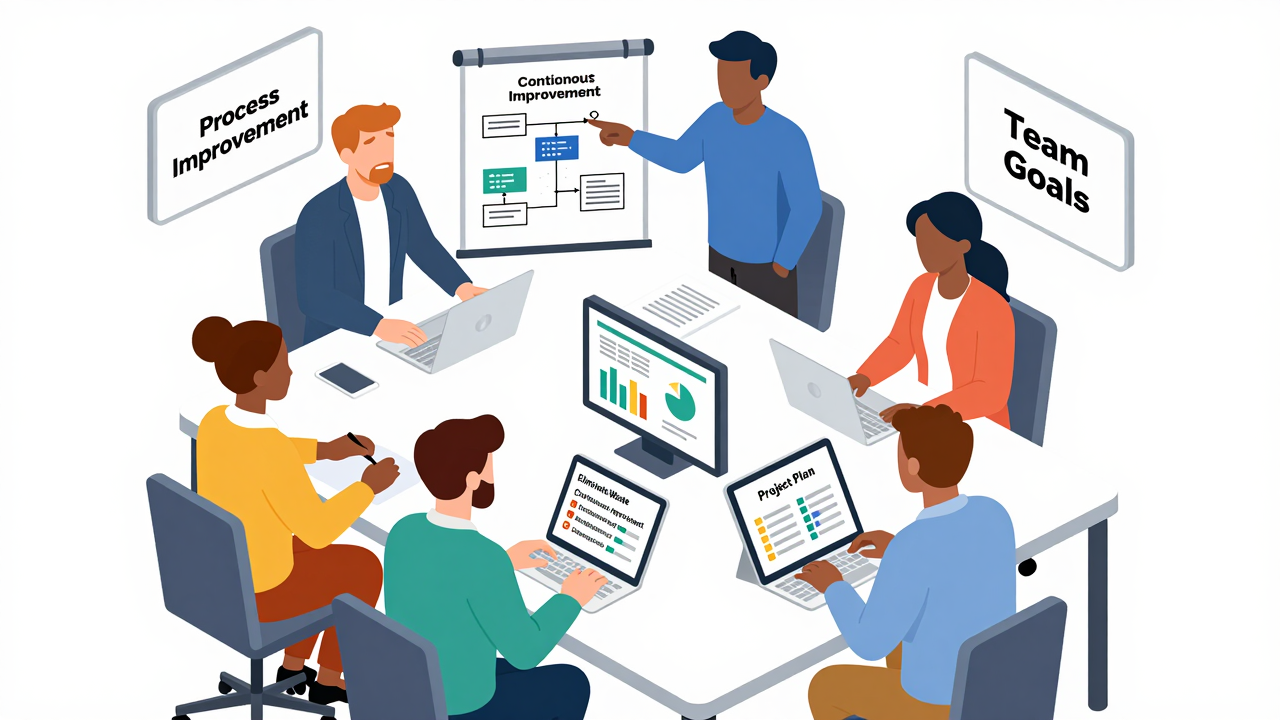
Leveraging modern technologies sets the stage for successful lean operations, but the real work begins with understanding your current processes. Here’s how to implement lean management effectively:
- Analyze existing workflows to identify waste and inefficiencies.
- Focus on high-impact areas that directly affect customer value.
- Engage and train employees at all levels to foster a culture of continuous improvement.
- Pilot lean practices through small-scale projects to validate your approach.
Start by documenting current processes, which helps you pinpoint areas needing improvement.
Next, prioritize changes that can notably reduce waste in assembly. Involve your team in brainstorming sessions, encouraging their input and ownership in the shift.
As you implement changes, continuously measure outcomes and adjust strategies based on feedback.
Measuring Success: Key Performance Indicators for Lean

To effectively measure success in lean operations, you need to focus on key performance indicators (KPIs) that reveal how well your processes are performing.
Start by tracking production lead time, which shows the duration from order to delivery. This helps identify bottlenecks.
Next, monitor the defect rate to understand the percentage of products that fail quality standards, providing insights into quality control effectiveness.
Equipment availability is another vital KPI; it assesses how often machines are operational versus downtime, which can enhance maintenance strategies.
Use visual management tools like dashboards for real-time tracking of KPIs in Lean Operations, fostering accountability within your teams.
Additionally, implement Daily Management Systems (DMS) to monitor performance continuously.
Future Trends in Lean Operations Management

As you measure success through key performance indicators, it’s important to contemplate how future trends will shape lean operations management. Here are some key areas to focus on:
- Integration of Technology: Embrace AI and IoT for real-time data analysis and decision-making.
- Sustainability Focus: Adopt sustainable practices to reduce waste and meet consumer expectations.
- Remote Work Adaptation: Use digital tools to streamline communication and maintain lean operations in hybrid environments.
- Enhanced Employee Involvement: Prioritize feedback and collaboration to empower your workforce.
These trends will drive efficiency and production waste reduction.
By leveraging technology and engaging employees, you can create a more agile and responsive organization.
Stay ahead of market changes by implementing agile methodologies, allowing you to quickly adapt and enhance customer satisfaction.
Focus on continuous improvement to guarantee your lean operations remain effective and relevant in the evolving landscape.
Frequently Asked Questions
What Are the 5 C’s of Lean?
The 5 C’s of Lean are Clear, Concise, Consistent, Collaborative, and Caring.
To implement these, guarantee communication is clear so everyone knows their roles. Keep messages concise to focus on essential tasks.
Maintain consistency in practices to foster trust and reliability. Encourage collaboration among team members for idea sharing, and create a caring culture that values employee well-being.
This approach enhances efficiency and supports a positive work environment, driving lean operations forward.
[embedded content]
What Is the Purpose of Lean Operations?
The purpose of lean operations is to maximize customer value while minimizing waste. To achieve this, identify what adds value to your processes and eliminate anything that doesn’t.
Start by mapping out your workflows to spot inefficiencies. Train your team on new practices, ensuring everyone understands their roles in this effort.
Regularly assess your operations and encourage feedback to foster continuous improvement, ultimately leading to better efficiency and enhanced customer satisfaction.
What Are the 5 Principles of Lean Management?
The five principles of lean management are: first, identify value by understanding what customers need.
Second, map the value stream to pinpoint wasteful activities.
Third, create flow by ensuring smooth processes without interruptions.
Fourth, establish pull to produce based on actual demand, reducing excess inventory.
Finally, seek perfection through continuous improvement, involving all employees in enhancing processes.
Implement these principles to streamline operations and boost overall efficiency in your organization.
What Are the 4 P’s of Lean?
The 4 P’s of Lean are Purpose, Process, People, and Problem-Solving.
First, clarify your Purpose by identifying what creates value for your customers.
Next, analyze your Process to eliminate waste and streamline workflows.
Engage your People at all levels to foster collaboration and encourage improvement.
Finally, adopt a Problem-Solving mindset, using techniques like root cause analysis to address issues effectively.
Apply these principles consistently for successful lean operations.
Conclusion

In conclusion, embracing lean operations management can transform your organization. Start by identifying what your customers truly value and eliminate wasteful processes. Involve your employees in continuous improvement efforts and adapt a pull system based on actual demand. Use modern technologies to streamline operations and measure success through clear performance indicators. By following these steps, you can enhance efficiency, reduce costs, and ultimately improve customer satisfaction, positioning your business to respond quickly to market changes.
Image via Google Gemini and Small Business Trends