
This post was originally published on this site.
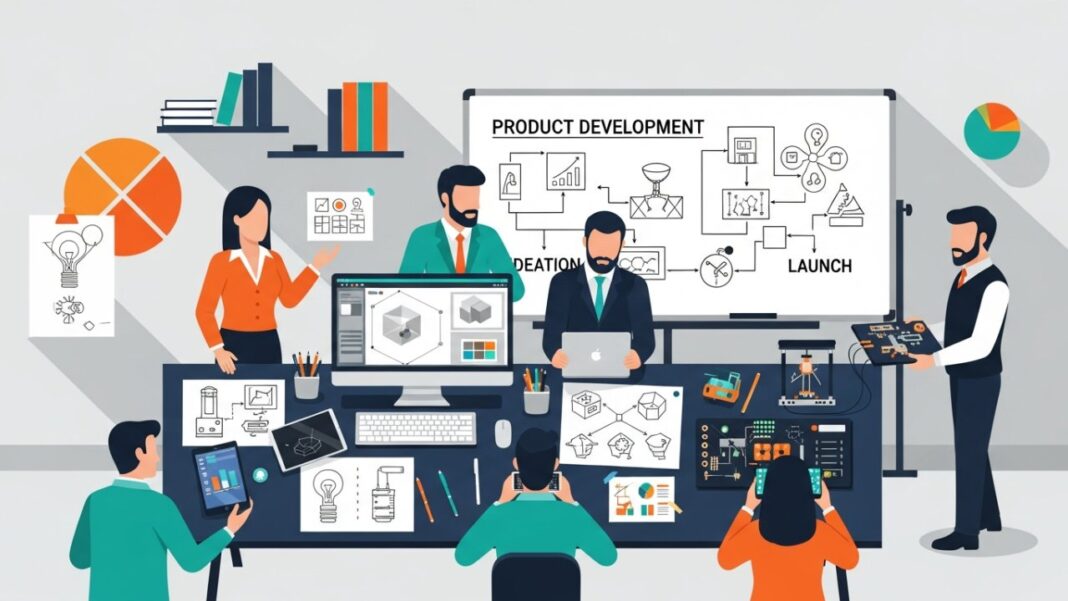
Prototype and product development involves turning ideas into real products through a structured process. It starts with defining the product concept and evaluating market feasibility, followed by detailed designs and prototype creation. This iterative approach allows for testing and refining the product based on user feedback, minimizing risks. Comprehending the phases of this process, including common pitfalls, can greatly impact your project’s success. Let’s explore what each phase entails and how to navigate them effectively.
Key Takeaways
- Prototyping visualizes product ideas, assesses feasibility, and validates market potential before mass production.
- The development process includes defining the product, creating detailed designs, and finalizing the design for manufacturing.
- Initial research focuses on market trends, customer needs, and product viability to inform design decisions.
- Iterative testing through alpha and beta phases gathers feedback for improvements and ensures functionality.
- User involvement enhances design accuracy, aligns products with user preferences, and increases market success likelihood.
Understanding Prototyping and Its Purpose
Prototyping is a crucial step in product development, as it allows designers to visualize their ideas and assess both technical feasibility and market potential before moving to mass production.
The prototype development process begins with a proof of concept, which tests ideas and functionality. This phase often involves multiple revisions based on user feedback, ensuring that the product meets consumer needs.
A robust prototype identifies and addresses potential issues, ensuring the product performs as intended through iterative testing. By preparing detailed design specifications, a prototype aids manufacturers in comprehending production requirements, facilitating smoother shifts to mass production.
Engaging in prototype development not only validates ideas but also improves user experience by encouraging collaboration among stakeholders throughout the development cycle.
The Prototype Development Process Overview
In the prototype development process, you’ll navigate through three distinct phases that are essential for transforming ideas into market-ready products.
First, you’ll define the product and assess its feasibility, ensuring you understand how to design a product and get it made effectively. This phase is significant, as about 40% of products fail because of insufficient market analysis.
Next, you’ll create detailed designs, collaborating with engineers and designers to develop 2D and 3D models as you implement iterative testing for refinement.
Finally, in the last phase, you’ll finalize the design, aiming for a high-fidelity prototype that meets a Perfect Order Performance (POC) of 95%, ensuring your product is ready for successful manufacturing and delivery.
Continuous feedback will improve quality throughout.
Phase 1: Defining the Product and Feasibility Assessment

Defining the product and evaluating its feasibility are fundamental steps that set the foundation for successful prototype development. During this phase, you’ll research market trends, product viability, and customer needs to avoid the high risk of failure that affects about 40% of new products.
Before developing initial drawings or concepts, confirm your product’s viability through unbiased research instead of relying on assumptions. Engaging professional product designers is vital, as their expertise guarantees that your sketches align with market demands and technical requirements.
This phase involves a thorough analysis of customer data and market conditions, guiding your product design decisions. In the end, the objective is to validate your product concept, allowing for informed choices before investing resources into prototype development.
Phase 2: Detailed Designs and Testing
In Phase 2, you’ll collaborate with engineers and product designers to create detailed drawings and 3D models that improve design accuracy.
This phase emphasizes an iterative testing process, starting with alpha testing to identify weaknesses using low-cost materials before moving to higher-quality options for appearance-focused evaluations.
Engineering Collaboration
During Phase 2 of prototype development, effective engineering collaboration is vital as teams work together to create detailed designs that form the backbone of the product.
Engineers and product designers collaborate to produce accurate 2D and 3D models, which are important for visualization. This phase highlights the importance of various engineering disciplines, as they provide insights into manufacturability, ensuring the design can be effectively produced.
Utilizing advanced prototyping tools and software improves design accuracy, enabling refined iterations based on feedback.
Alpha testing begins here, focusing on functionality with low-cost materials to identify weaknesses. Beta testing follows, gathering feedback from target markets on both functionality and design, ensuring the product aligns with user expectations and requirements before moving forward.
Iterative Testing Process
Effective testing is a vital component in the iterative process of prototype development, especially during Phase 2, where detailed designs take shape. In this phase, engineers and designers create 2D and 3D models that improve accuracy. You begin with alpha testing, using low-cost materials to assess functionality, then move to beta testing, gathering feedback from target markets to refine both design and functionality. Prototyping tools and software are important for achieving precise designs. Your goal is to iterate based on testing results, ensuring the prototype aligns with user expectations.
| Testing Phase | Key Focus |
|---|---|
| Alpha | Functionality Testing |
| Beta | User Feedback |
| Iteration | Design Refinement |
| Final Prep | Manufacturing Readiness |
Phase 3: Final Design and Hiring Professionals
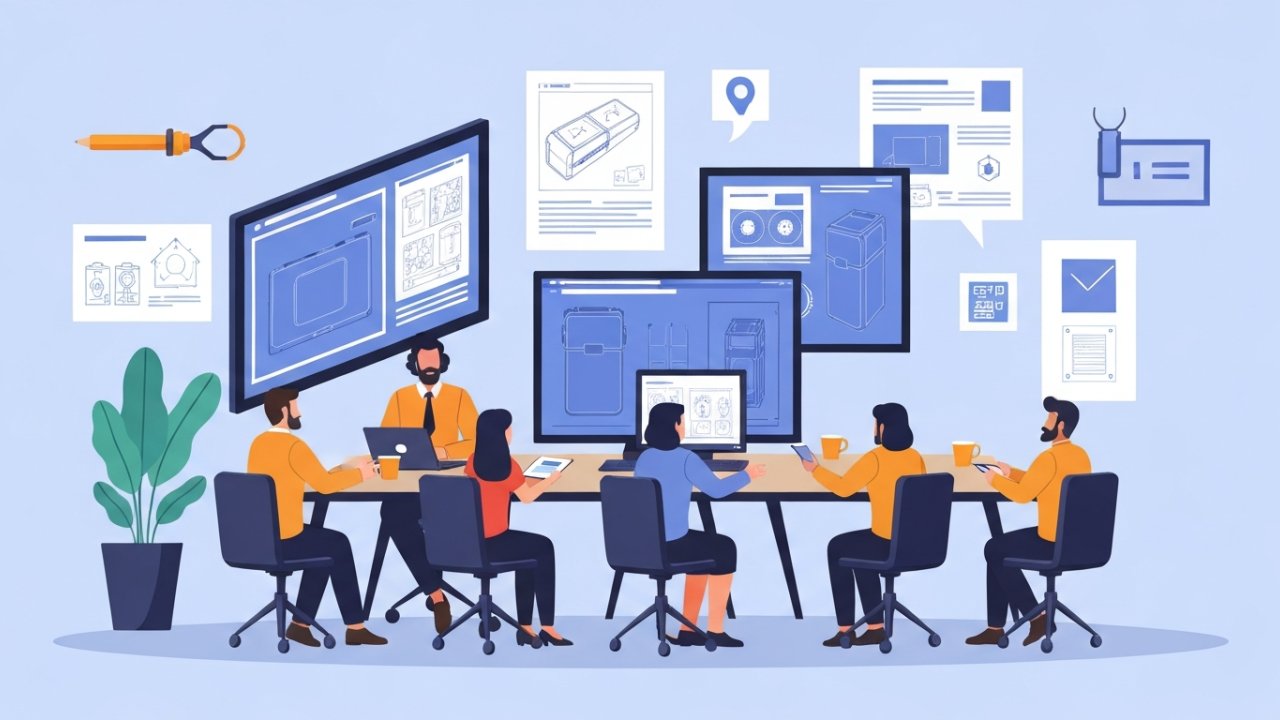
As you enter Phase 3 of prototype development, the focus shifts to finalizing a design that’s ready for manufacturing. This stage emphasizes creating a high-fidelity prototype with detailed specifications, ensuring it meets quality metrics for production.
To streamline this process, consider the following:
- Engage a product development firm: They provide access to experienced designers, engineers, and vetted manufacturers, enhancing your design efficiency.
- Establish quality metrics: Aim for a Perfect Order Performance (POC) level of 95% to guarantee accurate fulfillment and timely delivery.
- Implement continuous feedback loops: Regular input on design and functionality is essential, ensuring adherence to quality standards before pre-production.
Importance of Prototyping
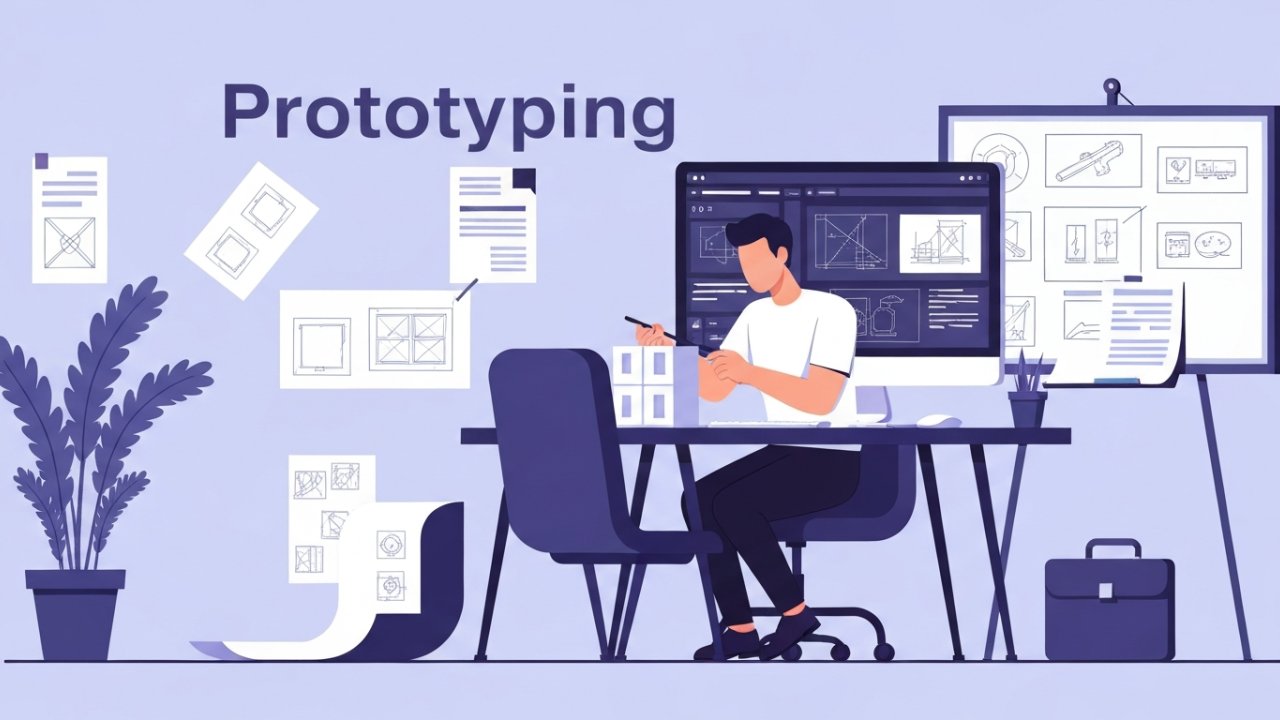
Prototyping plays an essential role in early error detection, allowing you to spot design flaws before they escalate into costly production issues.
By testing your concepts iteratively, you can optimize costs and make informed decisions that reduce financial risks.
This process not merely improves the overall quality of your product but additionally guarantees that it meets user expectations more effectively.
Early Error Detection
When you consider the development of a new product, recognizing the importance of early error detection can be crucial for your project’s success.
Prototyping allows you to pinpoint design flaws before mass production, reducing costs associated with late changes. Here are three key benefits of early error detection through prototyping:
- Validation: Approximately 40% of new products fail to become profitable; prototypes help validate concepts to avoid costly mistakes.
- Iterative Testing: Continuous feedback during prototyping enables real-time adjustments, ensuring design issues are addressed swiftly.
- User Experience: Prototypes assess functionality and ergonomics, allowing for changes based on direct user feedback early in development.
Cost Optimization Strategies
Identifying cost optimization strategies is essential for any product development process, especially when leveraging the advantages of prototyping. Prototyping allows you to spot design flaws and inefficiencies early, which can cut production costs by up to 30%.
[embedded content]
By validating your product concepts through iterative testing, you minimize the risk of investing in unfeasible ideas, leading to smarter decisions. Engaging in multiple prototyping rounds as well helps you integrate user feedback quickly, enhancing customer satisfaction and ensuring your final product meets market demands.
In addition, effective prototyping can streamline the shift from concept to production, reducing time to market by as much as 25%. Finally, early testing can reveal regulatory compliance issues, saving you thousands in potential rework costs.
Creating a Prototype: Step-by-Step Process
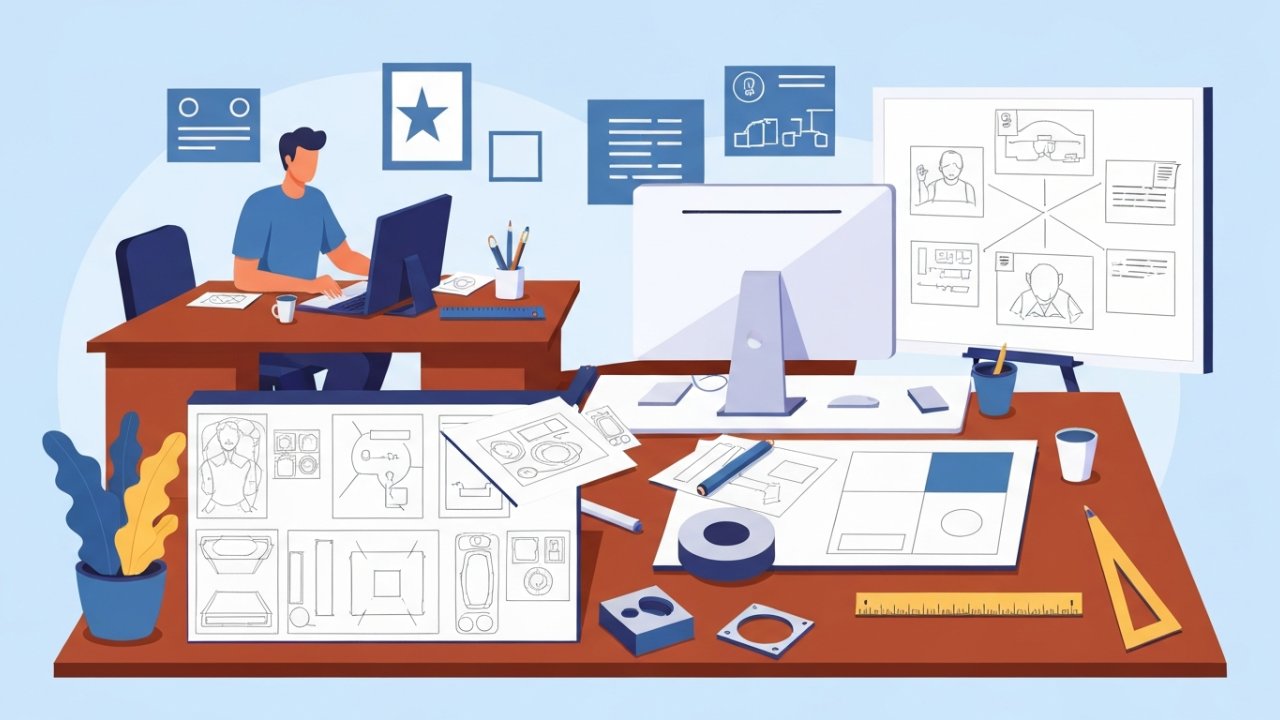
Creating a successful prototype begins long before the actual development process, as thorough preparation lays the groundwork for effective design and testing.
Start by validating your product concept through market research, ensuring there’s a demand for your idea. Next, clarify your prototype objectives; this helps you establish clear goals for each iteration and defines specific aspects to be tested.
Finally, choose the appropriate fidelity level for your prototype, whether low, medium, or high, based on project requirements and available resources.
- Conduct patent searches to avoid intellectual property issues.
- Develop product designs using 3D CAD models for efficiency.
- Focus on core functionalities in the initial proof of principle stage.
Types of Prototypes
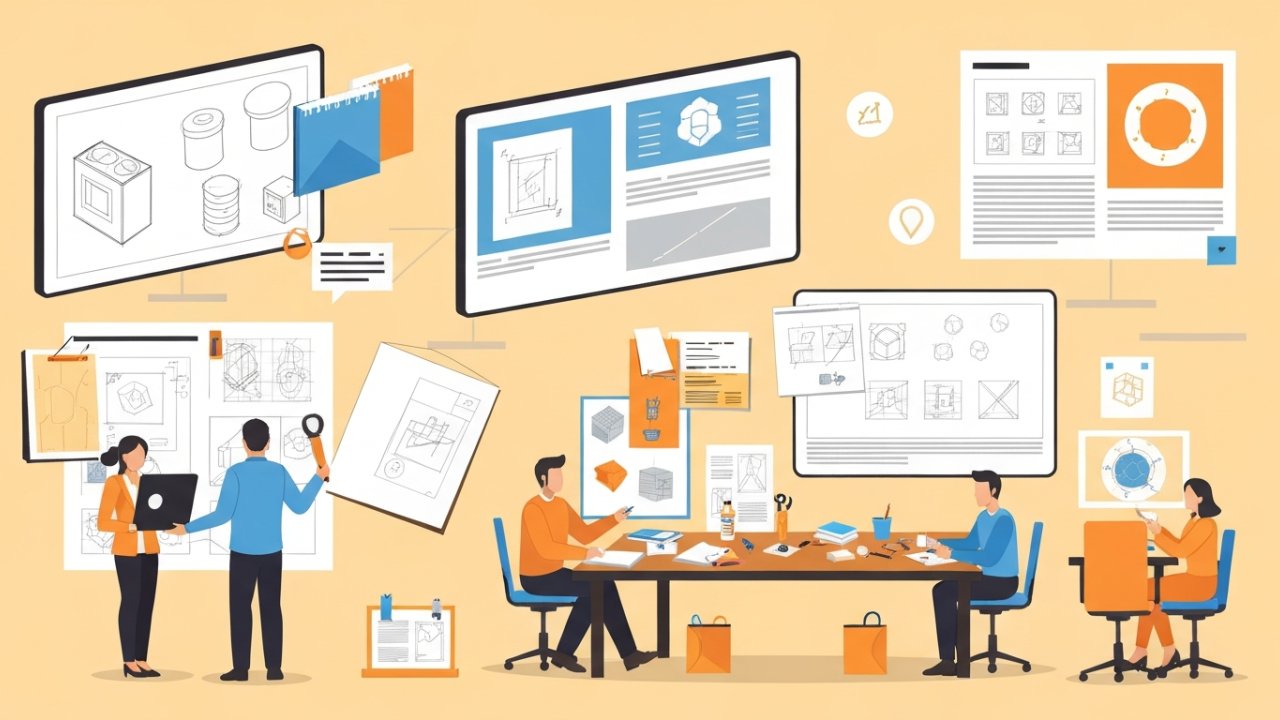
Prototypes come in various types, each serving distinct purposes in the development process, so grasping these categories can refine your approach to product design.
Visual prototypes emphasize aesthetics, whereas functional prototypes evaluate mechanisms. You might consider low-fidelity prototypes for quick, inexpensive early testing or high-fidelity prototypes that use advanced techniques, like 3D printing, to simulate the final product in detail.
Feasibility prototypes assess technical viability, helping you identify risks and manufacturing capabilities. Physical model prototyping allows you to create scaled-down replicas for evaluating size and ergonomics.
Finally, user-driven prototypes involve potential users, gathering valuable feedback that can guide design adjustments and improvements, ensuring the product aligns closely with user needs and preferences.
Common Mistakes When Prototyping
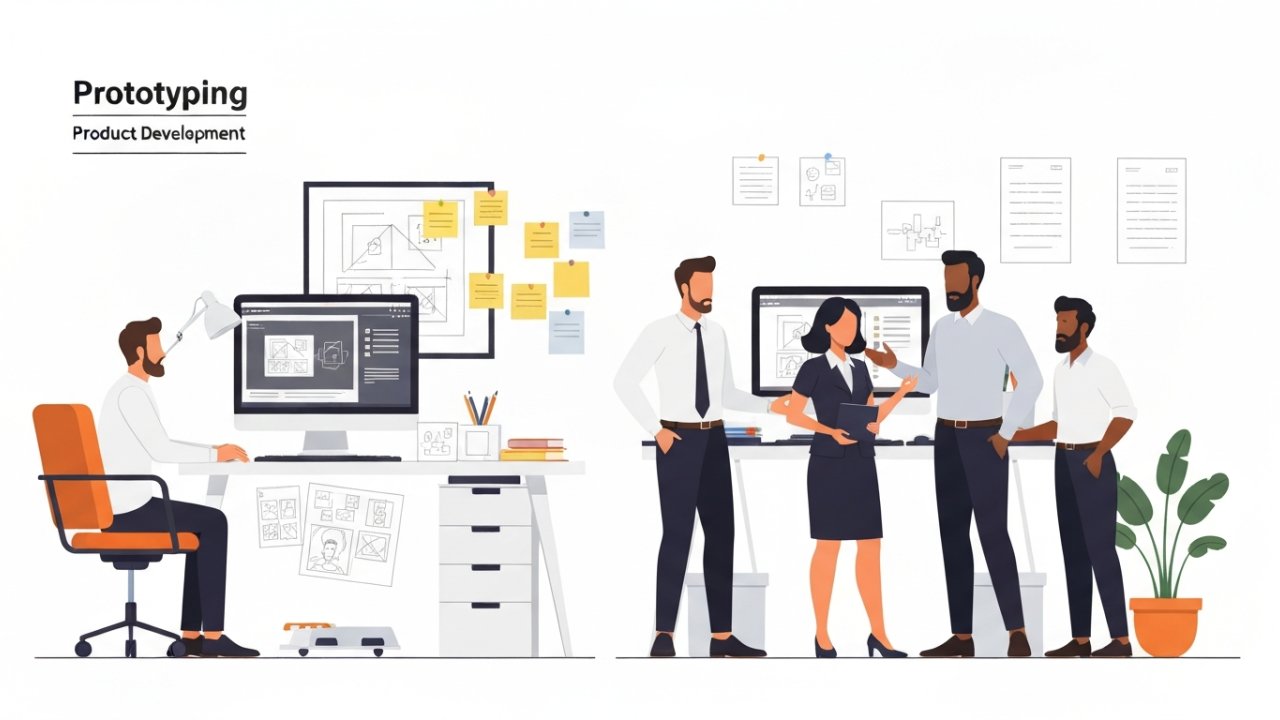
When starting on the prototyping quest, many individuals overlook critical aspects that can greatly impact the success of their product. Here are three common mistakes to avoid:
- Overcomplicating Designs: Simplifying your prototype can save time and reduce costs, ensuring you focus on the crucial features that meet user needs.
- Neglecting User Feedback: Engaging potential users early on provides insights that can shape your product. Ignoring this feedback can lead to a final product that fails in the market.
- Skipping Iterative Testing: It’s tempting to rush through testing, but this can overlook significant functionality issues.
Thorough testing helps identify flaws before your product hits the market, eventually safeguarding your investment.
Frequently Asked Questions
What Is Prototype in Product Development?
In product development, a prototype is an early model that helps you visualize and test your concept. It allows you to assess feasibility, identify design flaws, and refine ideas before moving to full production.
What Is the Main Goal of Prototyping in Product Development?
The main goal of prototyping in product development is to visualize your product concept before mass production.
This process allows you to assess both technical feasibility and market appeal. Prototyping helps you identify design flaws and functionality issues early on, which can save costs and reduce risks.
What Are the 5 Major Stages of Product Development?
The five major stages of product development are idea generation, concept development and testing, product development, market testing, and commercialization.
First, you brainstorm to generate innovative ideas.
Next, you create and test prototypes to evaluate their feasibility.
[embedded content]
After refining your design, you move to product development, focusing on high-fidelity prototypes.
Then, you conduct market testing to assess performance.
Finally, you launch the product, making it available to consumers, completing the development process.
What Is an Example of a Product Prototype?
A common example of a product prototype is a smartphone model created using 3D printing.
You can design a low-fidelity prototype to test ergonomics and user interface before moving to expensive manufacturing. This prototype may be a basic model that allows for initial testing and feedback.
Conclusion
In conclusion, prototype and product development is crucial for turning ideas into viable products. By systematically defining the product, evaluating feasibility, and creating detailed designs, you can effectively test and refine your concept. Engaging with various types of prototypes allows for valuable user feedback, minimizing risks and enhancing user experience. Comprehending the process and avoiding common pitfalls can greatly increase your chances of success in bringing a product to market that meets both user needs and industry standards.
https://www.youtube.com/watch?v=nNzH2rlEH6A
Image via Google Gemini