
This post was originally published on this site.
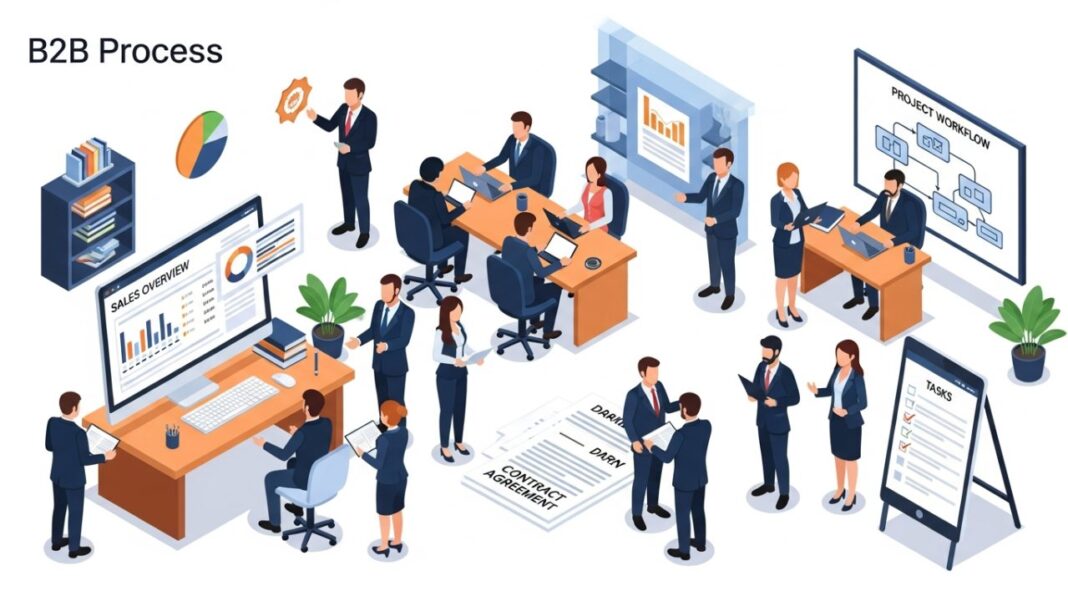
The B2B process is essential for driving successful transactions between businesses. Start by identifying potential customers through lead generation; then, assess their fit with lead qualification. Next, understand their needs to tailor your proposals effectively. Focus on building strong relationships while managing challenges like longer sales cycles. By using metrics to measure success, you can refine your strategy. Let’s explore how each stage can enhance your sales approach and drive better results.
Key Takeaways
- The B2B process encompasses stages like lead generation, qualification, needs assessment, proposal creation, negotiation, and closing sales.
- Effective lead generation and qualification are crucial for identifying potential customers and improving conversion rates.
- Understanding client needs through research and active listening helps in crafting tailored proposals that address specific pain points.
- Negotiation strategies and clear payment terms are essential for finalizing sales and ensuring smooth transactions.
- Building strong customer relationships through personalized communication and support fosters loyalty and long-term satisfaction.
Understanding the B2B Process: A Comprehensive Guide

To effectively navigate the B2B process, you need to understand its key stages and how they interconnect. The B2B buying process typically involves several significant steps, from lead generation to closing the deal.
Start by identifying potential leads, then qualify them to guarantee they meet your criteria. Next, assess their needs thoroughly, as this is crucial for proposing the right solutions.
When engaging with a buying group, remember that multiple stakeholders will evaluate options together. Your internal champions can help advocate for your solution, but be prepared to address any concerns or conflicts that arise.
Streamlining the B2B purchasing process is essential; verify that your payment methods are efficient, utilizing solutions like digital payments or Buy Now, Pay Later options. This enhances cash flow and simplifies transactions, making it easier for your clients to make B2B purchase decisions.
Key Stages of the B2B Process
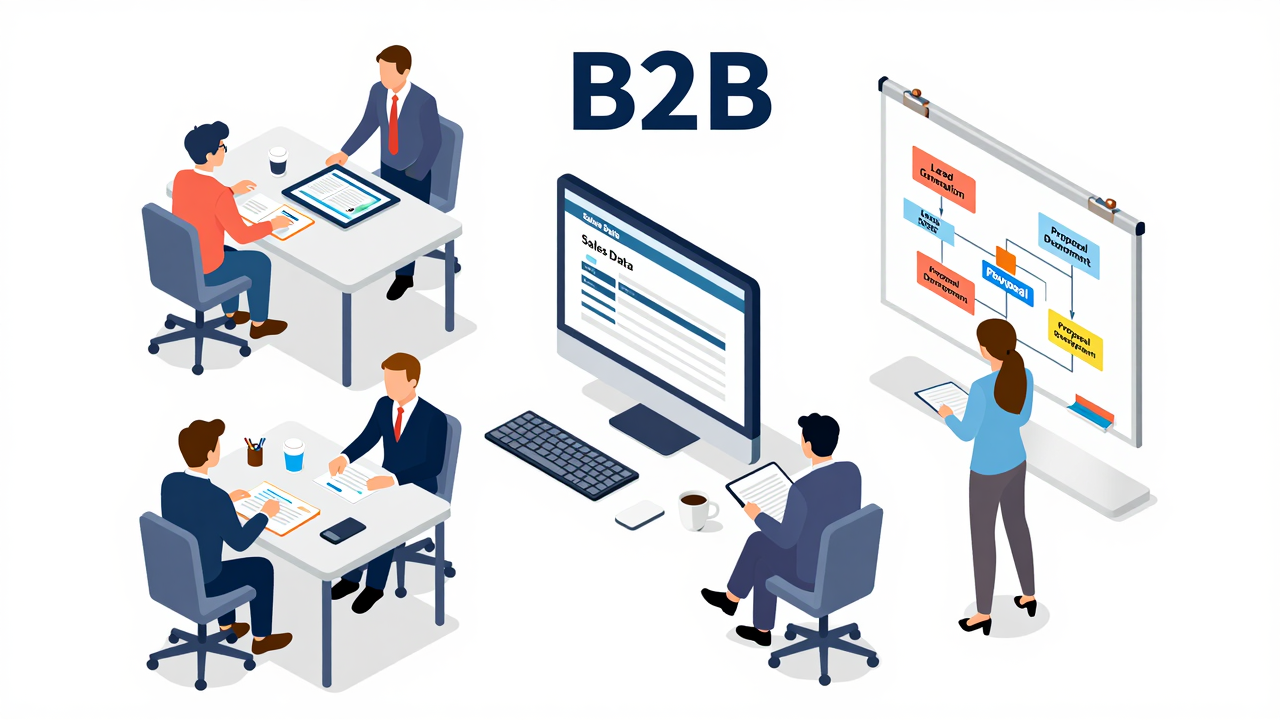
In the B2B process, understanding the key stages can greatly enhance your effectiveness in closing deals.
First, you start with lead generation, identifying potential customers through targeted marketing and networking.
Once you have leads, move to lead qualification, where you assess whether these prospects align with your offerings. This sets the stage for the needs assessment, allowing you to understand their specific requirements and challenges.
After gathering insights, present a proposal and quote that outlines tailored solutions and pricing. This is essential in the B2B buying process, as it prepares for negotiation.
Finally, engage in negotiation and closing, where you finalize terms and process the sale. This stage often involves multiple approvals due to the complexity of the B2B purchase process.
Importance of Lead Generation in B2B Sales

Lead generation plays a pivotal role in B2B sales, serving as the foundation for building meaningful customer relationships. It initiates the sales process by identifying potential customers and creating opportunities for engagement. Effective strategies can greatly boost your conversion rates, especially when you tailor content and focus on targeted outreach.
Here’s a simple breakdown of lead generation strategies:
| Strategy | Purpose |
|---|---|
| SEO | Attracts organic traffic |
| Content Marketing | Positions your business as a thought leader |
| Email Campaigns | Nurtures relationships |
| Networking Events | Connects you with decision-makers |
How to Qualify Leads Effectively

Qualifying leads effectively can make all the difference in your B2B sales process. Start by evaluating potential customers’ needs and fit for your product, which boosts your conversion rates. Focus on analyzing firmographics like company size and industry.
Understanding the decision-making structure in an organization is also essential.
Use a scoring system based on BANT—Budget, Authority, Need, and Timeline—to streamline your qualification process. This helps you prioritize high-potential leads.
Regular communication is key; follow up with leads and conduct needs evaluations to gauge their interest and readiness to purchase.
Utilize data-driven insights from your CRM tools to track engagement and interactions with potential customers. This will greatly improve your lead qualification accuracy, ensuring you’re focusing on the right prospects in the B2B process.
Understanding Client Needs: The Assessment Stage

To effectively understand your client’s needs during the assessment stage, start by identifying their key pain points and aligning your solutions with their goals.
Gather insights from various stakeholders through surveys and interviews, which will help you analyze their current processes and uncover gaps.
Key Pain Points Identification
Identifying key pain points during the assessment stage is crucial for understanding client needs and crafting effective solutions. Start by conducting thorough customer research, using surveys and interviews to gather insights.
[embedded content]
Engage with multiple stakeholders to capture diverse perspectives, as B2B transactions often require input from different decision-makers. Focus on active listening and open communication; this builds trust and rapport with clients.
Pay attention to key metrics like customer satisfaction and feedback, which can guide your assessment process. By pinpointing specific issues clients face, you can tailor your proposals to address their needs effectively.
Goals and Objectives Alignment
Aligning goals and objectives with your client’s needs is essential for crafting effective solutions. Start by conducting a detailed needs assessment.
Engage multiple stakeholders to gather diverse insights, which helps create a fuller picture of client requirements. Use effective communication to pinpoint pain points and clarify business objectives. This alignment allows you to tailor your solutions more accurately.
Leverage customer research and buyer profiles to enhance your understanding, ensuring your proposals resonate with the client’s vision.
Remember, a well-executed assessment can streamline the sales cycle, making proposals and negotiations faster and more efficient.
Comprehensive Needs Analysis
When you immerse yourself in a thorough needs analysis, you not only gather essential information but also build a foundation for a successful partnership.
To effectively assess your client’s needs, follow these steps:
- Engage Stakeholders: Involve multiple decision-makers from both sides to capture diverse perspectives.
- Conduct Interviews: Use structured interviews to explore deeper into specific pain points and goals.
- Utilize Surveys: Distribute surveys to collect both qualitative and quantitative data, ensuring extensive insights.
- Prioritize Findings: Identify key features and functionalities that matter most to the client, enhancing your proposal’s effectiveness.
Crafting Proposals: Essential Elements

Crafting a compelling proposal is essential for winning over potential clients, especially since it serves as your primary communication tool. Start with a clear executive summary that outlines the project’s objectives and benefits, allowing decision-makers to quickly grasp your value.
Next, include detailed descriptions of your products or services, emphasizing features and how they meet the client’s needs.
Be transparent with pricing; break down costs, payment terms, and any discounts available to facilitate informed decisions. Outline your implementation plan, detailing timelines and milestones to reassure clients about the project’s feasibility.
Finally, enhance your proposal’s credibility by including case studies or testimonials that showcase past successes and client satisfaction. This not only demonstrates your capabilities but also increases the likelihood of acceptance.
Mastering Negotiation in B2B Sales

Negotiation in B2B sales can often feel like maneuvering through a maze, especially with multiple decision-makers involved. To navigate this complex process effectively, focus on these key strategies:
- Understand Stakeholders: Identify all decision-makers and their priorities. Tailor your approach to address their specific concerns.
- Build Relationships: Establish trust and rapport. Strong relationships can lead to more favorable terms and smoother negotiations.
- Use Data Insights: Leverage metrics like customer lifetime value (CLV) and annual contract value (ACV). These figures can help demonstrate the long-term benefits of your solutions.
- Be Flexible: Stay adaptable during discussions. Adjust your strategies based on feedback and evolving circumstances to find mutually beneficial solutions.
Closing the Deal: Final Steps

As you approach the closing phase, focus on key negotiation strategies to finalize the details, like payment terms and conditions.
Make sure you clearly outline the value your solution brings, addressing any remaining concerns from stakeholders.
Once everything’s agreed upon, get that contract signed swiftly to kick off implementation and keep the momentum going.
Key Negotiation Strategies
Closing a deal in B2B negotiations requires strategic actions that directly address the needs of your buyer. To effectively close the deal, consider these key negotiation strategies:
- Understand the Buyer’s Needs: Tailor your proposal to highlight solutions that address their specific pain points.
- Build Trust and Rapport: Engage with decision-makers to create a comfortable atmosphere, making it easier for them to agree.
- Present a Clear Proposal: Outline benefits, pricing, and ROI clearly, so all stakeholders recognize the value of your offer.
- Follow Up Promptly: After negotiations, quickly address any concerns and reiterate the benefits, ensuring the buyer feels supported in their decision.
Implementing these strategies can greatly enhance your chances of closing the deal successfully.
Finalizing Payment Terms
After establishing trust and rapport with your buyer, the next step is to finalize payment terms.
Start by discussing the payment methods that work for both parties, like wire transfers, ACH payments, or credit terms. Depending on the size of the transaction and your relationship, you can negotiate these terms.
Clearly outline the payment schedule in your contract, using net terms like net 30 or net 60, which specify how many days the buyer has to pay after receiving the invoice. This clarity helps prevent misunderstandings and guarantees smooth cash flow.
Post-Sale: Building Customer Relationships
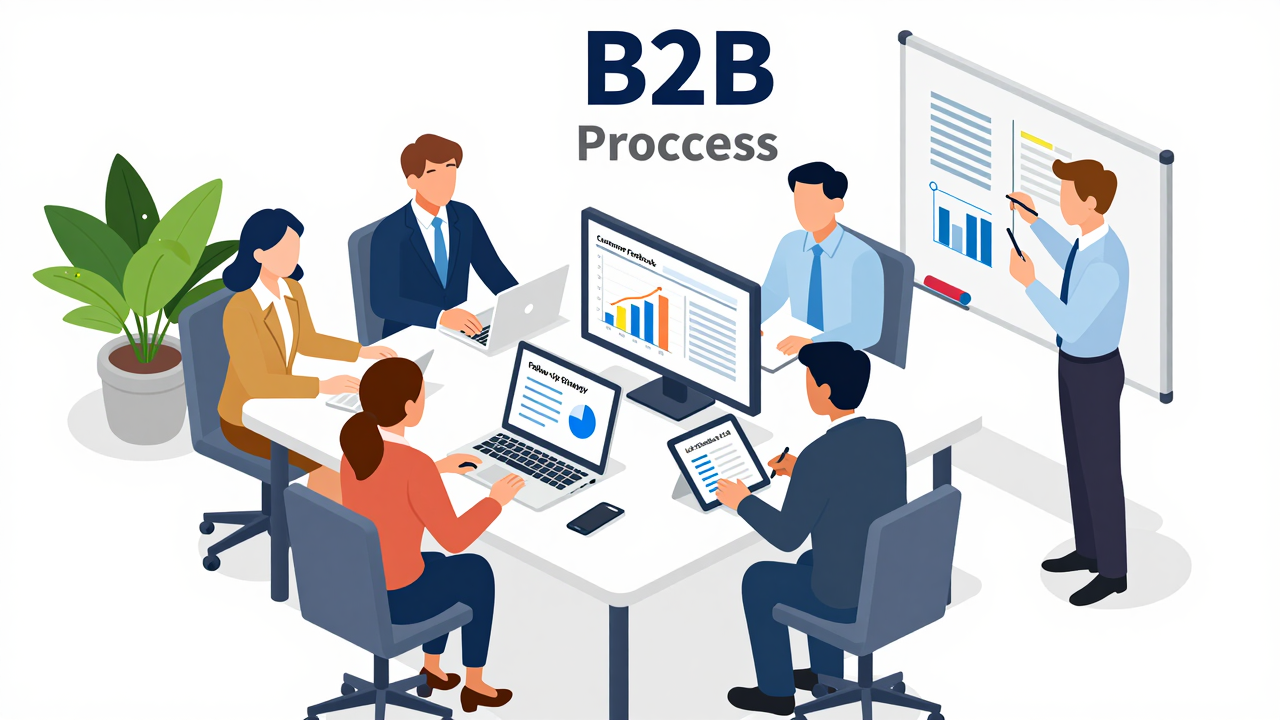
Building strong customer relationships post-sale is essential for guaranteeing long-term loyalty and satisfaction. Engaging with customers after the sale can greatly impact their experience and your business’s success.
Here are four effective strategies to enhance these relationships:
- Provide Excellent Customer Support: Make certain your clients can easily reach you for assistance; 70% of experiences hinge on how customers feel treated.
- Personalize Communication: Tailor your messages to each customer, as 80% prefer companies that offer personalized interactions.
- Conduct Regular Check-Ins: Schedule follow-ups to gather feedback and assess ongoing needs; 55% of customers are willing to share their thoughts when approached appropriately.
- Implement Loyalty Programs: Create incentives for repeat business, since loyal customers spend 67% more than new ones.
Common Challenges in the B2B Process

Steering the B2B process can be tricky, especially when you encounter common challenges that can slow down your operations.
First, recognize that longer sales cycles often arise from complex decision-making. To combat this, streamline your approval processes by clearly defining roles for each stakeholder involved.
Next, be wary of relying too heavily on a few large clients; diversifying your client base can stabilize revenue.
Additionally, customization can complicate delivery, so make certain your sales, product, and support teams coordinate effectively to meet client needs.
Improve communication between your sales and marketing teams to avoid missed opportunities; regular check-ins can help align your goals.
Finally, address payment delays by implementing clearer invoicing practices and follow-ups. This will help maintain cash flow and keep your business running smoothly.
Solutions to Common B2B Challenges
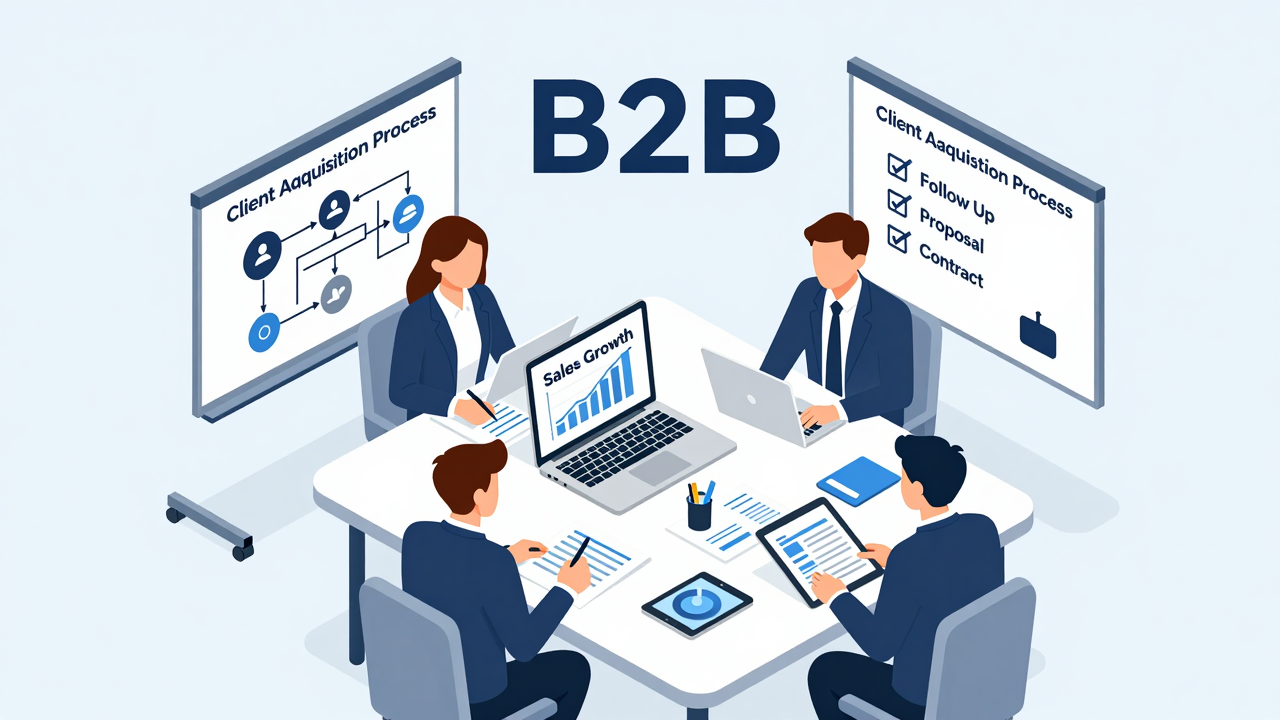
To tackle common B2B challenges, you can start by streamlining your sales processes and enhancing communication strategies.
Focus on creating clear channels for your team to share insights and updates, which can help speed up decision-making.
Additionally, consider using tools like CRM systems to keep everyone aligned and informed, making it easier to manage complex transactions.
Streamlining Sales Processes
When you face the challenge of lengthy B2B sales cycles, streamlining your sales processes can make a significant difference.
Here are some practical steps to enhance efficiency:
- Implement CRM Tools: These tools help you track interactions and improve communication between sales and marketing.
- Utilize Data Analytics: Identify high-potential leads to prioritize your efforts, boosting conversion rates by 10-30%.
- Adopt Account-Based Selling: Tailor your strategies to specific clients, increasing engagement and success rates.
- Automate Routine Tasks: Streamline invoicing and follow-ups to reduce manual errors, allowing your team to focus on building relationships.
Enhancing Communication Strategies
Effective communication strategies are essential in B2B environments, especially since many buyers favor personal connections during their purchasing journeys.
To enhance your communication, leverage digital platforms for real-time feedback, which can shorten typical sales cycles that often exceed three months.
Implement Customer Relationship Management (CRM) tools to keep everyone aligned and informed.
Regular check-ins and updates with clients foster transparency, allowing you to address concerns early and build trust.
Train your sales teams in consultative selling techniques to effectively engage multiple decision-makers, maneuvering the complex dynamics of B2B transactions.
Top Best Practices to Enhance Your B2B Sales Process

Enhancing your B2B sales process requires a clear understanding of your target audience. To effectively boost your sales, consider these best practices:
- Create Detailed Buyer Profiles: Understand who your ideal customers are. This helps tailor your marketing strategies and improves lead generation efforts.
- Implement a Structured Sales Process: Follow a clear path from lead generation to closing. This includes qualifying leads, evaluating needs, and negotiating effectively.
- Utilize CRM Tools: Centralize your communication data and track key sales metrics. This will help you evaluate performance and make informed decisions.
- Build Long-Term Relationships: Focus on understanding decision-makers’ pain points. Deliver tailored solutions that highlight ROI to foster trust and loyalty.
Regularly review and refine your techniques to adapt to market changes, ensuring you maintain a competitive edge in the B2B landscape.
Metrics to Measure B2B Sales Success

To measure the success of your B2B sales efforts, it’s important to track specific metrics that provide insight into your team’s performance. Start with the conversion rate, which shows the percentage of leads turned into sales; aim for 20-30% if you want to be high-performing.
Next, calculate the annual contract value (ACV) to understand the average revenue generated from each customer contract annually. This helps in forecasting future revenue.
Don’t overlook customer lifetime value (CLV), as it reveals the total revenue expected from a single customer relationship, guiding your investment in acquisition and retention.
Also, keep an eye on new leads in your pipeline—successful organizations endeavor to add numerous qualified leads each quarter.
Finally, use a thorough sales dashboard to aggregate data over time, which aids in strategic decision-making and can improve your win rates.
These metrics will help you pinpoint areas for growth and optimization.

To enhance your B2B sales process, you need the right tools to streamline operations and boost effectiveness.
Start by integrating CRM systems to centralize communication and track interactions efficiently.
Then, utilize sales analytics and AI-driven tools to gain insights, prioritize leads, and automate repetitive tasks, allowing your team to focus on building valuable relationships.
Essential Sales Tools
In today’s competitive B2B landscape, having the right sales tools can make all the difference in your success. Here are four essential tools to enhance your sales process:
- CRM Tools: Centralize your communication and customer data, which helps you track the sales process and manage relationships effectively.
- Sales Analytics: Use data to predict outcomes and measure performance in real-time, so you can make informed decisions.
- Sales AI: Automate repetitive tasks to free up your time for high-value activities, improving your strategic focus.
- Efficiency Tools: Simplify processes and reduce manual errors, boosting overall productivity in your sales operations.
Incorporating these tools can streamline your workflow and enhance your team’s effectiveness.
CRM Integration Benefits
CRM integration offers significant advantages that can streamline your B2B sales process. By centralizing customer data, you gain access to thorough profiles, which improves lead qualification and nurturing efforts.
Automate follow-ups and reminders to reduce manual tasks and guarantee timely communication, vital for longer sales cycles. Use enhanced reporting features in your CRM to track sales metrics in real time, allowing for data-driven decisions that optimize strategies and boost conversion rates.
Collaboration between your sales and marketing teams becomes easier, leading to aligned messaging and targeted campaigns that resonate with potential clients.
Finally, utilize CRM for account management to keep detailed records of interactions and preferences, fostering stronger relationships and increasing customer lifetime value.
Data Analytics Impact
Data analytics tools greatly enhance the B2B sales process by providing insights that help you track key metrics like conversion rates and customer lifetime value. By utilizing these tools, you can make informed decisions and refine your strategies.
[embedded content]
Here are four key benefits:
- Identify Trends: Analyze customer behavior to tailor your marketing and sales approaches effectively.
- Streamline Lead Qualification: Use advanced CRM systems to prioritize leads, focusing on high-potential prospects.
- Forecast Sales Outcomes: Apply predictive analytics to historical data, improving your sales strategies.
- Enhance Efficiency: Integrate analytics to reduce errors and foster stronger client relationships through informed interactions.
Incorporating these practices will empower your B2B sales efforts and drive better results.
Future Trends Shaping B2B Sales

As businesses navigate the evolving landscape of B2B sales, staying ahead of future trends is essential for success. Embrace AI to automate repetitive tasks, enhance lead scoring, and deliver personalized recommendations. This boosts your efficiency and effectiveness.
Make data your ally; utilize analytics to gain actionable insights for better targeting and lead prioritization.
Consider adopting Account-Based Selling (ABS). Tailor your sales pitches to the unique needs of high-value clients, increasing your chances of conversion. Shift from one-size-fits-all solutions to customized strategies that address individual client pain points—this personalization is key.
Lastly, don’t underestimate the power of social selling. Use social media platforms to engage prospects, build relationships, and establish trust. These interactions can greatly impact your B2B sales process, making it more effective.
Frequently Asked Questions

What Is a B2B Process?
A B2B process involves one business selling goods or services to another.
Start by generating leads through networking or marketing, then qualify those leads to identify potential clients.
Assess their needs, and prepare a tailored proposal.
Engage in negotiations to finalize terms, and focus on building long-term relationships.
Always aim for a clear return on investment.
Use data to personalize your approach, which can greatly enhance your chances of closing the deal successfully.
What Is the 3 3 3 Rule in Sales?
The 3 3 3 Rule in sales helps you structure your calls effectively.
Start by spending three minutes preparing; outline your key points and anticipate questions.
Next, use three minutes to present your message clearly, focusing on benefits.
Finally, dedicate three minutes for follow-up; ask for feedback and clarify next steps.
What Are the 7 Steps of the Sales Process?
The seven steps of the sales process are lead generation, lead qualification, needs assessment, proposal and quote, negotiation and closing, order fulfillment, and relationship management.
Start by generating leads through marketing and outreach. Then, qualify those leads to confirm they fit your offering.
Assess their needs, create tailored proposals, negotiate terms, fulfill the order, and manage the relationship to nurture long-term partnerships.
Focus on clear communication and understanding throughout each step.
[embedded content]
What Is the B2B Method?
The B2B method focuses on building relationships between businesses.
Start by identifying your target market and generating leads through networking or marketing.
Next, qualify these leads to find potential customers who need your product.
Conduct a needs assessment to understand their requirements, then create tailored proposals.
Negotiate terms effectively, close the sale, and maintain strong communication post-sale to guarantee customer satisfaction and loyalty.
This approach fosters long-term partnerships and repeat business.
Conclusion

In conclusion, mastering the B2B process is key to driving your business forward. Start by generating quality leads, then qualify them effectively to guarantee a good fit. Assess client needs and tailor your proposals to address those needs directly. Use best practices to streamline your sales process, and keep track of important metrics to measure success. Finally, stay updated on trends to adapt your strategies. By following these steps, you’ll enhance your B2B sales outcomes considerably.
Image via Google Gemini and Small Business Trends