
This post was originally published on this site.
The summer solstice will be celebrated across the northern hemisphere this week, marking the official start of astronomical summer.
This year, it falls on Sunday 21 June and while we generally think of it as the whole day, it actually happens at a single moment when the hemisphere is tilted at its maximum towards the Sun.
That exact time this year is 09:24 BST.
However, for those in the northern hemisphere, it is generally recognised as the midsummer date with the longest amount of daylight and the shortest period of darkness.
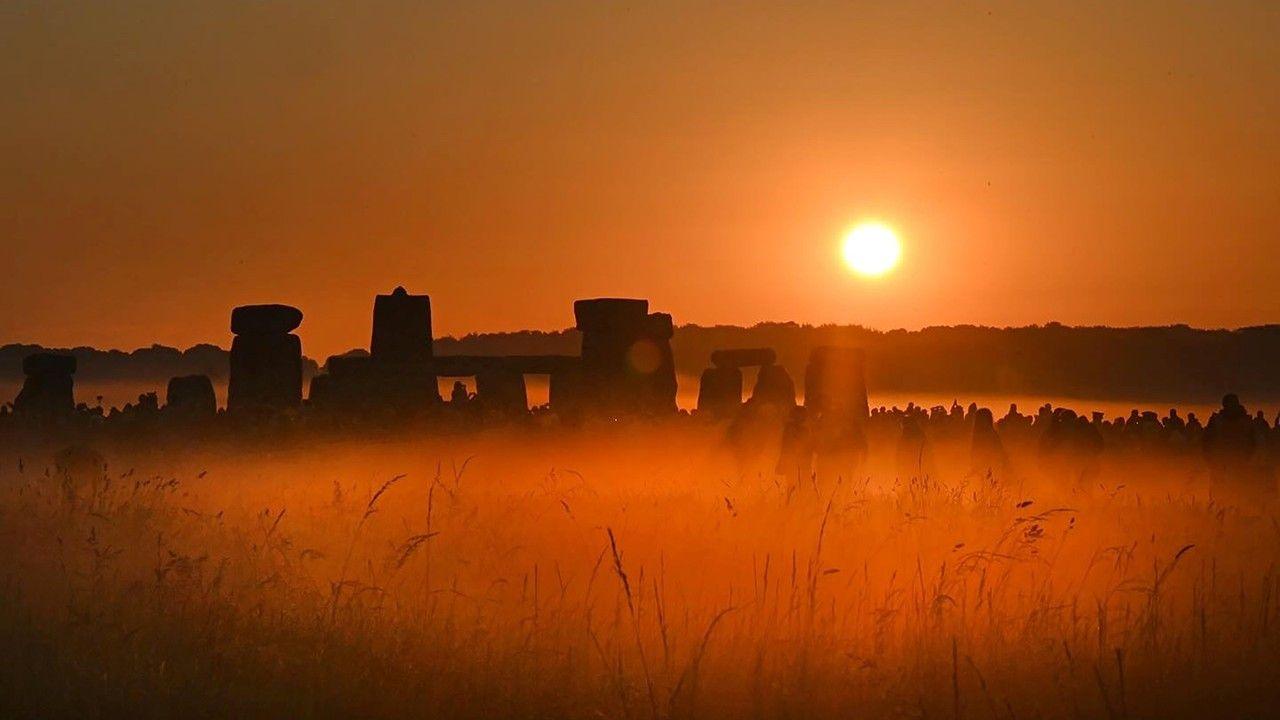 BBC / Jeff Overs
Is the solstice always on 21 June?
The solstice does not always fall on the 21 June. Depending on the year, it can also take place on 20 June or 22 June too.
In a leap year, it generally falls on 20 June.
This variation is because it actually takes the Earth almost six hours longer to orbit the Sun than the length of a full calendar year.
To keep the calendar aligned with the Earth’s orbit we add a leap day in every four years to make up for this difference.
Why does the amount of sunlight vary?
Our planet does not spin on a perfectly vertical axis — it is tilted.
This tilt causes the amount of sunlight that reaches different regions of Earth to change throughout the year as it orbits the Sun.
For half the year the northern half of the Earth is tilted toward the Sun.
On the summer solstice the northern hemisphere is tilted most directly toward the Sun, and the Sun appears directly overhead at the Tropic of Cancer.
Without this tilt we would still experience weather but not distinct seasons, as the amount of daylight would remain nearly constant throughout the year.
The word solstice comes from the Latin words sol (sun) and sistere (to stand still), referring to the apparent pause in the Sun’s movement across the sky.
Despite being the longest day of the year, the summer solstice does not have the latest sunset or the earliest sunrise.
The earliest sunrises happen before the summer solstice and the latest sunsets happen after.
You can check sunrise and sunset times where you are on the BBC Weather app and website.
What is the difference between astronomical and meteorological summer?
While the solstice is the beginning of astronomical summer, meteorologically speaking it started several weeks ago.
Meteorologists define summer in the northern hemisphere as beginning on 1 June and ending on 31 August.
This is because all four seasons are divided into specific three month periods in order to make it easier to compare seasonal statistics.