
This post was originally published on this site.
Why England should be wary of Panama’s hybrid tactics
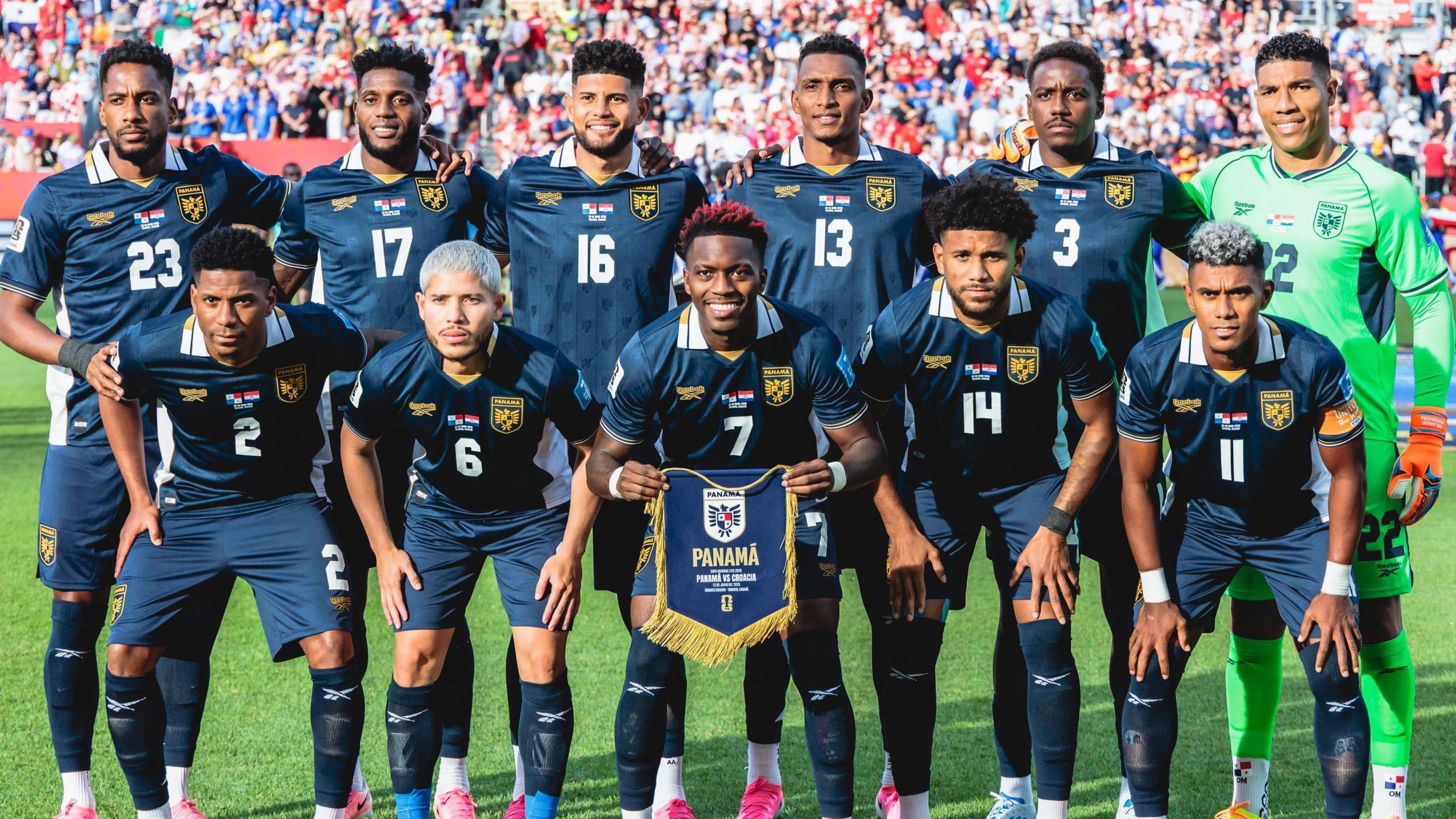 Image source, Getty Images
-
Published
With four points from two games, England will hope to seal top spot in their World Cup group with victory on Saturday against Panama.
The Central American side are a relatively unknown quantity, but they are an exciting team whose results do not paint a true picture of their performances in the tournament.
Against both Ghana and Croatia, there were periods of the game when Panama looked the better team.
But with arguably their best player Adalberto Carrasquilla injured, they have struggled to turn their impressive play into goals.
So how might Thomas Christiansen, the former Leeds United manager, set his team up and what can the Three Lions do to pose problems for Fifa’s 42nd-ranked nation?
Panama’s many shapes
During their first two games, Panama have taken a dynamic approach depending on the phase of play the game is in.
From opposition goal-kicks, Panama have stepped up to press aggressively in a 4-4-2 shape.
If the opponents have quality on the ball and find themselves in possession higher up the pitch, Panama’s high press falls into a mid-block, and they move from a 4-4-2 into a 5-3-2. Their focus is on making it hard for teams to play through them.
As Croatia, in particular, grew into the game, Panama took an even more defensive approach.
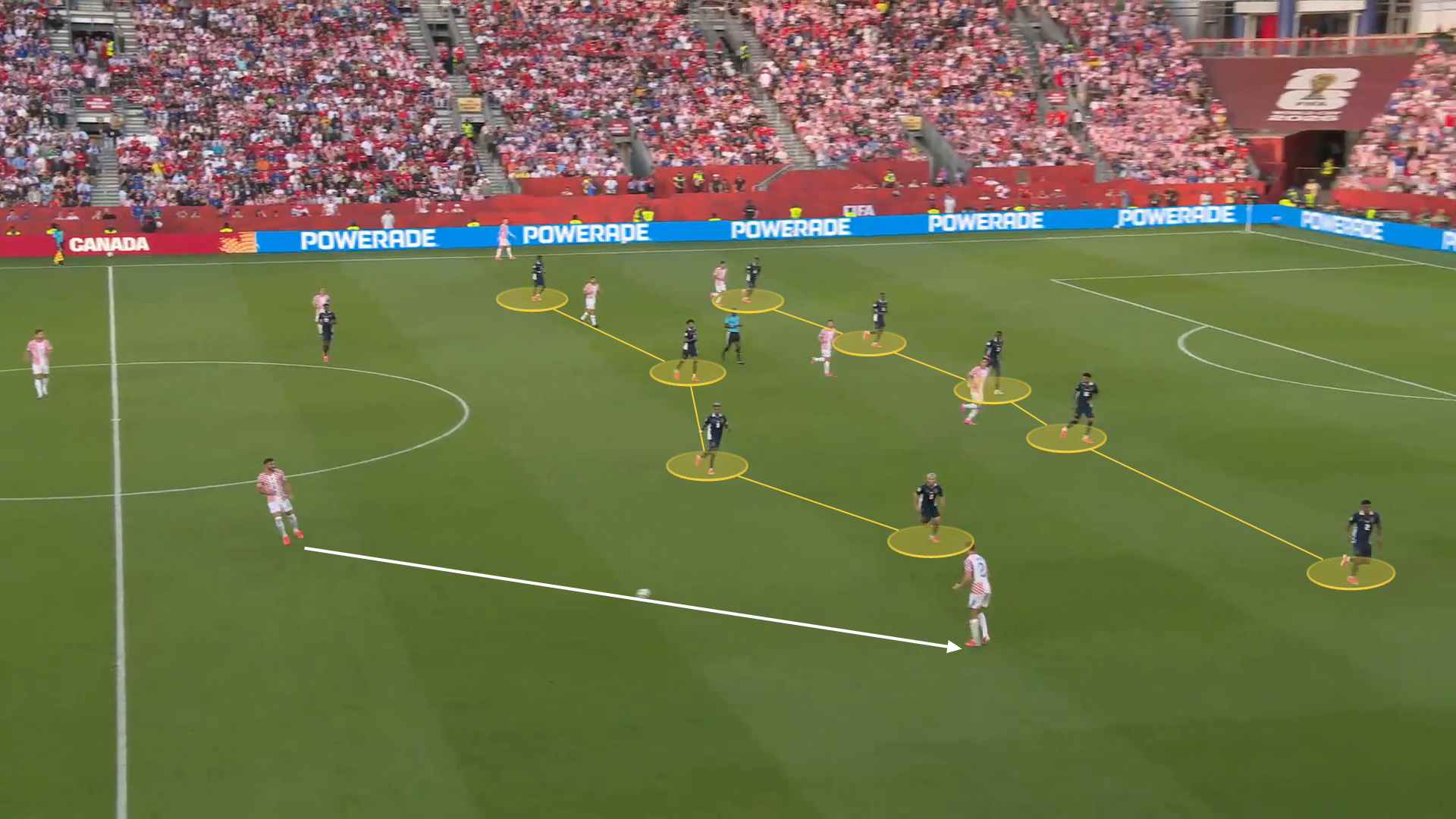
Their 5-3-2 became a 5-4-1, a shape they adopted with a deeper defensive line for large parts of the game.
So what does this mean for England?
Will England be able to play their own way?
To play this video you need to enable JavaScript in your browser.
This video can not be played
England are a side that will relish the prospect of playing a team that push up the pitch – if Panama do try to press.
It was in the 93rd minute that Panama conceded against Ghana as they chased a winner.
When they lost the ball in the final third, Panama pressed high but Ghana played into their forwards quickly and they capitalised on the space that opened up.
Against Croatia – and in the qualifying games – it was clear Thomas Tuchel’s game model was similarly built upon teasing opponents out of a stubborn defensive shape.
When Croatia did press England’s defenders or deep midfielders, and space opened up between their attacking and defending units, Tuchel’s side sought to find their own forwards quickly against fewer defenders.
Against Ghana, England suffered because Carlos Queiroz’s men offered an alternative blueprint that took away Tuchel’s preferred conditions, instead sitting deep without applying forward pressure.
This kept Ghana compact between attack and defence.
Playing around Panama
Panama are an ‘in-between’ version of Ghana and Croatia defensively and may have more success if they adopt a style closer to that of the Africans against England.
There are three ways for a team to create chances: by playing around an opponent; by playing through an opponent; or by playing over an opponent.
By playing with four midfielders rather than five in their 5-4-1 shape, Panama will be unable to cover the width of the pitch as well as Ghana did with their five midfielders in a 4-5-1.
This makes it easier for opposition defenders to find their full-backs or wide midfielders if they move the ball quickly from one side to the other.
So, playing around Panama is likely to be England’s best way to create chances.
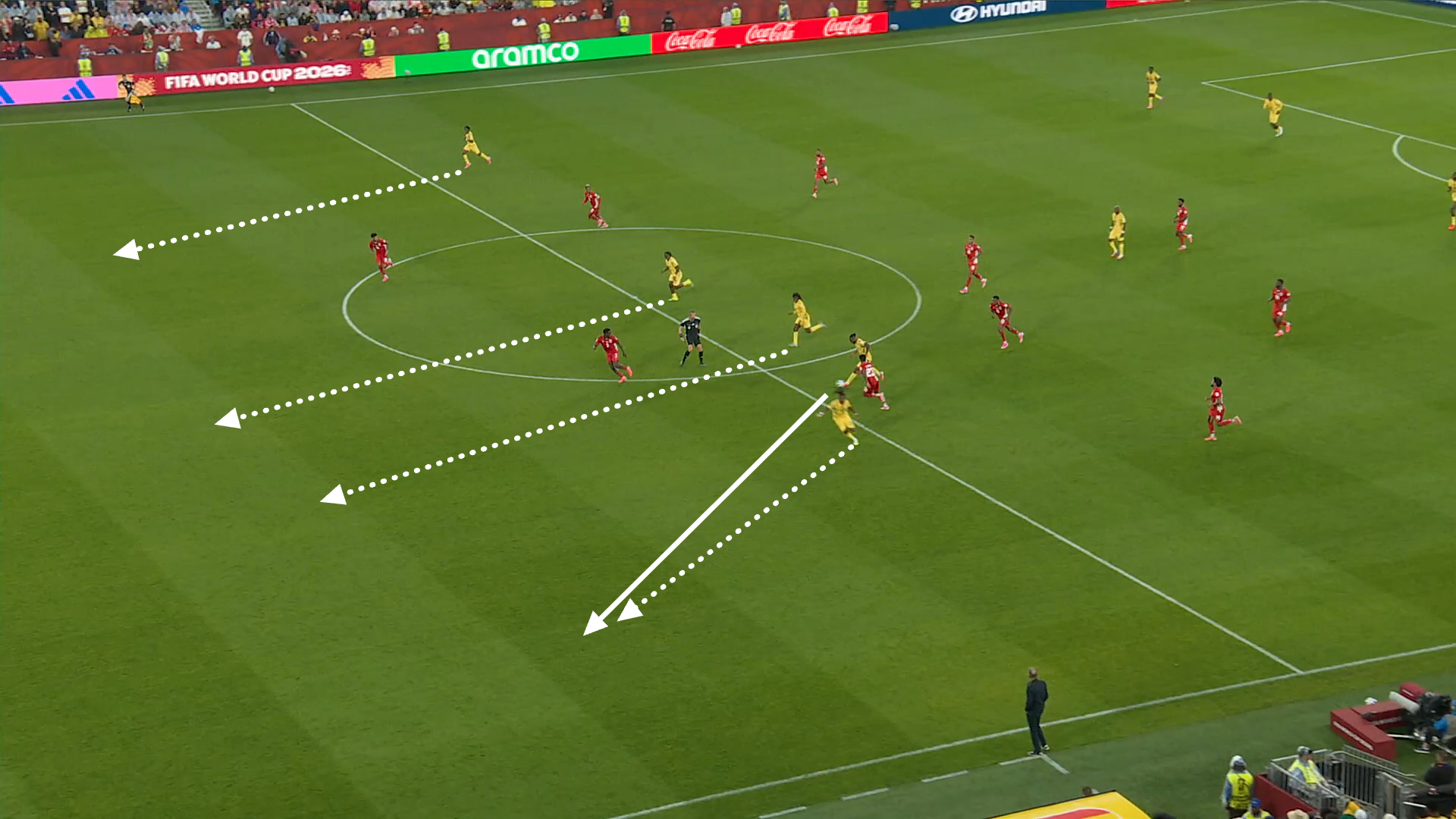
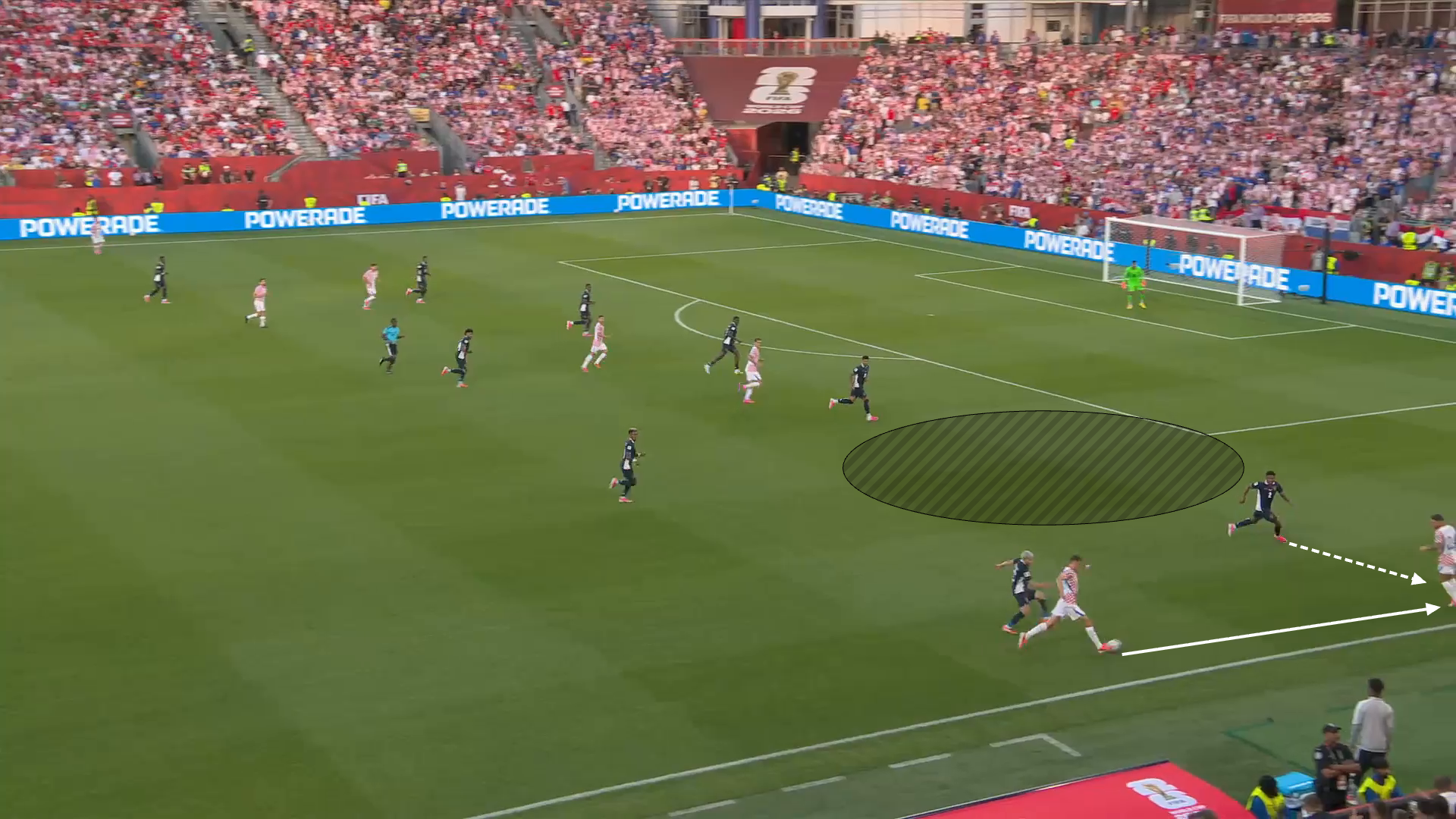
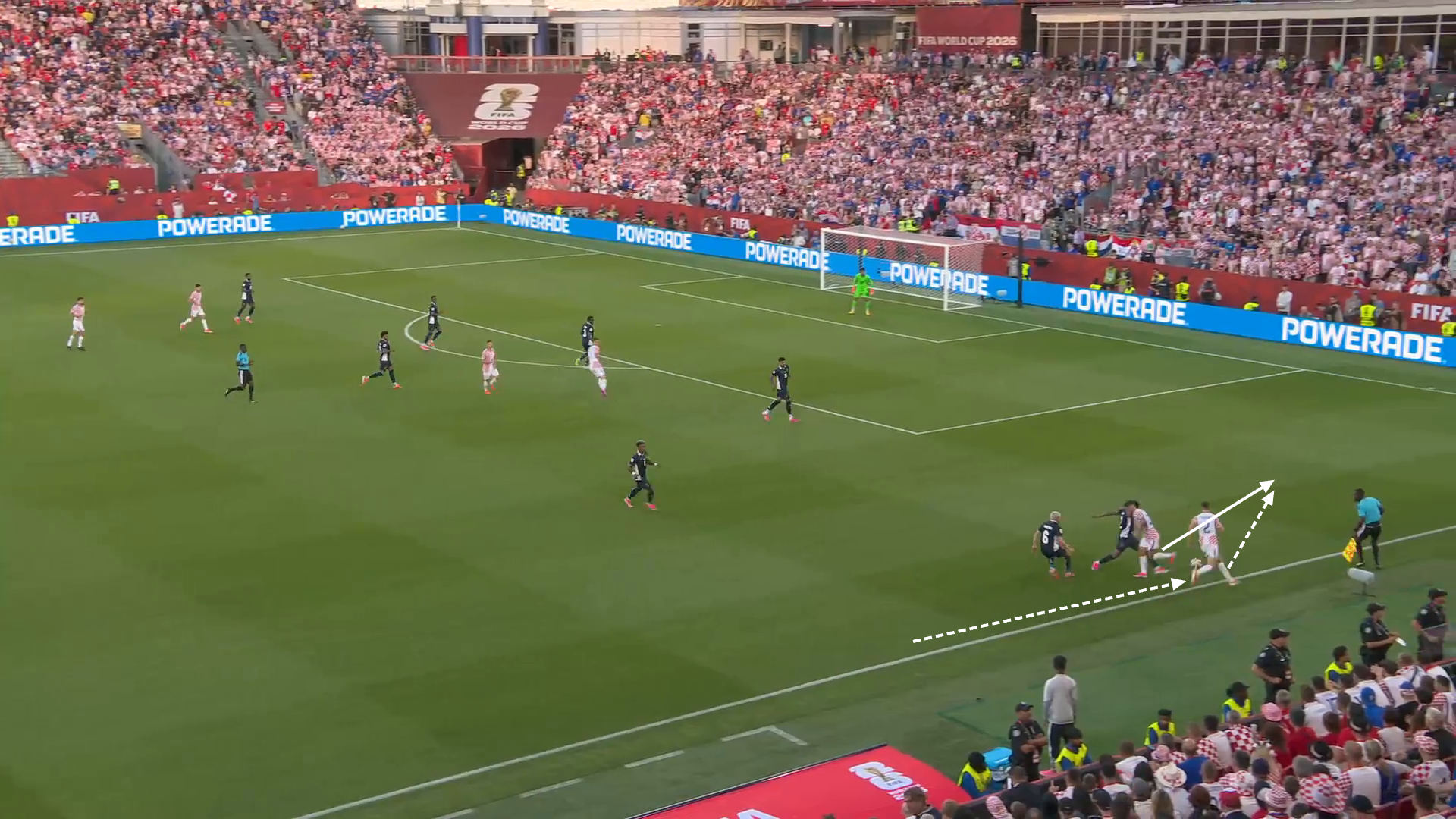
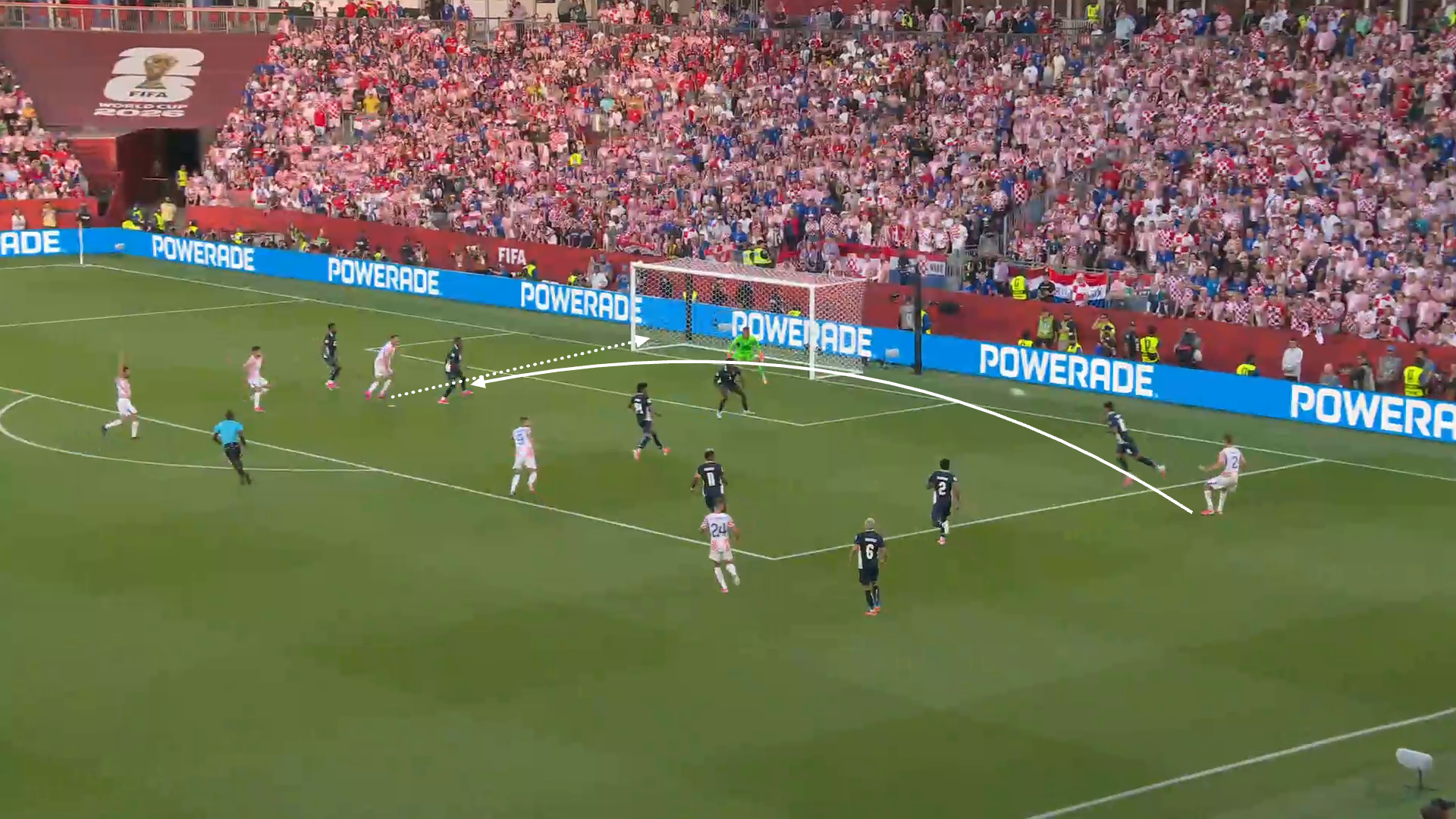
Croatia’s only goal came from exploiting this, with Panama looking to protect the centre of the pitch.
1 of 4
Slide 1 of 4, Screen grab from Croatia 1-0 Panama. Yellow connecting lines are drawn to illustrate Panama’s 5-4-1 shape. An arrow is draw to show the pass from centre back to right back., Croatia’s centre-back finds the right-back Josip Stanisic outside the width of Panama’s midfield
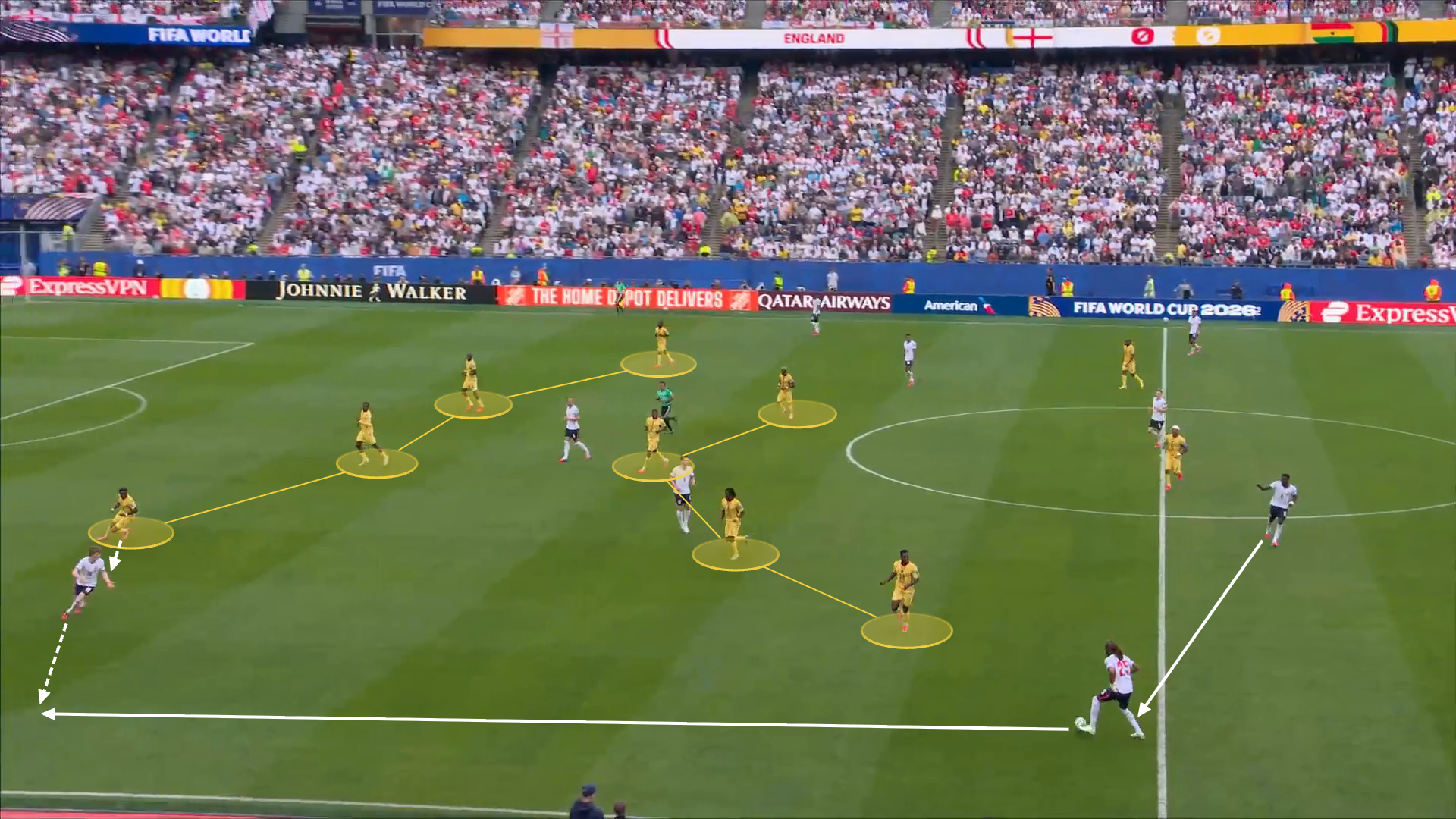
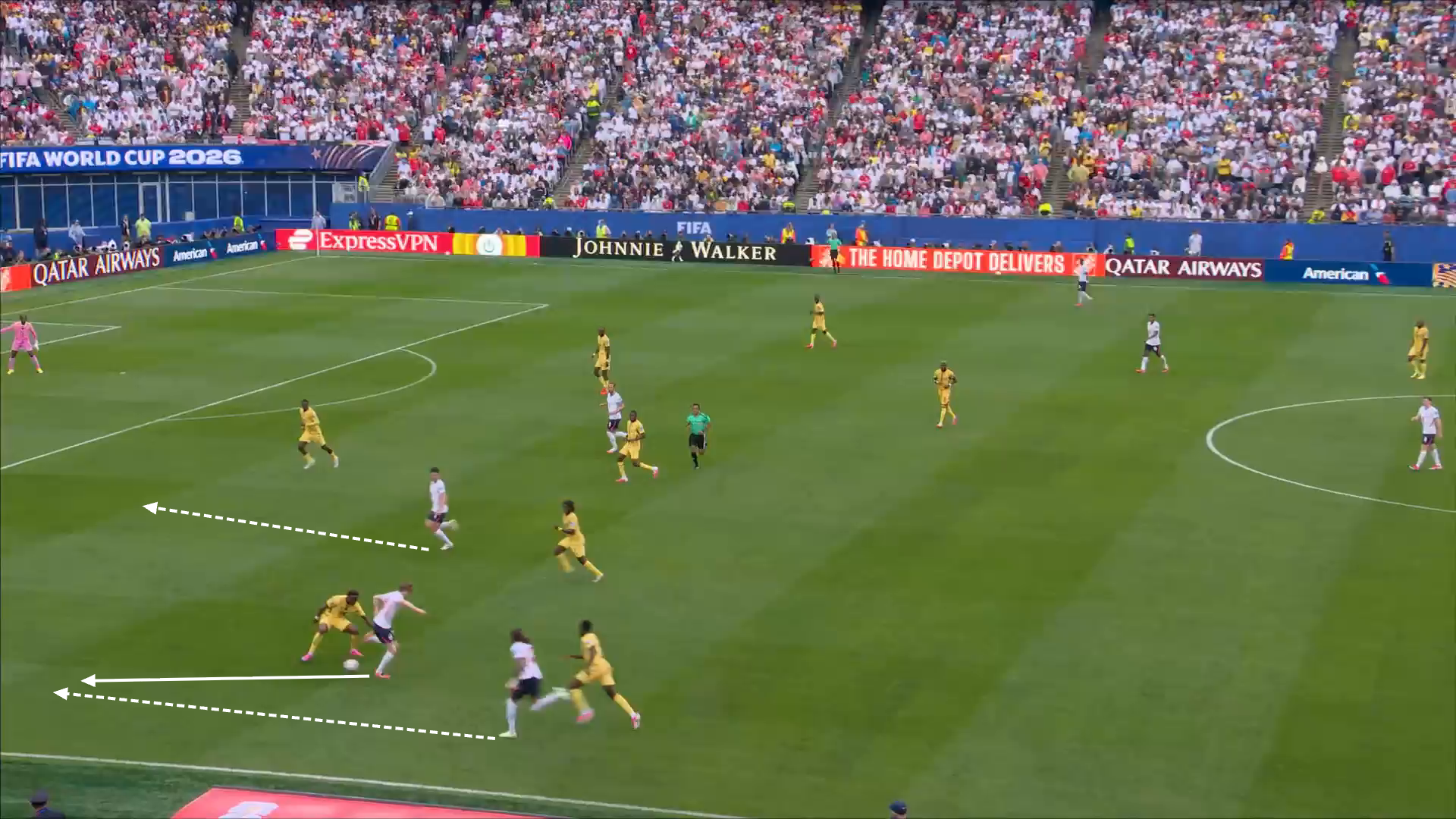
England have tried to keep their wingers high and wide this tournament too, and doing so against a Panama back five would pull their wing-back out in the same way Croatia did.
Against Ghana, England looked to play with two wide players, given how congested the middle of the pitch was.
Tuchel was seen shouting at full-back Djed Spence from the touchline, encouraging him to pass it into Anthony Gordon before making a forward run to follow his pass, in a very similar way to Croatia’s goal against Panama.
This is something Tuchel will hope his players lean into in their third game.
1 of 2
Slide 1 of 2, Screen grab from England 0-0 Ghana. Arrows drawn show the path of the passes from Guehi to Spence to Gordon., Guehi finds Spence wider than Ghana’s midfield width. Ghana only have four across midfield here. Spence then plays it into Gordon who has pulled wide – dragging the full-back with him
The gap that opened up between centre-back and wing-back when Croatia’s winger pulled wide is also a potential area to exploit.
It is easy to imagine a situation in which England pull a third player across to run between the wing-back and centre-back.
Playing over Panama
Panama’s defensive line, even in their 5-4-1, appears higher than Ghana’s.
This opens up the possibility of playing over them too.
Ghana asked Thomas Partey to track Harry Kane to nullify his influence and paired that with giving up little space behind their defence. It will be interesting to see if Panama mimic this man-marking tactic.
If Kane is allowed to roam, however, dropping him deep to play accurate passes into the space behind Panama’s slightly higher line might also be a smart tactic.
Impressive chance creation but lack of a scorer
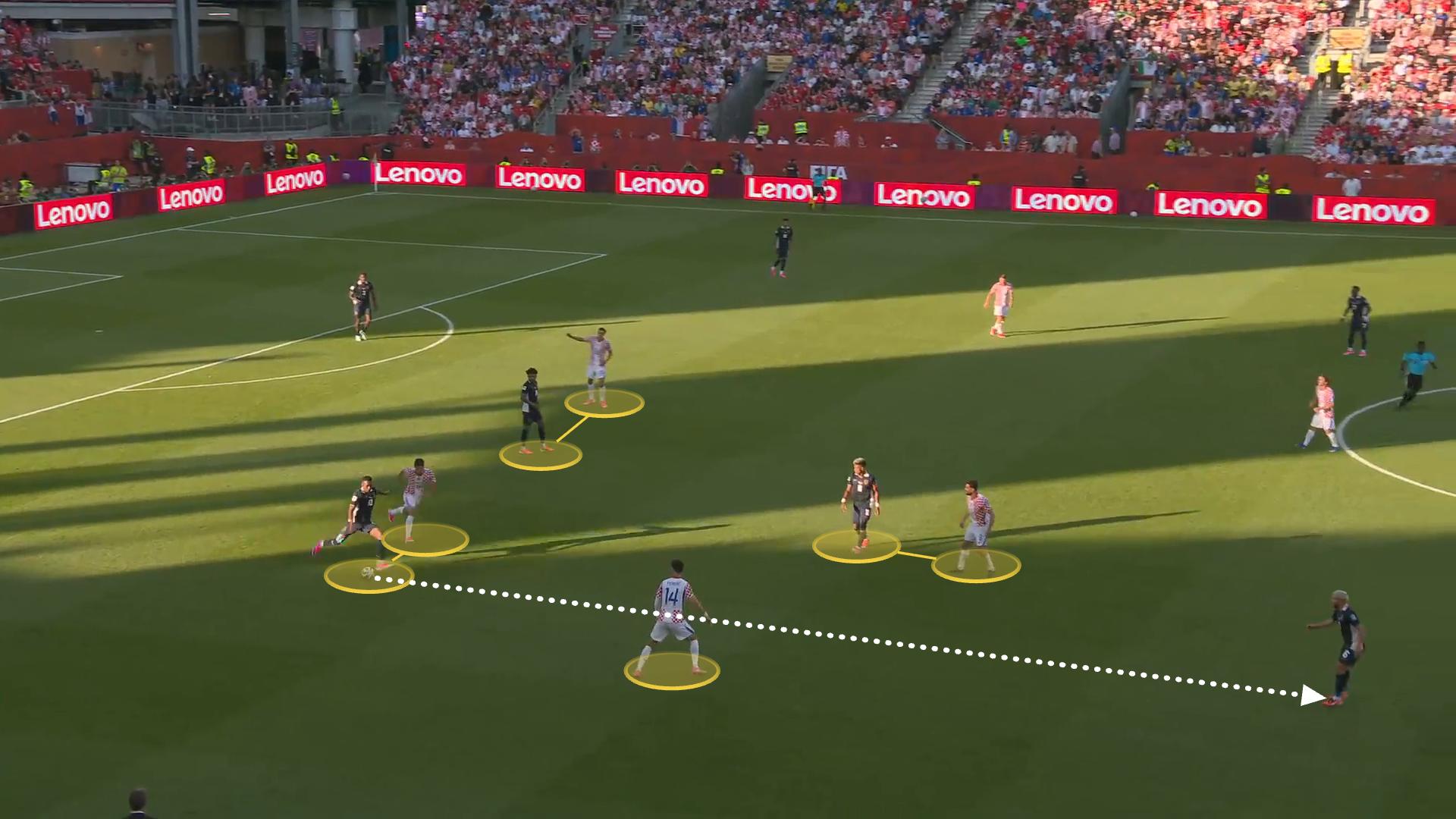
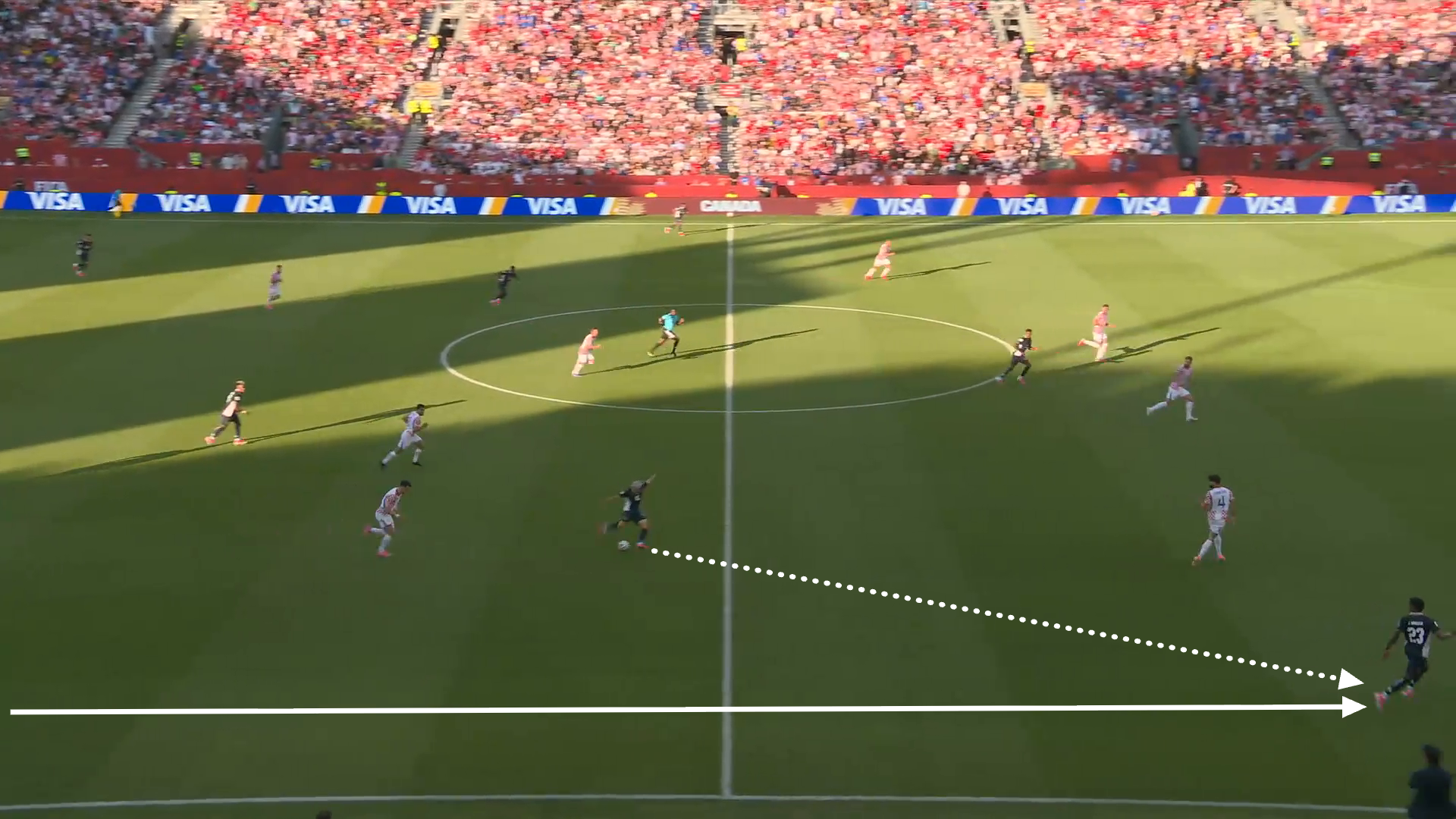
When Panama find themselves on the ball, they showcase strong technical quality to play out of the opposition’s immediate pressure. Midfielder Cristian Martinez stands out in this regard.
One of England’s biggest strengths this World Cup, however, has come from their counter-pressing – with even their biggest stars buying in to working hard, crowding around the ball and winning it back immediately after losing it.
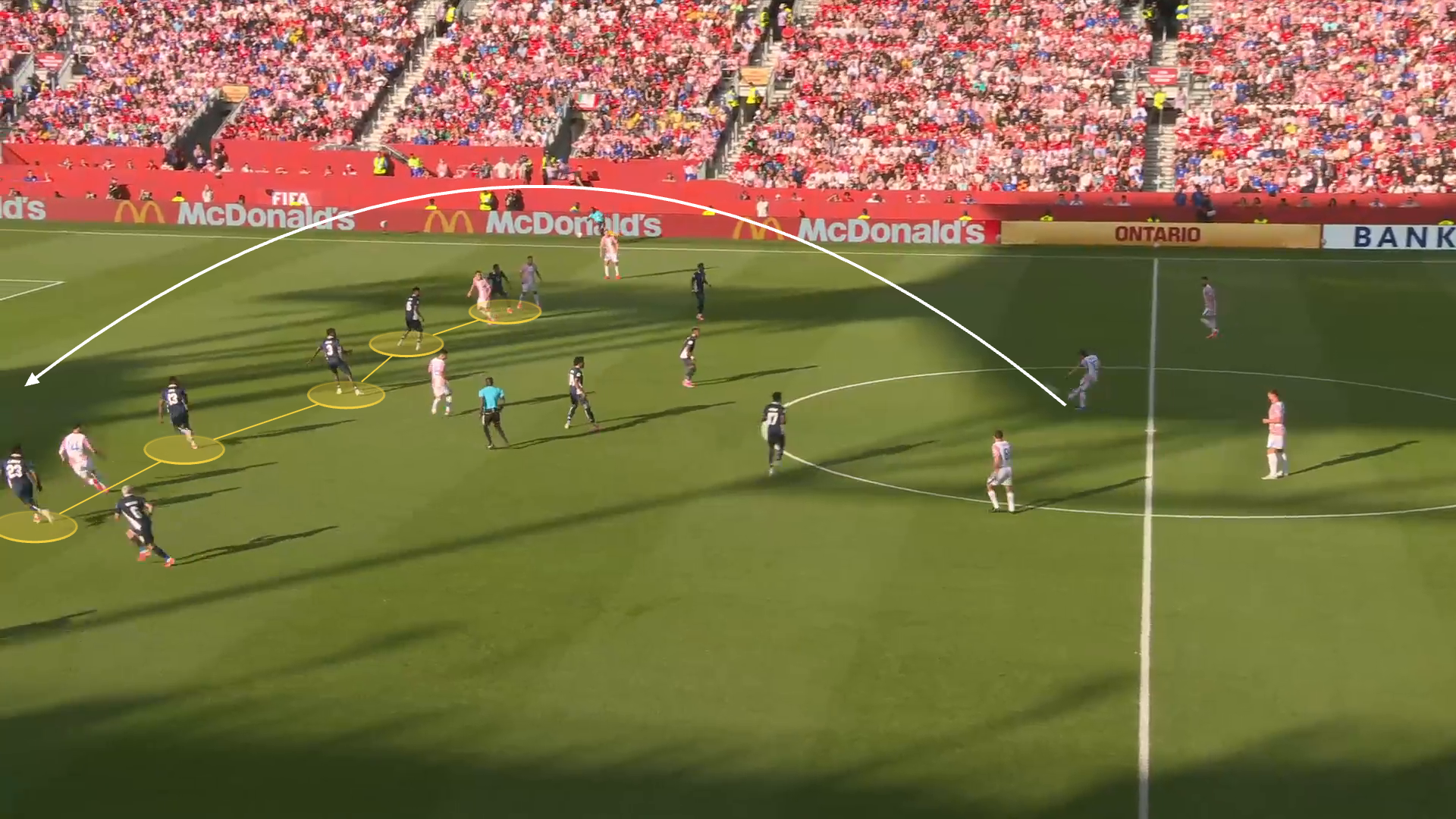
But if Panama can find short and quick combinations before they speed up play – either down the same wing or to the far-side winger with a switch – they could be dangerous.
Their fast attacks generally conclude in crosses rather than central through-balls.
1 of 2
Slide 1 of 2, Screen grab from Croatia 1-0 Panama showing Croatia’s pressure, illustrated by yellow lines linking the Croatian players to the Panama players they are covering. A dotted arrow is drawn to show the pass that is played forward., Panama on the ball look good. They are willing to absorb pressure, playing neat small-space combinations, before looking to get it forward in a deliberate manner
A game of variance
If Panama stick to the version of their 5-4-1 shape we’ve seen so far, there are solutions England can look for as highlighted above. For that reason, it will be interesting to see if they adopt some of the tactics Ghana used so effectively.
They do boast attacking threat of their own but have lacked the final action to finish these chances off regularly.
And there is also the issue of Panama being unable to qualify for the next round, no matter what happens against England.
They will, naturally, want to win irrespective of that fact – but without an incentive, how motivated they will be and how many changes the coach makes to his side will be factors in terms of their performance.
-
-
Published9 June
-
-
-
Published6 June
-
-
-
Published1 April
-