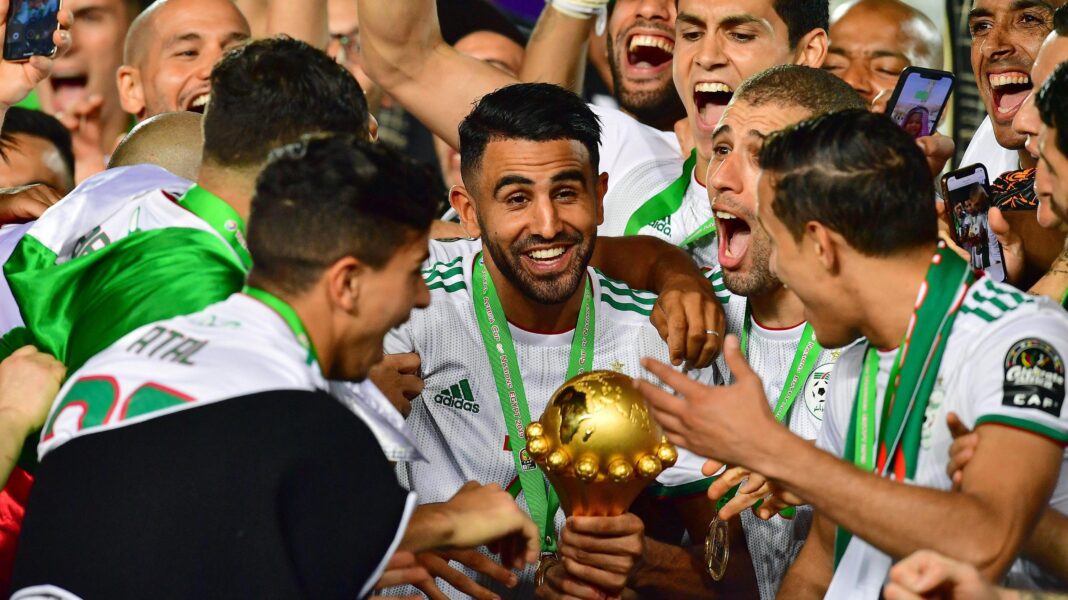

Why has Caf abandoned plans to hold Afcon every four years?
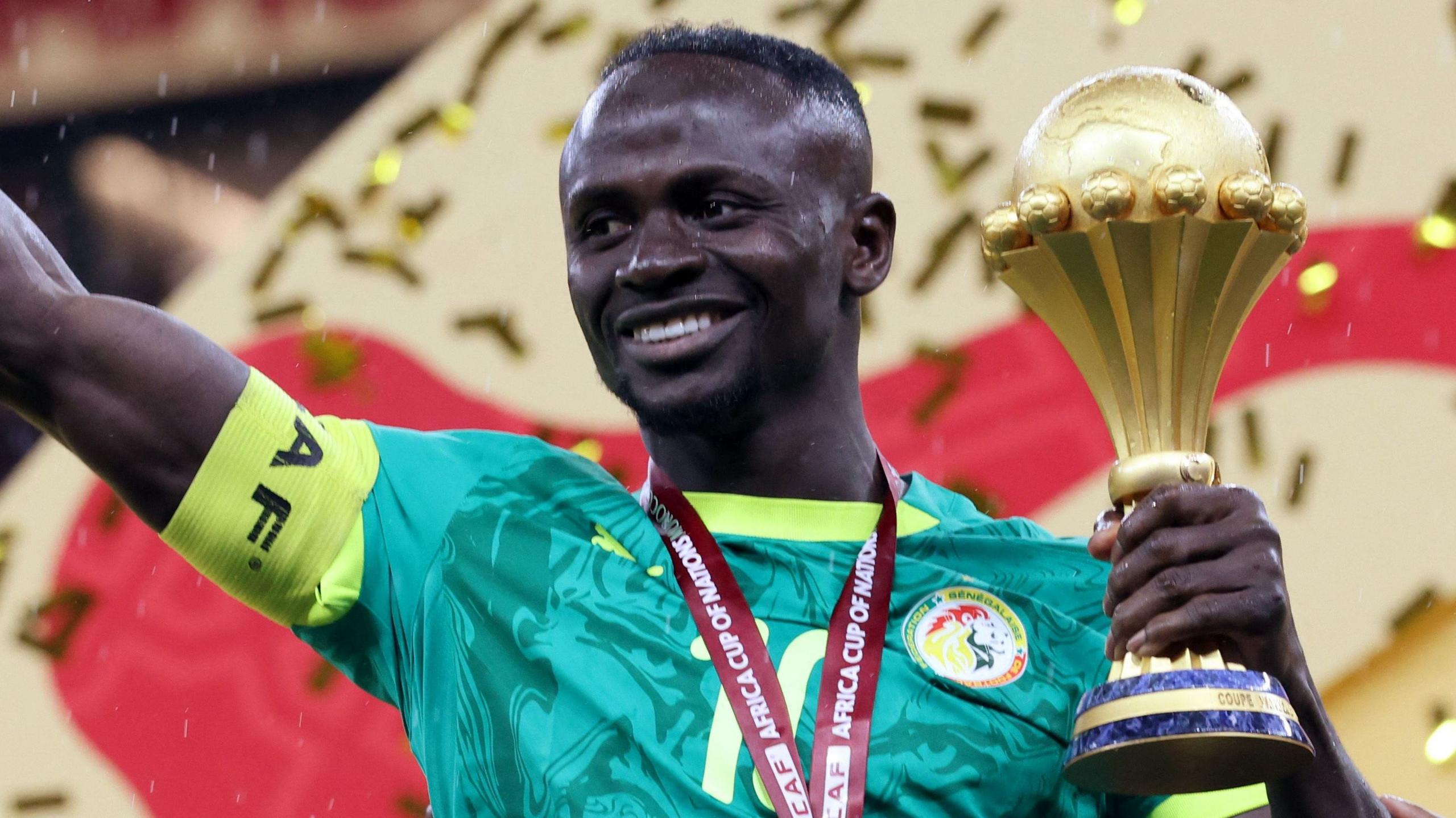 Image source, Reuters
-
Published
After a shock announcement 10 months ago that the Africa Cup of Nations (Afcon) would be held every four years, the governing body of football on the continent has reversed course.
The Confederation of African Football (Caf) will instead retain the tournament’s traditional biennial staging, with its president Patrice Motsepe saying the U-turn was based on “advancing, protecting and promoting” the interests of the African game.
The first indication that the frequency of Afcon was being reconsidered came at Caf’s strategy conference in Cape Verde earlier this month.
Questions are now being asked about the decision-making process and what this means for the future of African football.
Why was the planned change controversial?
Afcon has predominantly been held every two years since its first edition in 1957, barring two three-year gaps in the 1960s and one year between the 2012 and 2013 tournaments.
On the eve of the 2025 finals in Morocco, Motsepe announced all that would change from 2028.
The South African said the shift to a four-year cycle was, in part, to help the global calendar “be significantly more synchronised and harmonised”.
In recent years Afcon has been staged midway through the European club season, leading to recurring disputes over the release of African players.
Fifa general secretary Mattias Grafstrom was sitting aside Motsepe when the plan was announced, and critics highlighted that the scheduling change favoured football’s world governing body more than the African game.
“I think the general sentiment around the continent has been that the two-year cycle has served the continent very well,” Football Association of Zambia (Faz) official Sydney Mungala told the BBC.
“The idea of pushing it to a four-year cycle was a bit of a surprise, maybe a concern, to the bulk of the African federations.”
-
Afcon to return to two-year cycle after Caf U-turn
-
Published10 hours ago
-
-
Afcon to be held every four years from 2028
-
Published20 December 2025
-
What were the benefits of the switch?
Afcon has developed into Caf’s biggest revenue generator, with a profit of $114m (£85m) forecast for Afcon 2025, up from $75m (£56m) for the previous finals in Ivory Coast.
In its stead, an annual Africa Nations League involving all 54 countries on the continent was proposed. Motsepe described the ambition as creating a “world-class competition every year”.
The idea was to move beyond Caf’s heavy reliance on Afcon and develop a more sustainable commercial model which could support football development.
Yet the last time an ambitious alternative competition took place in Africa, it failed to deliver on its financial promise and was quickly ditched.
The Africa Super League, announced by Caf in 2022 to revolutionise continental club competition, and with projected annual revenues of $200m (£149m), was discontinued after just one edition.
Motsepe later acknowledged that commercial deals fell short of expectations.
“We didn’t proceed as quickly because the partners that were giving us money were not giving us the deals we thought we would be happy with,” he said.
Why the U-turn on Afcon?
The decision to move to a four-year cycle was taken at a meeting of Caf’s executive committee last December – without being tabled at a general assembly where all member nations are represented.
“These kinds of decisions should be put to the general assembly, they should be debated and discussed for months at a time,” Algerian journalist Maher Mezahi told the BBC.
“Afcon is the locomotive by which Caf funds all of its other competitions.”
Caf subsequently asked its 54 associations to express a preference between proceeding with the four-year format or retaining the original schedule, and the executive committee eventually voted to restore the status quo.
Motsepe said the decision was in the “best interest of African football” and would contribute to the development and growth of the sport.
He also admitted misgivings about the new Nations League, with concerns it would require “several years” before it could make “the substantial financial and football development contributions” to help the continental game be “self-supporting”.
How does Fifa fit in?
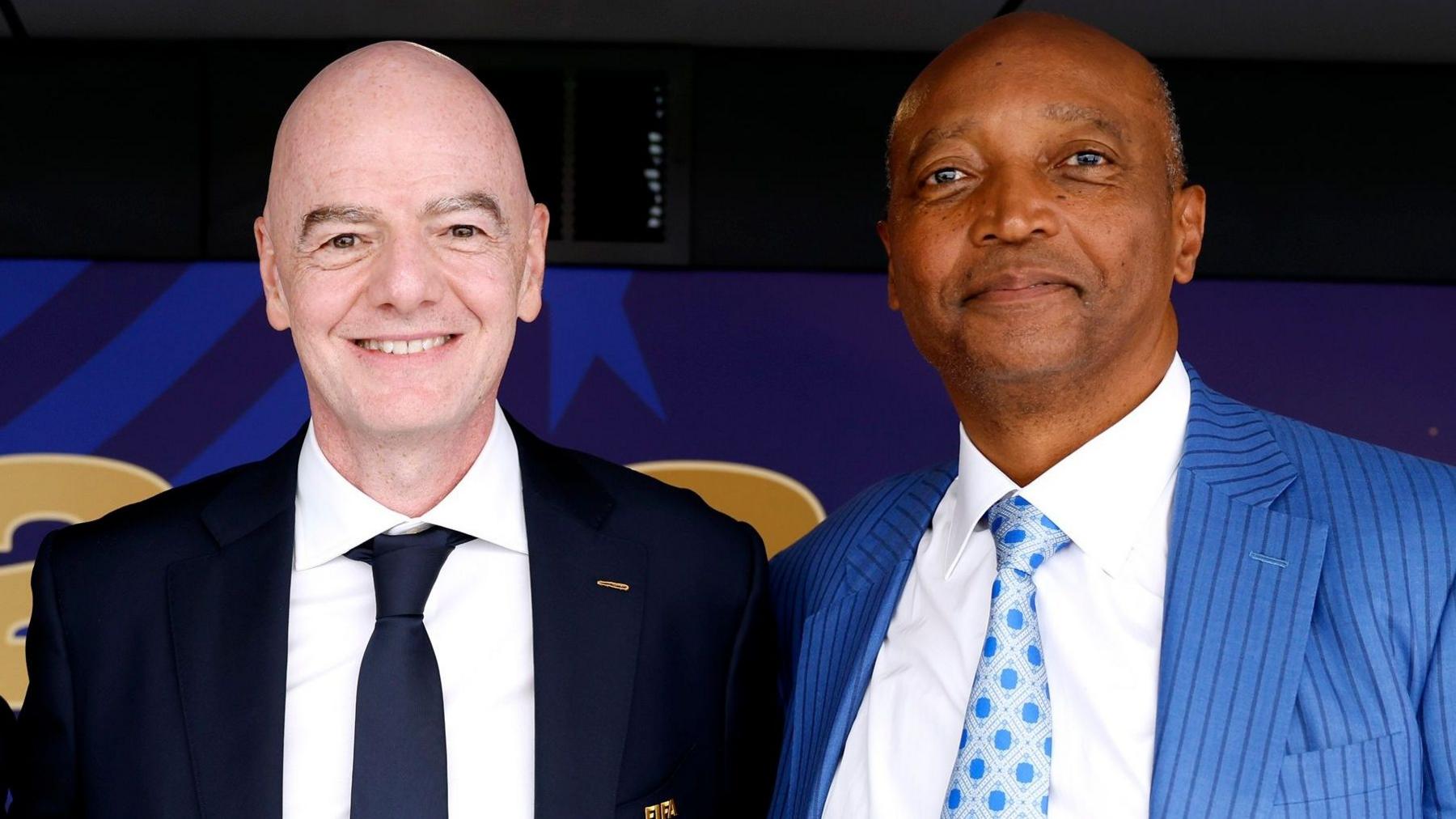 Image source, Getty Images
Fifa president Gianni Infantino first publicly proposed holding Afcon every four years in February 2020, an idea Motsepe rejected after he was elected as Caf president 13 months later.
That has not stopped the South African cultivating a close relationship with his counterpart and Infantino’s drive to expand the Fifa World Cup to 48 teams – and in the process increase African representation at the tournament – has won him backing across the continent.
Yet the Swiss’ position has been under threat since his plan to sell stakes in Fifa’s competitions was leaked in July.
Since then Infantino has been busy shoring up his power base ahead of his re-election bid, including at Caf’s strategy meeting this month.
“He came to Cape Verde to generate support, And, by and large, Africa gave him that support,” Mezahi said.
“But I think they did that in a quid pro quo – they gave him the support in return for some concessions.
“And I think the main concession was the return of the Africa Cup of Nations [to a two-year cycle].
“It shows that Africa is willing to assert its influence and look after its interests, even in the face of the global game’s interest.”
-
Infantino says he is backed by ‘vast majority’
-
Published6 days ago
-
-
Does Africa still back Infantino as Fifa president?
-
Published6 August
-
Why is Afcon revenue so important?
Afcon is Caf’s financial lifeline, accounting for a substantial share of the governing body’s income.
Morocco 2025 was projected to generate $192m (£143m), representing 66% of Caf’s total revenue from competitions across men’s, women’s and age-group football.
For many FAs, Afcon’s importance extends far beyond the tournament because they cannot always rely on consistent government or corporate investment.
“We have 11 [Zambian] national teams and only two are partly sponsored by government,” Faz official Mungala said.
“The rest have to be supported from the FA’s coffers. We actually fund some of these programmes from the support that we get from Caf and Fifa.”
What about upcoming Afcons?
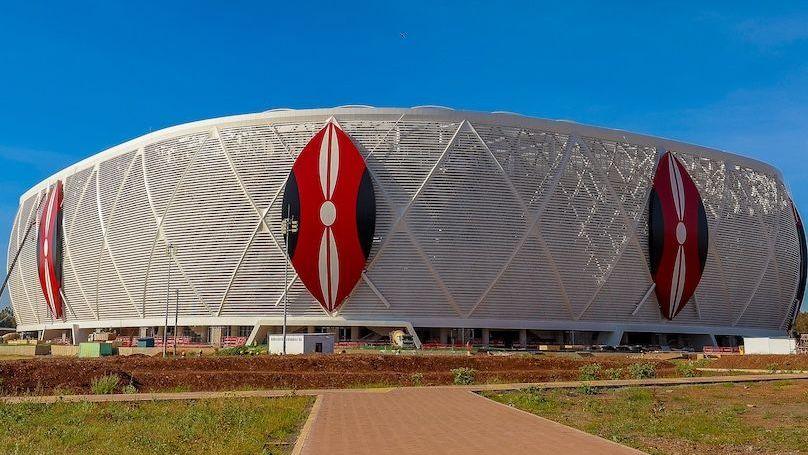 Image source, Kenya Ministry of Interior/Kelly Ayodi
The 2027 Afcon is scheduled to be held in Kenya, Tanzania and Uganda from 19 June to 17 July next year.
Yet, on a visit to East Africa in September, Motsepe called for a “heightened sense of urgency” in order to make sure stadiums and supporting infrastructure are ready on time.
The next Afcon will be held just one year later in 2028 – a decision Caf made when planning for the switch to a four-year cycle and which it as has decided to stick with.
An announcement on where and exactly when the finals will be held is yet to be made.
Subsequent tournaments will be held in 2031 and 2033 to avoid clashes with the World Cup.
The proposed kick-off date for the Africa Nations League, meanwhile, is September 2029.
Motsepe’s latest statement suggests the new competition will also be held every two years – rather than annually as he initially announced last December – but that begs the question of how space will be found for the fixtures to be played in an Afcon year from 2031 onwards.
While debate continues around the game’s congested calendar, Caf’s U-turn on scheduling has at least protected the tradition of Africa’s biggest sporting showcase.
It also exposes, however, the challenge of finding a workable financial model which benefits African football as well as the demands of the global game.
-
-
Published19 January
-