
Why hasn’t the UK had any named storms yet?
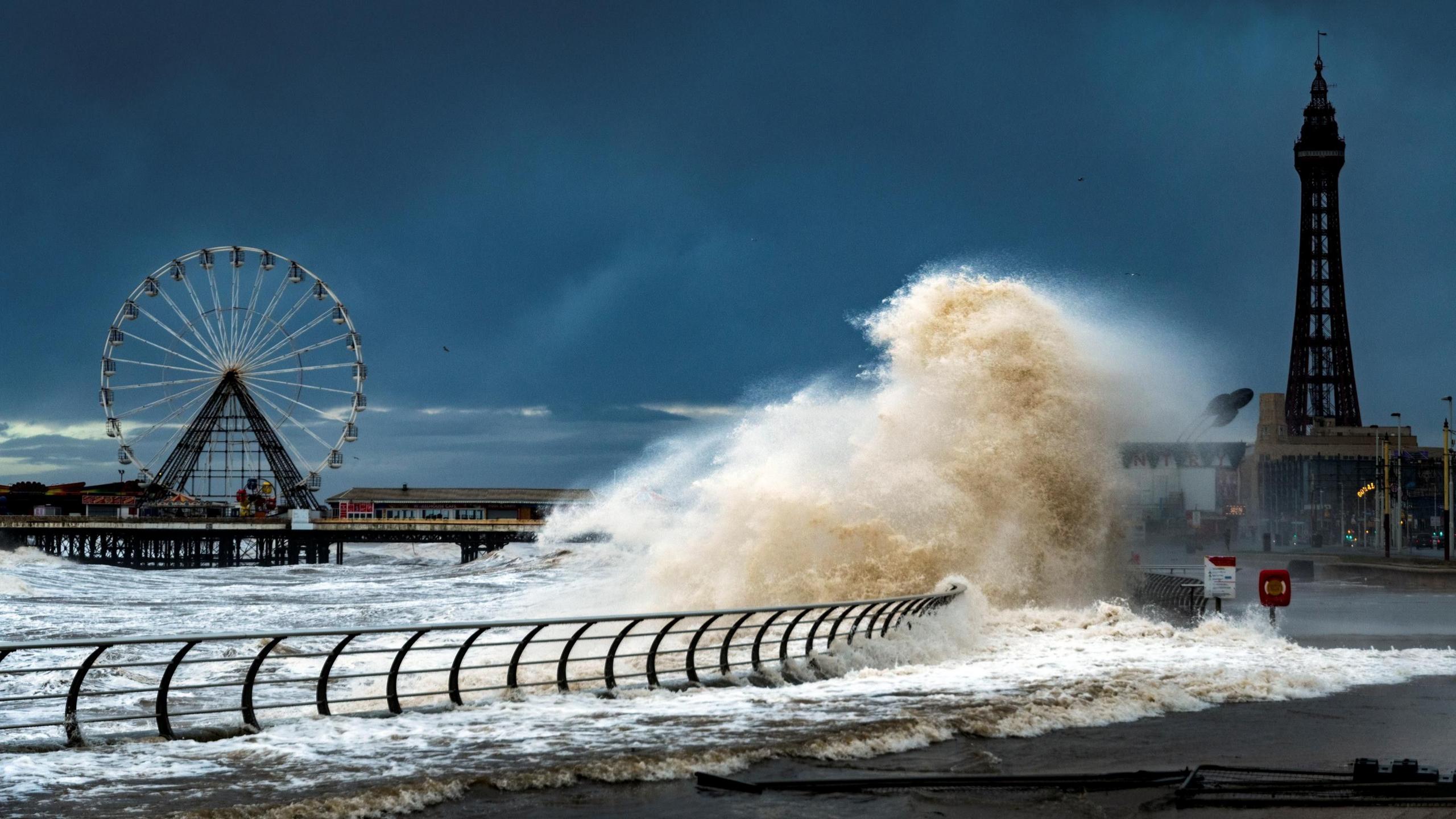 Image source, Getty Images
-
Published
With November already on the horizon the UK is yet to see its first named storm of the season.
Deep Atlantic lows responsible for more turbulent conditions have been steered away by dominant areas of high pressure.
This year the headlines have been about worsening drought rather than the impact of gales.
However, could this be the calm before the storms as the Met Office predict a growing chance that late autumn and early winter will turn wetter and windier as El Niño strengthens in the Pacific.
Why has it been a quiet start to autumn?
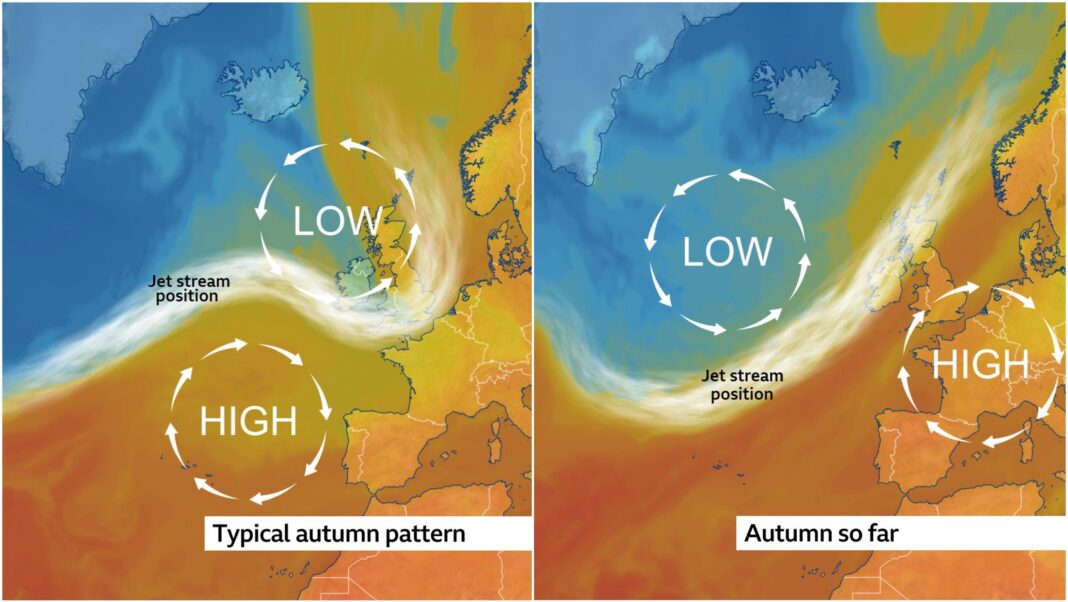
As autumn sets in and the nights get longer temperatures around polar regions start to fall. This causes a greater contrast with the warmer tropics which can fire up a more potent jet stream – the fast moving, narrow band of fast winds high in the atmosphere.
The jet stream is largely responsible for developing and delivering our stormier pressure systems.
Typically in autumn the jet stream would be a regular visitor to the skies above the UK, steering wet and windy weather towards us.
However, so far this season it has often been sitting to the north or north-west of the UK. This has meant south or south-westerly winds bringing warmer than normal conditions and high pressure having more of an influence leading to reduced rainfall for many.
These weather patterns have therefore meant only occasional bouts of stronger winds across the north-west of the UK, with little disruption.
The heaviest of the rain has also been focused across Scotland and Northern Ireland while parts of England and Wales have continued to be much drier than normal.
Parts of Herefordshire for instance have only received a tenth of the rainfall they would normally have seen by mid-October so far this month.
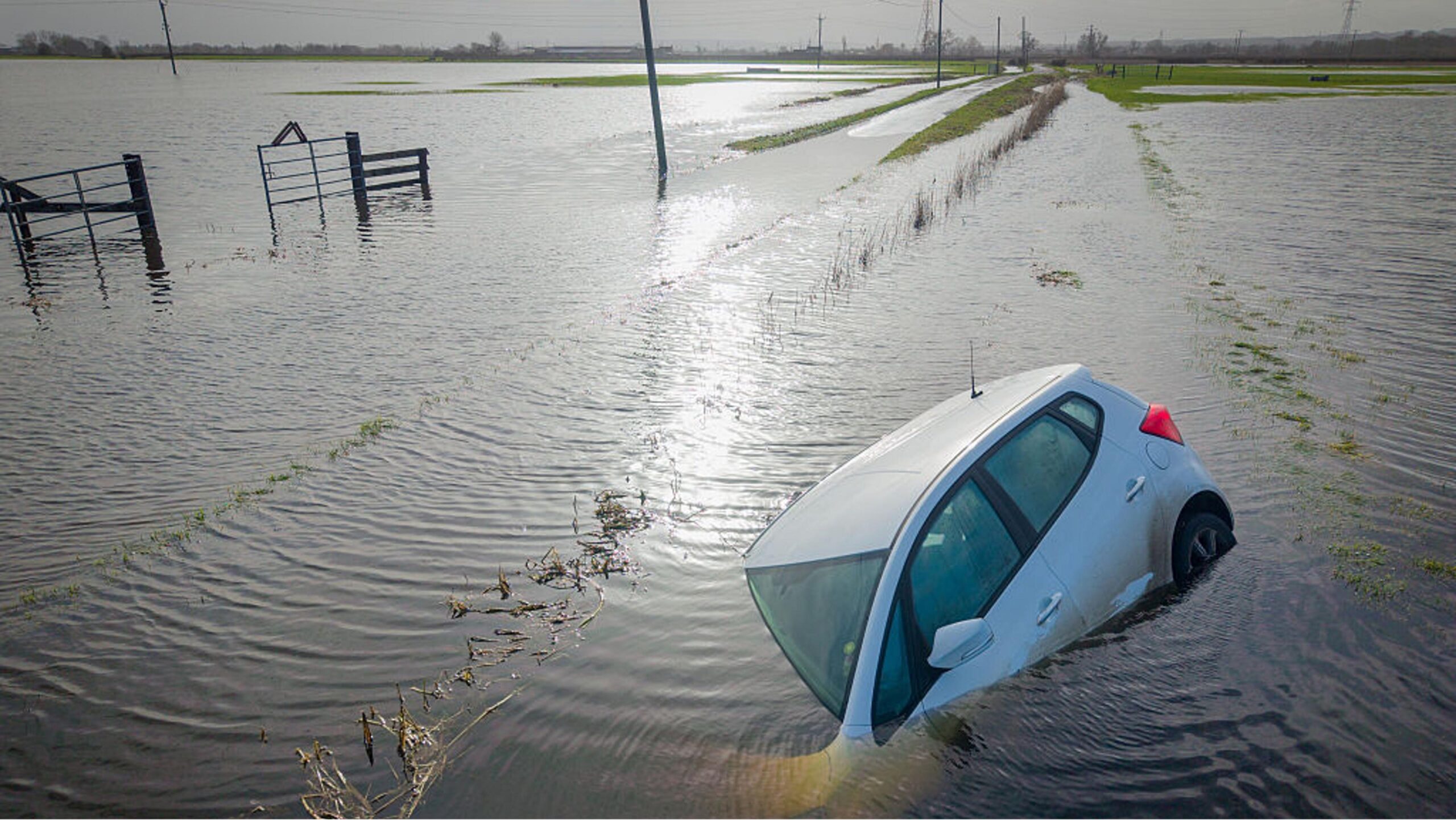
Some of the biggest impacts of the dry weather have been across the southern England where exceptionally low reservoir levels have prompted the Environment Agency to declare “severe drought” in some areas.
-
Is there a hosepipe ban in my area? What you need to know
-
Published14 hours ago
-
The quiet before the storm?
A change in the position of that jet stream and its strength is expected through the coming week.
This will allow deeper low pressure systems to affect more parts of the UK marking a shift to a more widespread wetter and windier weather.
Forecasts will need to be monitored closely as there is potential later in the week that we could see our first spell of widely disruptive weather this season.
There are also longer term signals for increased rainfall and storminess later in autumn and early winter in the UK.
The Met Office’s current three month outlook covering October, November and December forecasts a double the normal chance of wetter weather and 1.3 times the normal chance of windier weather which is consistent with the type of patterns seen with previous El Niño events.
When do we see the most named storms?
Storms are most often named when potentially damaging winds are forecast, but can also be named for flooding rain or disruptive snow.
They were first named to help bring public attention to episodes of severe weather, to help people prepare to avoid the worst impacts by planning ahead.
In Europe, there are five storm naming groups created from the meteorological agencies based in a similar geographic location.
The UK, Ireland, and the Netherlands form the western storm-naming group which started naming storms in 2015.
Weather systems are named by the the UK’s Met Office, Ireland’s Met Éireann and Netherland’s KNMI based on expected weather impacts as well as how likely those are.
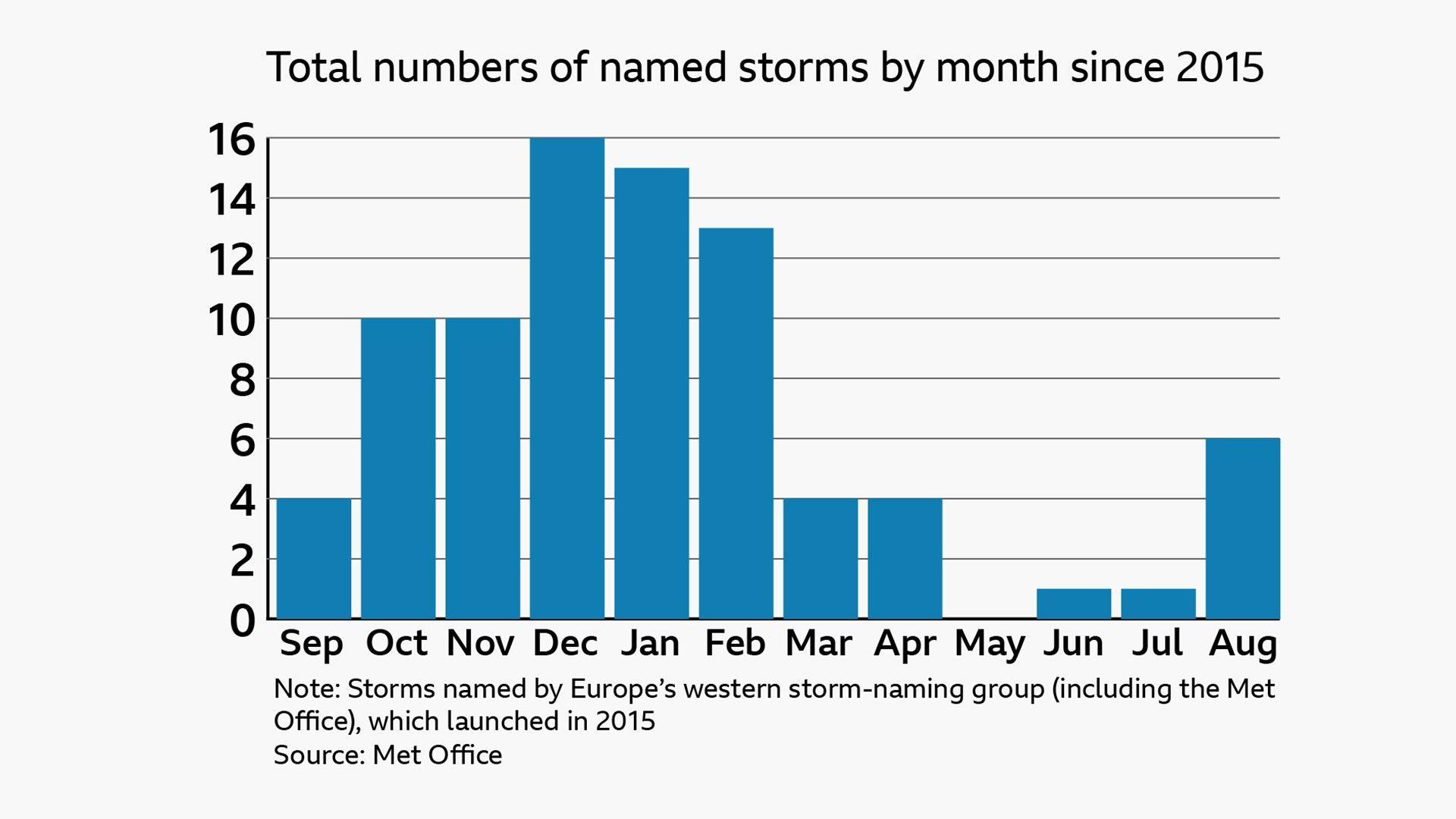 Image source, BBC Weather
Although named storms can affect the UK at any time of the year, analysis shows they are much less common in spring and early summer. The only month with no named storms in the eleven years that we’ve been naming storms in the UK, is May.
The chances of seeing a storm increases from late summer and throughout autumn with the peak of the season arriving in our winter months. This increase in storminess is why the storm-naming season begins in September each year.
It is not unusual to still be awaiting the arrival of the first storm at this time of year. In about half of the years since 2015, the first storm arrived after 1 November.
-
-
Published1 September
-
-
-
Published3 days ago
-
-
-
Published3 September
-