
This post was originally published on this site.
Wildfire in southern Spain leaves at least 12 dead and 23 missing
To play this video you need to enable JavaScript in your browser.
This video can not be played
-
Published
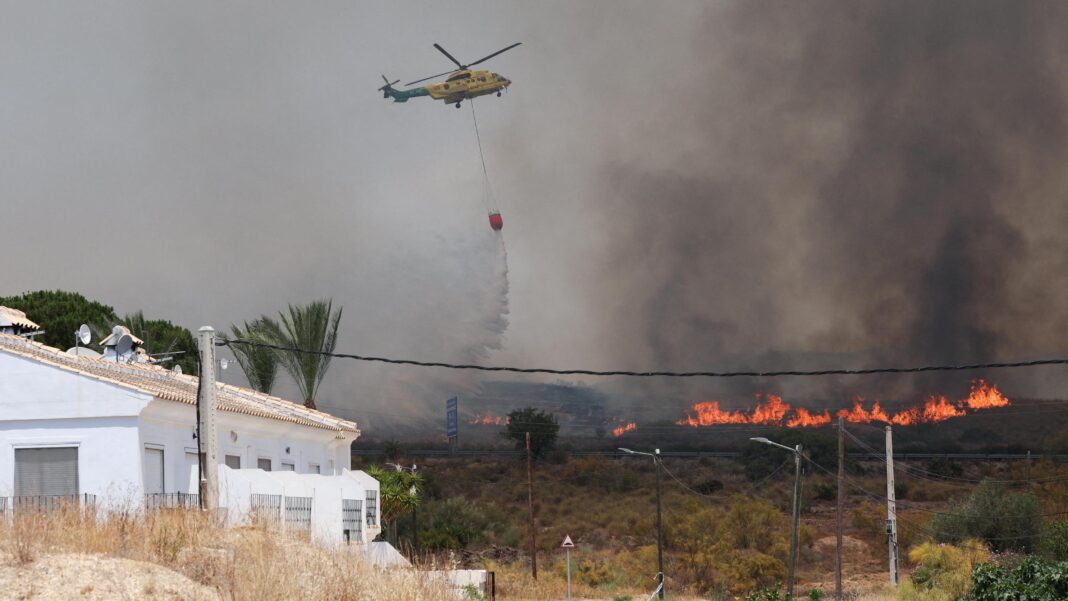
At least 12 people have died and 23 others are missing in a wildfire in southern Spain, Andalusia’s regional leader Juanma Moreno has said.
Four of the victims may be British, Andalusia officials say.
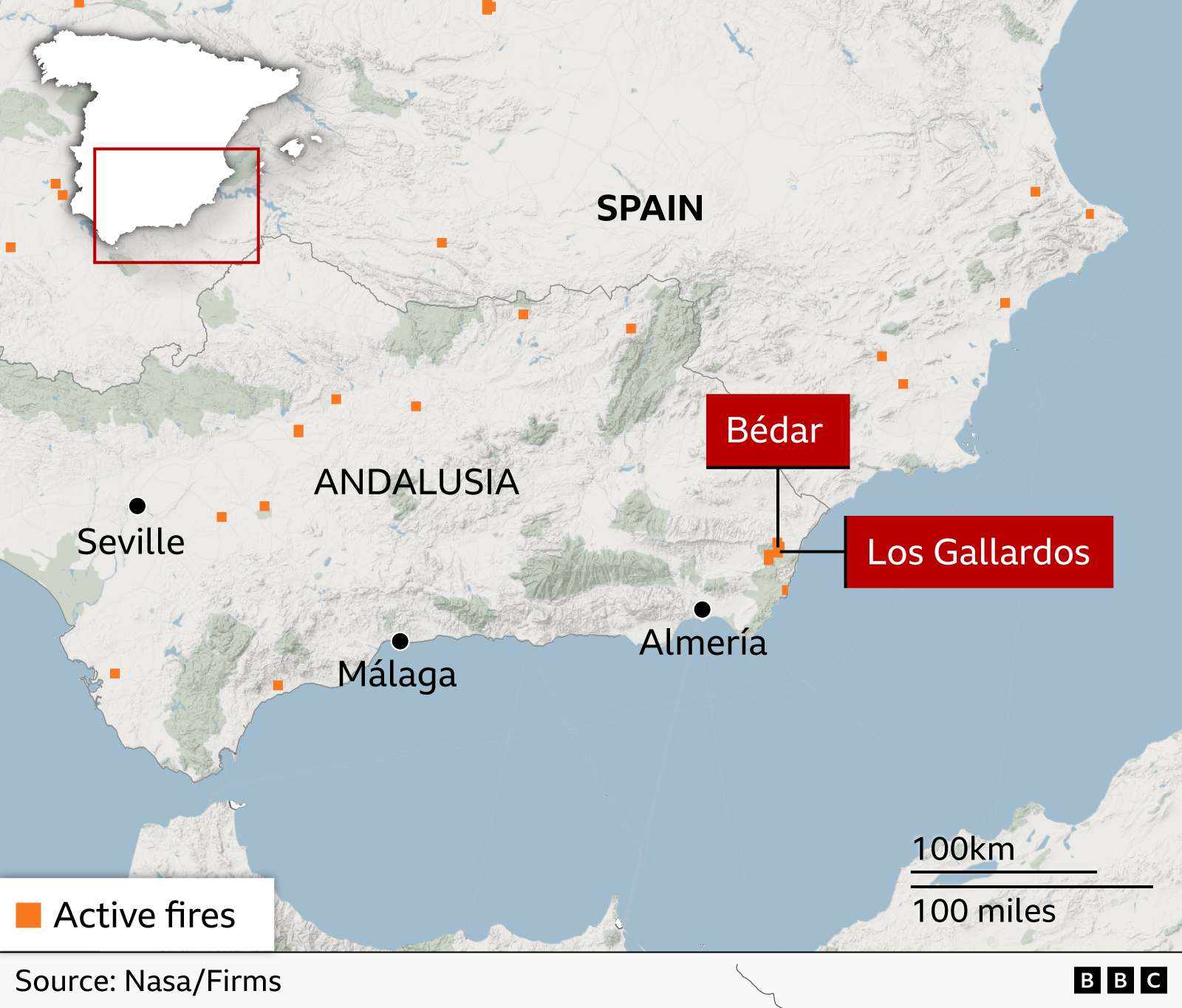
Hundreds of people are trying to contain the fire, which Moreno said appeared to have been caused by a downed power line. The flames then spread in a wooded area around Los Gallardos, Almería.
A sustained heatwave with temperatures of around 40C (104F) has caused wildfires across Southern Europe this summer. Firefighters have battled major incidents in France, Portugal and Spain, with thousands forced to leave their homes.
The bodies of the victims were found in and around the small village of Bédar, just outside Los Gallardos.
Antonio Sanz, Andalusia’s health and emergencies minister, said the fire had been complex and rapid and the majority or even all of the victims may have been foreign nationals.
Four people were found trapped in their car, said Sanz, while eight other victims were found elsewhere, apparently trying to escape the flames.
He said the four in the car were believed to be “of British origin” and that the car had a steering wheel on the right. The UK Foreign Office has contacted Spanish authorities, a Downing Street spokesperson told PA news agency.
Belgian Foreign Minister Maxime Prévot said many Belgians had second homes in Spain and consular services were trying to contact “Belgians with whom they have not been able to get in touch”.
To play this video you need to enable JavaScript in your browser.
This video can not be played
Sanz said it was the “most devastating fire” that Andalusia had ever seen and said the victims had tried to escape via a “different route than that designated for evacuation”.
Juanma Moreno said the deaths were a tragedy and he warned that the death toll could rise significantly. “Our hearts are heavy and we are devastated by grief,” the regional president posted on social media.
Four people have been taken to hospital with serious burns and another four are described as less seriously hurt with minor burns and respiratory problems caused by heavy smoke.
“Everything appears to point to the collapse of a power line pole, although this will still need to be investigated,” Moreno said on Cadena Ser radio, adding that those responsible for maintenance would be held accountable.
His remarks were later contested by electricity company Endesa, which said the fallen power line was inactive and did not belong to them.
Peter Chapman and his wife Shelagh, who own a holiday home a short drive from Los Gallardos, said they initially mistook the fire for a storm because of how quickly the smoke darkened the sky.
“The only way I can describe it is by thinking of how my mother used to describe the London bombings during the Second World War. It was surreal,” Peter Chapman said.
“It’s just terrible. People come away for a holiday and don’t imagine something like this happening. To think that people may have lost their lives is very, very sad.”
The fire also led to road closures, while 1,000 residents were evacuated, according to emergency services.
Spain’s Military Emergency Unit (UME) said it had deployed 220 soldiers and 70 vehicles to the Almería region to combat the blaze.
The country’s civil guard added 160 law enforcement personnel were involved in the emergency response, aiding evacuation, traffic control and searching for the origin of the fire.
With at least 12 people dead, this is already among the deadliest wildfires in Spanish history.
In 2005, 11 members of a firefighting team died when they became trapped by flames in the village of Riba de Saelices east of Madrid after a fire went out of control at a barbecue.
In 1984, 20 people died in a fire on the Canary Island of La Gomera.
In 1979, 21 people, including nine children, died in a forest fire near Lloret de Mar in northeastern Spain.
Prime Minister Pedro Sánchez said in May that Spain would deploy its largest-ever summer wildfire response this year, local media reported.
In June, Spain reached its highest daily average since 1950, and had days where it recorded its highest ever temperatures for that month. Temperatures as high as 42C (107.6F) were forecast in some parts of the country.
Last year, a record 393,000 hectares (971,000 acres) burned in Spain, according to the European Forest Fire Information System (EFFIS), more than six times the Spanish average for between 2006 and 2024.
Climate change is driving up temperatures around the world, and Europe is the fastest warming continent, heating up twice as fast as the global average, according to the Copernicus climate service.
This is causing increased summer heatwaves, greater pressure on Europe’s water supply, and more intense wildfires.
Last year was the European Union’s worst wildfire season since records began in 2006, with more than a record one million hectares – equivalent to about half the land area of Wales – burning across the EU.
The worsening fire season in the Mediterranean has been linked directly to climate change in a separate study by the World Weather Attribution group at Imperial College London.
Experts warn that more frequent and severe fires across Europe are likely to continue in the future.
Are you in the area? If it is safe to do so, share your story.

Get in touch
Have you been affected by the wildfires and extreme heat in Southern Europe? If it is safe to do so, get in touch.
-
UK bakes in 35C highs as heatwave to continue next week
-
Published9 hours ago
-

Sign up for our Future Earth newsletter to keep up with the latest climate and environment stories with the BBC’s Justin Rowlatt. Outside the UK? Sign up to our international newsletter here.