
This post was originally published on this site.
Wildfire still burning across large area as helicopter waterbombs Cairngorms
To play this video you need to enable JavaScript in your browser.
This video can not be played
-
Published
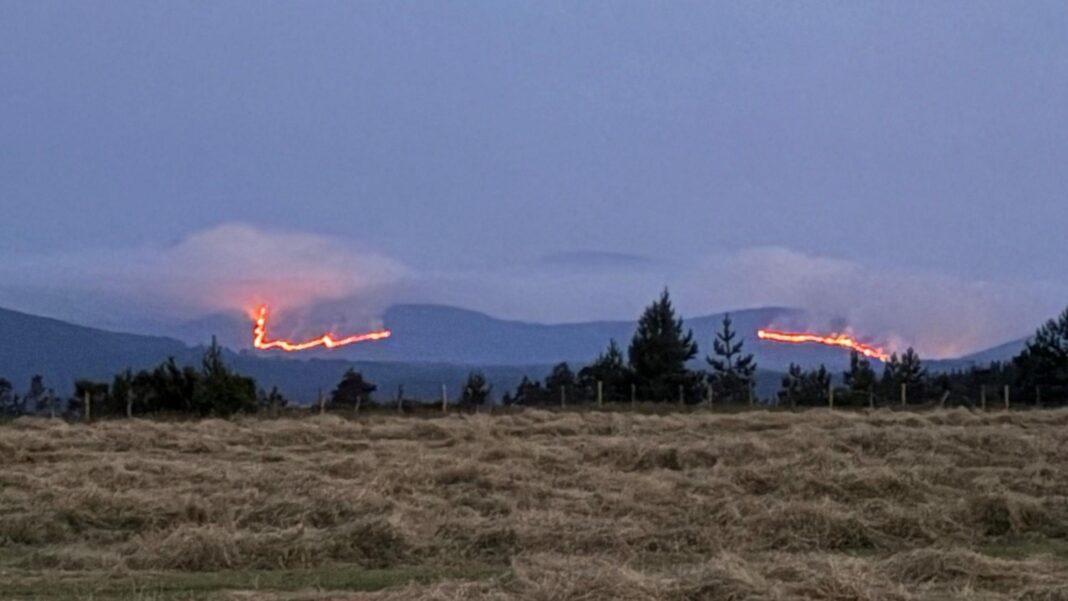
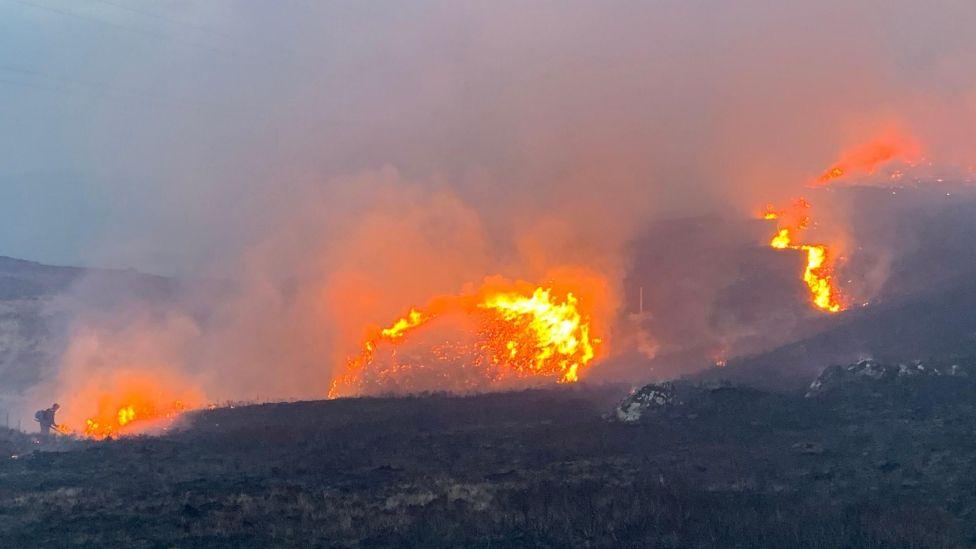
A helicopter is continuing to waterbomb a major wildfire in the Cairngorms that has been burning for three days and forced evacuations.
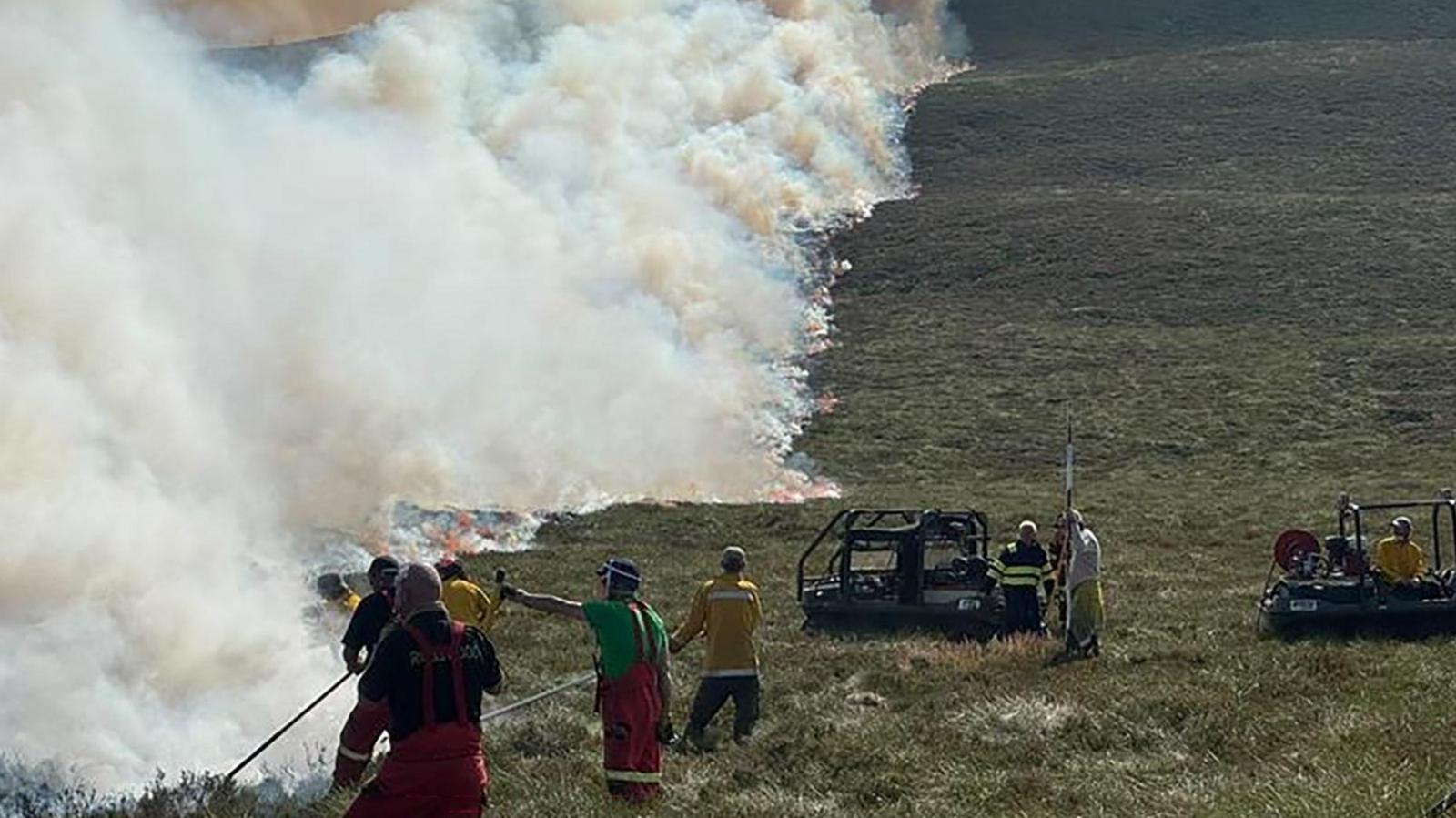
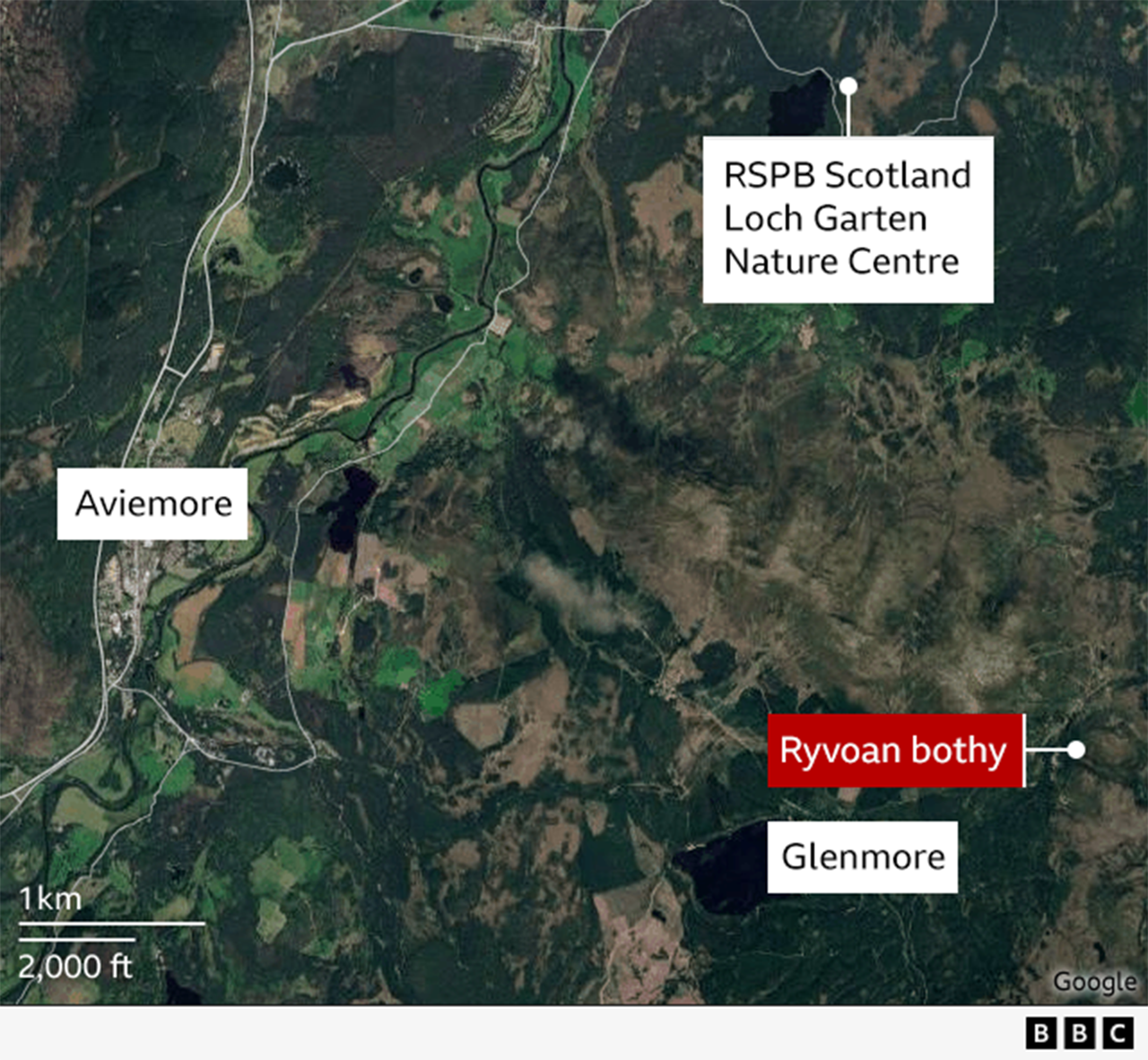
More than 50 firefighters are tackling the blaze which started in heathland near Ryvoan Bothy, south of Nethy Bridge, late on Wednesday morning.
A number of homes and businesses, including campsites and a ski resort in the Glenmore Forest Park area, have been closed and evacuated as a safety precaution.
A helicopter joined the firefighting efforts on Thursday night. Nine fire appliances, two specialist wildfire units and tactical commanders remain at the scene.
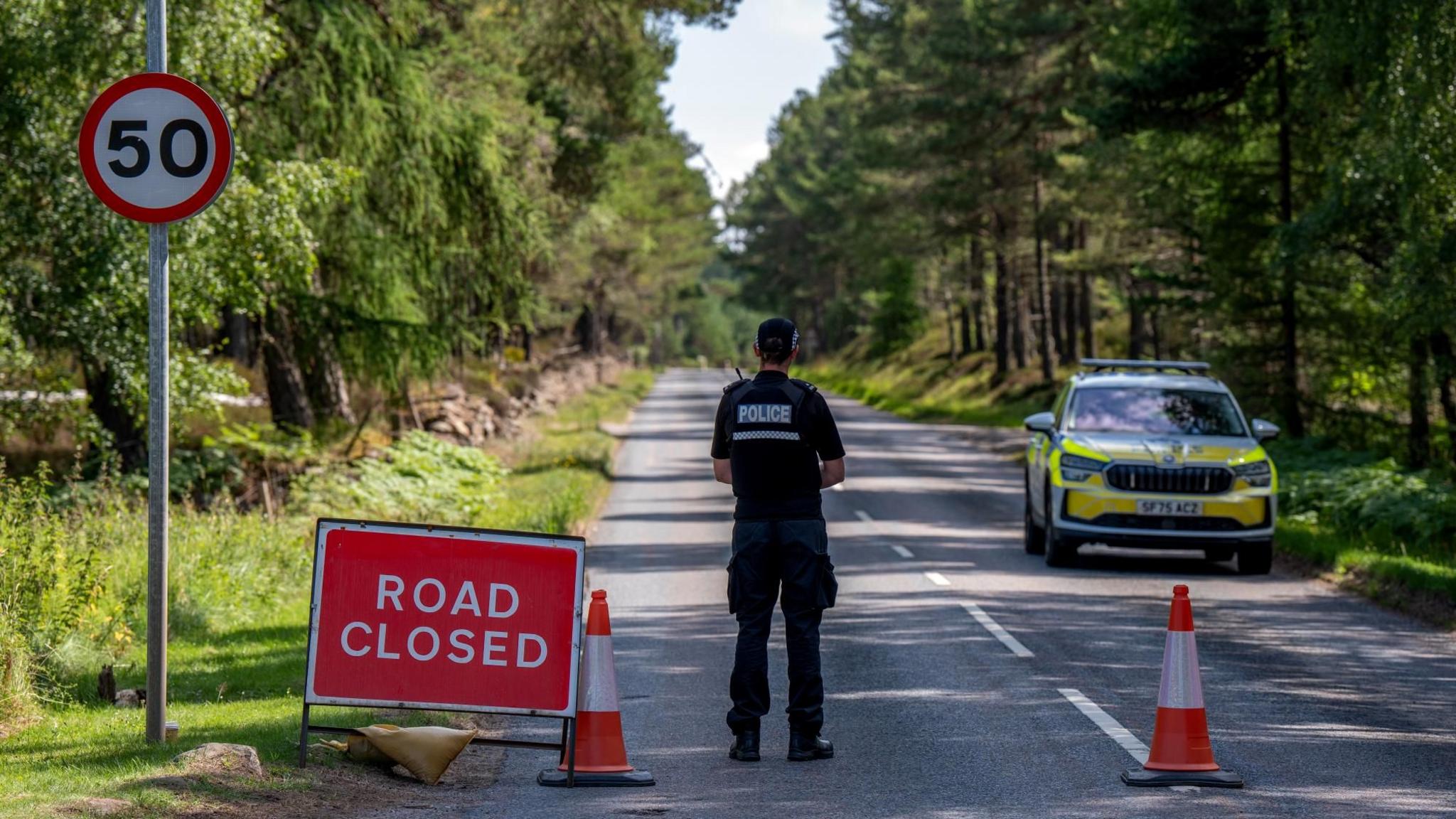 Image source, PA Media
Lynne Gow, a Scottish Fire and Rescue Service (SFRS) area commander, said: “The deployment of a helicopter provides an additional operational capability which can be particularly effective across challenging terrain and in areas that are difficult to access.
“Aerial support complements the extensive work already being undertaken by firefighters and partner agencies on the ground and enhances our ability to limit the spread of fire where conditions allow, as we work to bring this incident to a safe conclusion.”
Fire crews are using a high-volume pump to draw large volumes of water from Loch Morlich and, along with landowners, have been creating fire breaks to contain the spread.
It has so far burned 4 sq km (1.5 sq miles) of land.
Michael Byrne, a climate scientist at St Andrews University, told BBC Scotland that more rainfall during the winter plus overall warming was leading to an increasing threat of wildfires in Scotland.
On Thursday, Justice Secretary Neil Gray, whose ministerial responsibilities include the Scottish Fire and Rescue Service (SFRS), said the fire was “currently contained” thanks to “exceptional work of firefighters”.
There have been no reports of any casualties.
A number of people in the local community had been calling for a helicopter to be brought in.
The SFRS said there had been a request for a helicopter on Wednesday but none were available at the time.
A helicopter has since been waterbombing the area.
The SFRS has said the fire is still burning with flames continuing at a steady pace.
A strict cordon remains in place, with no access to Glenmore Forest Park or Loch Morlich, to support firefighting operations and ensure public safety.
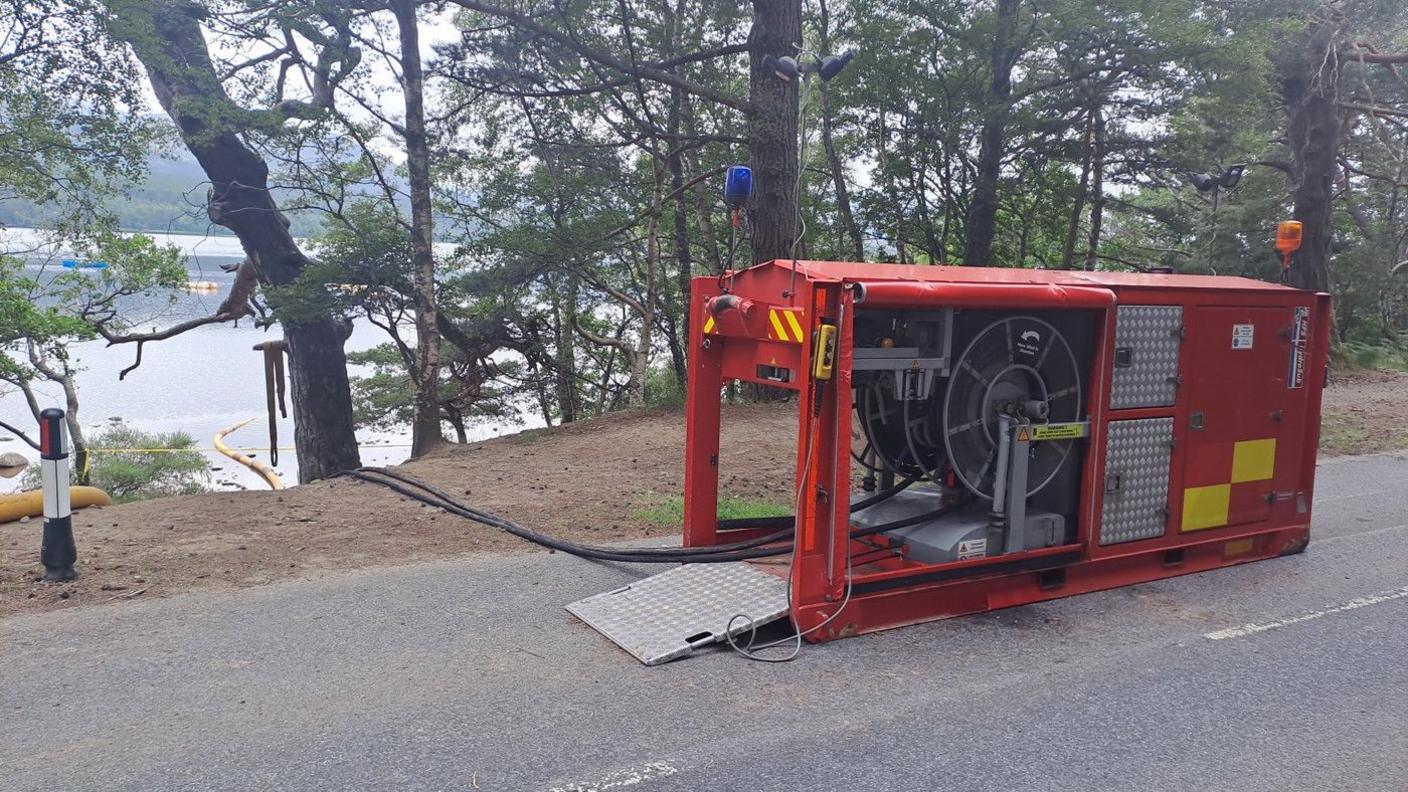 Image source, SFRS
Gow said it was a “complex and protracted incident involving significant resources”.
“We are undertaking aggressive operations across two sectors to contain and suppress the fire,” she said.
“Protecting communities, property and the environment remains our priority as we continue working to bring this incident under control.”
She added: “I would like to thank our firefighters for their tireless efforts in challenging conditions, as well as our partners, local businesses, communities and residents for their continued support and co-operation.”
-
Cairngorms wildfire ‘contained’, but very high risk remains
-
Published21 hours ago
-
-
How leaf blowers and jet washers are tackling wildfires
-
Published13 November 2024
-
-
Scots urged to ‘stay vigilant’ as wildfire risk very high
-
Published1 day ago
-
She said fire crews were working closely with Forestry and Land Scotland and local gamekeepers, whose “local expertise and knowledge of the land has been instrumental in supporting and informing our tactical plan”.
The RSPB said approximately 300 hectares of land have been burned so far.
The charity said 27 of its staff and volunteers were out helping to fight the blaze earlier in the week, using equipment including all-terrain vehicles with water bowsers, backpack hoses and shovels.
Neil Gray also praised police, land managers and volunteers for “an outstanding job keeping people, property and the natural environment as safe as possible”.
He said: “I ask everyone in the affected area to continue following advice from the authorities.
“Public safety is the priority, which is why the decision to evacuate a campsite and various properties has been taken as a precautionary measure.”
There had been concerns for capercaillie – large woodland grouse – that have recently been spotted around Ryvoan.
The native species became extinct in Britain in the mid-18th Century but were reintroduced in Perthshire in 1837. Earlier this year, the National Park and NatureScot announced an emergency plan to boost numbers in the Cairngorms.
A visitor centre which runs guided trips to see free-ranging reindeer in the area confirmed on Thursday that the animals were safe. The centre said staff had been evacuated and would not be running trips until further notice.
Get in touch
Have you been affected by the wildfire in the Cairngorms?
Parts of Scotland are at very high risk of wildfire over the next few days.
The SFRS, in conjunction with the Scottish Wildfire Forum, has issued wildfire warnings for the central Highlands, southern and eastern Scotland.
The alert came into force on Wednesday and lasts until Monday.
It follows days of hot and dry weather in many parts of the country.
SFRS wildfire tactical adviser Kevin Dingwall urged the public to take “simple steps” to prevent fires from starting.
He said: “Hot, dry conditions increase the risk of wildfire across Scotland. Even if a warning is not in place where you live, we ask everyone to stay vigilant.
“Wildfires can destroy property, landscapes and wildlife. That’s why it’s so important that everyone takes extra care during these conditions.”
Climate change
Earlier this week, the Met Office released a report on the UK’s climate, which said that weather once considered extreme was becoming the “new normal”.
Scientists say that the country’s climate is “on the move” as northern areas of Britain now see warmer temperatures that used to only affect southern England.
Michael Byrne, a climate scientist at St Andrews University, told the BBC’s Radio Scotland Breakfast the fire followed on from Scotland’s first ‘megafire’ which destroyed a vast area of moorland last year.
The fire on Dava Moor, around Grantown-on-Spey and Forres, started on 28 June and burned for four days. It is thought it destroyed as much land as typically burns across the UK in an entire year.
“What we see on the global scale is an increasing burned area associated with wildfires which has a strong fingerprint of climate change,” he said.
“In Scotland we are seeing more rainfall during the winter and milder temperatures which are great conditions for growing lots of vegetation. When that vegetation dies there’s now more of it in a warming climate so there’s more to burn.”
He said Scotland had warmed more than one degree since pre-industrial times.
“That warmer air sucks more moisture out of dead vegetation making that vegetation much more flammable,” he added.
Christopher Blanchett, senior weather presenter at BBC Scotland, said the west Highlands met the heatwave threshold earlier this week – a heatwave is defined by a specific area reaching 25C or higher for three days in a row.
He said the Cairngorms area had seen no real rain for seven days, adding that no significant rainfall was expected in the next week.
“We have had such high temperatures that the soil and vegetation dries out quickly so the wildfire risk is high,” he said.
“We are not expecting heatwave temperatures today but even if it rains it will take a while to recover so it won’t alleviate the wildfire risk.”
If you see a large outdoor fire, call 999 immediately. Give the location and any other relevant information so fire crews can respond quickly.
-
-
Published6 March
-