
This post was originally published on this site.
And so the seeds for a new trail between the two great rock formations of Uluṟu and Kata Tjuṯa were planted. TWC, in close consultation with Aṉangu leaders, began planning the five-day, 54-kilometer (33.5-mile) hiking experience that would include 38 kilometers (23.5 miles) of fresh trail tracing the footsteps of the Aṉangu, who have walked here for 30,000 years. The chance for any operator to bring in groups of walkers for overnight stays was a landmark first since 1985, the year Uluṟu-Kata Tjuṯa National Park was handed back to the Aṉangu—they also granted TWC permission to place four low-impact glamping camps and lodge structures along the trail. It’s the result of more than a decade of partnership between Godfrey and the community.
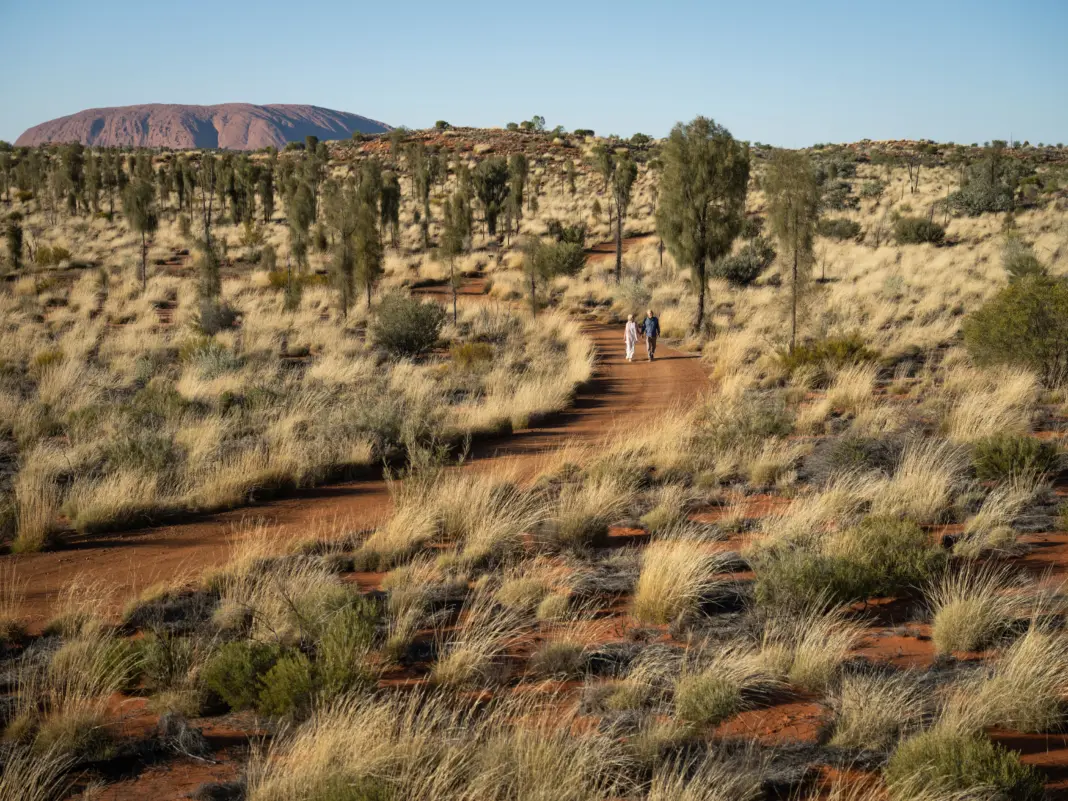
Now, seven years after my first poignant visit to Uluṟu, I’ve come back to walk the new five-day Uluṟu Kakararra Trail—Kakararra meaning “going east” or “walking east”—with TWC. On day one, we convene at a picnic shelter, with the red silhouette of Uluṟu as our backdrop, to meet our TWC walking guides Ebony Lacy and Marie-Charlotte Redot, before we are joined by Thomas. He meets every TWC walking group at three different points over the five-day adventure, allowing for an Aṉangu connection throughout the experience.
Thomas greets us with “palya,” a word that can mean many things: hello, goodbye, welcome, or thank you. “It’s a useful word to know,” says Thomas. “We want people to come here and experience our culture. Palya is a good way to start.” We feel the depth of the welcome on this ancient, Indigenous land, and an awareness that we are not only among the first outsiders to spend the night here in over 40 years, but among the first—ever—to do so at the invitation of the Aṉangu.
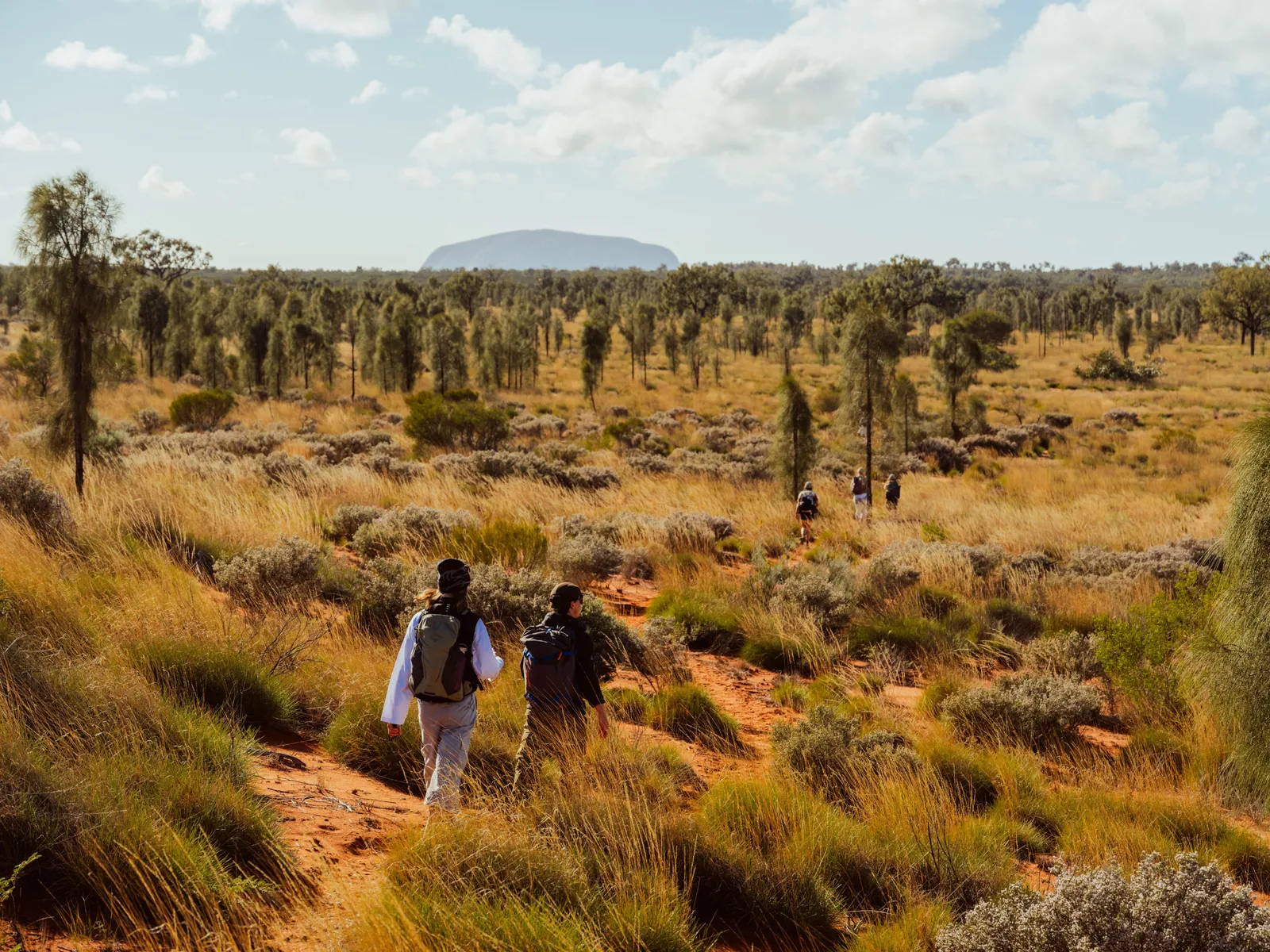
We begin by walking down a hill into the Valley of the Winds at Kata Tjuṯa. Mammoth boulders soar above us, and on either side of the path there are mounds of yellowed spinifex grass and mulga trees (a kind of acacia), among desert oaks and eucalypti that seem to sprout straight up from the rocks. Comprised of 36 conglomerate domes, Kata Tjuṯa, meaning “many heads,” is sacred to Aṉangu men who perform gender-specific “men’s business,” such as smoking ceremonies or passing down laws and knowledge to younger generations, at sites here (many of the women’s business sites, where activities related to childbirth and healing take place, are at Uluṟu). Since men’s business is restricted to initiated men only, neither photography nor video by visitors is permitted. We’ll only be allowed to photograph Kata Tjuṯa beginning on day three, when we’ll be far enough to avoid compromising any sacred sites—it’s a notable contrast from my last visit, when tourists unknowingly snapped selfies beside these very rocks.