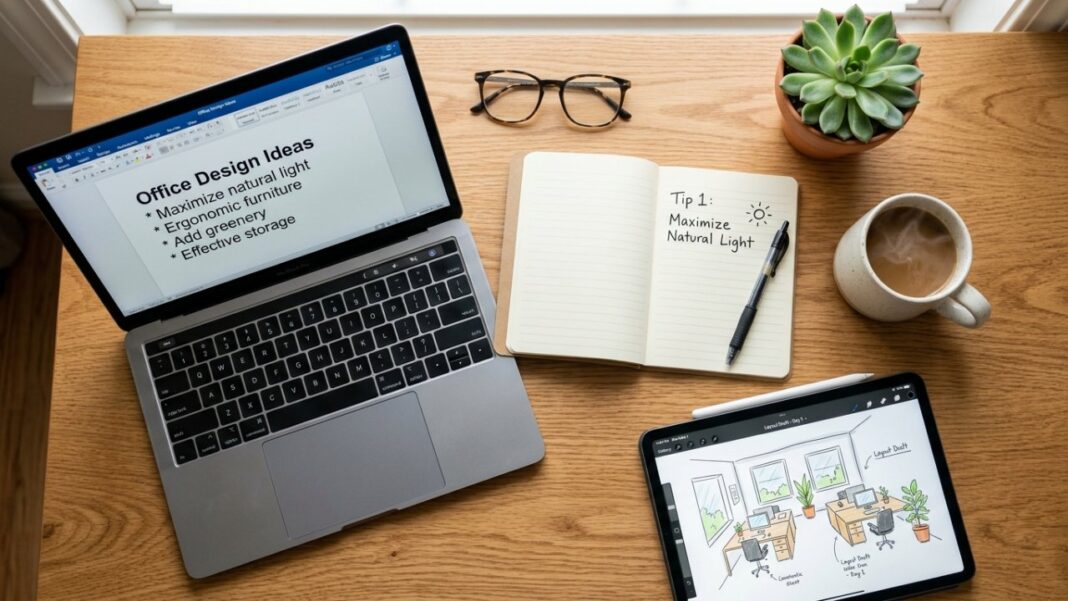

Designing an effective office space starts with understanding your workflow and employee needs. Observe how your team interacts with their environment, and involve them in the design process to guarantee their comfort and productivity. Focus on creating collaborative areas and integrating ergonomic furniture. Don’t forget to prioritize natural lighting and address acoustics. With these basics in mind, you can create a workspace that reflects your brand identity and enhances performance. Let’s explore these essential tips further.
Key Takeaways
- Prioritize employee comfort by allocating at least 11m² per person and using ergonomic furniture for enhanced productivity and satisfaction.
- Engage employees in the design process through surveys and workshops to foster ownership and align the space with brand identity.
- Create collaborative spaces with flexible seating and informal meeting areas to encourage spontaneous communication and teamwork.
- Maximize natural light and incorporate sound-absorbing materials to boost concentration and reduce distractions in the workspace.
- Integrate greenery and calming features, like water elements, to enhance the office atmosphere and reduce stress levels among employees.
Start With Your Workflow: Understanding Employee Needs

To create an effective office design, start by mapping out your workflow and understanding employee needs.
Begin by observing how employees use space throughout the day. Identify specific tasks and their spatial requirements to enhance efficiency. If you’re considering an open plan office space, think about dual-purpose workstations that allow for both collaboration and individual tasks. This flexibility maximizes functionality.
Incorporate large, uncluttered surfaces to support creative processes, giving teams room for brainstorming and idea development.
Position frequently used tools within easy reach to minimize unnecessary movements, boosting productivity.
Finally, gather feedback from your team on your office furnishing ideas and adjust your custom office workplace design accordingly.
This way, you guarantee that the workspace truly reflects their needs, leading to a more engaged and efficient work environment.
Engage Employees in the Design Process
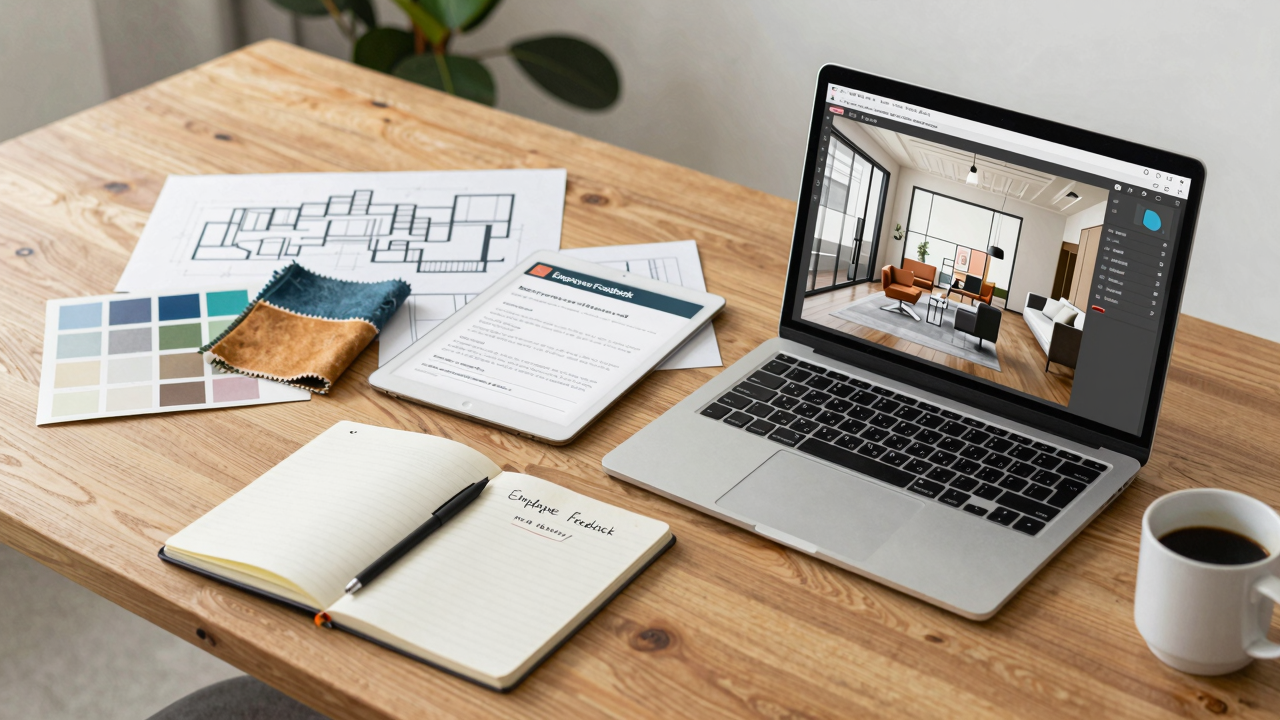
Engaging employees in the office design process creates a more inclusive and effective workspace. Start by gathering input through surveys and interviews to understand how your team uses space. This insight guarantees your office design guide aligns with their needs, whether they prefer an open layout office or private areas for focused work.
Encourage participation in design discussions, as this collaboration fosters a sense of ownership and value among staff. When employees feel their opinions matter, job satisfaction and motivation increase, enhancing productivity.
Consider setting up workshops where employees can share ideas and visualize potential layouts. You might find that simple tweaks, like adding collaborative spaces or adjusting furniture arrangements, can notably improve workflow.
Ultimately, a well-designed space that reflects employee input cultivates a positive company culture and strengthens interpersonal relationships, leading to a more engaged workforce.
Build Collaborative Spaces for Team Interaction
Creating collaborative spaces for team interaction can greatly enhance workplace dynamics. Start by designing communal areas that encourage spontaneous conversations, leading to innovative ideas and stronger team bonds.
Incorporate flexible seating arrangements in these zones, allowing diverse group formations and adaptability for various tasks.
Add informal meeting spots, like lounges or breakout areas, to create a relaxed atmosphere conducive to creative discussions outside traditional settings.
Integrating biophilic design elements, such as plants and natural materials, can help reduce stress and improve focus, making the environment more engaging.
Don’t forget acoustic considerations—design spaces that minimize distractions, ensuring effective communication and productivity during team interactions.
Use Lighting to Boost Office Productivity and Mood?
Lighting plays an essential role in boosting both productivity and mood in the office, so it’s crucial to get it right. Start by maximizing natural light; it can greatly enhance concentration and energy levels. If possible, arrange workspaces near windows or use reflective surfaces to distribute sunlight.
Consider implementing circadian lighting systems, which help regulate sleep-wake cycles, promoting better mood and wellbeing. Use sustainable options like Cree LED bulbs to cut energy costs while providing ideal brightness.
Combine ambient and task lighting to create flexible environments; this guarantees clarity and comfort for various tasks. For instance, install adjustable desk lamps for focused work and soft overhead lights for general use.
Finally, remember that employees in well-lit spaces report higher job satisfaction, so prioritize lighting choices that foster a positive atmosphere.
With these strategies, you can effectively enhance productivity and morale in your office.
Plan Your Office Layout for Maximum Efficiency

To maximize efficiency in your office layout, start by understanding the different types of work your team engages in. Guarantee you allocate a minimum of 11m² per person; this space fosters both comfort and productivity.
Create distinct zones for focused work, collaboration, and relaxation to enhance workflow. Pay attention to foot traffic patterns and natural light; strategically place workstations and communal areas to promote movement and well-being.
Consider L-shaped or linear desk layouts, which optimize space while facilitating better interaction among team members. Regularly assess your layout based on employee feedback; this can lead to continuous improvements in productivity and satisfaction.
Finally, don’t hesitate to make adjustments as needed, guaranteeing the space evolves alongside your team’s needs. By following these steps, your office can become a hub of efficiency and collaboration.
Craft a Comfortable Workspace for Employee Satisfaction
To craft a comfortable workspace, start by selecting ergonomic furniture, like chairs with lumbar support and adjustable desks, to help reduce strain during long hours.
Next, maximize natural light by positioning workstations near windows or using light-colored walls to reflect brightness, which can boost mood and focus.
These simple changes can greatly enhance employee satisfaction and productivity, creating a more enjoyable work environment.
Ergonomic Furniture Selection
When designing an office space, choosing ergonomic furniture is essential for ensuring employee comfort and satisfaction. Selecting chairs with lumbar support and adjustable features can greatly reduce strain and boost productivity by up to 17%. Aim for a desk height that promotes a 90-degree elbow angle, and place monitors at eye level to avoid neck strain. Incorporating sit-stand desks encourages movement, improving health and reducing fatigue. Use keyboard trays and wrist supports to maintain neutral wrist positioning, minimizing the risk of repetitive strain injuries. Investing in ergonomic office furniture not only enhances comfort but can also decrease absenteeism due to work-related injuries by 25%.
| Furniture Type | Benefits | Key Features |
|---|---|---|
| Herman Miller Ergonomic Chairs | Reduces strain | Lumbar support, adjustable |
| Sit-Stand Desks | Encourages movement | Adjustable height |
| Keyboard Trays | Maintains wrist position | Adjustable angle |
Natural Light Utilization
Natural light can transform your office environment, enhancing employee mood and productivity. To make the most of it, consider incorporating large windows or glass partitions. These features not only invite more natural light but also create a welcoming atmosphere.
If structural changes aren’t feasible, look into circadian lighting systems that mimic natural light patterns. This can help regulate your team’s sleep-wake cycles, boosting focus and energy levels.
Additionally, guarantee your workspace is free from glare to reduce eye strain and discomfort. By prioritizing natural light, you’ll likely see lower absenteeism rates and happier employees.
Simple adjustments can lead to a more productive and enjoyable work environment, so take action to brighten up your office!
Integrate Technology Seamlessly Into Office Design
Integrating technology into your office design can greatly enhance collaboration and productivity, especially in today’s hybrid work environment. Start by evaluating your team’s technology needs; identify the tools required, from basic solutions to advanced options, to support various working styles.
Incorporate audio-visual technology, like interactive screens and video conferencing tools, to improve communication among team members, whether they’re remote or on-site.
Ensure seamless connectivity by organizing your digital infrastructure. Use wired Ethernet for fast internet speeds and consider mesh Wi-Fi systems for reliable wireless access throughout the office.
Address office acoustics with sound-absorbing panels to minimize distractions in open spaces, creating a focused atmosphere.
Finally, implement smart office solutions that facilitate remote collaboration and real-time updates, keeping your team connected no matter where they are.
Incorporate Nature for a Calming Atmosphere
To create a calming atmosphere in your office, consider incorporating elements of nature that can enhance employee wellbeing and productivity.
Start by adding plants, as they not only beautify the space but also help reduce stress and noise pollution. Choose low-maintenance options like snake plants or pothos, which thrive in various lighting conditions.
Integrate natural light by positioning desks near windows, allowing employees to benefit from sunlight exposure that boosts mood and energy levels.
If possible, consider adding water features, like small fountains, which can create a soothing ambiance.
You might also create a dedicated green space, such as a small garden or seating area with plants, encouraging relaxation and collaboration.
Reflect Your Brand Identity in Office Design

Creating an office space that mirrors your brand identity can greatly enhance employee engagement and satisfaction. Start by integrating visual elements that showcase your company’s heritage and values, not just logos.
Use a consistent design across different areas; this strengthens brand recognition and fosters a cohesive environment. Incorporate color schemes and imagery that reflect your company’s history to boost employee pride.
[embedded content]
Choose furniture and layout thoughtfully to support your brand narrative, creating a space that embodies your culture.
Engaging employees in the design process is essential. Gather their input on aesthetics and functionality; this guarantees the space aligns with their perceptions of the brand.
Conduct surveys or workshops to gather feedback, making employees feel valued and connected.
Get Expert Help for Tailored Office Design Solutions
When you want an office design that truly fits your needs, hiring professional designers can make a significant difference. They provide tailored solutions that align with your organizational goals and employee needs. Expert consultations help you identify unique challenges, allowing for customized layouts that maximize space and boost productivity.
Professional guidance also guarantees ergonomic considerations are prioritized, reducing workplace injuries and enhancing employee comfort. In addition, design experts can facilitate compliance with safety and sustainability standards, creating a healthier workplace.
Here’s a quick overview of the benefits of hiring professional designers:
| Benefit | Description | Impact |
|---|---|---|
| Tailored Solutions | Aligns design with goals and needs | Improved functionality |
| Space Utilization | Customized layouts maximize available space | Increased productivity |
| Ergonomic Design | Prioritizes employee comfort and safety | Reduced injuries |
| Advanced Technology Integration | Enhances collaboration between teams | Better communication |
| Compliance | Guarantees adherence to safety and accessibility | Inclusive work environment |
Frequently Asked Questions
How Can I Measure Employee Satisfaction With the New Design?
To measure employee satisfaction with the new design, start by distributing anonymous surveys to gather feedback on specific elements, like layout and comfort.
Schedule one-on-one interviews to dive deeper into individual experiences.
Observe workplace interactions to see how the space affects collaboration.
[embedded content]
Hold focus groups to discuss improvements.
Finally, analyze productivity metrics before and after the redesign to gauge overall impact.
Regularly revisit these methods to stay updated on employee sentiments.
What Budget Considerations Should I Keep in Mind for Office Redesign?
When considering a budget for your office redesign, start by determining your overall budget limit.
Break it down into categories like furniture, technology, and decor.
Don’t forget to allocate funds for unexpected expenses, which often arise.
[embedded content]
Research costs for each item you need, and get quotes from multiple suppliers to find the best deals.
Finally, prioritize essential upgrades over nice-to-haves to guarantee you stay within your budget while meeting your goals.
How Often Should I Update the Office Design?
You should update your office design every three to five years, or sooner if your needs change.
Start by evaluating employee feedback and technological advancements. Consider seasonal trends or shifts in your industry as well.
Allocate time for planning and budgeting, ensuring you involve your team in the process. Regular updates keep the workspace vibrant and functional, boosting morale and productivity.
Small changes, like paint or furniture, can refresh the space without a full redesign.
What Sustainable Materials Are Best for Office Furnishings?
For office furnishings, choose sustainable materials like bamboo, reclaimed wood, and recycled metal.
Bamboo grows quickly and is durable, while reclaimed wood adds character and reduces waste.
Look for upholstery made from recycled fabrics or natural fibers, like organic cotton or linen.
When selecting furniture, check for certifications like FSC or GREENGUARD, which guarantee environmental responsibility.
How Do I Ensure the Design Accommodates Future Growth?
To guarantee your office design accommodates future growth, start by choosing flexible furniture that can be easily reconfigured.
Use modular workstations that can expand or shrink as needed. Incorporate open spaces that allow for team collaboration and can be adapted for different activities.
Plan for technology upgrades by installing ample power outlets and data connections.
Finally, regularly assess your space and gather feedback to make adjustments that support your evolving needs.
Conclusion
By focusing on workflow, engaging employees, and creating collaborative spaces, you can design an office that enhances productivity and comfort. Use natural lighting and incorporate biophilic elements to foster a calming atmosphere. Reflect your brand identity through thoughtful design choices. Don’t hesitate to seek expert help for tailored solutions that fit your needs. Remember, a well-designed office not only boosts morale but also drives performance, so take these steps to create a workspace that works for everyone.
Image via Google Gemini and Small Business Trends