

This post was originally published on this site.
Time management is essential for your success, affecting both productivity and work-life balance. If you’re wasting hours each day, it’s time to take action. Start by identifying what’s pulling your focus away from important tasks. You can use strategies like Covey’s Time Management Matrix to prioritize effectively. Plus, consider tech tools like time-tracking apps to spot inefficiencies. Understanding these key facts can transform your approach. Ready to explore how to make time work for you?
Key Takeaways
- Effective time management increases productivity and can enhance career advancement opportunities.
- Poor planning and distractions can lead to significant financial losses and wasted resources.
- Utilizing tools like Covey’s Matrix and time-tracking apps helps prioritize and allocate tasks effectively.
- Chronic procrastination can significantly decrease salary potential and lead to burnout.
- Technology, including AI and time-tracking apps, can streamline processes and improve overall time management.
Why Time Management Is Crucial for Success

When you manage your time effectively, you not only boost your productivity but also set yourself up for greater success in your career. Time management statistics reveal that 89% of employees waste part of their working hours daily, emphasizing the need for improvement.
By practicing effective time management, you can accomplish more in less time, opening doors for career advancement opportunities.
To get started, track your tasks regularly; this simple habit can prevent productivity leaks by up to 80%.
Prioritize your tasks using a to-do list, and allocate specific time blocks for each. This approach reduces stress and promotes a healthier work-life balance.
Remember, employees who manage their time well often achieve their goals more effectively, maintaining motivation and job satisfaction.
Consequences of Poor Time Management
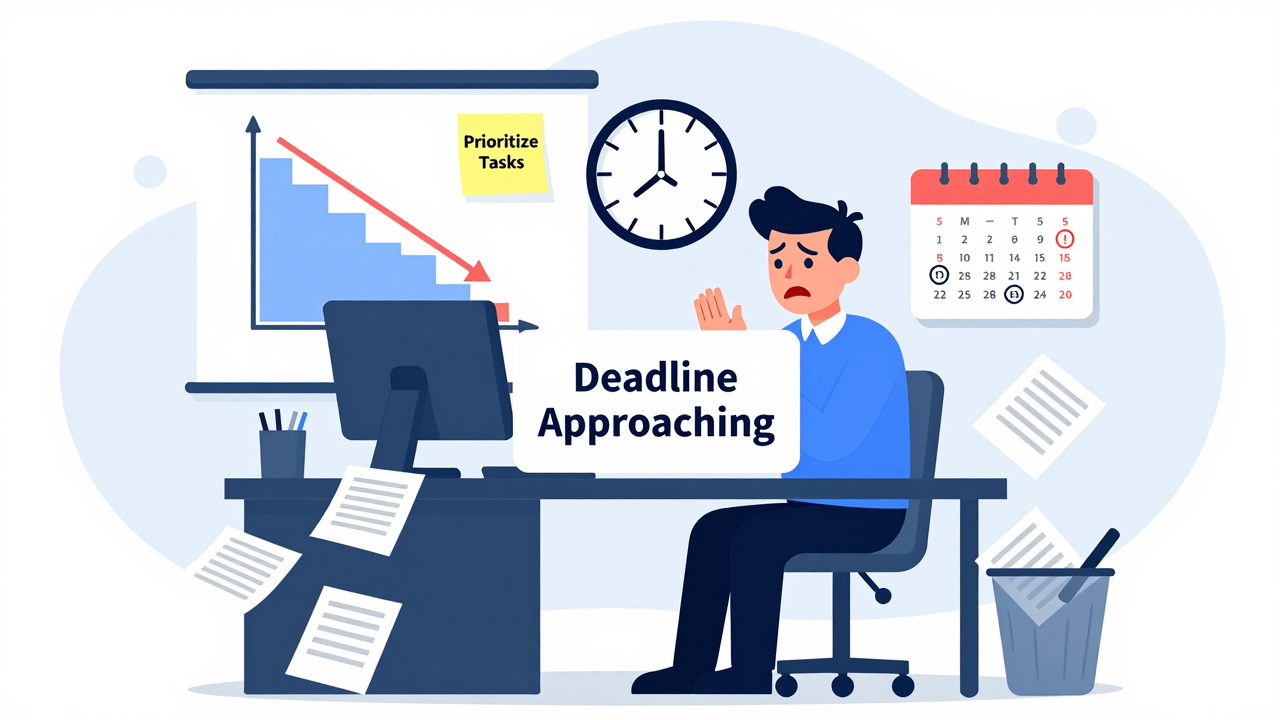
Effective time management is essential, but neglecting it can lead to serious consequences. Here are some key stats on time management that highlight the impact of poor planning:
- 89% of employees waste part of their working time daily.
- Ineffective time management results in unnecessary meetings costing US businesses about $37 billion annually.
- Chronic procrastination can lead to a $15,000 drop in salary for each point increase in procrastination.
- 64% of employees are distracted by time-wasting activities, like personal web surfing.
When you struggle with time management, you risk burnout from working excessive hours, which can drain your mental resources.
To combat these issues, prioritize tasks, set clear deadlines, and minimize distractions. By taking control of your schedule, you can enhance productivity and avoid the pitfalls associated with poor time management.
Understanding these facts about time management can empower you to make better choices daily.
Proven Strategies for Allocating Your Time Wisely
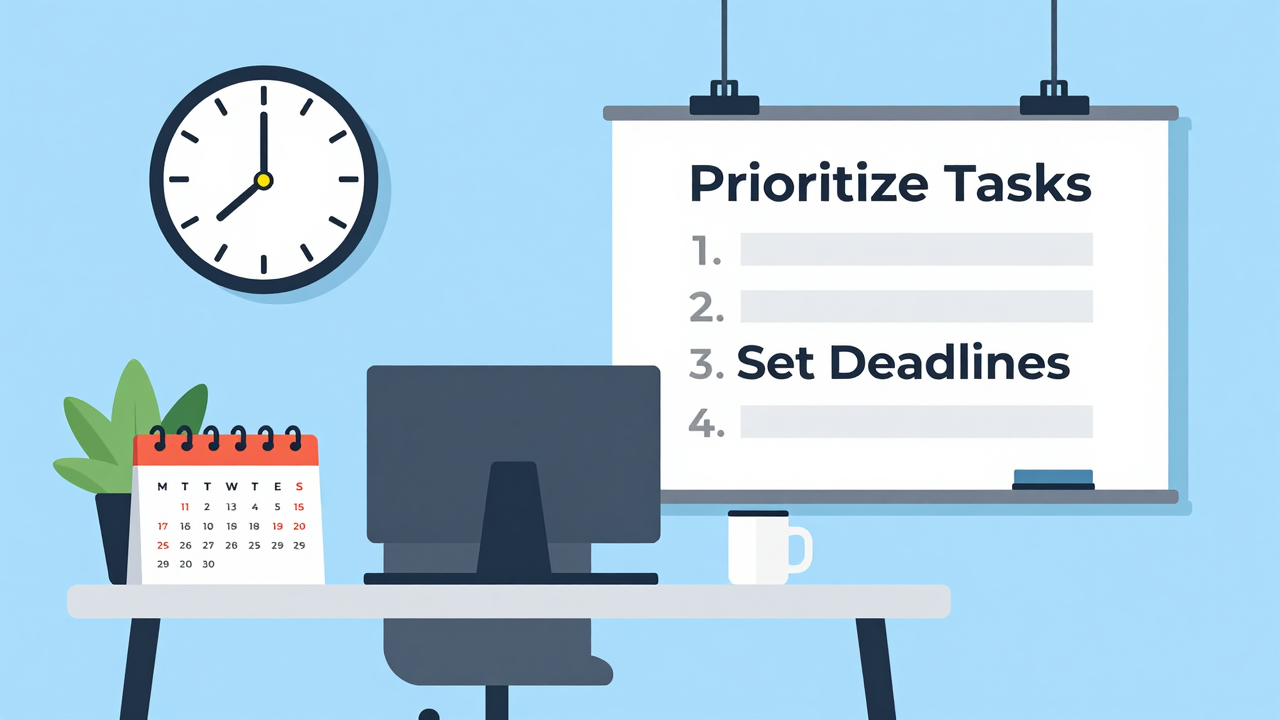
To allocate your time wisely, start by identifying what truly matters in your day-to-day tasks. Create a list of priorities using Covey’s Time Management Matrix to differentiate between urgent and important activities. Focus on high-impact tasks that align with your goals.
Next, keep a time log for a week to track how you spend your time. This insight will help you plan realistically and estimate how long tasks take. Consider delegating lower-priority tasks to free up time for what you do best.
Additionally, implement techniques like the Pomodoro Technique, where you work in focused bursts followed by short breaks, to maintain concentration. Time-tracking apps can also streamline your task management, ensuring you stay on track and reduce distractions.
Identifying and Eliminating Time Wasters

Identifying and eliminating time wasters is essential for improving your productivity.
To do this effectively, start by recognizing common pitfalls that drain your time and focus.
Here are some key areas to address:
- Limit personal internet use during work hours.
- Evaluate the necessity of meetings and set clear agendas.
- Set specific times for tasks to reduce procrastination.
- Keep track of where your time goes to identify patterns.
How Can Technology Make Time Management Easier?
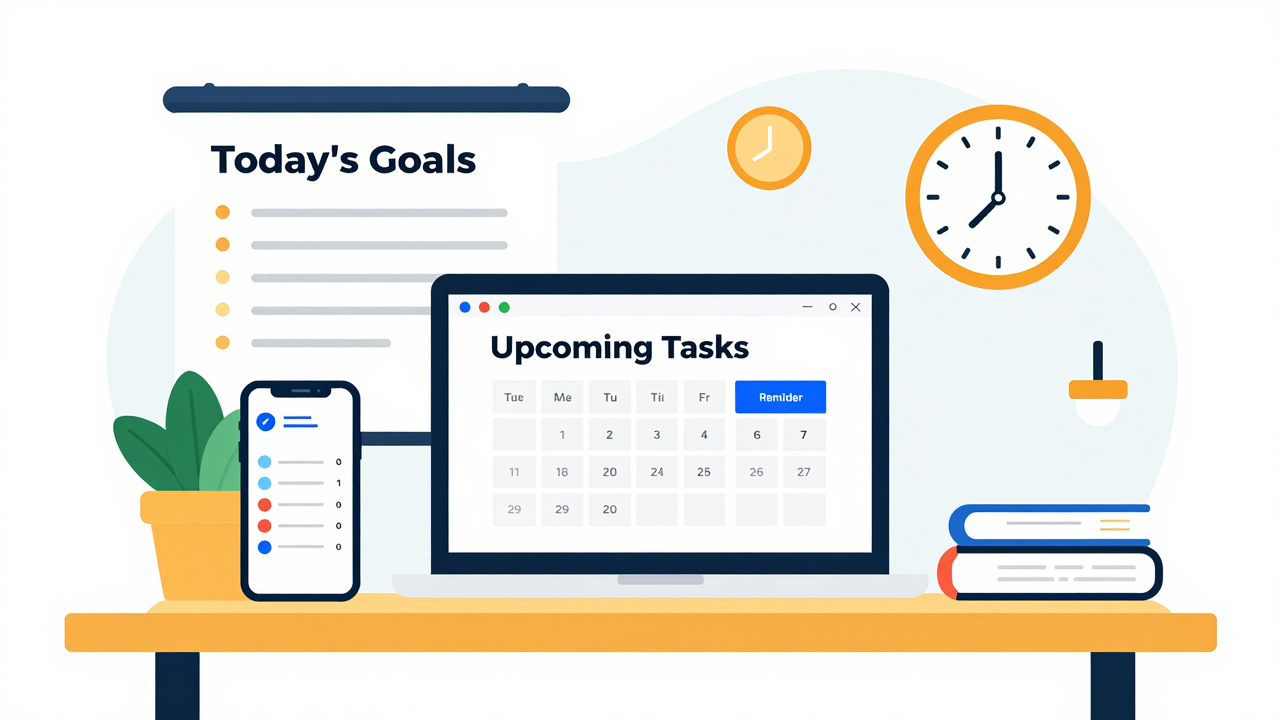
Many people struggle with managing their time effectively, often falling prey to distractions and inefficiencies. Technology can be a powerful ally in overcoming these challenges.
Start by using time-tracking apps to pinpoint inefficiencies in your daily routine. These apps can identify where you’re wasting time, allowing you to optimize your schedule. Consider integrating AI tools, which 86% of users find helpful for summarizing meetings and planning their day.
Additionally, the Eisenhower Matrix can help you prioritize tasks, making 50% of users feel more in control of their workload.
Finally, streamline communication with tech solutions that cut down on redundant messages, as communication can consume up to 57% of your work time. By leveraging these tools, you can greatly boost your productivity and take charge of your time management.
Frequently Asked Questions
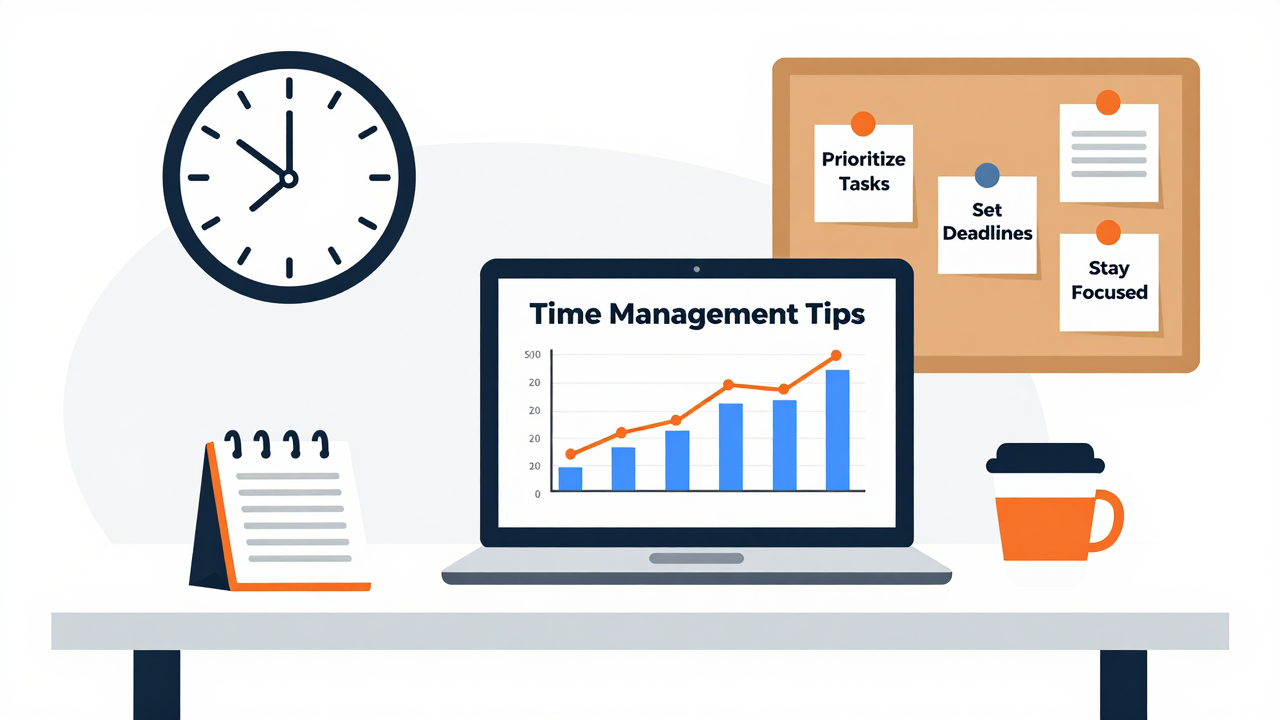
What Are Some Facts About Time Management?
Time management can boost your productivity noticeably. Studies show you could increase your output by up to 25% just by organizing your tasks.
Many workers waste time daily due to distractions, costing businesses billions. Multitasking often reduces productivity by 40%, so focus on one task at a time.
Consider tracking how you spend your time to identify leaks and improve efficiency. Implementing a time management system can lead to better resource allocation.
What Are the 5 Importances of Time Management?
Time management is essential because it boosts productivity, reduces stress, improves work-life balance, minimizes procrastination, and enhances overall efficiency.
To start, prioritize your tasks using a to-do list. Set specific deadlines for each task to stay on track.
Block out distractions by creating a dedicated workspace. Regularly review your progress to adjust your goals.
Finally, allocate time for personal activities to maintain balance, ensuring you stay motivated and productive in both work and life.
[embedded content]
What Are the 7 Key Elements of Time Management?
The seven key elements of time management are goal setting, prioritization, planning, scheduling, time tracking, delegation, and review.
Start by setting SMART goals to clarify your direction.
Use prioritization tools to identify urgent tasks.
[embedded content]
Create a schedule that protects your high-priority activities.
Track how you spend time to spot inefficiencies.
Delegate when possible to focus on what matters.
Finally, regularly review your progress to adjust your strategies and improve your effectiveness.
What Is the 3-3-3 Rule for Time Management?
The 3-3-3 Rule recommends that for every 30 minutes of work, you take a 3-minute break. This simple method helps you recharge and stay focused.
During your break, step away from your workspace, stretch, or grab a drink. When you return, you’ll likely feel more energized and ready to tackle tasks.
Conclusion
Mastering time management isn’t just a skill; it’s essential for your success. Start by prioritizing your tasks using Covey’s Matrix, and track your time with an app to spot inefficiencies. Regularly review what steals your focus and find ways to minimize those distractions. Remember, small changes can lead to big improvements in your productivity and work-life balance. Take control of your time now, and you’ll see the benefits in both your career and personal life.
[embedded content]
Image via Google Gemini and Small Business Trends