

This post was originally published on this site.
If you wait to file your taxes, you expose yourself to several risks that can have serious financial repercussions. You might face hefty penalties and interest, miss out on valuable deductions and credits, and deal with increased scrutiny from the IRS. Furthermore, procrastination can lead to unexpected tax liabilities and even identity theft. Comprehending these risks is vital, especially as the tax deadline approaches. What consequences might you encounter if you don’t act in time?
Key Takeaways
- Delaying tax filing can incur significant penalties, including a 5% failure-to-file penalty and accruing interest on unpaid taxes from the due date.
- Last-minute filers risk overlooking eligible tax benefits, such as deductions and credits, leading to reduced refunds.
- Increased scrutiny from the IRS occurs with rushed filings, raising the likelihood of errors and potential audits.
- Procrastination can heighten stress and anxiety, complicating decision-making and potentially resulting in missed opportunities for financial planning.
- Ignoring IRS notices may lead to harsher penalties and automated assessments, increasing overall financial burdens.
Potential Penalties and Interest Accumulation

When you delay filing your taxes, you open yourself up to a range of penalties and interest that can considerably increase your financial burden.
Should you wait to file taxes? The failure-to-file penalty is 5% of unpaid taxes per month, maxing out at 25%, which can quickly add to your total owed.
Moreover, a late payment penalty of 0.5% per month likewise applies, compounding your financial woes. Interest on unpaid taxes starts accruing from the due date, potentially reaching up to 8% for individuals in 2024.
If you file your return more than 60 days late, you’ll face a minimum failure-to-file penalty, either $435 or 100% of the unpaid tax, whichever is less.
Ignoring IRS notices about your late filings can further complicate things, leading to harsher collection actions and increased penalties.
Missing Out on Tax Benefits and Credits
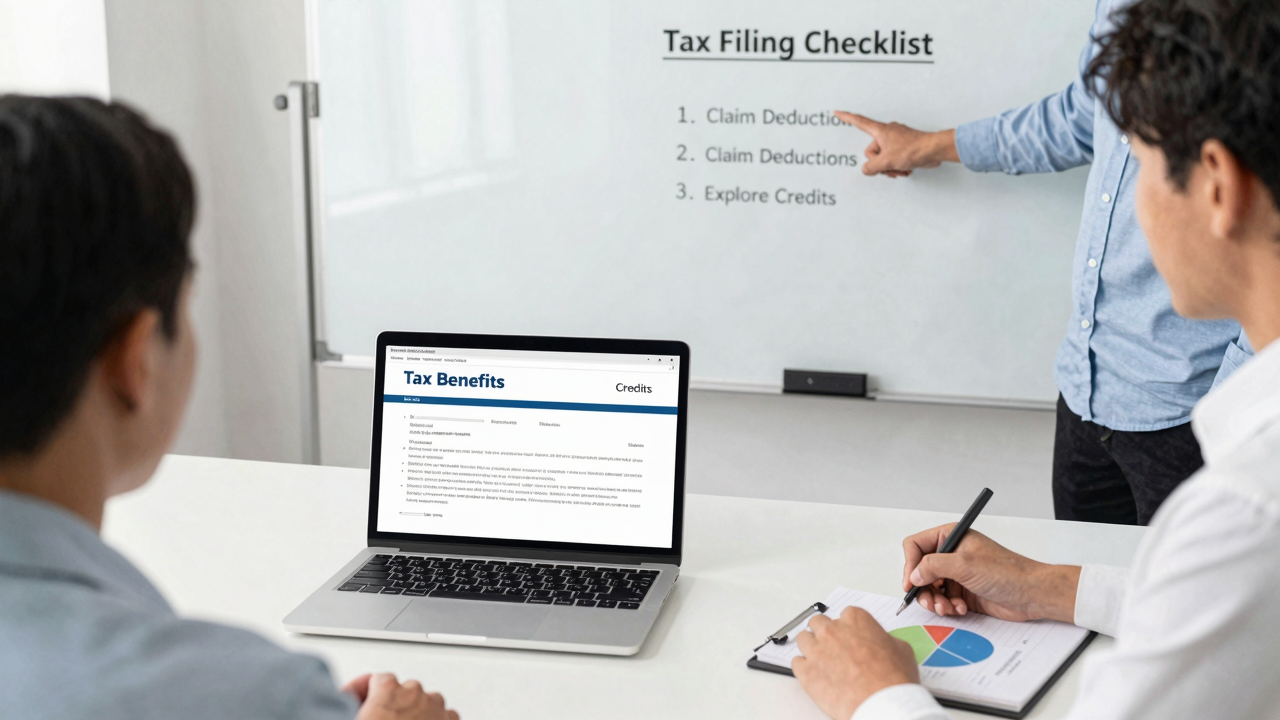
Missing out on tax benefits and credits can greatly impact your overall tax liability, especially if you rush through your filing. When you file at the last minute, you might overlook eligible deductions and credits, increasing your tax bill.
Many taxpayers miss valuable benefits like the Earned Income Tax Credit (EITC) or Child Tax Credit (CTC) simply because of lack of awareness or insufficient time for review. Moreover, charitable contributions made throughout the year often go unclaimed when filing is hurried, which can greatly reduce your tax owed.
If you don’t track deductible expenses during the year, you might forget to include them and miss out on potential savings. Finally, failing to take time to itemize deductions could lead to missing substantial savings, as you may qualify for deductions you weren’t aware of if you rush your filing.
Taking the time to file correctly can pay off greatly.
Delayed Refunds and Financial Planning Impacts

Filing your taxes late can lead to significant delays in receiving any potential refunds, impacting your financial planning and cash flow. When you postpone your tax filing, the IRS takes longer to process your return, which can disrupt your budget and savings goals.
You might miss opportunities to invest or save that refund amount sooner, limiting your financial growth. Additionally, late filing can complicate your comprehension of any tax liabilities you may owe, leaving you in the dark about future expenses.
This uncertainty can create stress and anxiety, making it harder to manage your finances effectively. As you navigate your budget for the upcoming year, the delayed clarity about your tax situation may hinder vital planning decisions.
Consequently, timely tax filing is fundamental not just for receiving refunds swiftly but likewise for maintaining a clear financial path and minimizing unnecessary complications in your financial planning.
Increased Scrutiny From the IRS

When you wait until the last minute to file your taxes, you increase the chances of making errors that could catch the IRS’s attention.
Mismatched information or significant changes in your return compared to previous years can raise red flags, suggesting potential issues like unreported income.
Furthermore, if you overlook eligible deductions, you might face a larger tax bill that could further attract scrutiny from the IRS.
Common Audit Triggers
Although many taxpayers hope to avoid an IRS audit, certain actions can inadvertently increase your chances of attracting scrutiny. Major errors from last-minute filings, like mismatched information or excessive deductions, heighten audit risks considerably.
If you claim unusually high deductions relative to your income, the IRS might flag your return for discrepancies in reported expenses. Remember, filing extensions won’t guarantee immunity; the IRS can still review your return for accuracy after the original deadline.
Furthermore, consistent patterns of late filing or extensions may raise red flags, leading to increased scrutiny of future returns. To mitigate these risks, keeping accurate and thorough records is vital, as incomplete documentation can lead to considerable errors that attract IRS attention.
Filing Errors Impact
Errors in your tax return can have significant repercussions, particularly regarding increased scrutiny from the IRS. Last-minute filings often lead to mistakes like typos or incorrect bank details, which can delay processing and refunds.
Major errors, such as mismatched information or excessive deductions, can trigger audits, causing the IRS to closely examine your financial records. Statistics show that rushed preparations heighten the risk of errors, increasing your chances of receiving an audit notice.
Common audit triggers include discrepancies between your reported income and third-party forms, making careful filing crucial. Moreover, these errors can result in penalties, with the failure-to-file penalty reaching up to 25% of the unpaid tax, complicating your financial situation further.
Mismatched Information Issues
Mismatched information on your tax return can lead to serious consequences, particularly increased scrutiny from the IRS. Discrepancies, such as income figures or Social Security numbers, can trigger audits and complicate your filing process. This is especially true if you’re rushing to file late, increasing the likelihood of errors.
The IRS uses automated systems to compare your data against third-party reports, making accuracy crucial.
Consider these key points:
- Common mismatches include income figures and filing statuses.
- Incorrect Social Security numbers can halt processing.
- Late filings raise the risk of errors.
- Notices from the IRS require prompt attention.
- Resolving mismatches can involve extensive documentation and penalties.
Ensure your information is accurate to avoid these issues.

As the tax filing deadline approaches, many taxpayers experience heightened stress and anxiety, especially if they’ve procrastinated. One-third of Americans file at the last minute, leading to rushed preparations and an increased risk of mistakes. Procrastination creates uncertainty about tax obligations, which can prolong your stress, particularly if unexpected liabilities arise.
Here’s a brief overview of the stressors related to procrastination:
| Stressor | Description | Impact on Taxpayers |
|---|---|---|
| Time Pressure | Last-minute filing increases pressure | More errors and rushed decisions |
| Uncertainty | Unclear tax obligations heighten anxiety | Poor financial planning |
| Difficulty Finding Help | Tax preparers are busy in April | Increased stress because of limited options |
| Financial Strain | Errors can lead to complications with the IRS | Potential for increased financial burden |
| Emotional Toll | Constant worry about deadlines | Negatively affects overall well-being |
These factors can greatly affect your mental state and financial health.
Difficulty Securing Tax Preparation Help

When you wait until the last minute to file your taxes, finding a qualified tax preparer can become a significant challenge.
As April nears, many professionals are booked solid, and those who aren’t may charge higher fees because of increased demand.
This situation can leave you with limited options and the risk of relying on less experienced preparers, which could lead to mistakes in your return.
Limited Availability of Preparers
Securing tax preparation help becomes increasingly challenging as the April deadline approaches, primarily due to the surge in demand for tax preparers.
Last-minute filers often discover that many professionals are already booked, which can lead to delays and potential penalties.
Consider these factors when waiting to file:
[embedded content]
- Many tax preparers can only manage a limited number of clients daily.
- Appointments may be harder to secure, resulting in longer wait times.
- Rushed consultations can increase the chance of errors in your filings.
- Increasingly high fees for urgent services can strain your budget.
- Complex returns may be overlooked or inadequately handled by overworked preparers.
Timely filing can save you from these headaches.
Higher Preparation Costs
Waiting until the last minute to file your taxes can lead to considerably higher preparation costs. As the April deadline approaches, many tax professionals raise their fees because of increased demand. You might find it challenging to secure assistance, as some preparers become fully booked.
Relying on less experienced preparers or tax software can result in mistakes, further escalating expenses for corrections. The average fee for last-minute tax preparation often exceeds $300, which could have been avoided with timely filing.
Furthermore, you may miss out on early bird discounts offered by qualified professionals, making it more expensive to file when you wait. Being proactive can save you both time and money in the long run.
Increased Demand for Services
As the tax filing deadline approaches, securing a tax preparer can become increasingly challenging due to the surge in demand. Many professionals find themselves fully booked, especially in March and April.
This limited availability might force you to rush your filings or settle for less experienced help. Furthermore, last-minute filers often face higher fees for expedited services.
With about one-third of taxpayers waiting until the last minute, competition for resources skyrockets, raising the chances of delays or errors. Rushed preparation can lead to mistakes that affect your deductions and credits, increasing your tax liability.
- Higher competition for tax preparers
- Increased chances of errors
- Limited availability of experienced professionals
- Higher fees for last-minute services
- Greater likelihood of filing stress
Higher Fees for Last-Minute Services

Filing your taxes close to the April 15 deadline often leads to considerably higher fees for tax preparation services.
Tax preparers frequently increase their rates during this busy period, sometimes by 50% or more, in order to accommodate urgent requests. As demand surges, you might find that many professionals require upfront deposits or charge premium rates for expedited services, which can strain your finances unexpectedly.
Furthermore, waiting until the last minute can limit your access to experienced preparers, forcing you to choose less qualified options that may charge even higher fees. The pressure of meeting a deadline can likewise lead to rushed work, which is often prone to errors.
These mistakes might necessitate costly amendments or even penalties, further increasing the financial burden of last-minute tax filing. To avoid these pitfalls, it’s advisable to plan ahead and file your taxes well before the deadline.
Greater Risk of Errors in Tax Filing

Procrastinating on your tax filing can greatly increase the risk of making errors that could complicate your financial situation. When you rush, you’re more likely to make mistakes that can lead to delays in processing and refunds.
Missing supporting documents or submitting an unsigned return could render your filing invalid. Keep in mind that accurately completing Form 1040 takes about 15 hours, and hurrying through it can result in critical oversights.
[embedded content]
Here are some common errors to watch out for:
- Incorrect bank details that delay refund deposits
- Typos that can alter your tax calculations
- Missing deductions or credits owing to insufficient review time
- Unsigned returns leading to invalid submissions
- Mismatched information that may trigger an IRS audit
Taking the time to file your taxes carefully can help you avoid these pitfalls and guarantee a smoother tax experience.
Unexpected Tax Liabilities
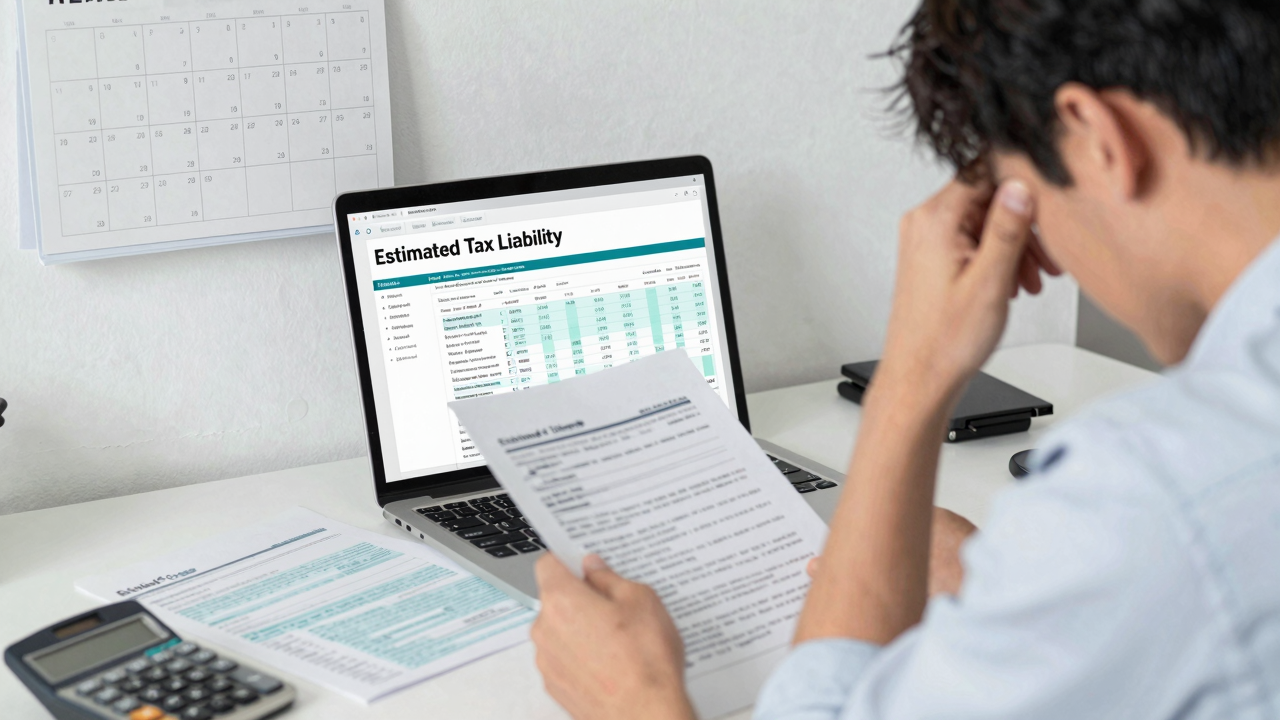
Delaying your tax filing can lead to unexpected tax liabilities that may catch you off guard. When you wait until the last minute, you might miss out on a thorough financial review, increasing the risk of discovering surprise tax debts.
For instance, you could overlook underreported income or fail to claim deductions, complicating any payment arrangements needed later. Rushed documentation processes often result in missing important forms like 1099s, which can greatly affect your taxable income.
Moreover, if you postpone filing, you may be unaware of any changes in tax laws or credits that could impact your obligations. This lack of awareness can create further liabilities.
Finally, delaying your filing prevents you from adjusting your withholdings or making estimated payments throughout the year, which could lead to a larger tax bill when you finally do file.
Taking timely action can help you avoid these unexpected financial burdens.
Increased Risk of Identity Theft

As tax season approaches, the increased risk of identity theft becomes a pressing concern for many taxpayers. Thieves often exploit stolen personal information to file fraudulent returns, and delaying your filing gives them more time to act.
By submitting your return early, you markedly reduce the opportunity for identity thieves to take advantage of your information.
Consider these points:
- Filing late allows more time for fraudulent activities.
- Early filing minimizes potential complications with your legitimate return.
- Thieves can wreak havoc on your tax records.
- Resolving identity theft issues can be time-consuming and stressful.
- Protecting your return early helps guarantee a smoother tax season.
Consequences of Ignoring IRS Notices

Ignoring IRS notices can lead to serious repercussions, making it vital to address them quickly. When you fail to respond, the IRS may assume the information in the notice is correct, resulting in automated assessments that increase your tax liabilities.
The agency has broad authority to collect unpaid taxes, which can include garnishing your wages or levying your bank accounts. Moreover, neglecting these notices means you could miss opportunities for appeal or resolution, potentially mitigating penalties or allowing for installment agreements.
Continued inaction can escalate the situation, leading to even more penalties and interest on what you owe. If you ignore notices long enough, the IRS might file a substitute return on your behalf, typically resulting in a higher tax bill than if you’d filed correctly.
Addressing IRS notices without delay is vital to avoid these costly consequences.
Options for Filing Extensions and Their Implications
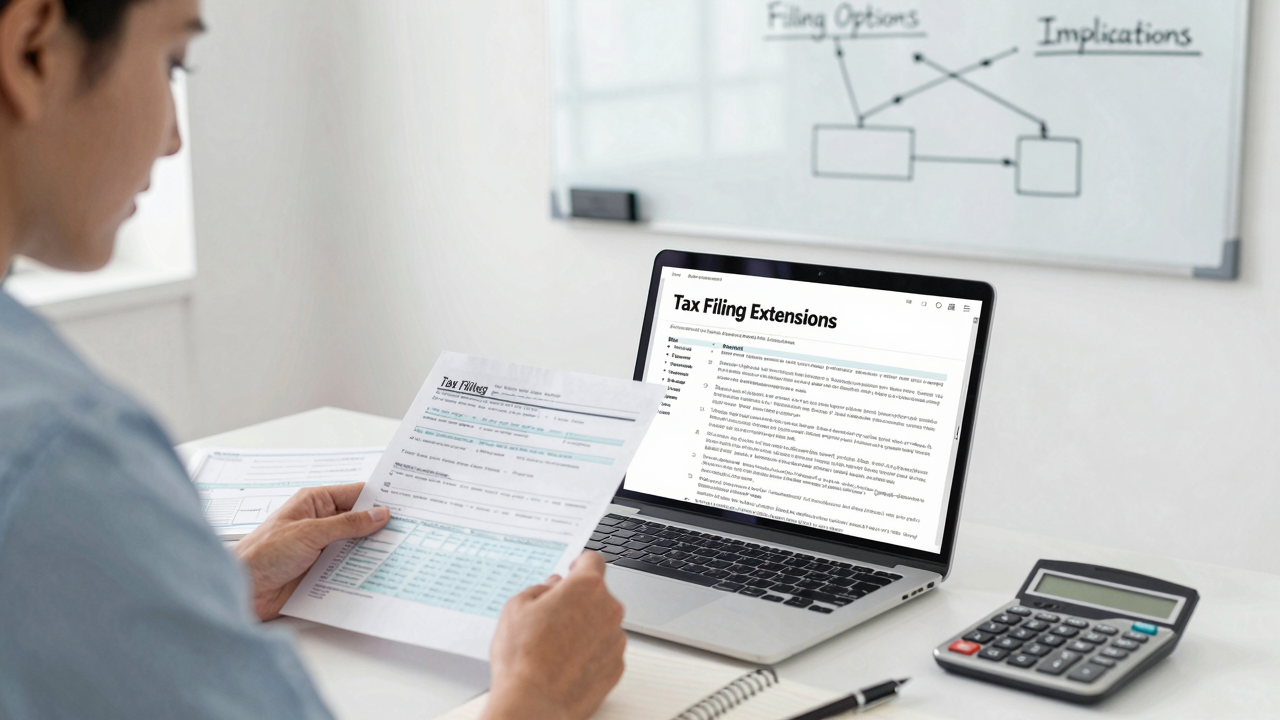
When faced with the pressure of tax deadlines, many taxpayers reflect on filing for an extension to gain additional time for preparation. You can file for an automatic six-month extension using Form 4868 for individuals or Form 7004 for businesses.
Nevertheless, keep in mind that this only extends the filing deadline—not the payment deadline for any taxes owed.
Here are some key implications to reflect on:
- Penalties and interest on unpaid taxes accrue, potentially reaching 0.5% monthly, up to 25%.
- The IRS processes extended returns more slowly, delaying refunds and impacting your financial planning.
- State tax laws may require separate extension forms for compliance.
- An extension doesn’t reduce the stress of tax preparation; uncertainty may increase anxiety.
- You remain liable for your tax obligations, even with an extension in place.
Be fully aware of these factors before deciding to file for an extension.
Frequently Asked Questions

What Happens if You Wait to File Taxes?
If you wait to file taxes, you might face penalties, including a failure-to-file penalty of 5% of unpaid taxes each month, which can accumulate considerably.
You risk missing valuable deductions and credits, as rushing can lead to oversights.
Furthermore, procrastination increases the chance of tax fraud, as identity thieves could submit false returns using your information.
Finally, last-minute submissions often result in errors that can delay processing and refunds.
What Is the Risk of Not Filing Taxes?
Not filing your taxes can lead to significant penalties and complications.
The IRS imposes a failure-to-file penalty of 5% per month on unpaid taxes, reaching up to 25%. Regardless of whether you request an extension, you still owe taxes by the deadline, accruing interest and penalties immediately.
Ignoring your tax obligations can trigger aggressive IRS collection actions and increase your risk of tax fraud, as criminals might misuse your personal information.
What Should I Wait for Before Filing Taxes?
Before filing your taxes, wait for all necessary documents like W-2s and 1099s, which you should receive by January 31.
If you’re self-employed, consider holding off for any corrected forms to avoid amendments later.
Additionally, evaluate recent life changes, such as marriage or having children, that might affect your deductions.
Finally, keep an eye on potential tax law changes that could impact your credits and consult with professionals if needed.
[embedded content]
What Happens if I File Taxes After October 15TH?
If you file taxes after October 15th, you’ll face several penalties.
You’ll incur a failure-to-file penalty of 5% of your unpaid taxes for each month the return is late, capped at 25%.
Interest likewise accrues on unpaid balances from the original due date, increasing your total owed.
Furthermore, you might face a failure-to-pay penalty of 0.5% per month, and your potential refund could be delayed, impacting your financial plans.
Conclusion

In conclusion, waiting to file your taxes can lead to various risks that negatively impact your financial situation. You could face penalties, miss valuable deductions, and experience delays in refunds. Furthermore, procrastination may increase your chance of IRS scrutiny and stress, as well as leaving you vulnerable to identity theft. To avoid these issues, consider filing without delay or exploring extension options, but be aware of their implications. Being proactive can help you maintain better control over your tax obligations.
Image via Google Gemini and Small Business Trends