

This post was originally published on this site.
While preparing for the biggest week of their season, Shakhtar Donetsk face challenges which are unimaginable for most football clubs.
After facing Crystal Palace in Krakow, Poland, in the first leg of their Uefa Conference League semi-final on Thursday, the Ukrainian Premier League leaders will begin an arduous journey.
They’ll face 18 hours of bus journeys to get to Kyiv in time for Sunday’s match against Dynamo Kyiv.
With Ukrainian airspace closed because of the war with Russia, they will then retrace their steps to Poland and fly to London for next week’s second leg.
“This is one case, and believe me, it’s been like this four years,” Shakhtar sporting director and former captain Darijo Srna said.
“You will not find in the world a head coach or medical staff who will understand and who has experience to recover players after 18 hours on the road.”
It’s not uncommon for their pre-match preparations to include hours spent in air-raid shelters and last-minute hotel changes because of rocket damage.
“If you bring even Pep Guardiola into Shakhtar now, or Jose Mourinho, or Jurgen Klopp, I don’t know how he will manage this situation. Believe me, it’s just mentality.”
‘Ukrainians can do something crucial in life’
Shakhtar have led a nomadic existence since the 2014 Russia-backed annexation of Donetsk, playing their home matches all around Ukraine.
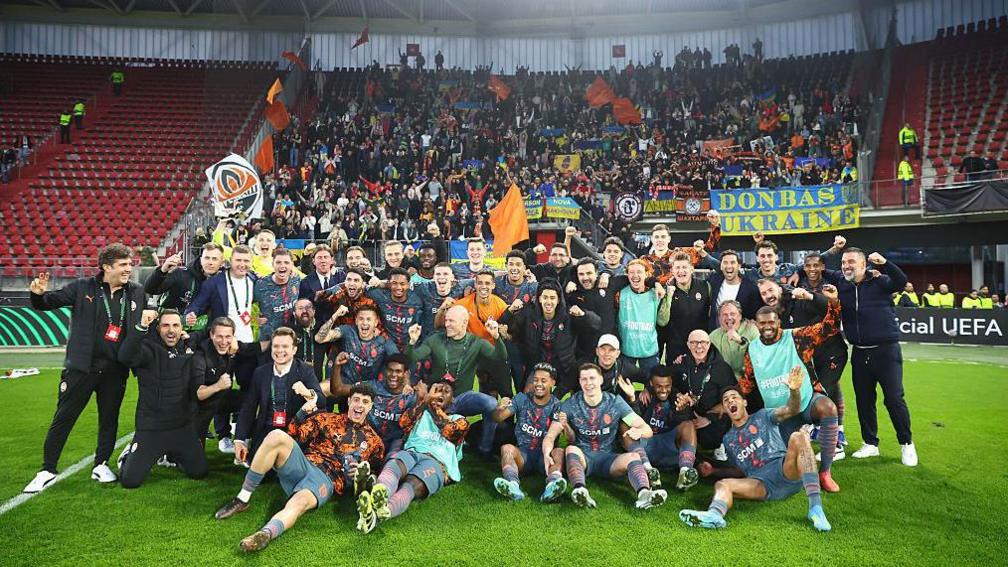
Since Russia’s full-scale invasion of Ukraine in 2022, the club has been forced to play home European fixtures in Germany and Poland. Doing so has offered a link to their homeland for the 10 million Ukrainians – Shakhtar fans or not – who fled the war.
“We will have around 26,000 supporters, almost 90% Ukrainian people,” club CEO Sergei Palkin said of the Palace game in Krakow.
“I am sure that they arrive not just from Poland, but from other countries. They spread over the world, everywhere. For those who stayed abroad, it’s like a connection.”
 Getty Images
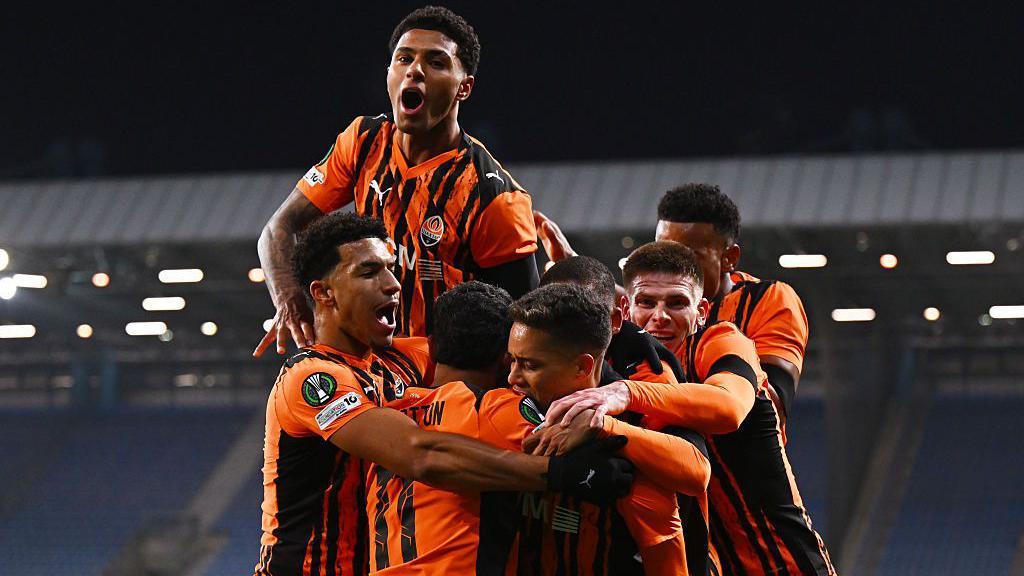
Under the management of former Atletico Madrid and Turkey midfielder Arda Turan, Shakhtar are looking to claim a second European trophy after winning the Uefa Cup in 2008-09.
After finishing sixth in the Conference League league phase they beat Lech Poznan 4-3 on aggregate in the last 16 before overcoming AZ Alkmaar 5-2 over two legs to reach the final four.
It may sound trite to say that football is more than a game, but for those who remained in Ukraine, it is important to see representatives of their country succeed on the international stage.
“It’s almost [always] negative news, and Ukrainians are living under big emotional pressure,” said Palkin.
“For us to go to a semi-final, it means we can give them some kind of positive emotion, to understand that we are alive, Ukrainian football is alive, and we can continue to compete on this high level.
“It’s very important because we give some kind of belief to our people that Ukrainian guys can reach and do something crucial in life.”
‘We are not selling them comfort’
 Getty Images
Running a successful football club in a country at war is no easy feat, never mind one with the history and prestige of Shakhtar.
Over the past 20 years the club’s model has been to buy promising young Brazilian talents, develop them and then sell them to Europe’s top clubs for profit.
Fernandinho, Douglas Costa, Willian and Fred are just a few who used Shakhtar as a stepping stone to Europe’s elite.
Shakhtar have always blended South American flair with homegrown talents from their academy – the £89 million sale of Mykhailo Mudryk to Chelsea in 2023 showed that can be a profitable avenue as well.
However, Fifa’s decision in 2022 to allow both foreign and homegrown players to leave Ukrainian clubs for free because of the war left Shakhtar in a difficult position.
“It was a big problem because we lost top talents. We lost 14 players and coaching staff,” said Palkin. “So we started to build a new Ukrainian team.”
Thanks to the relationship they had built up with clubs and players in Brazil, Shakhtar have gradually returned to their model.
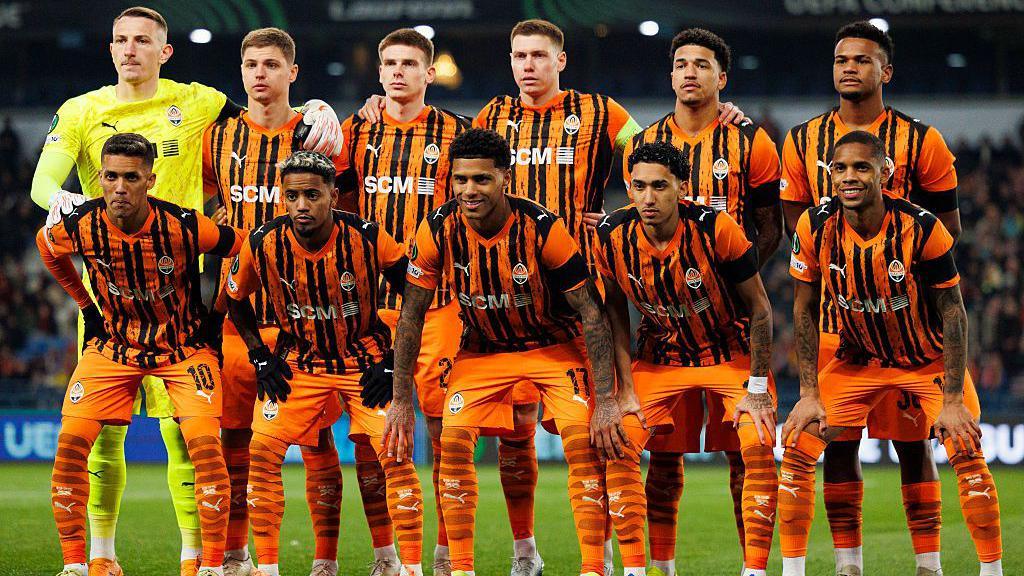
Turan has 12 Brazilians in his squad, with more expected to arrive in the summer. Even with the uncertainty of war, Brazilians jump at the chance to join them.
“We are not selling them comfort, because everybody understands the war, it’s not comfort. We are selling them their career pathway,” Palkin said.
“We lost our home, but we didn’t lose our identity. We follow our procedures, we follow our model, what we are building.”
Palkin is aware that European success for Shakhtar can help keep his people’s struggle in the wider public consciousness.
“I understand it’s difficult, but it’s not possible to close your eyes on what’s going on here in Ukraine,” he said.
“Can you imagine what this means for Ukraine, also for President Zelensky, for all the people, for all the fans, also for the other clubs?
“I am proud of this team. We are still strong. We are still united.”


