

This post was originally published on this site.
Current corporate lending rates can greatly impact your business’s financial strategy. Rates at Bank of America typically range from 6.7% to 11.5%, as certain loan types, like business term loans and SBA loans, differ even more. These fluctuations depend on factors like economic conditions and your company’s credit profile. Comprehending these rates is essential for making informed borrowing decisions. But, what strategies can you employ to secure the best possible rates?
Key Takeaways
- Corporate lending rates at banks currently range from 6.7% to 11.5%, varying based on loan type and borrower profile.
- Business term loans have APRs between 10% and 28%, while SBA loans offer variable rates from 10.00% to 13.50%.
- Business lines of credit and equipment financing typically charge interest rates from 10% to 28% and 9.9% to 24%, respectively.
- Accounts receivable financing rates are higher, ranging from 24% to 36% APR due to increased risk for lenders.
- Recent economic trends suggest potential stabilization of corporate lending rates in 2025, influenced by Federal Reserve rate cuts.
Understanding Current Corporate Lending Rates

Comprehending current corporate lending rates is essential for businesses looking to secure financing. Today, corporate lending rates typically range from 6.7% to 11.5% at banks, varying based on factors such as the prime rate and your company’s credit profile.
If you’re aware of interest rates for 2018, you can compare them to today’s rates, noting the fluctuations that have occurred over the years. Historical lending rates provide insight into how economic conditions influence borrowing costs.
[embedded content]
Furthermore, the type of loan matters; for instance, SBA loans usually offer lower rates than traditional bank loans.
Keep in mind that corporate loans often come with extra fees, like origination and underwriting fees, which can raise the effective annual percentage rate (APR) beyond the stated interest rate.
Grasping these elements will help you make informed decisions when seeking financing for your business.
Factors Influencing Corporate Lending Rates
When you consider corporate lending rates, two main factors stand out: economic conditions and borrower creditworthiness.
Economic factors, like federal interest rates and inflation, can greatly affect how much you’ll pay to borrow.
Furthermore, your company’s credit profile plays a vital role, as a stronger credit score often leads to lower interest rates, making it important to maintain a solid financial standing.
Economic Conditions Impacting Rates
Comprehending the economic conditions that influence corporate lending rates is essential for businesses seeking to navigate the complex financial environment. Factors like the Federal Reserve‘s monetary policy play a significant role; recent rate cuts can lead to lower borrowing costs.
Economic indicators, including inflation and employment rates, affect lender confidence and shape the interest rate terrain. For instance, mortgage interest rates in 2017 were influenced by these conditions, whereas interest rates in 2019 reflected a different economic climate.
Furthermore, market conditions, such as demand for credit and the health of the financial sector, impact corporate lending rates.
Finally, loan types, including secured versus unsecured loans, contribute to variations, with secured loans typically attracting lower rates because of reduced risks for lenders.
Borrower Creditworthiness Considerations
In the domain of corporate lending, borrower creditworthiness is a crucial factor that lenders evaluate to determine interest rates. A higher credit score typically results in lower rates, as lenders perceive less risk. Your business’s time in operation matters, too; established companies often secure better rates compared to newer ones. Consistent revenue and cash flow indicate reliability, allowing you to negotiate lower rates. Collateral likewise plays an essential role; secured loans backed by assets usually attract lower rates than unsecured loans. Furthermore, overall market conditions, including fluctuations in the Federal Reserve‘s interest rates, impact borrowing costs.
| Factor | Impact on Rates |
|---|---|
| High Credit Score | Lower Interest Rates |
| Time in Business | Better Rate Offers |
| Strong Cash Flow | Negotiable Rates |
| Secured Loans | Lower Interest Rates |
| Economic Environment | Rate Fluctuations |
Benchmark Rates and Their Impact

Benchmark rates play a vital role in shaping corporate lending rates, as Benchmark typically sets their loan rates based on these benchmarks plus an added margin to account for risk.
As of November 2025, the prime rate is 7%, serving as a key reference for variable-rate business loans and lines of credit. When federal rates change, benchmark rates often adjust, impacting the overall cost of borrowing for corporations.
For instance, an increase in the prime rate can lead to higher lending costs, whereas a decrease might make loans more affordable. Furthermore, corporate lending rates can fluctuate based on economic indicators, such as inflation and employment data, prompting banks to revise their lending terms.
Consequently, monitoring benchmark rates is vital for businesses seeking loans, as a lower benchmark can markedly reduce borrowing costs, enhancing loan affordability and overall financial strategy.
Rate Variability and Market Trends

As economic conditions shift, corporate lending rates often reflect these changes, creating a dynamic environment for businesses seeking financing. Currently, average corporate loan rates range from 6.7% to 11.5%, influenced by various factors.
Consider these key points about rate variability and market trends:
- Rates can fluctuate monthly based on Federal Reserve actions and market indicators.
- Economic indicators like inflation and employment rates play a substantial role.
- Fixed rates provide stability, whereas variable rates may offer lower initial costs but can increase over time.
- A recent 0.25% rate cut by the Federal Reserve hints at potential downward pressure on future lending rates.
Staying informed about these fluctuations is essential for corporations.
Timely decisions can greatly affect your financing costs and access to capital, allowing you to navigate the lending terrain more effectively.
How to Secure Competitive Lending Rates
To secure competitive lending rates, you should start by improving your credit score, as higher scores can lead to better offers from lenders.
It’s additionally essential to compare loan types and offers from multiple lenders, which helps you identify the best interest rates available.
Improve Your Credit Score
Improving your credit score is essential if you want to secure competitive lending rates for your business. A higher score, ideally 700 or above, can lead to better loan terms.
[embedded content]
Here are some effective strategies to boost your credit score:
- Regularly check your credit report for errors and dispute any inaccuracies.
- Pay down existing debts and maintain a low credit utilization ratio, ideally below 30%.
- Establish a consistent payment history by paying your bills on time.
- Diversify your credit mix by responsibly managing different types of credit accounts, such as credit cards and installment loans.
Understand Loan Types
Comprehending the different types of loans available to your business is vital for securing competitive lending rates. Interest rates can vary considerably based on lender type; banks and SBA loans typically offer the most competitive rates, whereas online lenders may charge higher rates.
Securing a loan with collateral often results in better interest rates, as lenders perceive these loans as lower risk. Your credit profile furthermore plays a paramount role; businesses with higher credit scores usually receive lower interest rates, whereas newer businesses may face higher costs.
In addition, the loan type matters; for instance, SBA loans typically feature lower rates compared to traditional term loans.
Finally, keep an eye on economic conditions and Federal Reserve actions to time your loan applications effectively.
Compare Multiple Lenders
Finding the best lending rates involves comparing offers from multiple lenders, which can greatly impact your business’s financial health.
To secure competitive rates, consider these key steps:
- Explore different lender types: Traditional banks, online lenders, and credit unions often have varying rates.
- Evaluate interest rate structures: Compare fixed versus variable rates to find the most cost-effective option for your situation.
- Use business loan calculators: These tools help estimate monthly payments and total interest costs, simplifying your comparisons.
- Research market trends: Stay informed about current average rates, like the 10-28% APR range for business term loans as of November 2025.
Engaging with multiple lenders early enables you to negotiate better rates and potentially lock in favorable terms.
Loan Types and Their Associated Rates
When exploring corporate lending, you’ll encounter a variety of loan types, each with its own associated rates.
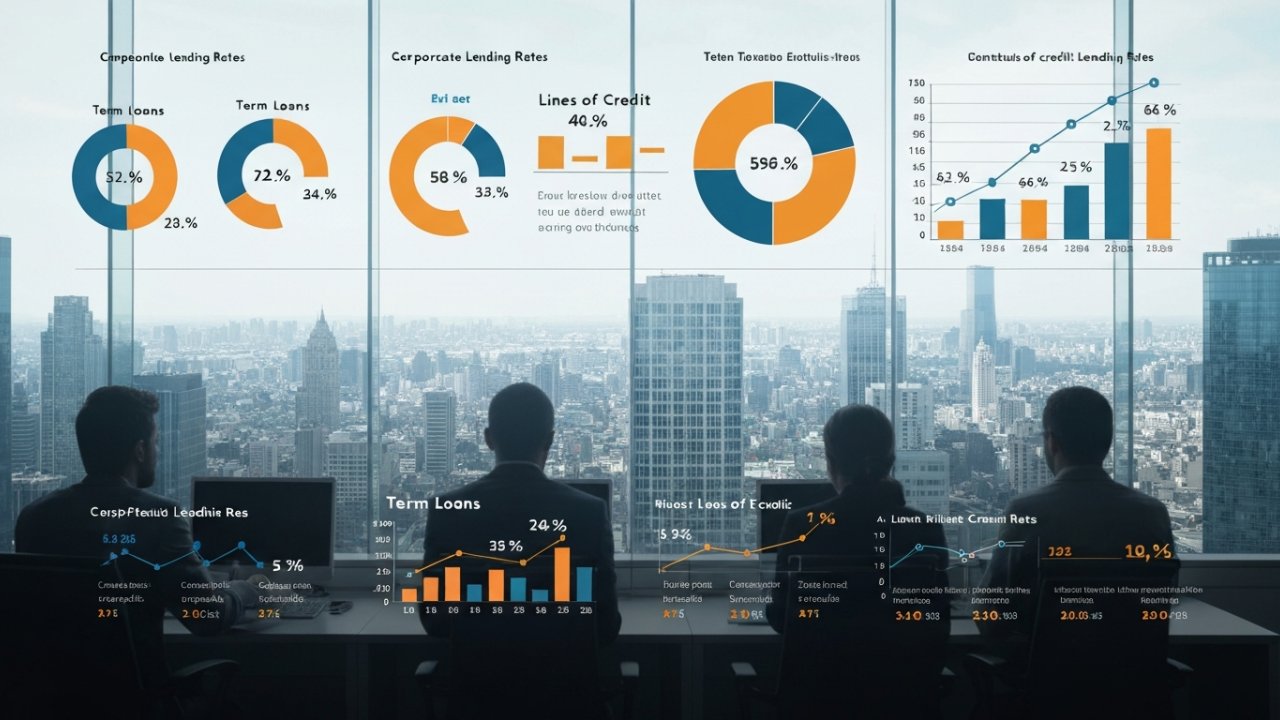
Business term loans typically range from 10% to 28% APR, depending on factors like your credit profile and economic conditions.
SBA loans can offer variable rates between 10.00% and 13.50%, or fixed rates from 12.00% to 15.00%.
If you need flexible access to funds, business lines of credit additionally fall within the 10% to 28% APR range.
[embedded content]
For companies investing in equipment, financing rates can vary from 9.9% to 24% APR.
Nevertheless, if you’re considering accounts receivable financing, be prepared for higher costs, as rates typically range from 24% to 36% APR.
Comprehending these variations will help you make informed decisions when seeking corporate loans, as each type serves different financial needs during carrying its unique cost structure.
Predicted Rate Changes for 2025
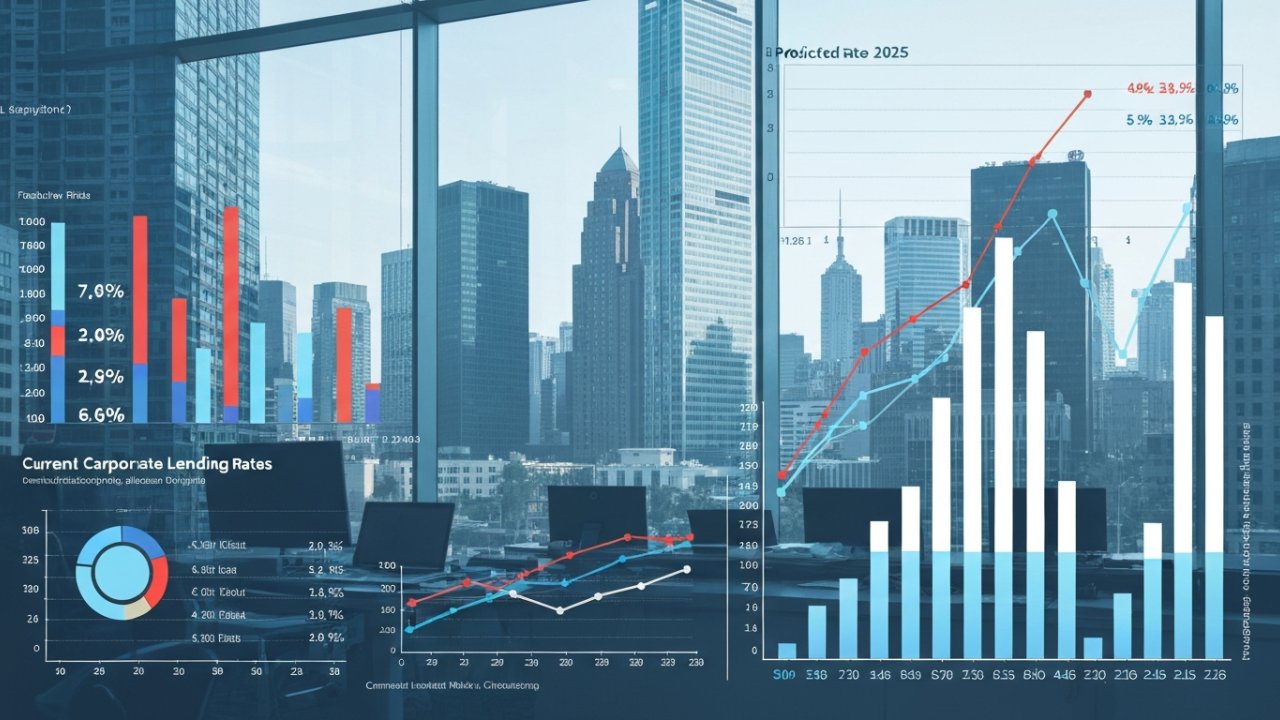
As economic conditions fluctuate, corporate lending rates are anticipated to stabilize in 2025, especially following recent Federal Reserve rate cuts that may lower borrowing costs for businesses.
Analysts predict that if the Fed continues to reduce the federal rate, corporate lending rates could decrease, benefitting borrowers considerably.
Nevertheless, keep in mind that various factors will shape these changes:
- Inflation levels may impact borrowing costs.
- Market performance could sway lender confidence.
- Corporate lending rates might shift on a month-to-month basis.
- Monitoring Fed meetings will be vital.
It’s important for you to stay informed about economic indicators and Fed decisions, as these will play a key role in determining the direction of lending rates throughout the year.
Best Practices for Corporate Borrowing

Comprehending best practices for corporate borrowing is vital for making informed financial decisions that can benefit your business.
First, consider securing a loan with collateral; this option typically offers better terms and lower interest rates than unsecured loans. Maintaining a strong credit profile is imperative, as higher credit scores often lead to more favorable borrowing conditions from lenders.
Additionally, familiarize yourself with various loan types, such as term loans, lines of credit, and equipment financing, to identify the best fit for your needs.
Regularly monitoring market conditions and interest rate trends can help you make timely borrowing decisions, ensuring you capitalize on favorable rates.
Finally, evaluate all associated fees—like origination and closing costs—because they can greatly affect the overall cost of borrowing and should always be included in your calculations of effective interest rates.
Frequently Asked Questions
What Is the Current Interest Rate for Corporate Loans?
The current interest rates for corporate loans vary widely based on several factors, including credit profile and business revenue.
Typically, business term loans and lines of credit can range from 10% to 28% APR.
For SBA loans, variable rates fall between 10.00% and 13.50%, whereas fixed rates can reach 15%.
Equipment financing often sees rates from 9.9% to 24%, and accounts receivable financing tends to have higher rates, ranging from 24% to 36%.
What Is the Commercial Lending Rate Right Now?
Right now, commercial lending rates vary widely based on the type of loan you’re considering.
For business term loans, rates range from 10% to 28% APR. If you’re looking at SBA loans, expect variable rates between 10.00% to 13.50%, or fixed rates from 12.00% to 15.00%.
Business lines of credit follow a similar pattern, whereas equipment financing rates fall between 9.9% and 24%.
Accounts receivable financing typically has higher rates, ranging from 24% to 36% APR.
What Is the Interest Rate for Corporate Loans?
When considering corporate loans, interest rates typically range from 6.7% to 11.5%. These rates depend on your creditworthiness and the type of loan you choose.
Fixed rates offer predictability, whereas variable rates can change based on market conditions. Secured loans usually have lower rates because of reduced lender risk.
Economic factors, such as the federal interest rate and your business’s financial health, likewise play an essential role in determining the rates you may receive.
What Is a Typical Interest Rate on a Commercial Loan?
A typical interest rate on a commercial loan usually ranges from 6.7% to 11.5%, depending on factors like the lender, loan type, and your creditworthiness.
If you’re considering an SBA loan, expect lower rates between 10.00% and 13.50% for variable options, whereas fixed rates can range from 12.00% to 15.00%.
Online lenders may charge higher rates, sometimes reaching 28% APR, so it’s crucial to shop around for the best deal.
Conclusion

In summary, comprehension of current corporate lending rates is essential for making informed borrowing decisions. By recognizing the factors that influence these rates and the types of loans available, you can better navigate the lending environment. Keep an eye on market trends and anticipated rate changes for 2025, as this knowledge can help you secure competitive rates. Adopting best practices in corporate borrowing will eventually position your business for success in a fluctuating financial environment.
Image via Google Gemini