
This post was originally published on this site.
British households have taken the heaviest hit to their wealth of any advanced economy since the pandemic, a sobering benchmark for a country that once prided itself on rising prosperity.
The average Briton is now more than a fifth poorer than five years ago, according to UBS. Of the 37 countries the Swiss bank surveyed, none has seen a steeper decline.
Typical individual wealth has dropped by roughly £28,500 since 2020 once inflation is stripped out, leaving the median adult with assets of just over £95,500 last year. That makes the British marginally better off than the French, but poorer than the Dutch and the Italians, a ranking that would have seemed improbable a decade ago.
Wealth here is measured by the value of assets such as property and shares, and it has been eroded at pace after inflation surged in the wake of the pandemic and Russia’s invasion of Ukraine. Britain absorbed a worse inflation shock than most of its peers as energy costs jumped, a squeeze that continues to shape the wider picture on living standards.
A cooling housing market has deepened the slump. Remarkably, British families have fared worse over the past five years than households in Turkey, Bulgaria, Mexico and Kazakhstan.
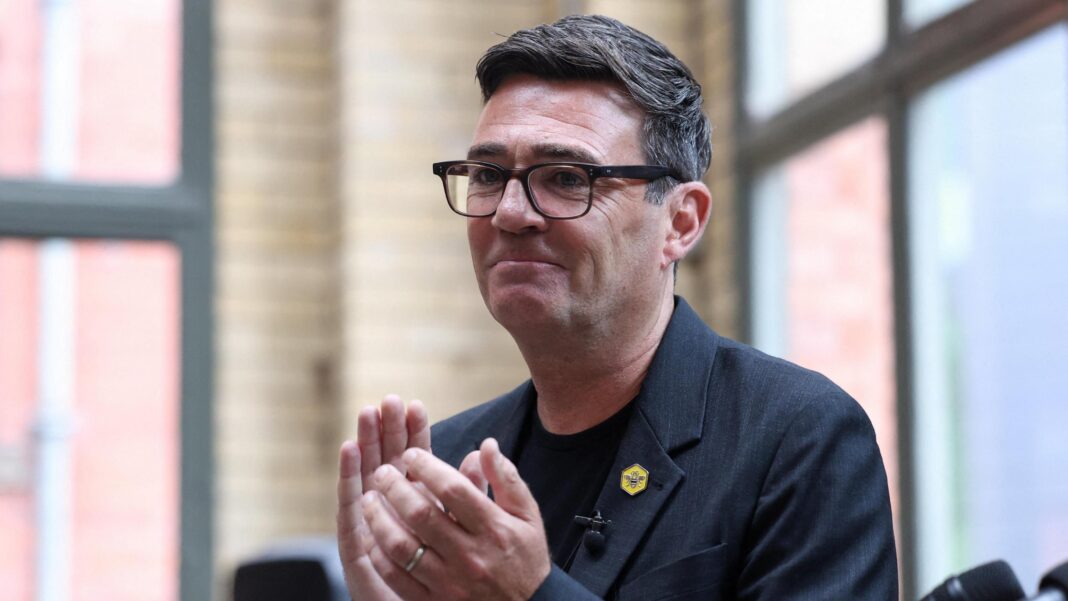
The UBS findings underline the scale of the task facing Andy Burnham as he prepares to become the next prime minister. In his first major speech since returning to the Commons, the MP for Makerfield said this week: “We cannot go through another decade like the one we have just had. We need a new determination to raise the living standards of every person in this land.”
Separate figures from the Office for National Statistics, published on Tuesday, showed that Sir Keir Starmer had failed to deliver on his pledge to improve living standards, with families now worse off than they were before he entered Downing Street.
The UBS data show the wealth of a typical individual has tumbled by more than 23 per cent on both the mean and median measures since 2020, ground down by a spike in inflation that peaked at 11.1 per cent in October 2022.
Paul Donovan, chief economist at UBS Global Wealth Management, said: “The UK had a brief period of notably higher inflation than Europe did, and that has distorted the real numbers. You had a couple of years of quite high inflation, partly because of the various peculiarities of our energy pricing structure.”
The housing market has added to the strain. UK house prices have risen by 26 per cent since the start of 2020, according to the ONS House Price Index, but consumer prices have climbed by 32 per cent over the same stretch, meaning the real value of the money tied up in the typical home has been quietly whittled away.
Donovan added: “There is a considerable weight to real estate as a form of wealth because it is the largest asset that most people own. A change in the relative performance of your local real estate market can have a notable bearing on, in particular, the median wealth level over time.”
The fall in wealth has landed alongside incomes that have struggled to keep up with prices, a double squeeze on households. At the same time, the tax burden is set to climb to its highest level since the Second World War, driven in part by the long freeze in income tax thresholds, an issue explored in Business Matters’ coverage of Britain’s record property tax burden.
The picture is not uniformly bleak across the globe. The biggest gains came in South Korea, where average wealth rose 55 per cent, along with Russia and Croatia. Among G7 economies, the largest rise was in Japan, where median wealth climbed 51 per cent.
The data arrived as the Institute of Directors said business confidence fell again in June. Anna Leach, the group’s chief economist, said it pointed to an urgent need for ministers to back economic growth.
“Businesses need to see meaningful improvements in areas like regulatory cost, tax complexity and swiftness and consistency of government decisions to fundamentally unlock spending and get growth going,” she said.
A Treasury spokesman was more upbeat: “We have the right economic plan. Inflation is holding steady, the UK led G7 growth at the start of the year, and the IMF and OECD have both upgraded growth forecasts. Real wages have risen more in the last year than in the first ten years of the previous government.” That claim of steadier prices chimes with the latest ONS inflation reading, though for many households the damage to accumulated wealth has already been done.