

This post was originally published on this site.
To enhance your feedback strategy, you need to implement effective customer surveys. Start by identifying the key areas where you want insights, like overall satisfaction or specific service aspects. Use straightforward questions to gather actionable feedback, such as ratings on website navigation or delivery speed. Each survey should target a unique element of the customer experience. This approach not only uncovers valuable insights but also helps you foster greater loyalty. Let’s explore specific examples that can make a real difference.
Key Takeaways
- Overall Satisfaction Rating: Start surveys with a 1-10 scale to gauge customer satisfaction and identify areas for improvement.
- Open-Ended Questions: Include open-ended questions to gather detailed feedback and insights about customer experiences.
- Tailored Questions: Customize survey questions based on specific touchpoints in the customer journey for relevant and actionable insights.
- Loyalty Measurement: Assess customer loyalty by asking if they would recommend your product or service to others.
- Incentives for Participation: Encourage survey completion by offering incentives such as discounts or gift cards to enhance response rates.
The Importance of Customer Surveys for Business Growth
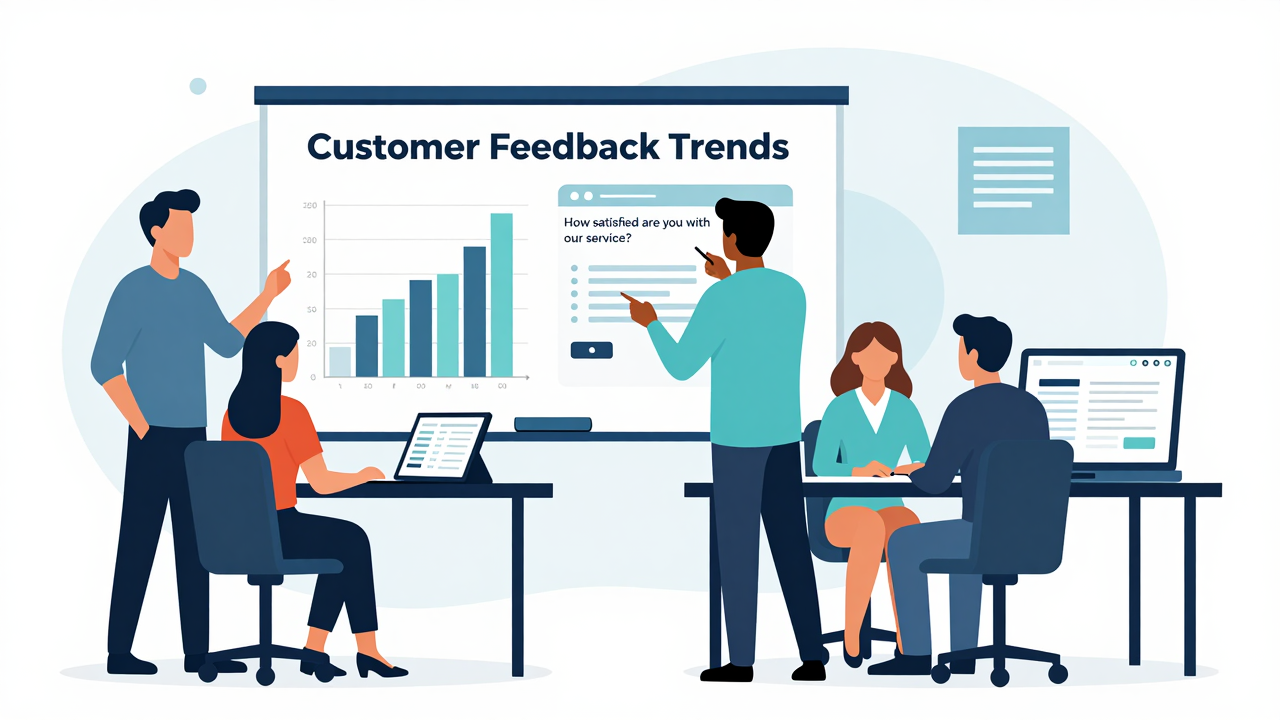
Customer surveys are essential for driving business growth, especially since they provide valuable insights into what your customers really think. By actively seeking customer service feedback, you can boost retention rates considerably—just a 5% increase can lead to profit growth between 25% to 95%.
Use these surveys to identify early-stage problems; addressing issues promptly can prevent customer churn.
Conduct surveys regularly to track satisfaction over time, allowing you to make strategic adjustments that enhance the overall experience. Analyze the data-driven insights from these surveys to fuel innovation, adapting your products and services to meet evolving customer needs.
Finally, engaging in customer surveys shows your commitment to listening and responding to client needs, which strengthens loyalty and trust.
Benefits of Customer Satisfaction Surveys
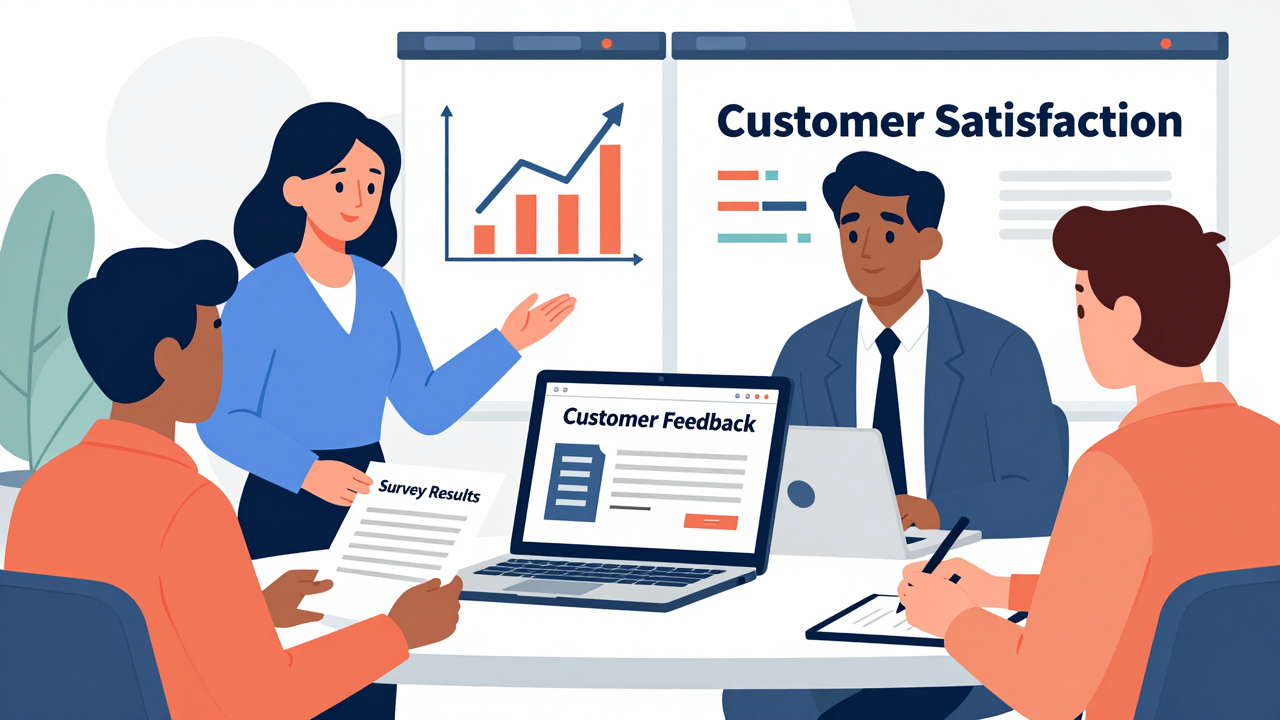
Customer satisfaction surveys can greatly improve your service quality and enhance customer loyalty.
By regularly gathering feedback, you can pinpoint areas needing improvement and make necessary adjustments.
This proactive approach not only shows customers you value their opinions but also helps you build a loyal customer base that keeps coming back.
Improved Service Quality
To enhance service quality, leveraging customer satisfaction surveys is essential. These surveys provide actionable insights that help you pinpoint areas needing improvement, leading to better customer experiences.
By regularly collecting and acting on customer feedback, you could see significant retention increases, boosting profits substantially.
- Identify specific pain points customers face.
- Track trends in preferences to adapt services accordingly.
- Validate your decisions with concrete data from surveys.
- Transform subjective experiences into measurable metrics.
- Continuously improve service quality over time.
Enhanced Customer Loyalty
Surveys not only improve service quality but also play a vital role in building enhanced customer loyalty. By conducting customer satisfaction surveys, you can boost retention by 5%, which translates to profits increasing by 25% to 95%.
Regular feedback helps you pinpoint areas needing improvement, addressing concerns that might lead to churn. When you act on insights from these surveys, you show commitment to your customers, fostering trust and encouraging repeat business.
Companies that prioritize customer satisfaction often see higher Net Promoter Scores, indicating stronger loyalty and greater likelihood of referrals. Use surveys to track customer sentiment over time, creating tailored experiences that resonate with them, solidifying lasting loyalty.
General Satisfaction Survey Questions You Should Use
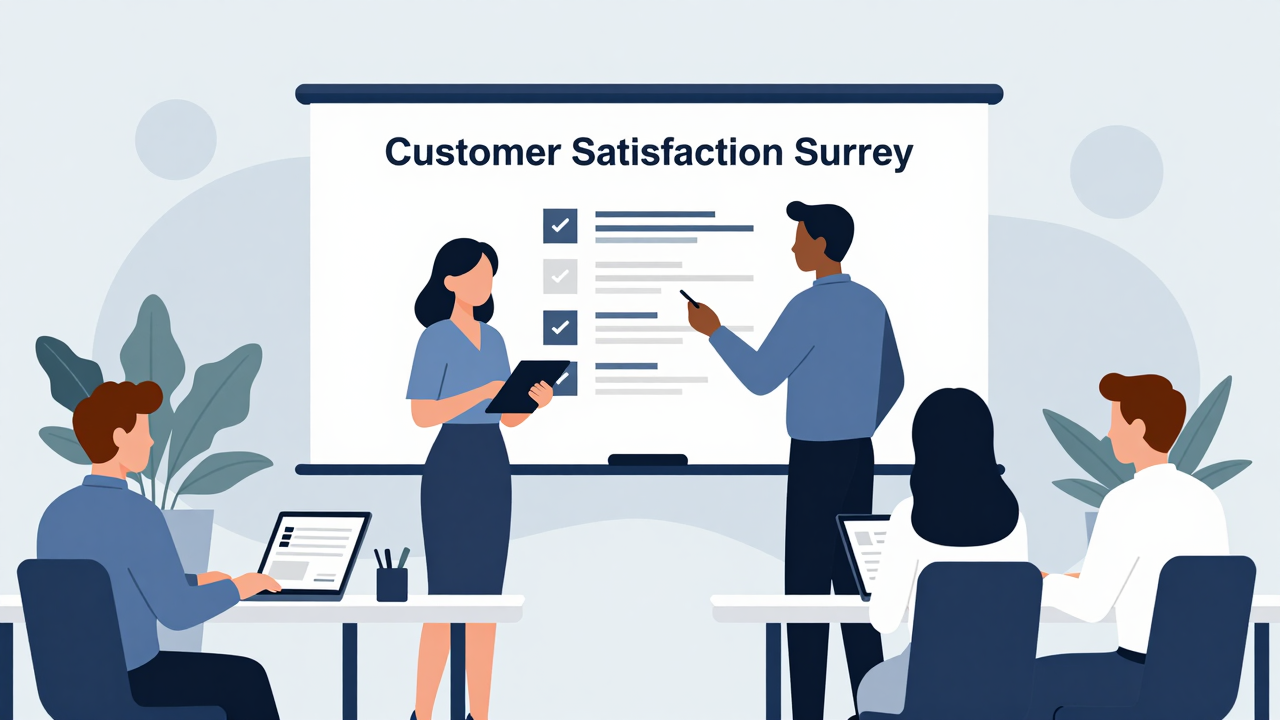
When creating general satisfaction survey questions, focus on key metrics that matter most to your customers.
Start by asking them to rate their overall satisfaction on a scale of 1 to 10, then follow up with open-ended questions like, “What could be improved about your experience?”
This approach not only gives you measurable data but also uncovers actionable insights to enhance your services.
Key Metrics To Track
Tracking key metrics in customer satisfaction surveys is essential for understanding how your audience feels about your products and services.
To effectively gauge customer sentiment, focus on the following key areas:
- Overall Satisfaction Score (CSAT)
- Net Promoter Score (NPS) for loyalty measurement
- Customer Effort Score (CES) to assess ease of use
- Trends over time to identify shifts in sentiment
- Benchmarks against industry standards for context
Incorporating these metrics into your customer survey examples allows you to gather actionable customer feedback.
Effective Question Formats
How can you create effective general satisfaction survey questions that yield valuable insights? Start by mixing quantitative and qualitative formats to capture extensive customer feedback. Use a consistent rating scale, like 1 to 10, for reliable trend analysis. Follow-up questions asking for specific comments on satisfaction ratings deepen your understanding of customer service feedback. Don’t forget to include a question about recommending your product or service, as it’s a key indicator of customer loyalty. Tailor your questions to specific touchpoints in the customer journey for more relevant insights.
| Question Type | Example Question | Purpose |
|---|---|---|
| Rating Scale | How satisfied are you from 1-10? | Measure overall satisfaction |
| Open-Ended | What can we improve? | Gather specific feedback |
| Recommendation | How likely are you to recommend us? | Assess customer loyalty |
| Touchpoint Specific | How was your last interaction? | Evaluate specific experiences |
Key Strategies for Crafting Effective Customer Surveys

Crafting effective customer surveys starts with defining clear objectives, so you can guarantee your questions target the specific insights you need for improvement.
To enhance your customer feedback strategy, consider these key strategies:
- Use diverse question types: Combine rating scales with open-ended questions for rich customer support feedback.
- Keep it short and engaging: Aim for a survey completion time under 5 minutes to boost response rates.
- Regularly update your surveys: Reflect changing customer needs and market conditions to maintain relevance.
- Offer incentives: Discounts or gift cards can encourage participation and improve response quality.
- Focus on voice of the customer questions: Ask targeted questions to gather valuable insights.
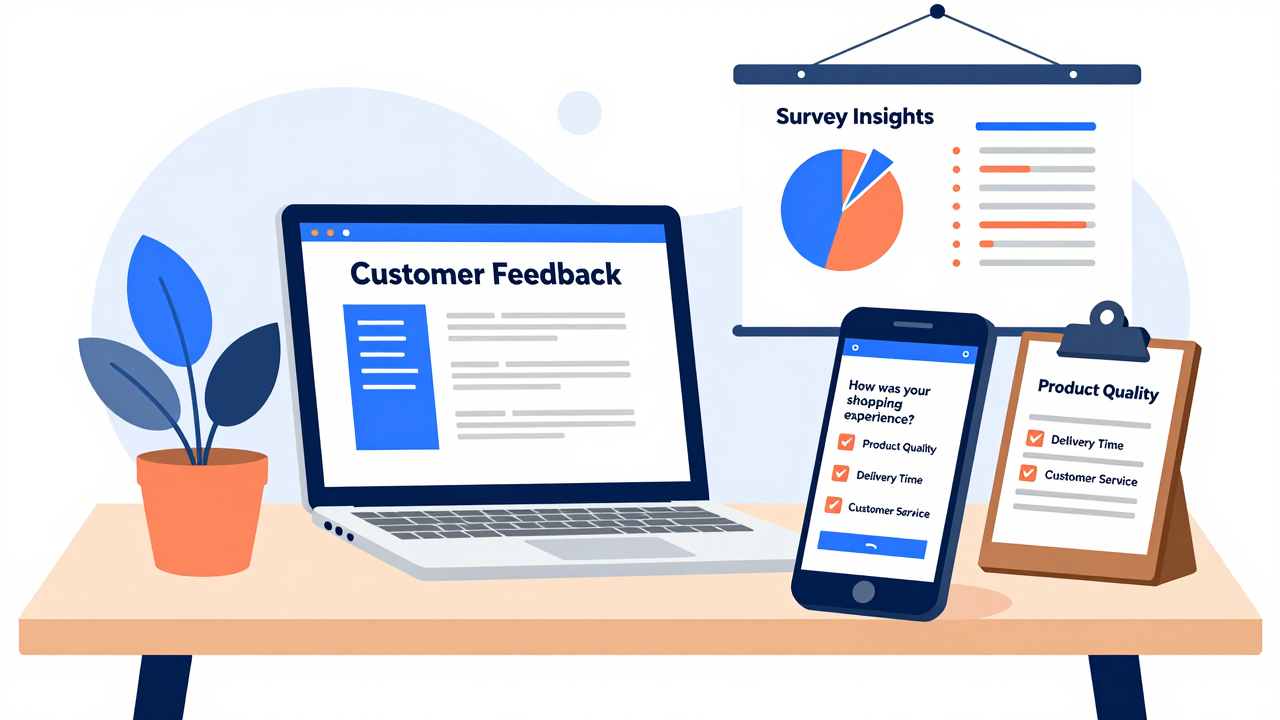
What makes a shopping experience truly satisfying for customers? Start by asking essential e-commerce survey questions that target specific areas.
First, gather customer feedback on website navigation. Ask, “How easy was it to find what you needed?” This helps improve conversion rates.
Next, focus on the checkout process. Inquire, “Did you face any issues during payment?” Identifying friction points can reduce cart abandonment.
Don’t forget to assess delivery and packaging. A question like, “How satisfied were you with the delivery speed?” can reveal vital insights, as 78% of consumers prioritize this.
Finally, include customer service feedback. Ask, “Was your issue resolved quickly?” Since 83% of customers expect immediate assistance, understanding their experience can enhance service quality.
How to Measure Patient Satisfaction in Healthcare?

To measure patient satisfaction effectively, start by identifying key metrics like cleanliness, communication, and staff interactions.
Use structured survey techniques, such as the HCAHPS survey, to gather both quantitative scores and qualitative feedback.
Address patient concerns directly by analyzing their responses regularly, allowing you to pinpoint areas for improvement and enhance the overall patient experience.
Key Metrics for Assessment
Measuring patient satisfaction in healthcare is essential for ensuring high-quality care and improving overall patient experiences.
To effectively assess this, focus on key metrics that provide valuable customer feedback. Here are some important metrics to evaluate:
- Patient Satisfaction Score (PSS): Evaluates communication, treatment effectiveness, and facility quality.
- Net Promoter Score (NPS): Gauges the likelihood of patients recommending your services.
- CAHPS Surveys: Standardized tools for collecting feedback across various healthcare settings.
- Facility Cleanliness Ratings: An important factor in patient experience.
- Appointment Scheduling Satisfaction: Measures how easy it’s for patients to make appointments.
Effective Survey Techniques
When you want to gauge patient satisfaction in healthcare, effective survey techniques can make all the difference.
Start by crafting targeted questions that assess care quality, communication, and the appointment scheduling process. For example, ask, “How satisfied were you with the clarity of communication from your healthcare provider?”
Using a Likert scale, from 1 to 5, helps you collect quantifiable customer feedback that can be benchmarked over time.
Don’t forget to include open-ended questions like, “What could have improved your experience?” This can provide valuable insights into specific concerns.
Regularly conducting these surveys enables you to identify trends, adapt services, and ultimately enhance patient care and loyalty.
Addressing Patient Concerns Directly
How can you effectively address patient concerns directly? Start by gathering customer feedback through targeted surveys. Focus on key areas like care quality and communication to get specific insights.
Here are some steps to enhance patient satisfaction:
- Use standardized questions for consistency and clarity.
- Measure satisfaction with specific aspects, like appointment scheduling.
- Analyze trends over time to spot areas needing improvement.
- Share results transparently to build trust with your patients.
- Act on feedback to show patients that their opinions matter.
Food and Beverage Survey Questions for Memorable Dining Experiences

What makes a dining experience truly memorable? To enhance your restaurant’s appeal, you need effective food and beverage survey questions.
Start by evaluating food quality—ask customers to rate their favorite dishes. This gives you valuable customer feedback on what to keep or improve.
Next, inquire about the service speed, as faster service often leads to happier diners. Don’t forget to assess the ambiance; ask how it impacted their experience. A pleasant atmosphere can boost customer retention.
Also, gauge the attentiveness of your waitstaff, since high-quality service correlates with repeat visits.
Finally, send your surveys shortly after the dining experience to capture immediate insights. This enables you to address concerns quickly and enhance future interactions.
Event Feedback: How to Gather Valuable Insights From Attendees?

Ever wondered how to make your events better with valuable feedback? Gathering customer feedback from attendees is essential for improving future events. Here’s how you can effectively collect insights:
- Use Surveys: Send out surveys right after the event to capture fresh thoughts.
- Ask Specific Questions: Include questions like, “How would you rate the overall event experience?” for quantifiable data.
- Combine Formats: Mix Likert scale questions with open-ended options to get both ratings and detailed suggestions.
- Analyze Trends: Review feedback regularly to identify patterns and areas needing improvement.
- Focus on Key Aspects: Assess areas like content quality, logistics, and overall satisfaction to pinpoint strengths and weaknesses.
Customer Support Satisfaction Questions for Enhanced Service

To enhance your customer support service, focusing on satisfaction questions is essential. Start by evaluating key areas like communication quality, response time, agent helpfulness, and issue resolution effectiveness. Use customer support satisfaction questions in your surveys to gauge these factors. For instance, ask customers to rate their satisfaction on a scale from one to five, which quantifies the effectiveness of your service.
An important metric to include is the Customer Effort Score (CES), measuring how easy it was for customers to resolve their issues. This directly impacts loyalty.
Follow-up questions can provide deeper insights; consider asking for specific feedback on agent interactions. Regularly analyze this satisfaction data to identify trends and common pain points. By doing so, you can make informed adjustments to your support strategies, ensuring you continually meet and exceed customer expectations.
Best Practices for Designing Effective Customer Surveys
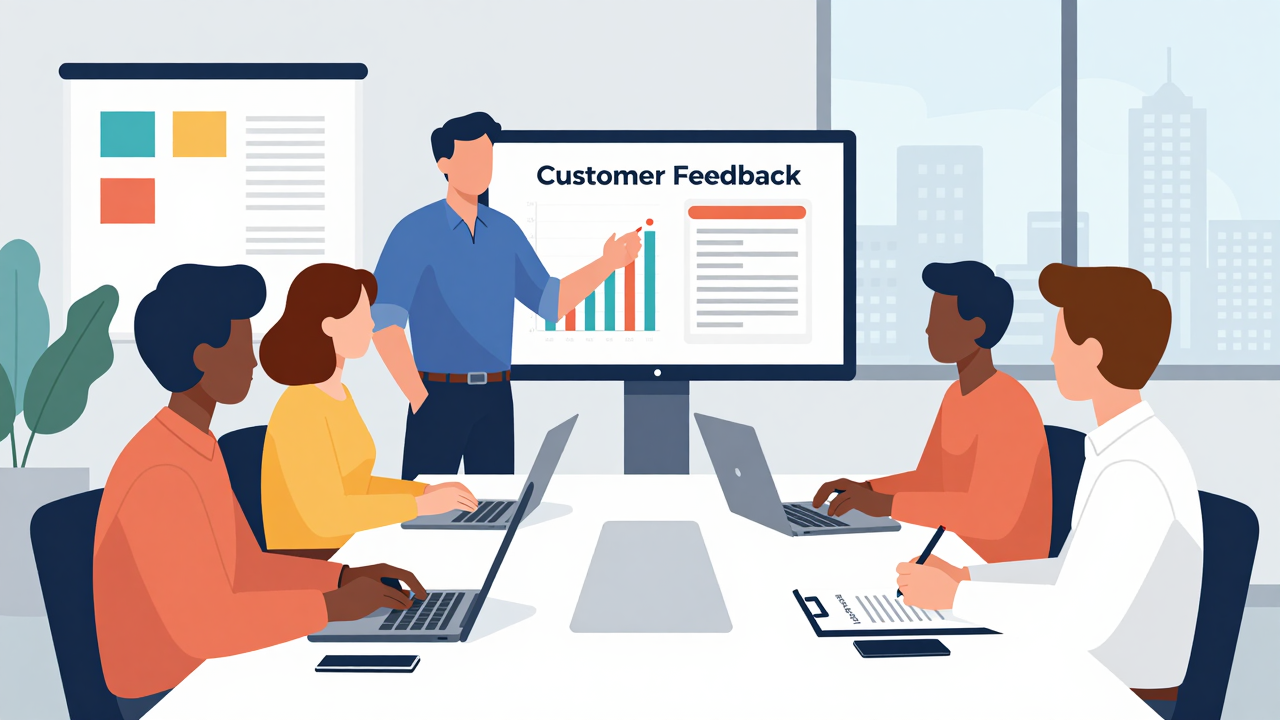
When designing effective customer surveys, it’s crucial to define clear objectives that guide your questions. This guarantees you gather relevant customer feedback that drives actionable insights.
Here are some best practices to keep in mind:
- Utilize a mix of question types, like Likert scales and open-ended queries, for a well-rounded view.
- Keep your surveys concise, ideally under 10 questions, to improve completion rates and reduce fatigue.
- Regularly update your questions to reflect changing customer needs and market conditions.
- Incorporate a thank-you message or incentives, as these can greatly boost response rates and foster goodwill.
- Test your survey before launching to catch any confusing elements or technical issues.
Frequently Asked Questions
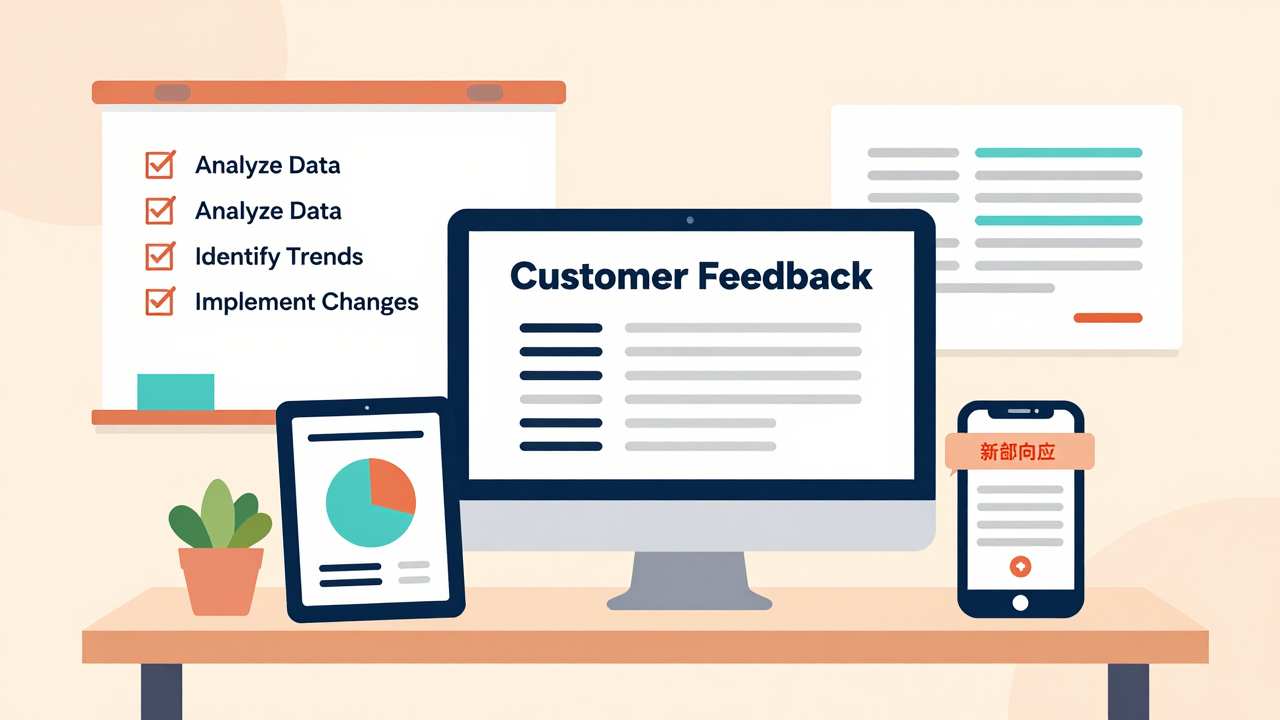
What Are Good Survey Questions for Feedback?
Good survey questions for feedback include clear, specific inquiries like, “How satisfied are you with our service?”
Use a Likert scale for responses. Follow up with open-ended questions, such as, “What can we improve?”
Mix in multiple-choice questions to gauge preferences. Personalize questions based on customer history, and include metrics like CSAT or NPS to track satisfaction.
This approach helps you gather actionable insights for enhancing your services effectively.
What Are Examples of Customer Feedback Questions?
You can ask customers various feedback questions to gather useful insights.
Use a satisfaction rating scale from 1 to 10 to gauge overall happiness.
Include open-ended questions like, “What could we improve?” for detailed feedback.
Consider multiple-choice questions to simplify responses, such as asking about preferred features.
Finally, employ Likert scale questions to assess agreement with statements about your service.
These approaches will help you pinpoint areas needing improvement effectively.
How to Make a Customer Feedback Survey?
To make a customer feedback survey, start by defining clear objectives, like measuring satisfaction or gathering product insights.
Next, craft engaging questions, mixing open-ended and multiple-choice formats. Keep it concise with 5-10 focused questions to respect participants’ time.
Pilot the survey with a small group to catch any issues.
Finally, analyze the responses for actionable insights and communicate how you’ll use the feedback to improve experiences.
What Is an Example of a Customer Satisfaction Survey?
An example of a customer satisfaction survey could start with a question like, “How would you rate your experience with us today?” on a scale from 1 to 10.
Then, follow up with, “What could we improve?”
Include a mix of Likert scale questions for agreement and open-ended prompts for detailed feedback.
Send this survey right after key interactions, like a purchase or support call, to get the most relevant insights.
Conclusion
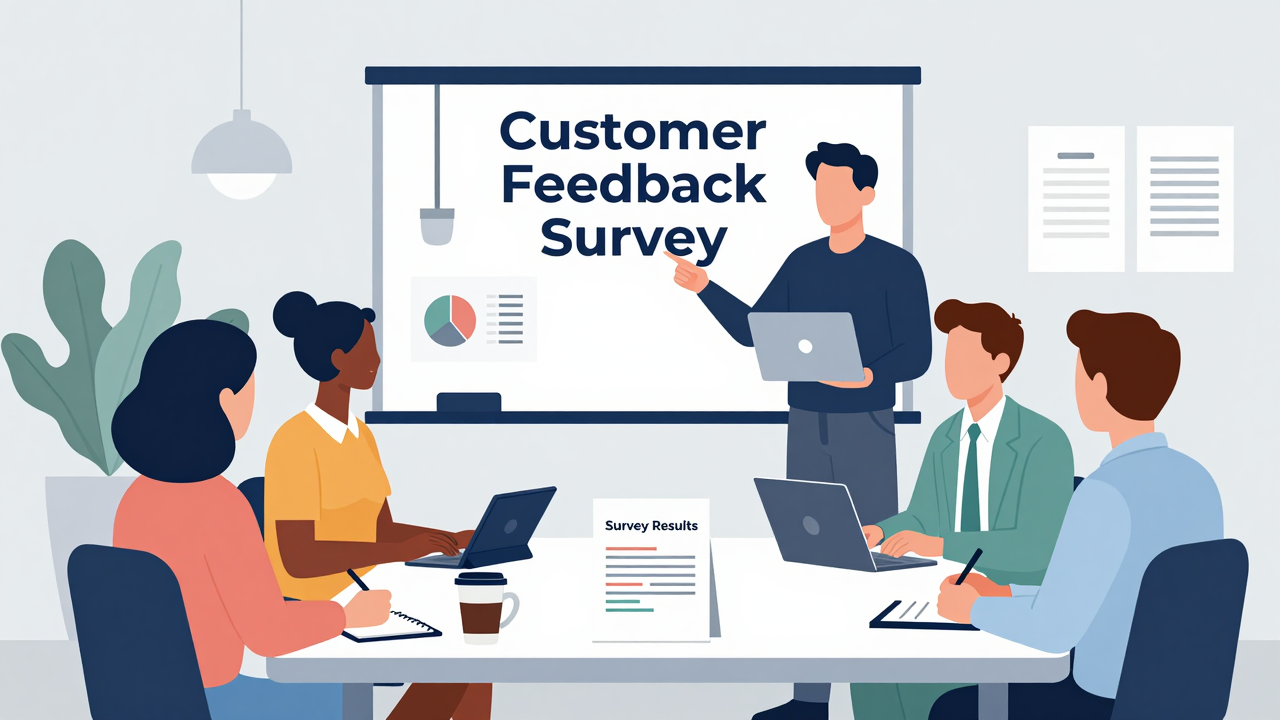
Incorporating effective customer surveys can greatly enhance your feedback strategy. Start by identifying key areas to evaluate, like satisfaction and service quality. Use straightforward questions that encourage honest responses. Regularly analyze the data to spot trends and areas for improvement. Implement changes based on feedback and communicate these to your customers. By actively engaging with their opinions, you’ll foster loyalty and drive your business growth. Take these actionable steps to create a better experience for everyone.
Image via Google Gemini and Small Business Trends