

This post was originally published on this site.
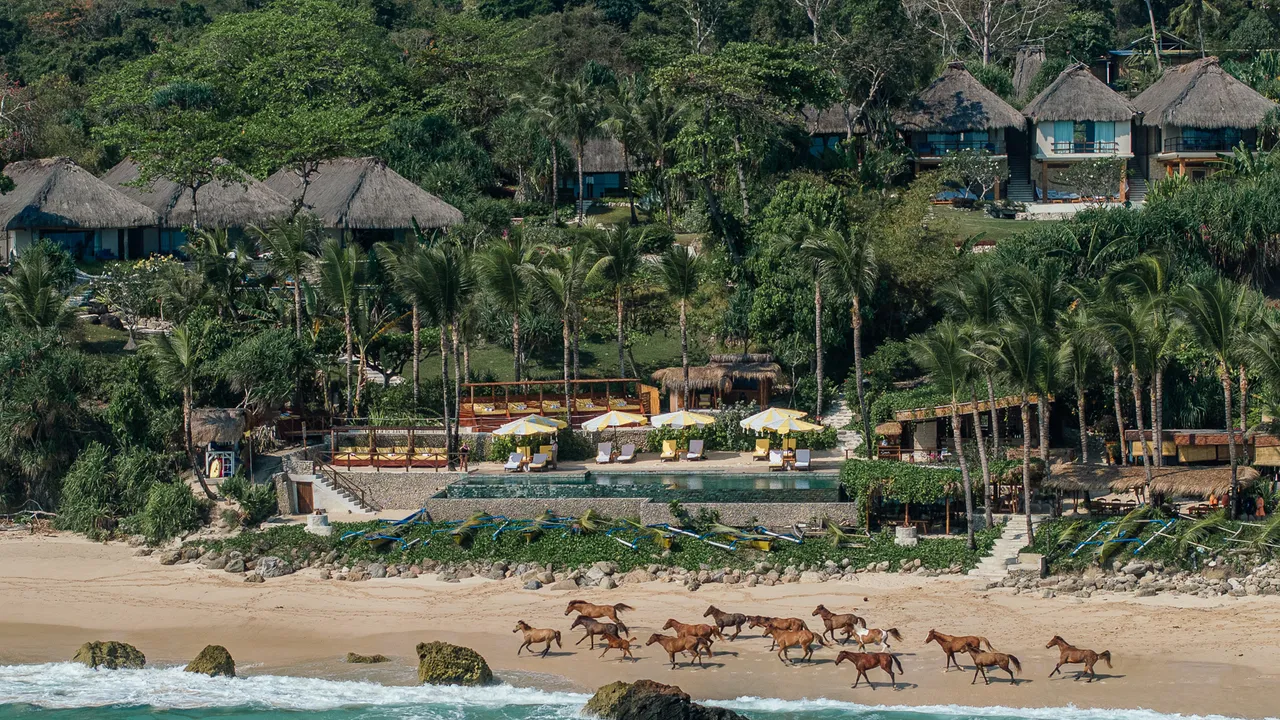
Certainly, my emotional release felt far less transactional than a response to five-star pampering. I’ve blubbed on several occasions this week, sobbing through a remarkably vulnerable full moon gathering with the retreat guests on the beach, and again in another equine session with Carol. Hunter, a large bay native Sandalwood horse, initially shies away from my touch, and I’m nervous, unsure about my directive to send him away by spinning his lead rope. But just 30 minutes later, he is following me around, untethered entirely, stopping, starting, and turning left and right under my hands-free direction. Carol says if I can control a horse, I can control my own life.
I’m surprised at how comfortable I’ve felt sharing so much of myself with strangers in such a short time, but there’s evidence to suggest my experience isn’t uncommon. Equine therapy has gained increasing attention in recent years, with practitioners believing horses’ profound sensitivity to body language and emotion allows them to respond to feelings that humans often suppress. Horses don’t care about your job title, your carefully rehearsed stories, or the version of yourself you’d prefer the world to see. As prey animals, they’ve evolved to read the smallest changes in breathing, posture, and tension in order to survive. Whether or not you believe they can detect something deeper, they have an uncanny way of inviting you to become present.
Candice has moved up my body to my crown chakra. She is tapping my third eye, my neck, my head. Or at least I think she is; she tells me afterwards clients often tell her how good that feels, only for her to say she didn’t touch them at all. Nicky gently rests his nose on my hair, and it’s over. “We’ve got a lot of energy out of you today,” says Candice, “we’ve dug up a lot of old feelings.”
She points at what the horses have done to the ring. The sand, once pristine, is a complete mess. Hannah and Nicky have wheeled around and around, digging and digging into the ground. Great craters now exist where there were none before. It’s a striking physical manifestation of all my old feelings, exhumed from the depths and released into the Indonesian daylight. I take my crumpled papers with all my silly old feelings and set fire to them in a bowl. Candice gives me a hug.
At sunset, boys who live in a nearby village are galloping bareback down the beach on their Sumba ponies. The sky is painted pastel, and the waves rear up 20-feet-high before thundering onto the shore, over and over. A farmer starts to usher his buffalo herd into the shallows.
I, too, feel cleansed. Others may dismiss this place as just another high-end boutique for wealthy wellness-seekers, but I’ve been to plenty of beautiful hotels and never wept over a marble bathtub, or even a tropical sunset. In a place where horses serve as both companions to the living and guides for the dead, this retreat feels as though it has mirrored that same ancient respect. Carol has dedicated years to rescuing those that have been neglected, while Candice trusts them to lead people towards parts of themselves they struggle to reach alone. I have been touched by the genuine kindness, care, and attention I’ve received from them both.