
This post was originally published on this site.
The second day of my first trip to Guadalajara, a decade ago, began, like so many mornings in Mexico’s second city do: with blazing sunshine and a blazing hangover. I’d spent the previous evening sipping agave distillates at Mezonte, a miniature plywood-clad tasting room that pours some of Mexico’s most exciting spirits, and dancing clumsily at what may be the world’s most perfectly named bar: Pare de Sufrir, or Stop Suffering. My inevitable headache required an antidote. And so, in the fine expiatory fashion of this famously Catholic, famously hedonistic metropolis of nearly six million, I chose sublimity.
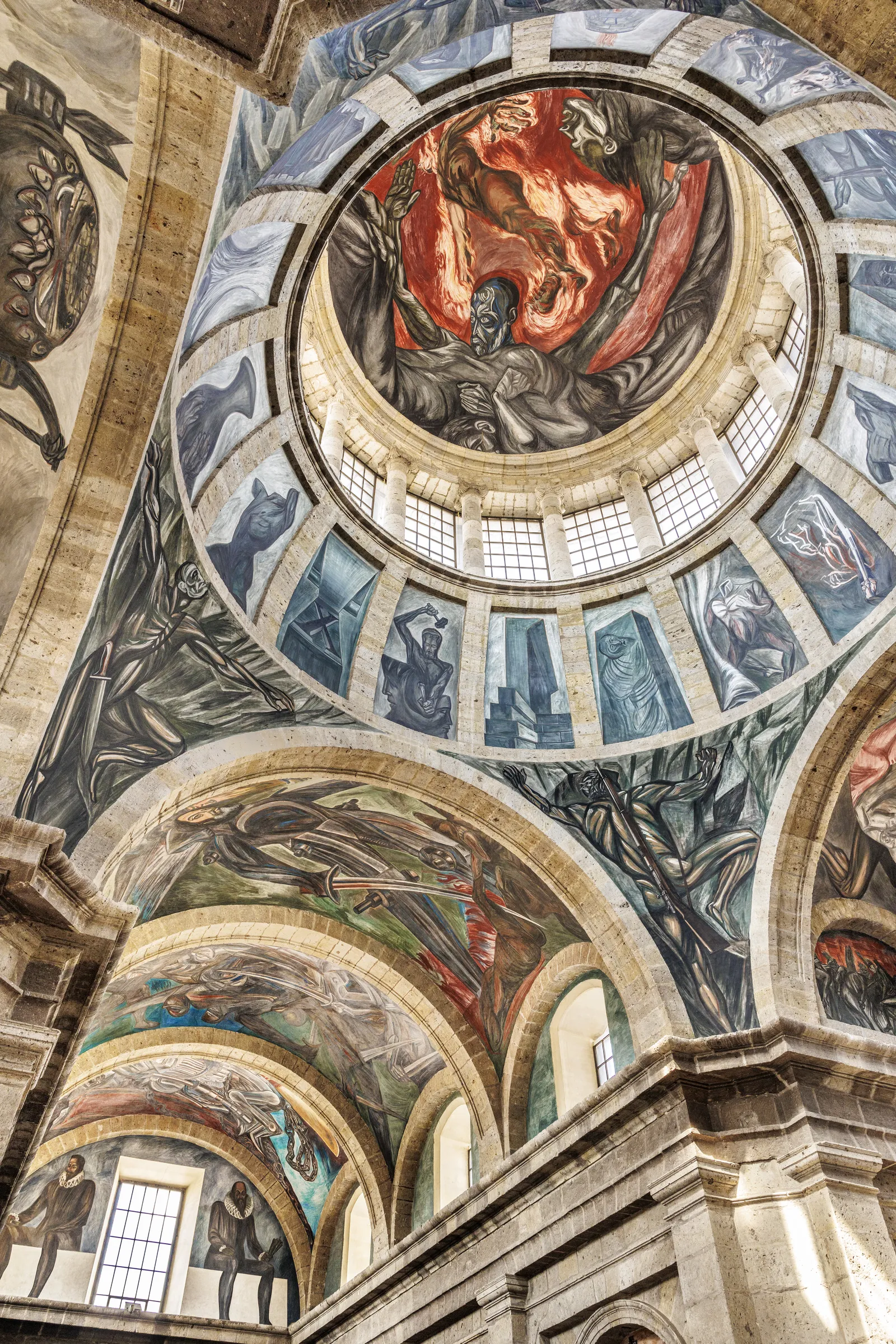
I remember heading east that morning from the café-studded streets of the Colonia Americana neighborhood, the epicenter of Guadalajara’s buzzy restaurant and art scene, through the historic center, to the Hospicio Cabañas, an early-19th-century orphanage turned museum. From 1937 to 1939, the muralist José Clemente Orozco filled the Hospicio’s central chapel with 57 frescoes that trace Mexico’s history from colonial savagery through the brutalizing hope of industrialization. A Promethean prophet, the celebrated Man of Fire, strides across the central dome, ringed with allegorical representations of arts, crafts, and sciences: learning and labor as equal paths to enlightenment. I left reeling, almost in tears. I’d never encountered a more heartrending room. I still haven’t.
Since then I’ve returned to the city, and to Orozco’s murals, at least a dozen times, and I always leave reluctantly. I’ve lived in Mexico City for 10 years, and while I adore my adopted home it’s hard not to be seduced by Guadalajara’s gorgeous weather and gorgeous people, its offhand elegance and easy pace, its languorous lunches and, perhaps above all, its commitment to the disciplines represented in Orozco’s dome, which taken together are known as oficios. In actual usage, oficios, which translates to “vocations,” encompasses all the artisanal practices (ceramics and glassblowing, carpentry and bricklaying, painting and cooking) that make the city one of Latin America’s most thrilling destinations.
“If you want to find a particular oficio in Guadalajara, you’ll find it,” said Oliver Pendragón, a young architect who I met up with on a bright Sunday in January at the entrance to the Mercado San Juan de Dios, a Brutalist public market a few steps from the Hospicio Cabañas. Immense and intimate, rigorous and rooted, with texture and drama to spare, San Juan de Dios has for years been my favorite building in Mexico, and I wanted to visit with someone who knew it well. Pendragón spent three years overseeing the restoration of a childcare center on the market’s roof, part of the ambitious original 1957 design. Inside he led me past stalls packed with food, clothes, electronics, and leather goods. Dark, narrow aisles opened onto leafy patios and soaring atria crowned with voluptuous canopies of cast concrete.