

A decade ago, the idea that infrastructure could be an exciting, growth-focused investment was unlikely. The sector was seen as a source of steady income that would hopefully keep pace with inflation, but probably not offer much more. Talk to an infrastructure specialist today and it’s clear how much has changed in a few years, especially when it comes to energy and power.
In the past two weeks, I’ve spoken to Jean-Hugues de Lamaze of Ecofin Global Utilities and Infrastructure (LSE: EGL) and Daniel Chu of ClearBridge Global Infrastructure Income Fund. Both argue that the fundamentals of the sector have shifted, yet markets are still underestimating the capital that will be required and what it means for investors.
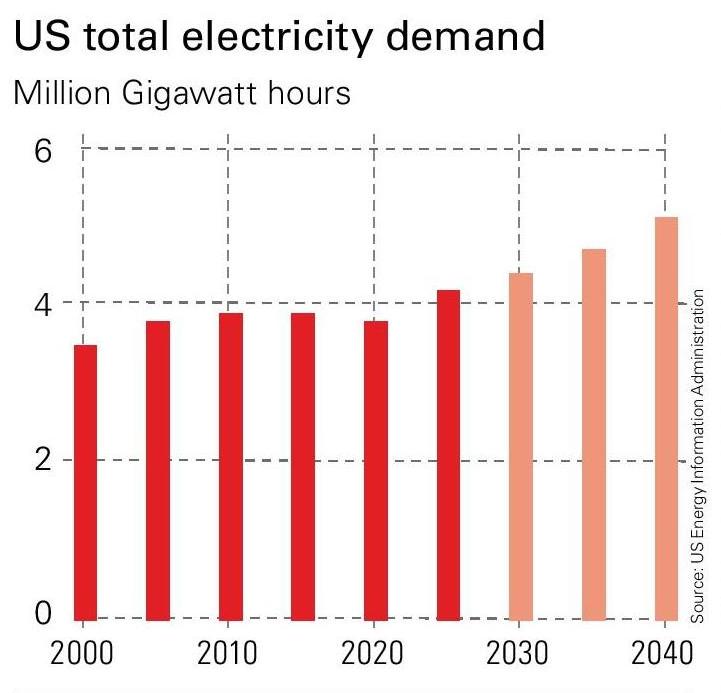
To give a simplified summary, the bull case begins with the need to renew and replace ageing infrastructure, much of which was built over 50 years ago. This applies across many infrastructure subsectors. Second, there’s the electrification of the economy as a result of the energy transition, which requires investment both in new generation and in grids and batteries to support more use of renewables in the generation mix. On top of that trend, we have the growth of new, power-hungry users such as AI and data centres adding fresh demand (see chart). Finally, there’s a growing focus on boosting security of supply and resilience in the face of both geopolitical threats and climate change.
Sign up to Money Morning
Don’t miss the latest investment and personal finances news, market analysis, plus money-saving tips with our free twice-daily newsletter
Don’t miss the latest investment and personal finances news, market analysis, plus money-saving tips with our free twice-daily newsletter
(Image credit: Unknown)
Infrastructure valuations at a discount
The investments needed will be large. As one example, de Lamaze points to Germany’s infrastructure plans, which could require more than €700 billion between 2026 and 2035. Governments are not going to want to fund all of that given the state of public finances. This will create huge opportunities for private capital, often in partnership with the public sector.
A further positive for investors, he says, is that many utilities’ business models have also changed for the better, especially in power. A greater share of revenue comes from longer-term contracts and less from short-term sales. This provides greater certainty for earnings, which is reassuring if much of the sector is likely to invest in expanding capacity in the years ahead.
Despite these tailwinds, valuations for listed infrastructure funds remain at a significant discount to where similar assets are valued in private deals, say both managers. We shouldn’t bet on this gap being closed, but listed stocks look attractive by historical standards even before allowing for a structural shift in growth rates. Investors want to see more proof of successful execution and earnings growth, says Chu. That could come by 2028 – and with it, at least something of a rerating for the sector.
You’ll be able to hear my discussion with Jean-Hugues de Lamaze on the MoneyWeek Talks podcast next week.
This article was first published in MoneyWeek’s magazine. Enjoy exclusive early access to news, opinion and analysis from our team of financial experts with a MoneyWeek subscription.