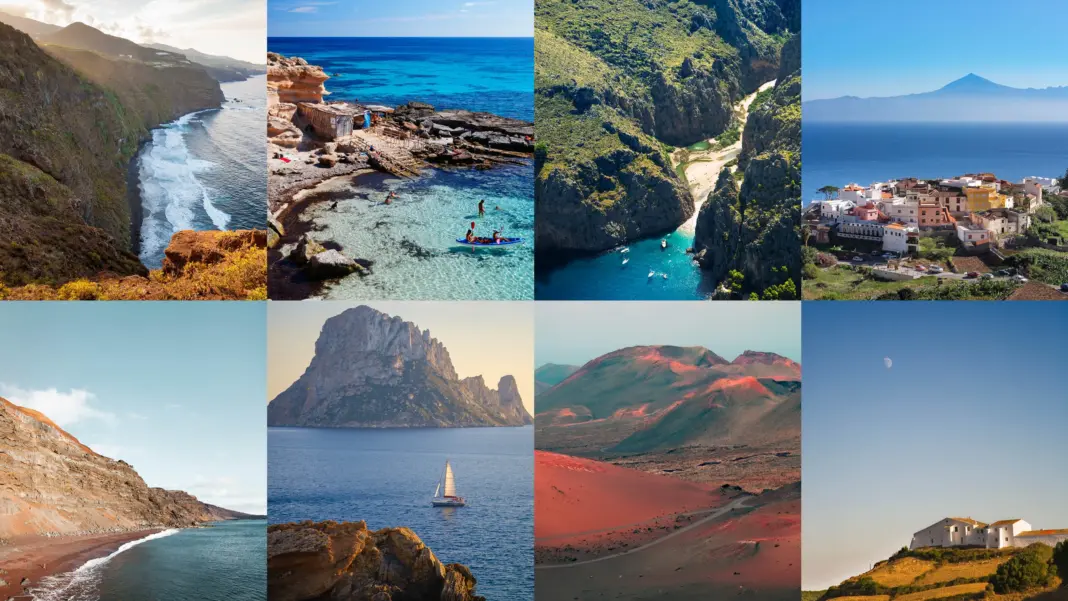

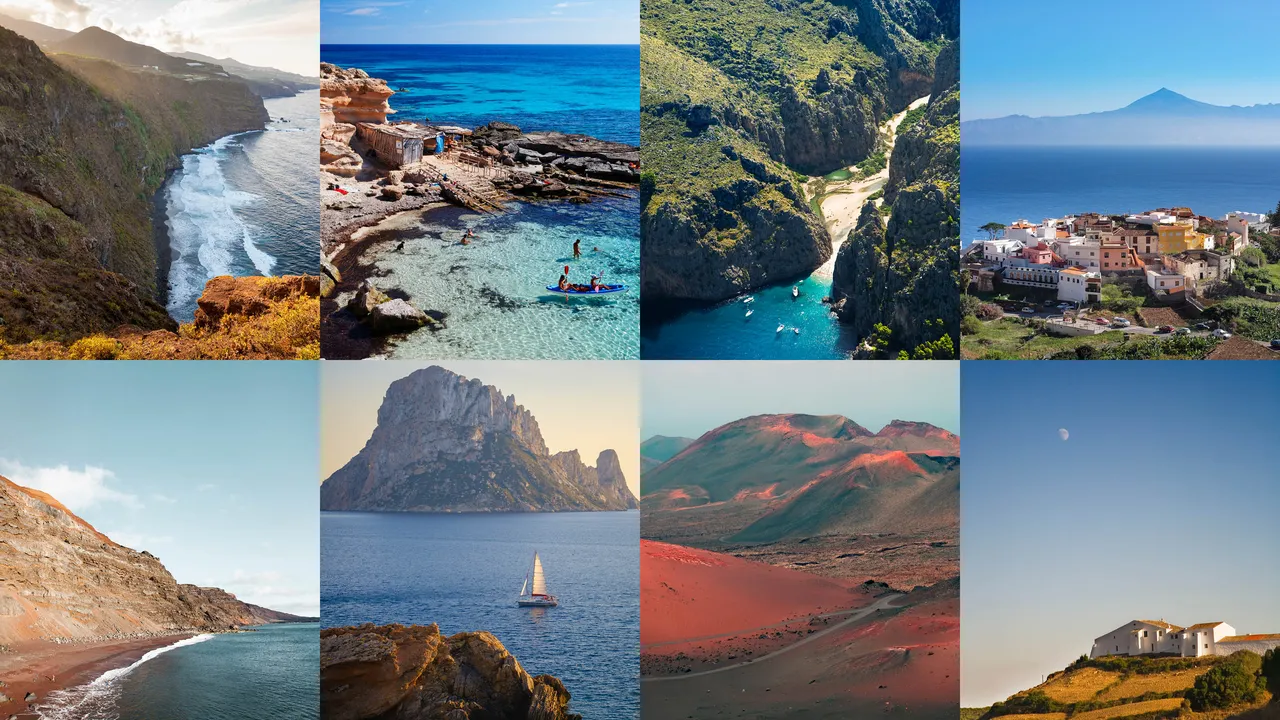
Head of editorial content for Condé Nast Traveler Spain David Moralejo’s favorite Spanish island for: biological treasures
Menorca has the largest marine Biosphere Reserve in the Mediterranean, protected by UNESCO and extending more than 12 miles offshore. Its Posidonia oceanica seagrass is a biological treasure, the same that makes the sea appear turquoise. The calm of the sea is carried inland because it is unbeatable: Menorca is famous for its tranquillity and peace, which even the voracity of overtourism cannot break.
But where can you get lost to find calm? In Cala Algaiarens, located in the north of the island and very close to the beautiful city of Ciutadella. Also on the Camí de Cavalls, to the north, is Cala Morell, with its imposing rocky landscape and the only Talayotic necropolis in the Balearic Islands, with up to 14 caves carved into the rock.
In the S’Albufera Natural Park, a 70-hectare nature reserve, you will find some of the most impressive and hidden beaches on the island, such as Cala Morella Nou, very close to Cape Favàritx.
Mahón, the capital, is worth a stroll through its English-style streets, art galleries, and lively bars. And if you want to keep walking, you can even climb Monte Toro, the island’s highest point. From here, you can almost embrace the beauty of Menorca and—weather permitting—even Mallorca.
Where to stay. We wouldn’t know which one to choose. Villa le Blanc, a Gran Meliá Hotel, to experience the warmth of a small but grand resort; Torralbenc, the perfect example of Menorcan lifestyle; Son Ermità & Binidufà because Vestige Collection has reinvented luxury on the island; Amagatay and Morvedra, with the freshness of the Annua Hotels brand; Cristine Bedfor, a charming house in the center of Mahón.