



When it comes to terminating an employee, having a clear checklist can make the process smoother and more compliant. Start by reviewing the termination decision with key stakeholders to guarantee it’s justified. Then, prepare for a private meeting where you’ll communicate the decision and discuss final pay. Don’t forget to document the reasons for termination thoroughly. There are additional critical steps to take into account, including handling company property and addressing potential unemployment claims.
Key Takeaways
- Review Termination Decision: Involve stakeholders, document performance issues, and ensure compliance with company policies to avoid bias.
- Conduct Termination Meeting: Clearly communicate reasons for termination in a private setting, allowing employee feedback while affirming the decision is final.
- Document Reasons for Termination: Keep detailed records of specific termination reasons and ensure they align with legal requirements and company policies.
- Final Pay and Benefits Compliance: Understand and adhere to federal and state laws regarding final paychecks, unused vacation payouts, and COBRA notifications.
- Ensure Return of Company Property: Inventory and document all company assets returned by the employee, and revoke access to systems immediately after.
Review the Termination Decision Thoroughly

When you’re faced with the decision to terminate an employee, it’s essential to review the situation thoroughly. Start by involving multiple stakeholders to guarantee you get a balanced perspective.
Examine all relevant facts and circumstances, focusing strictly on job-related performance or conduct. Document your findings, such as performance reviews or records of misconduct, to support your decision.
Remember, you must avoid any bias, especially concerning protected activities like discrimination complaints or whistleblowing.
As part of your terminating an employee in California checklist, confirm that your decision aligns with company policies and is consistent with how similar situations have been handled in the past.
This step not only protects the organization legally but also helps maintain fairness. By methodically reviewing the termination decision, you can confirm that it’s justified and well-supported, minimizing potential fallout and promoting a fair work environment.
How to Conduct a Termination Meeting?

Conducting a termination meeting requires careful planning and execution. First, schedule the meeting in a private space, guaranteeing a witness is present to support the process.
Clearly communicate the termination decision, providing concise reasons while respecting the employee’s feelings. Allow the employee to respond, but firmly state that the decision is final, avoiding any misleading statements that could create confusion.
Next, discuss important details like the final paycheck, any unused vacation payouts, and benefits such as COBRA. Make certain the employee understands their options moving forward.
Document the meeting thoroughly, including the employee’s reactions and any statements made, to maintain a clear record for your employee termination checklist.
This documentation will be valuable for future reference and compliance. By following these steps, you can secure a respectful and legally sound termination process.
Document Reasons for Employee Termination

Documenting the reasons for employee termination is vital, not only to justify your decision but also to protect your organization from potential legal challenges.
Begin by clearly recording the specific reasons for the termination, whether they stem from performance issues, misconduct, or economic conditions. This clarity is important, as it influences the employee’s eligibility for unemployment benefits.
Utilize a California termination checklist to guarantee compliance with state laws. Maintain supporting documentation, such as performance reviews and any prior disciplinary records, in the employee’s personnel file. This not only substantiates your decision but also demonstrates adherence to established procedures, reducing the risk of wrongful termination claims.
Regularly review and update your documentation practices to align with federal and state laws regarding record retention.
Final Pay and Benefits Compliance

Guaranteeing compliance with final pay and benefits requirements is essential for a smooth employee termination process. First, know your federal and state laws regarding final paycheck timelines; typically, you’ll need to pay the employee by the next scheduled payday if they’re involuntarily terminated.
Check state regulations to see if unused vacation time must be paid out, as this varies by location.
Next, comply with the Consolidated Omnibus Budget Reconciliation Act (COBRA) by informing the employee about their rights to continue health insurance coverage after termination.
Provide clear documentation outlining their final pay, including any severance packages, accrued vacation pay, and benefits rights. This transparency fosters trust and guarantees final pay and benefits compliance.
Finally, confirm the method and location for delivering the last paycheck, as specific state laws govern these details. Following these steps will help you navigate the complexities of final pay and benefits effectively.
Ensure Return of Company Property

When an employee’s termination is finalized, you need to guarantee all company property is returned promptly.
Start by inventorying assets like laptops, keys, and access cards, then schedule a time for their return during the termination meeting.
Finally, verify that any sensitive data is deleted from personal devices to protect your company’s information.
Inventory Company Assets
Before the employee’s final departure, make it a priority to gather all company property. Use a termination checklist template to guarantee you don’t miss anything.
Start by creating a detailed inventory of items like laptops, mobile devices, keys, and identification badges. Document each item as it’s returned, verifying not only the physical assets but also any software licenses.
[embedded content]
Confirm the employee no longer has access to proprietary data or sensitive information. Schedule a final meeting to review the returned assets, allowing space for the employee to ask questions or raise concerns.
Finally, keep a record of all returned items in the employee’s personnel file for compliance and to avoid future disputes regarding company property.
Schedule Property Return
To guarantee a smooth property return process, start by creating a detailed list of all company property assigned to the employee, including laptops, phones, and access cards.
Next, schedule a specific date and time for the return, ideally on the employee’s last working day. Use a property return form to document each item returned, and make sure to get the employee’s signature as acknowledgment.
Inspect the returned items for any damage and note their condition.
Finally, revoke the employee’s access to company systems and facilities immediately after the property return to protect sensitive information.
Verify Data Deletion
After you’ve confirmed the return of all company property, the next step involves verifying data deletion. This is essential in your employee termination process checklist to guarantee sensitive information is protected.
Here are key actions to take:
- Disable the former employee’s access to company systems immediately.
- Conduct a thorough inventory check of returned devices and document any missing items.
- Delete all personal data stored on company devices according to your data protection policies.
- Verify the deletion process is compliant with relevant regulations.
- Maintain records of both the data deletion and returned items for future reference.
Address Unemployment Claims Post-Termination

Addressing unemployment claims post-termination is vital for guaranteeing a smooth shift for both you and the departing employee. Start by reviewing the unemployment exit checklist, which outlines the eligibility criteria and necessary documentation for claims.
Since employees terminated for reasons other than gross misconduct typically qualify for benefits, it’s important to understand your state’s specific rules.
When a claim is filed, respond promptly, providing accurate information about the employee’s separation. This includes a written notice of separation, as it can greatly affect their claim outcome.
Familiarize yourself with the minimum work hours or earnings required for eligibility in your state, and keep thorough records of the employee’s work history.
Retain Records in Compliance With Legal Obligations
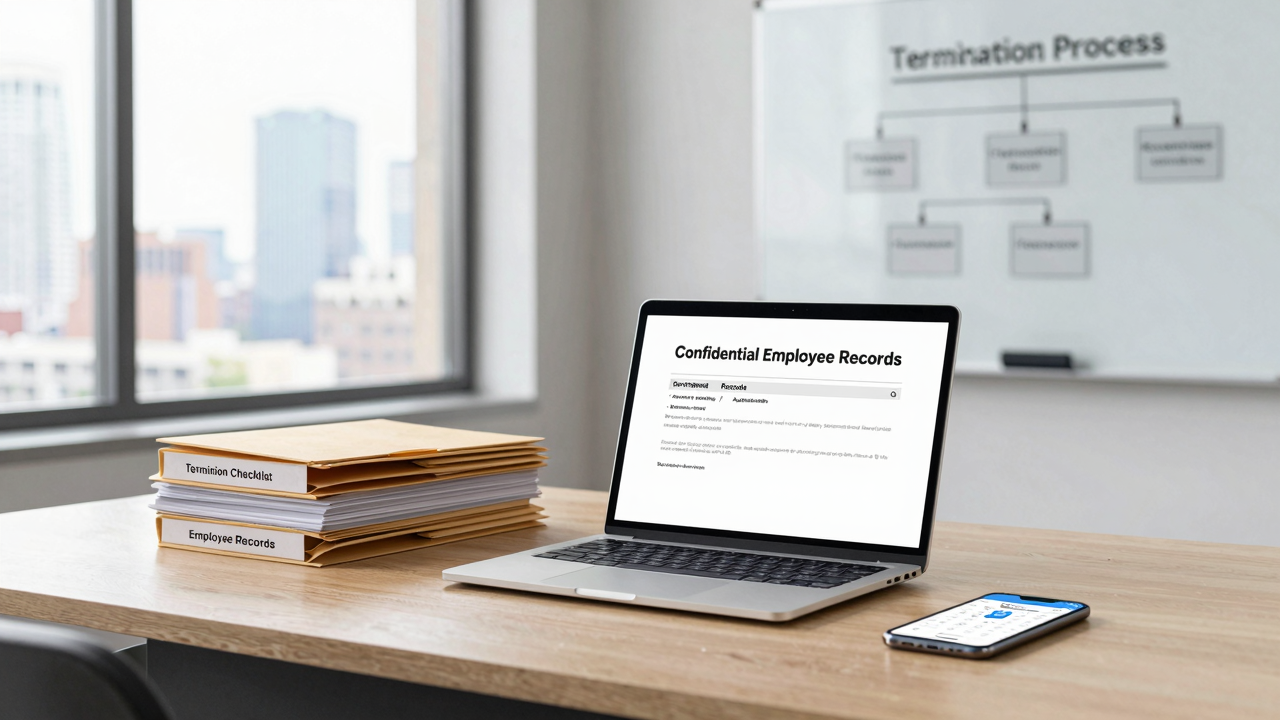
When you terminate an employee, it’s essential to retain records in line with legal obligations.
Keep personnel records for at least one year after involuntary terminations, and store I-9 forms for three years from the hire date or one year post-termination.
Also, understand that documentation related to discrimination claims must be kept until those claims are resolved, so familiarize yourself with state-specific retention requirements to stay compliant.
[embedded content]
Importance of Record Retention
Record retention plays an essential role in ensuring your organization stays compliant with legal obligations. You need to keep accurate records to protect against potential legal issues and demonstrate fair practices.
Consider these key points:
- Retain I-9 forms for three years or one year post-termination.
- Keep personnel records for at least one year after involuntary terminations.
- Maintain records related to discrimination claims until resolved.
- Document consistent employment practices to defend against wrongful termination claims.
- Regularly review your record retention policies to align with evolving laws.
Using an employee exit checklist template can help you systematically track and manage these records, ensuring your organization meets its legal responsibilities effectively.
Legal Compliance Requirements
Maintaining compliance with legal obligations around record retention is essential for any organization. Familiarize yourself with the California termination notice requirements, as they dictate how long you must keep employee records.
Generally, you should retain personnel records for at least one year following termination. For I-9 forms, keep them for three years from the hire date or one year post-termination, whichever is longer.
Additionally, preserve documentation related to any discrimination claims until resolved, aligning with EEOC regulations. Confirm you have clear records justifying the termination decision, as this can protect you from wrongful termination claims.
Regularly review your policies to stay updated on any changes in federal, state, or local laws to maintain compliance effectively.
Recommended Retention Durations
To guarantee compliance with legal obligations, it’s essential to know how long to retain specific employee records. This is vital for your termination checklist and helps you avoid potential legal issues.
Here are recommended retention durations:
- I-9 Forms: Retain for three years from the hire date or one year after termination.
- Personnel Records: Keep for at least one year after involuntary termination.
- Discrimination Claim Records: Maintain until the claim is resolved, potentially longer.
- Unemployment Claim Documentation: Store for a minimum of five years.
- Performance and Disciplinary Records: Hold onto these for the duration of employment plus three to seven years, depending on state laws.
Following these guidelines guarantees you stay compliant and prepared for any future inquiries.
Frequently Asked Questions

What Should I Say to the Employee During the Termination Meeting?
During the termination meeting, start by stating the decision clearly and directly. You might say, “We’ve decided to terminate your employment effective immediately.”
Briefly explain the reason, referencing past performance or behaviors without going into excessive detail.
Allow the employee to respond, but firmly maintain that the decision is final.
Provide information about their final paycheck and benefits, ensuring they understand next steps.
Keep the tone respectful and professional throughout the conversation.
How Can I Support the Remaining Team After a Termination?
To support your remaining team after a termination, hold a team meeting to address concerns and provide clarity.
Encourage open communication, allowing team members to express their feelings. Reassure them about their roles and the direction of the team.
[embedded content]
Offer additional resources, like counseling or support services, if needed.
Reinforce a positive work environment by focusing on team goals and collaboration, helping everyone move forward with confidence and unity.
What Are Common Emotional Reactions From Employees During Termination?
During a termination, employees often experience shock, disbelief, anger, or sadness. You should anticipate these reactions and stay calm.
Offer a private space for them to express feelings, and listen actively. Acknowledge their emotions without making promises or justifications.
Provide clear reasons for the decision, and guarantee they understand the next steps.
It’s helpful to follow up later, check in on their well-being, and offer resources, like outplacement services.
Should I Offer a Severance Package to the Employee?
You should consider offering a severance package, especially if it aligns with company policy or if the employee has been with you for a significant time.
It can help ease the change and maintain goodwill. Calculate an appropriate amount based on their tenure and role.
Clearly outline the terms in a written agreement, including any confidentiality clauses. This can protect your organization and support the employee’s future job search.
How Can I Prevent Future Termination-Related Disputes?
To prevent future termination-related disputes, guarantee clear communication of policies and expectations.
Document performance issues consistently, and provide regular feedback.
Before any termination, involve multiple decision-makers for impartiality.
Hold exit interviews to gather insights and address concerns.
Stay compliant with legal requirements, and keep thorough records of all actions taken.
This proactive approach helps maintain transparency and can reduce misunderstandings, ultimately fostering a more positive workplace environment.
Conclusion

In conclusion, following these seven essential steps will help you navigate employee terminations effectively. Start by reviewing the decision with key stakeholders, then conduct a private meeting to discuss the termination. Document everything, guarantee final pay and benefits are clear, and collect company property. Address any unemployment claims afterward, and keep accurate records to stay compliant. By taking these actions, you’ll minimize risks and maintain a professional approach throughout the termination process.
Image via Google Gemini and Small Business Trends