
As a founder, your attention is on pipeline, retention, and the next 90 days rather than how AI engines describe your company. But your buyers are already asking AI which vendors to consider — including you.

The founders who ignore their AI-generated brand description are betting that their competitors are ignoring it too. As buyer behavior continues to shift toward AI-first research, that assumption is getting riskier.
Getting your brand in front of AI-assisted buyers comes down to two things: knowing where you stand, and making a few targeted moves.
Start by getting a clear picture of where your brand stands in answer engines.
Before you can improve your AI visibility, you need to know what it actually looks like right now. Most founders assume their brand shows up in AI results because they rank well in search. But the two aren’t the same. Answer engines cite different sources and construct answers differently than search results pages.
Operating without visibility into how your brand appears in AI answers means you don’t know whether buyers researching your category are seeing your name, a competitor’s, or nothing at all. That uncertainty makes it hard to know whether AEO deserves attention.
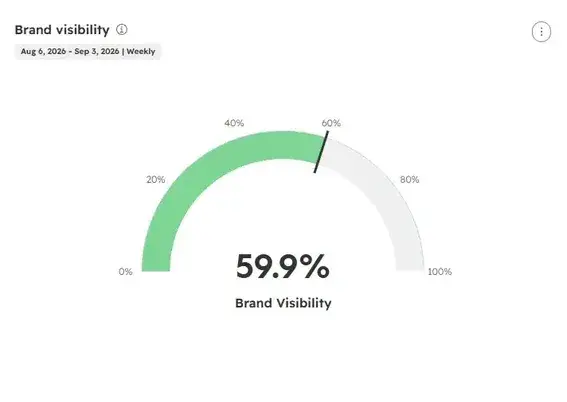
HubSpot AEO surfaces your AI visibility score, share of voice, and citations in a Brand Visibility Dashboard you can check without SEO expertise or prior AEO knowledge. You get a baseline for where your brand stands: what it’s being cited for, which competitors are outranking you in AI answers, and where the gaps are.
AEO customers create 82% more deals, according to HubSpot internal data.
Once you have a baseline, the next step is knowing what to do about it, without needing to hire anyone to do it for you.
Act on AEO recommendations without needing a marketing team or agency.
Acting on AEO means knowing which content gaps to close, which sources to target, and what changes are likely to move the needle. The gap between knowing your AI visibility score and doing something about it is where many founders stall. That knowledge usually lives with a specialist.

A clear, prioritized list of actions is key to moving the needle on AI visibility. HubSpot AEO surfaces prioritized recommendations tied to your current visibility gaps: content to create, pages to update, and sources to pursue. You can act on those recommendations yourself or hand them off to a writer without a strategy consultation in between.
Connect AEO activity to leads and deals in your CRM.
AEO is a lead generation channel, not just a brand awareness exercise for founders. Your AI visibility work is only paying off if it’s showing up in your pipeline as contacts, conversations, and deals.
Without a way to connect AEO metrics to CRM data, you’re managing two separate pictures of your business: one that shows marketing signals and one that shows revenue. That disconnect makes it hard to know whether the time you’re spending on AEO is worth it.
HubSpot AEO is connected to HubSpot Smart CRM and content tools, so the recommendations it surfaces — content to create, pages to update, sources to pursue — are informed by what HubSpot already knows about your customers and prospects. That means your AEO strategy starts from your actual business context, not generic industry templates.
For founders, AEO doesn’t need to be a separate discipline. It just needs to connect to the work you’re already doing in your CRM. Buyers are already using AI to research vendors. Are they finding you?