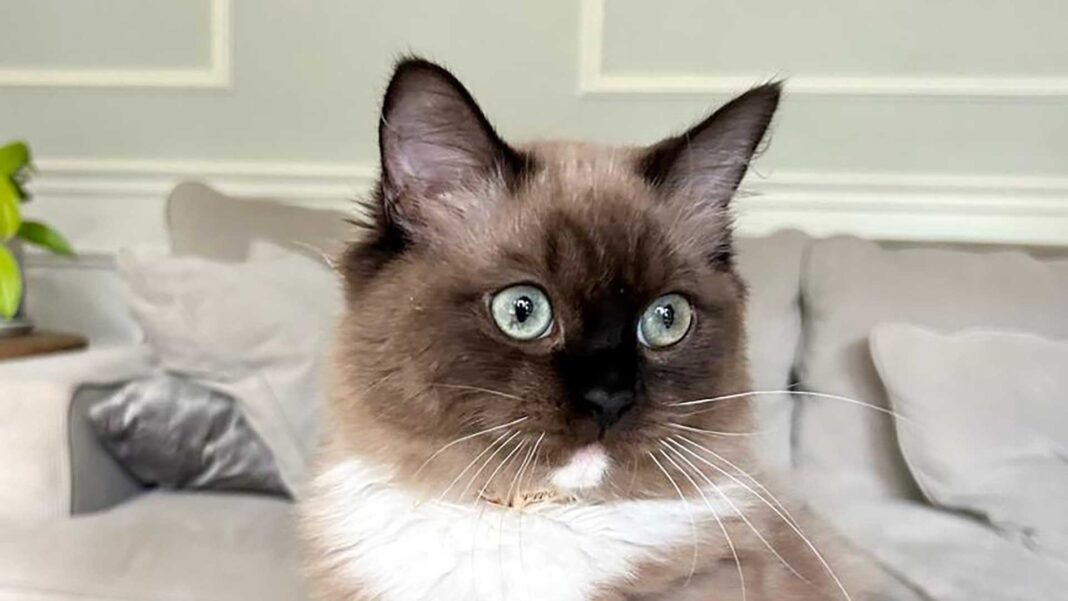

Despite that growth, Midwest Ragdolls remains a small, family-run operation, and the same people who built the business over more than three decades still care for the kittens.
Founder Dr. Jennifer Creed is an experienced practicing small-animal veterinarian who runs Midwest Ragdolls with help from her family. The cattery has no large staff. Her children help care for the kittens, which means they grow up around children, dogs, and the regular activity of a family environment. For Creed, this hands-on approach has remained central to Midwest Ragdolls, even as the cattery has begun working with families much farther from its Illinois home.
“My kittens are raised by my family and me and are used to being around kids and dogs,” Creed says.
How Midwest Ragdolls Began in Elburn, Illinois
When Dr. Creed founded Midwest Ragdolls in 1993, she brought her professional experience in animal health into the breeding program. As a small-animal veterinarian, she already understood the importance of preventive care, testing, observation, and an animal’s health history. Those principles became closely tied to how she approached raising Ragdoll kittens.
Over the years, Midwest Ragdolls’ geographic reach gradually expanded. What remained based in Elburn began connecting with families elsewhere in Illinois, across the Midwest, and eventually throughout the United States. Creed says the Midwest still accounts for much of the cattery’s business, although kittens now go to homes across the country.
“I sell kittens all over the USA but primarily in the Midwest,” Dr. Creed says.
While the customer base has expanded, Midwest Ragdolls has not followed that growth by developing into a large breeding operation. Instead, the cattery has maintained the family structure that has defined it from the beginning.
How Veterinary Experience Shapes Midwest Ragdolls
Dr. Creed’s veterinary career provides important context for understanding Midwest Ragdolls’ health practices. Rather than simply listing veterinary care as a priority, the cattery has several specific procedures that show how health considerations are built into its breeding program.
According to Dr, Creed, kittens receive testing for feline leukemia virus and feline immunodeficiency virus, commonly known as FeLV and FIV. They also receive a fecal examination, and Midwest Ragdolls provides a three-year health guarantee. They also focus on the health of the breeding cats, with Dr. Creed reporting that the parents are tested for heart and kidney issues as well as viral diseases.
Health screening cannot guarantee an animal will never experience a medical problem later in life, but it can give breeders and future owners useful information. For Midwest Ragdolls, these practices also show how Creed’s veterinary career and her experience as a breeder have developed alongside one another.
Dr.Creed describes herself as “a practicing experienced small animal veterinarian,” and that professional background has been part of Midwest Ragdolls since its earliest years. More than three decades later, veterinary knowledge still influences how the cattery approaches both its kittens and its breeding cats.
Why Midwest Ragdolls Has Remained a Family-Run Cattery
One of the more distinctive parts of the Midwest Ragdolls story is that the business has remained small even as its reach has expanded. No employees manage different parts of the operation. Instead, Creed’s family remains directly involved, with her children helping care for the kittens.
This structure also shapes the environment the kittens experience in their earliest weeks. Dr. Creed says the kittens are accustomed to being around both children and dogs, giving them experience with some of the everyday activity that can come with living in a family home. Every kitten has its own temperament, but Midwest Ragdolls has made this type of family environment part of its approach to raising Ragdolls.
For a business that has operated since 1993, remaining family-run is a notable part of its history. Midwest Ragdolls has had decades when it could have pursued a larger operational model, yet direct family involvement remains central to how the cattery functions.
What Has Stayed the Same After More Than 30 Years?
The world Midwest Ragdolls operates in has changed considerably since 1993. Families now have more ways to research breeders, communicate across long distances, and learn about kittens before deciding where to find their next pet. Midwest Ragdolls has also expanded beyond its original local reach and now works with families nationwide.
At the same time, many of the cattery’s basic priorities have remained .Dr. Creed describes her goal as providing “low shedding, friendly intentionally bred purebred Ragdoll kittens.” Achieving that goal involves considering several parts of a kitten’s early life, not just appearance.
The health of the parent cats is one part of that process, while veterinary testing and examinations provide additional information about the kittens themselves. The environment in which the kittens are raised adds another dimension. At Midwest Ragdolls, these areas come together within a breeding program that has remained closely connected to Creed’s veterinary background and her family’s daily involvement.
What Can Families Ask When Researching a Ragdoll Breeder?
Midwest Ragdolls’ practices also highlight information families can consider when researching a breeder. Rather than deciding based only on photographs or a kitten’s appearance, prospective owners can ask about the health testing performed on both kittens and their parents, the veterinary care provided before a kitten leaves, and any health information that accompanies the animal.
Families can also learn about the environment in which kittens are raised. Asking who cares for the kittens, what kinds of interactions they experience, and whether they are exposed to other animals can provide additional context about their first weeks of life. A breeder’s history and experience can also help prospective owners understand how a breeding program has developed over time.
For Midwest Ragdolls, those questions lead back to a history spanning more than 30 years. Veterinary care, health testing, family involvement, and a home-based environment have all remained part of the cattery as its geographic reach has grown.
Midwest Ragdolls Continues to Build on Its Elburn Roots
Today, a kitten raised by Midwest Ragdolls in Elburn may eventually join a family elsewhere in Illinois, in another Midwestern state, or much farther across the country. That national reach represents a significant change from the local context in which the cattery began in 1993, but the operation behind those placements remains intentionally personal.
Creed continues her work as a small-animal veterinarian while running Midwest Ragdolls with help from her family. The kittens continue to be raised around children and dogs, while health testing of kittens and parent cats remains an established part of the breeding program.
After more than three decades, Midwest Ragdolls’ story is not simply about how far the business has expanded. Its longer history is about maintaining a consistent approach while reaching families across a much wider area. From its home in Elburn, Midwest Ragdolls has expanded its reach while keeping the family involvement and veterinary foundation that have defined the cattery since 1993.