
How West Midlands shed its gun crime capital label
To play this video you need to enable JavaScript in your browser.
This video can not be played
-
Published
More than 10 years ago, the West Midlands was dubbed the gun crime capital of England and Wales.
It was an area suffering from high-profile shootings. Gun fights between rival gangs were happening regularly.
Figures at the time reflected that notoriety – there were more firearms offences per head in the West Midlands Police force area than anywhere else.
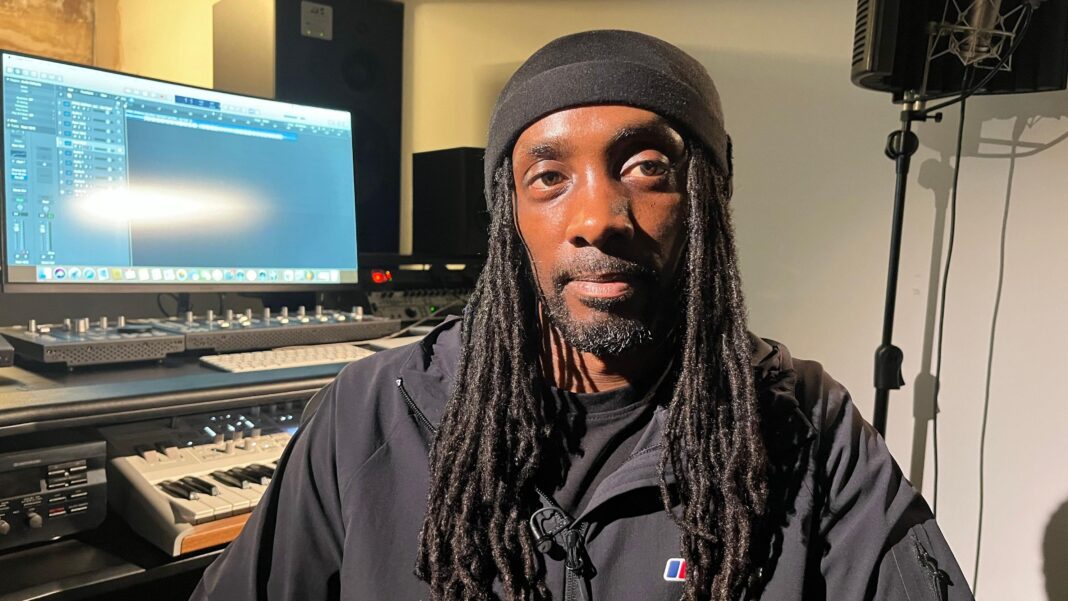
“Back then, there were shootings every day, reported shootings every day and unreported shootings every day,” says Simeon Moore, also known as Zimbo, an ex-Johnson crew member – one of the Birmingham’s most notorious gangs in the noughties.
New figures seen by BBC News show shootings in the West Midlands force area – covering Birmingham, Wolverhampton, the Black Country and Coventry – have dropped significantly over the past six years.
“Things have calmed down dramatically since the early 2000s,” Zimbo, who now mentors youngsters, said.
While the numbers are not directly comparable, due to the criteria in the way they were gathered and published, in 2002-03 the force recorded about 1,300 gun crimes, external, compared with 504 in the 2024 calendar year, external.
A more direct snapshot of the past six years also shows things are improving.
In 2020-21, there were a total of 157 firearms discharges, while a year later in 2021-2022 there were 148.
By last year, the number of discharges had dropped to 69 and in the first seven months of 2026, there had only been 30, according to figures from West Midlands Police.
The force said the fall was down to way it now dealt with firearms incidents.
A major crime unit deals with all firearms events. Every time gun fire is reported, it is treated as if it was a murder.
But it is not all down to policing, Zimbo said.
He thinks there has been a change in culture, with more people speaking out about that kind of lifestyle, keeping the next generation out of trouble.
He was jailed for six years for possessing a semi-automatic weapon as a teenager and was in and out of prison for two decades.
“We lived it,” Zimbo said.
“There’s more people that have been involved in that life talking about it, turning away from it and speaking bad about it in the sense that this isn’t the right way to go.
“Now you’ve got man that have lived that life, done crazy sentences and they’re telling the young people now, ‘if you’re going to start living like this, expect jail, expect to lose your friends or possibly lose your own life.'”
Zimbo also credits various organisations across Birmingham which are working with young people and delivering projects, and the impact that is having.
“Most young people within the city are engaged with organisations that are supporting them to stay away from the streets,” he adds.
It is this kind of work, he suggests, that is leading Birmingham to “become more of a village.”
“The village is starting to work together.”
But gun crime has not gone away and rivalries still exist.
The most recent statistics from the Office of National Statistics for England and Wales showed the West Midlands force area remained second only to the Met for the total number of discharges.
However, it is also second only to the Met in terms of the population it serves.
Fleeing in fear
A shooting outside a nightclub in Aston earlier this year was captured on CCTV.
People could be seen fleeing in fear as shots rang out when two men fired at each other outside FJ Lounge.
One of them was injured, as well as an innocent bystander working on a food stall outside the club. Two men were convicted and are due to be sentenced next week..
And in 2025, a man was left in a critical condition following a shooting at Mango nightclub in the city centre.
“I don’t believe there’s fewer weapons out there. I just think a few less people are using them,” says Zimbo.
At Revere Records in the city, where Zimbo heads up its urban division, a young artist, Solitary, is recording a track. His lyrics reference life in parts of the city, avoiding jail and being a product of your environment.
This is just one of the projects Zimbo is involved with that gives youngsters opportunities.
Zimbo added: “It’s very hard for these young people to stay away from the lifestyle.”
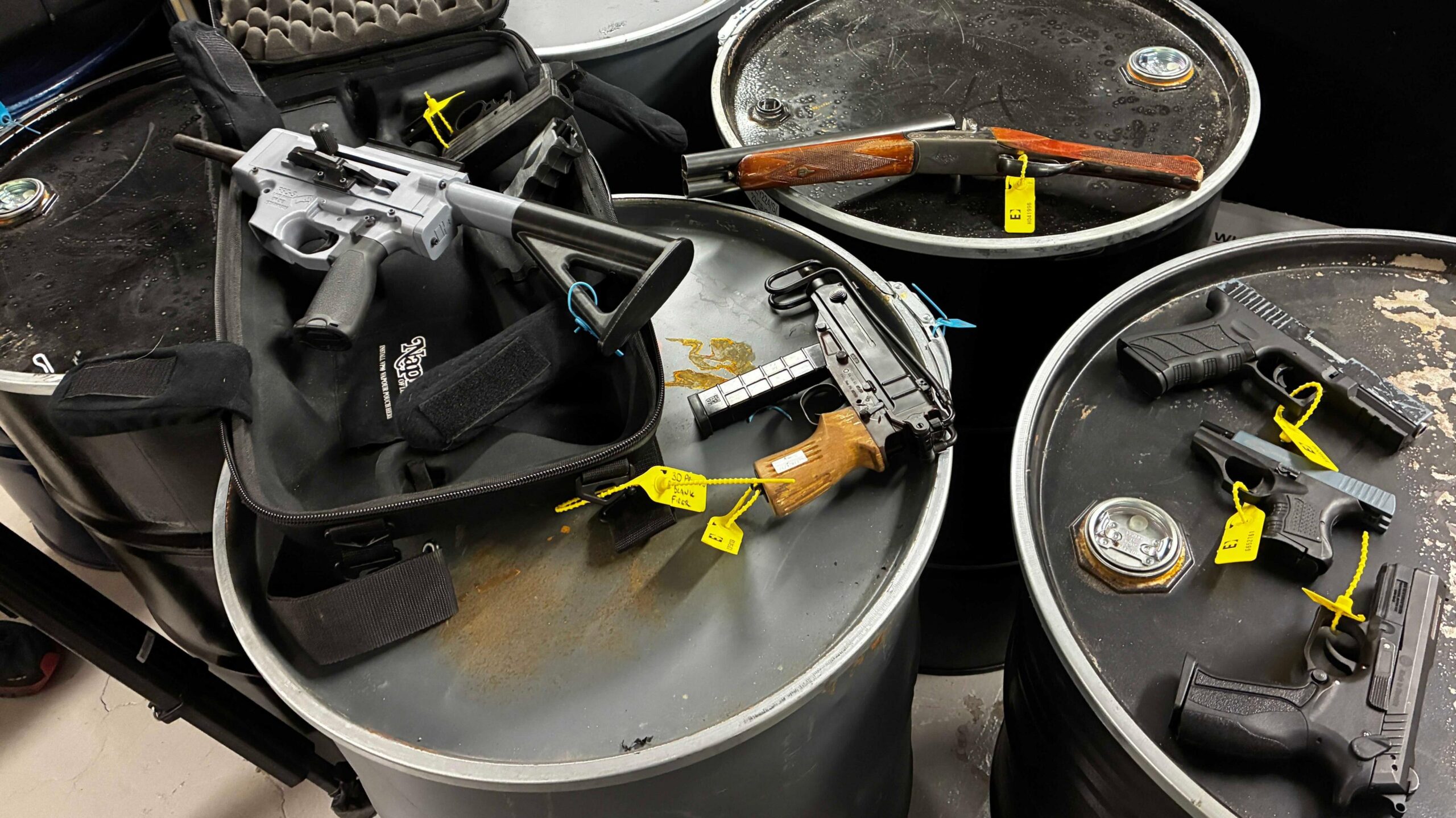
West Midlands Police believes the reorganisation and creation of its major crime unit has led to the fall in gun crime, and a rise in seizures of weapons.
Det Supt Ryan Chambers said the unit specialised in the most serious elements of criminality, targeting offenders and those in possession of firearms.
He said 50% of the discharges the force dealt with were from shotguns which had been owned lawfully, but stolen in burglaries and ended up in criminal hands.
Chambers said: “We’ve had a good level of success over the last 12-months. We’ve had the most recoveries and biggest reduction in discharges we’ve seen in recent years.”
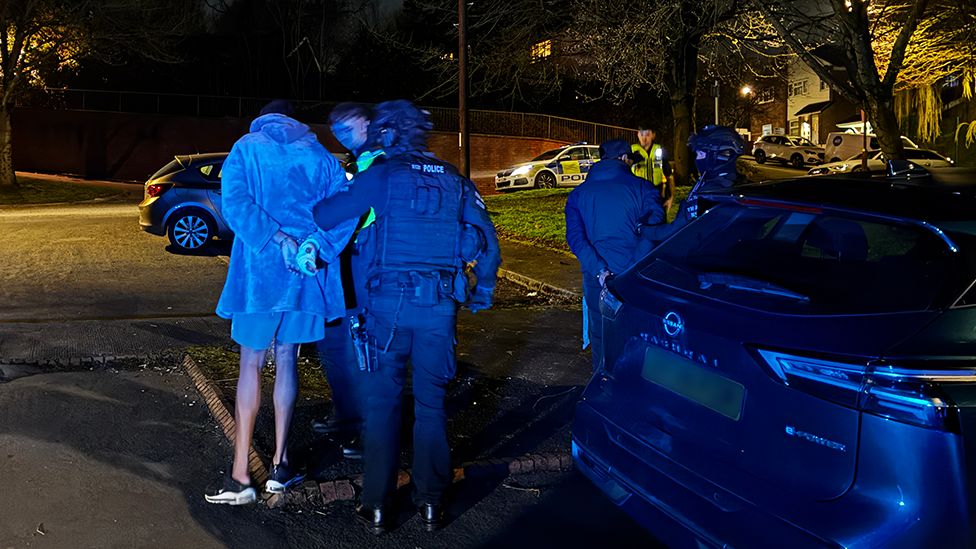
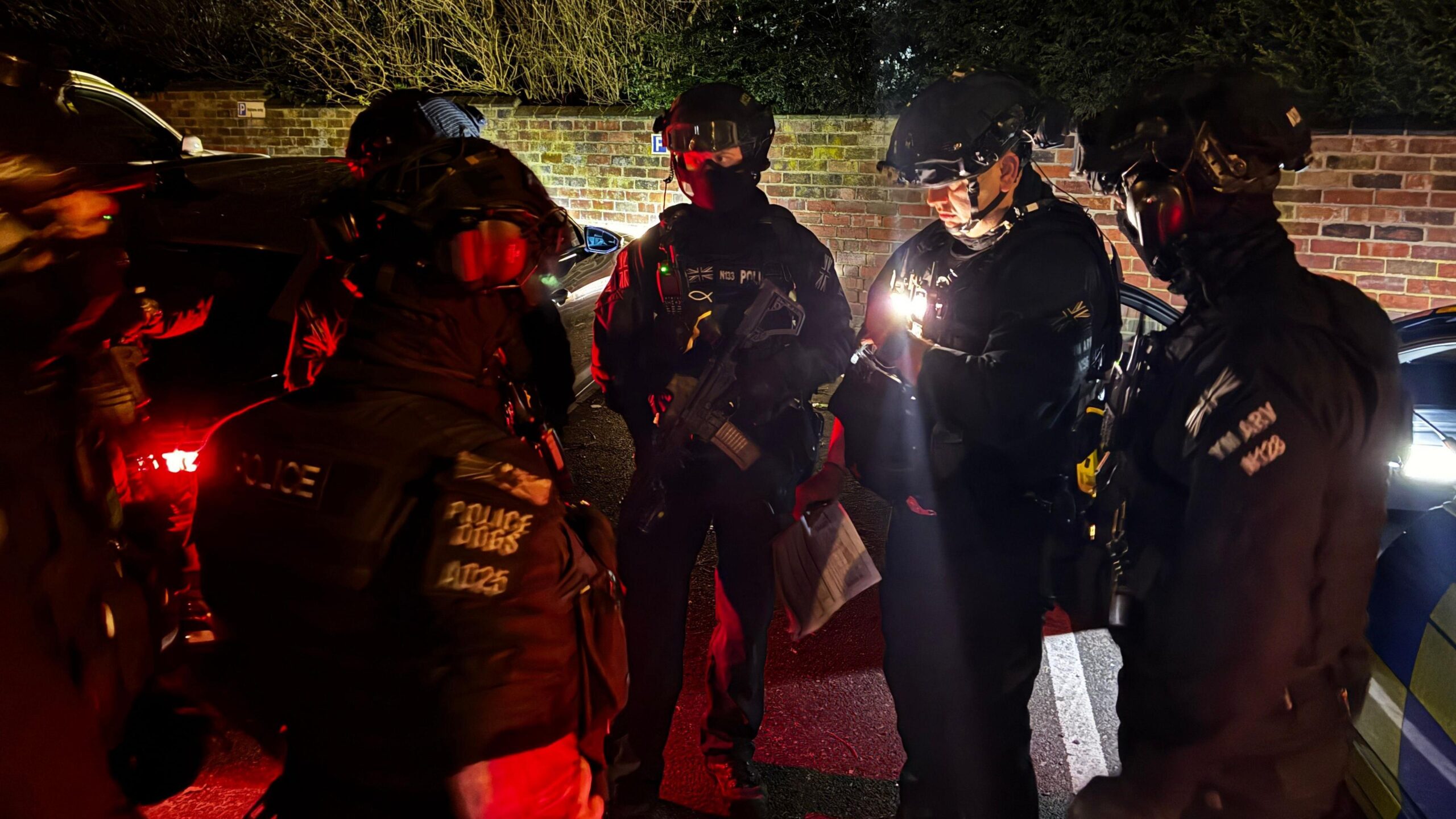
We joined officers on a raid in Dudley and while they did not find a gun, they found a machete and crossbow, and arrested a man who had a wound to his hand from a shooting a week earlier. He was also suspected to have been involved in a machete attack, and will stand trial in 2029.
Despite successes like these, gun crime has not gone away.
Weapons are still getting into the country despite tough gun laws, but what is clear is that work being done by both police and the community is having an impact.
Get in touch
Tell us which stories we should cover in Birmingham and the Black Country
Follow BBC Birmingham on BBC Sounds, Facebook, external, X, external and Instagram, external.