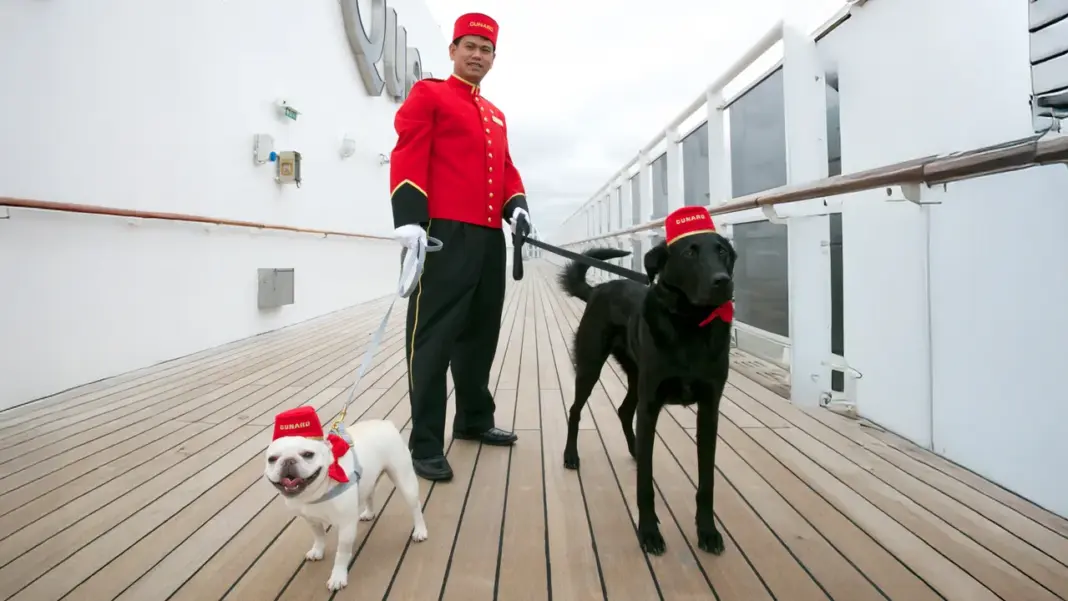

Then there’s the feeding. Every dog has its own portion sizes and diet, and it all has to be right. The food ranges from boiled chicken breast to grilled steak, steamed salmon, Cumberland sausage, scrambled egg, fruits, vegetables—basically whatever they need. The food comes from the same kitchen that cooks for the guests, but I am very strict: no salt and pepper.
Sometimes people who don’t have pets in the kennels try to come in because the dogs are cute—maybe 20 or 25 people in a day. I have to explain that the dogs are already trying to adjust to an unfamiliar environment as well as the other dogs. They don’t need more strangers coming in to see them.”
What is your favorite part about this job?
“Meeting all the new dogs on the first day and making my family bigger. After seven days of bonding, playing, and running around together, saying goodbye is the saddest part.”
What is the most challenging part about working at sea?
“The parents. Sometimes I tell the owners, ‘No treats,’ but I can see them secretly feeding their dog oily food like bacon from the kitchen. I have to say, ‘Mama, I’m not so happy seeing you do this.’
And once I had somebody take their own dog back to their cabin without telling me. That evening, I was about to close the kennel when I did my usual count and realized one was missing. It was a very stormy evening, and I was running around like a headless chicken. I was soaking wet and crying. I asked housekeeping to send people around the ship to help me find this dog, but nobody could.
Finally, I phoned the owner and she said, ‘Oh yes, Oliver, she’s here.’ I was dying that night!”
What is the coolest or weirdest thing about living on a ship?
“The weirdest thing: When I’m home, I feel strange. When I’m here, I feel at home.