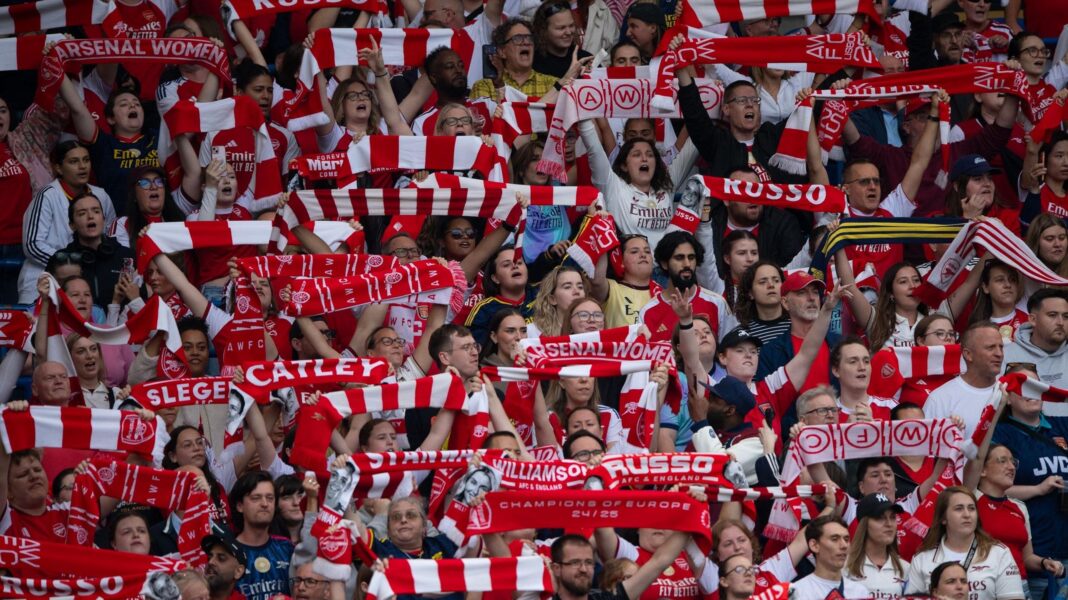

Families v loyal fans – women’s football’s attendance dilemma
-
Published
Average Women’s Super League attendances surged by 192% in the season after the Lionesses’ Euro 2022 triumph, but the speed of the boom has stalled.
Median crowds have risen by just 166 fans, from 3,070 in 2023-24 to 3,236 in 2025-2026, according to a 2026 report from YouGov and architecture firm Populous, external.
Some of the biggest fixtures are now attracting significantly smaller attendances.
Arsenal against Manchester United at Emirates Stadium fell from 46,603 in 2024-25 to 29,853 this season, while Chelsea v Arsenal dropped from 34,302 to 19,349 over the same period.
The Gunners, who averaged 34,000 at the Emirates last season – almost four times the next-highest club, Chelsea, and higher than eight Premier League sides, external – had just 19,546 for their October match against Birmingham City.
There are bright spots, including a sold-out 4,000-ticket Arsenal away allocation at Tottenham for the first time, but the wider trend for some matches is clear.
Manchester United against Manchester City was hosted at Leigh Village in October with a crowd of 5,361. The same fixture was held at Old Trafford in March 2026 with 24,983 fans.
So what is behind the decline? Marketing, scheduling, matchday experience, stadium design, product or something else?
Families v loyal fans – can women’s football attract both?
When supporters were asked what mattered most to their enjoyment of a women’s football match in the report, a “welcoming, family-friendly environment” ranked above team success and the quality of on-pitch performance for both established and potential fans.
The research found only 15% of fans who have attended a women’s match in the past five years do so at least monthly.
Meanwhile, 43% describe themselves as casual followers who engage more with major international tournaments than domestic club football, while just 10% identify as devoted supporters.
The findings suggest there is a possible matchday “experience gap” in the domestic game, with some clubs seeking to address it through family-friendly initiatives.
However, some fans have voiced their frustration at the family-friendly marketing.
Tottenham fan Dakota said “I’m almost glad I can’t make it” in relation to a Spurs social media advert about the north London derby, which listed DJs, drinks, face painting and freestylers.
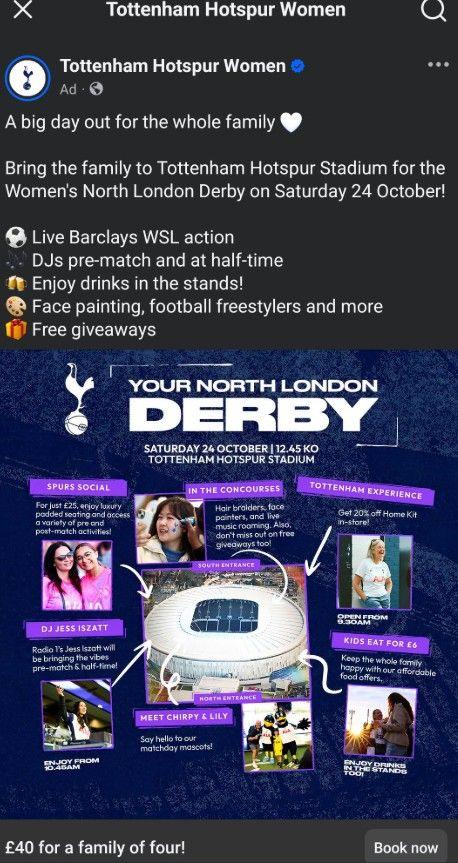 Image source, Tottenham Hotspur
She added: “We’ll never grow as a women’s club if the entire marketing is for kids and families rather than young adults with disposable income.”
Spurs fan Rosewen had similar views: “They can offer attractions to tempt people through the gates but we’re losing sight of football and the importance of winning.”
On the recent low crowd for the north London derby, one fan wrote on X: “Attendances across the WSL are down so this isn’t a Spurs specific issue. However, the club has used a one-dimensional family-friendly marketing strategy for years.”
Brighton took a similar family-focused approach for their October match against West Ham at the Amex, promoting a “Saturday Spooktacular” with attractions including a haunted house, face-painting, hair braiding, costume competitions and other activities taking up the majority of the advert.
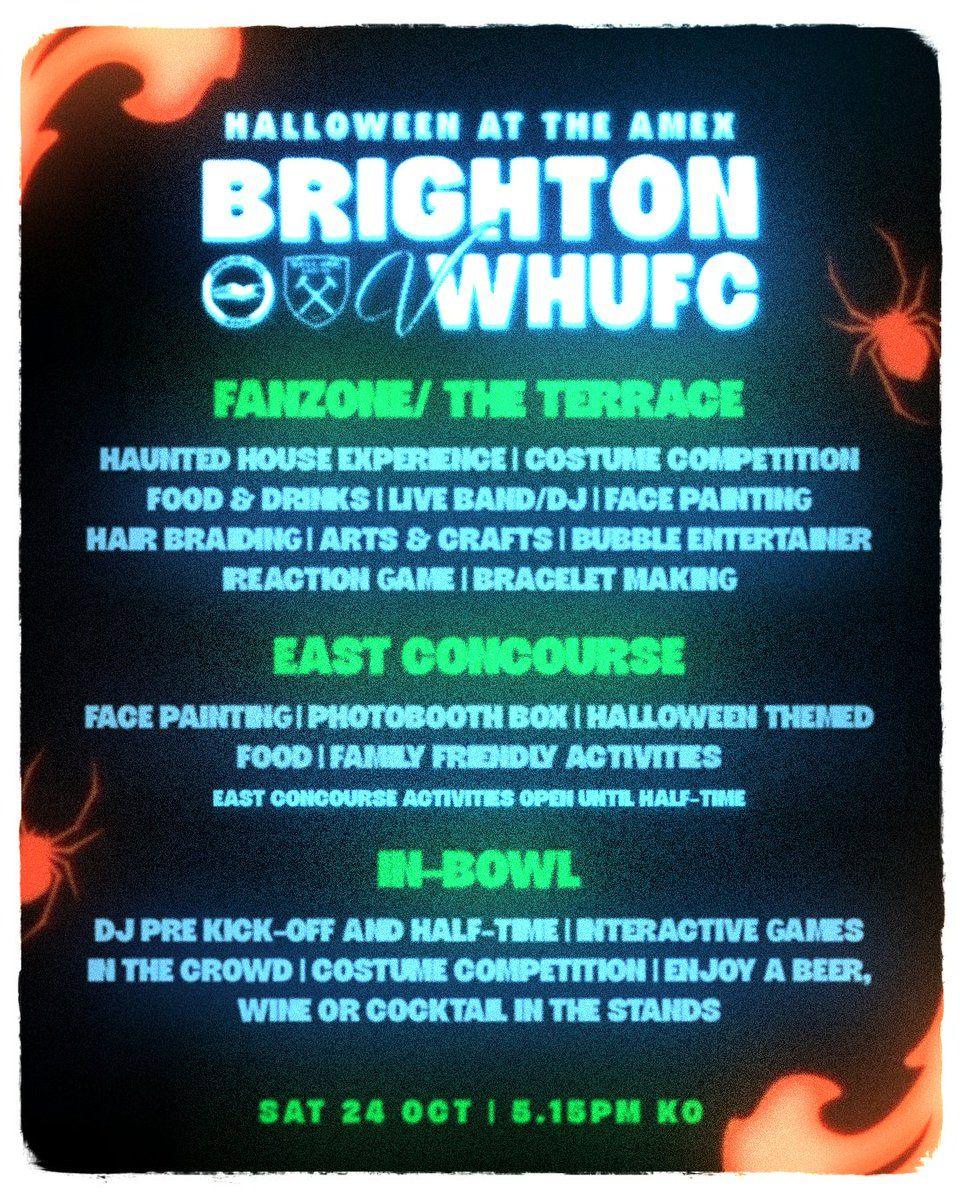 Image source, Brighton and Hove Albion
How does scheduling impact crowd numbers?
Premier League football has long owned the 3pm Saturday slot while the WSL has varied kick-off times, making it harder for fans to establish a regular routine.
Inconsistent kick-off times emerged as a common concern when BBC Sport asked why attendances were falling.
Gunners fan Sue said: “It’s the constant changing of the game times and travel issues. I had six lots of tickets for Arsenal games last season. For three matches, the day and time changed and for another three, there were bus replacements for trains.
“These issues put families off. WSL needs regular days/time slots to attract consistent fans.”
Victoria agreed: “Scheduling is dreadful. They need to stick to Sunday afternoon where possible. I get fed up of all the late changes to day/times. Consistency is key to its success.”
The October north London derby at Tottenham Hotspur Stadium kicked off at 12:45 BST, with Arsenal’s men playing Everton later the same day, forcing some fans to choose between the two.
The attendance at the women’s match was 13,719, less than half the 28,852 who watched the same fixture in 2024.
Who are the audience?
Attempts to attract new audiences to women’s football have sometimes misfired.
The Sky Sports TikTok channel Halo was shut down within 48 hours after criticism that its pink branding and lifestyle-focused content felt patronising.
Similar concerns followed a Women’s League Cup draw hosted by influencer GK Barry.
Disney+’s coverage of the Women’s Champions League also faced challenge for including gimmicks such as a dog and a vegetable platter.
The debate highlights a wider challenge for broadcasters: how do you attract new audiences without alienating existing ones?
-
Does Scott’s Disney+ exit unmask wider issue in coverage of women’s game?
-
Published16 October
-
Is the product competitive enough?
One fan told BBC Sport a lack of jeopardy makes WSL matches less appealing: “Attendances need to be taken in context. If a match is a ‘dead rubber’ less people will turn up against a game with something on it. In the Premier League most games have competition for something. WSL has less European places and fewer relegation places. Too many ‘nothing’ games.”
This view was echoed by London City Lionesses owner Michele Kang, who said at the World Football Summit in Madrid earlier this year: “If you look at Spain, France and Germany, the competitive balance is not quite there yet.”
Barcelona’s appearance in seven of the past eight Women’s Champions League finals supports this.
How can stadium design help?
Home venues vary across the WSL, from Manchester United’s 12,000-spectator Leigh Sports Village and Brighton’s 6,134-seat Broadfield Stadium to Arsenal’s 60,000-seat Emirates and Chelsea and Everton’s 40,000-capacity grounds.
Larger stadiums offer room for growth but can feel empty, while smaller venues often generate atmosphere at the expense of capacity and facilities.
One supporter told BBC Sport: “For many families of fans of the larger clubs hosting WSL games in the main stadiums allowed cheap access to visit iconic stadia.
“But now most people have been to Old Trafford, Emirates, Etihad etc, so you see the drop-off as the novelty has worn off.”
Brighton hope to address this with plans for Europe’s first purpose-built women’s football stadium, a £75-80m, 10,000-capacity ground next to the Amex.
The club says it will provide a permanent home for the women’s team, while being designed specifically for female players, families and first-time fans.
CEO Paul Barber said a purpose-built stadium is important to give “respect and focus” to the women’s team.
The move aligns with the WSL’s “world-first design guidelines”, which argue stadiums have historically been built for men’s football and need to better serve female players and fans.
-
Brighton plan Europe’s first purpose-built £80m women’s stadium
-
Published28 April
-
Four years on from Euro 2022, the WSL’s challenge is not attracting interest but turning occasional visitors into regular supporters and helping fans build tribalism.
Some believe clubs can cater to different audiences at the same time.
One fan told BBC Sport: “Matchday doesn’t need to be either/or. London City had a fan zone aimed at children ahead of last week’s match with Everton.
“They also had a post-match Oktoberfest aimed at an older age group. Different marketing for different audiences for the same matchday.”
Former England international Ellen White told BBC’s Women’s Football Fallout: “The beautiful thing about women’s football is that it is for everyone.
“I don’t think it’s about dismissing any of our audiences. I think it’s about finding the marketing strategies that will grow our game and sell stadiums out.”
Women’s football is still maturing.
As professional pathways produce more elite players, standards, product and competitiveness should rise.
Similarly, the first generation of fans to grow up with regular exposure to women’s football should build fandom that help attendances boom.