
Simplicity is the new luxury
Sprawling menus as an indicator of abundance; dozens of items on a single plate—foams, sauces, sprigs of herbs placed with tweezers; narrative-driven tasting menus that span six or seven hours. These used to scream luxury. Now? Simplicity speaks louder. It’s a trend noted by executive chef James Gaag of La Colombe in the Constantia Valley near Cape Town, owned by chef-proprietor Scot Kirton. La Colombe landed at number 35 and also took home the title of Best Restaurant in Africa.
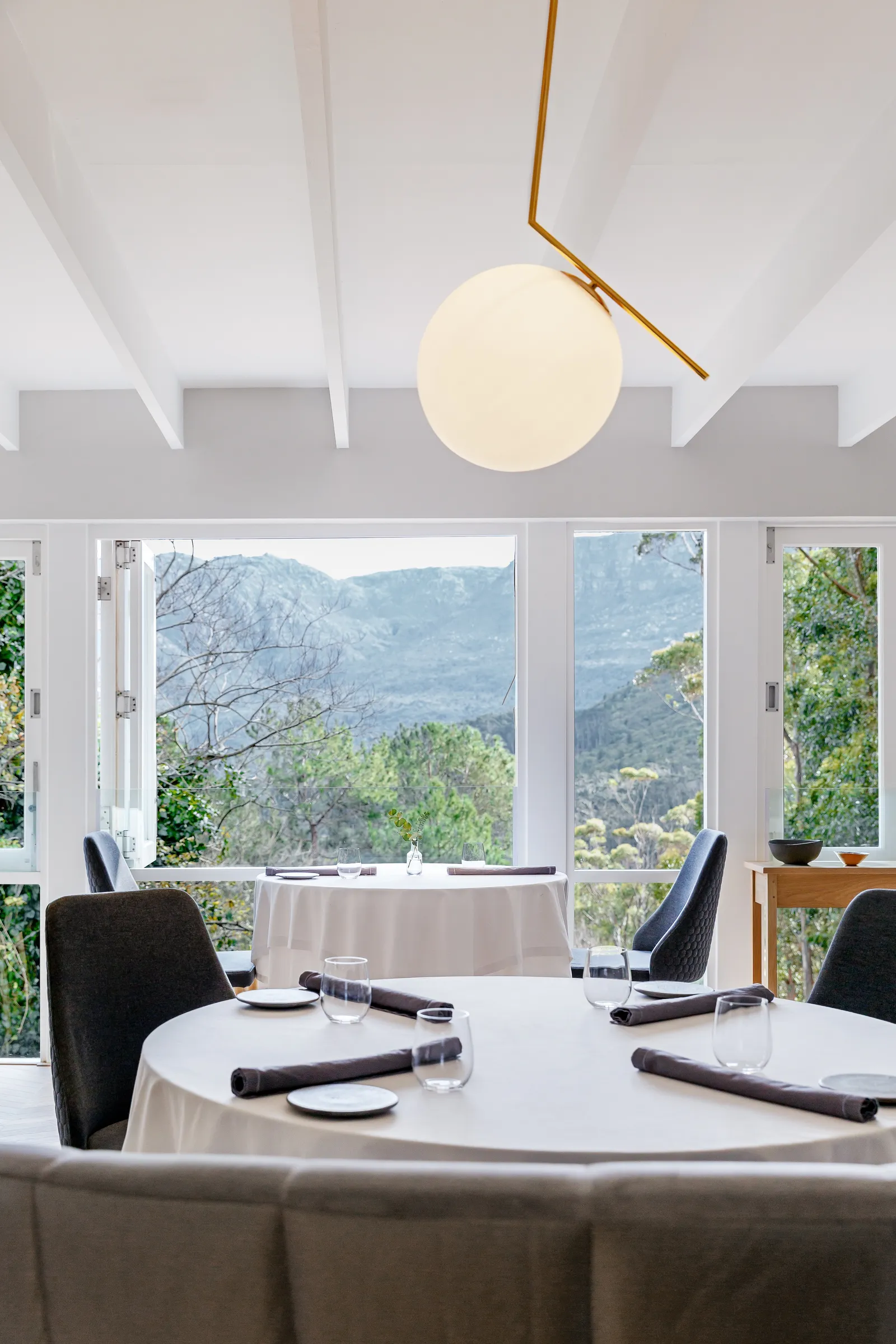
At La Colombe and elsewhere, Gaag is energized by “less courses, fresher courses, lighter courses, less time at the table.” His innovative menus might be inspired by both his German upbringing and world travels, but that doesn’t mean trying to fit the entire globe in one menu. “We used to put 100 ingredients on each plate, and I think the longer I run the restaurant, the more confident I am in putting less on the plate,” he continued.
Stripping away the stuffiness from fine dining
Chef Jeremy Chan, who owns Michelin-starred Ikoyi in London with co-founder Iré Hassan-Odukale, continues to rise. Ikoyi landed at number 48 this year, owing to its contemporary global menu that is inspired by both British microseasonality and meticulously sourced global spices. For Chan, though, fine dining doesn’t mean frigid. “Fine dining is about creating a refined experience, rather than a sense of preciousness or formality,” he told Condé Nast Traveler. “For me, it is about the refinement and technique of the craft, alongside the responsibility and precision in what we do to make people feel special.”
Odette, the Singapore restaurant founded by chef Julien Royer, placed at number 15 this year—one of the many high-ranking spots across Asia, including Gaggan in Bangkok (number 2, and also the Best Restaurant in Asia), Wing in Hong Kong (number 5), and the Chairman (number 6), also in Hong Kong. Condé Nast Traveler asked Chef de Cuisine Sheng Xiong—who blends his Asian heritage with French training for Odette’s menus—if there’s a fine dining trend he’d be happy to see vanish. “You mean we’re going to lose our jobs?” He joked. After his laughter subsided, the chef at the Three Michelin-starred restaurant echoed Chan’s sentiments: “I think moving forward, maybe the white-glove service [will go], because in our restaurant we treat everyone coming in like [they are] coming back home as a family member. It can be a bit too casual sometimes, and at the same time, it makes them feel comfortable. Guests are happy. At the start, Singaporeans, the older generation couldn’t understand what we are doing, but as time goes by, they actually prefer that to a very stiff kind of environment.”