
Product marketing’s core job is positioning: Deciding how a product should be described, what category it competes in, and which differentiators matter most to buyers. The results are deployed through sales, content, and campaigns. But now there’s a channel that interprets and rebroadcasts your positioning at scale without asking permission: answer engines.

When a buyer asks an AI assistant about your product category, they get a confident summary answer synthesized from hundreds of sources, including reviews, comparisons, competitor content, and industry coverage. If your owned content isn’t in that source mix, your positioning is being written for you by everyone else.
Product marketing teams with strong AEO visibility do three critical things: Actively monitor what answer engines say about their products; create the owned content that shapes those descriptions; and track whether their positioning investments change how AI represents them to buyers.
Monitor how AI answer engines describe and position your product.
Monitoring highlights what you need to reposition and where. It’s easy to spot product positioning drift in traditional channels. You can read competitor ads, check your own landing pages, and listen to sales calls. But it’s harder with AI answers. If an answer engine draws on stale or competitor-influenced product descriptions, buyers may get inaccurate information or positioning about your product, and you may never know unless you have the right signals in place.
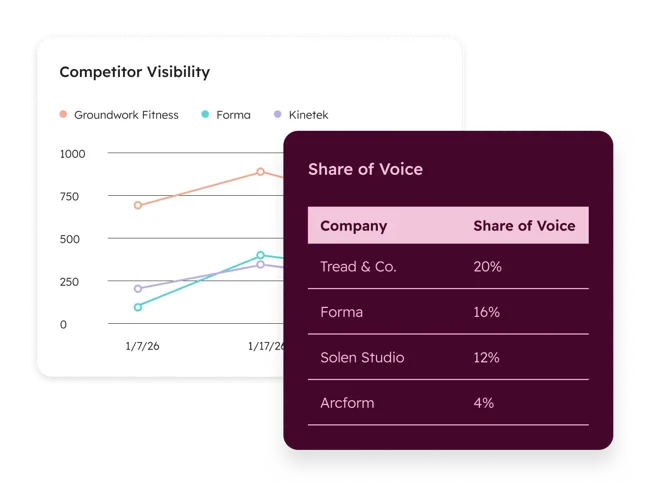
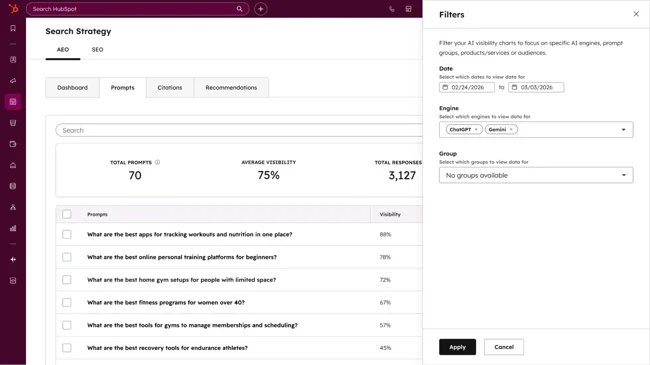
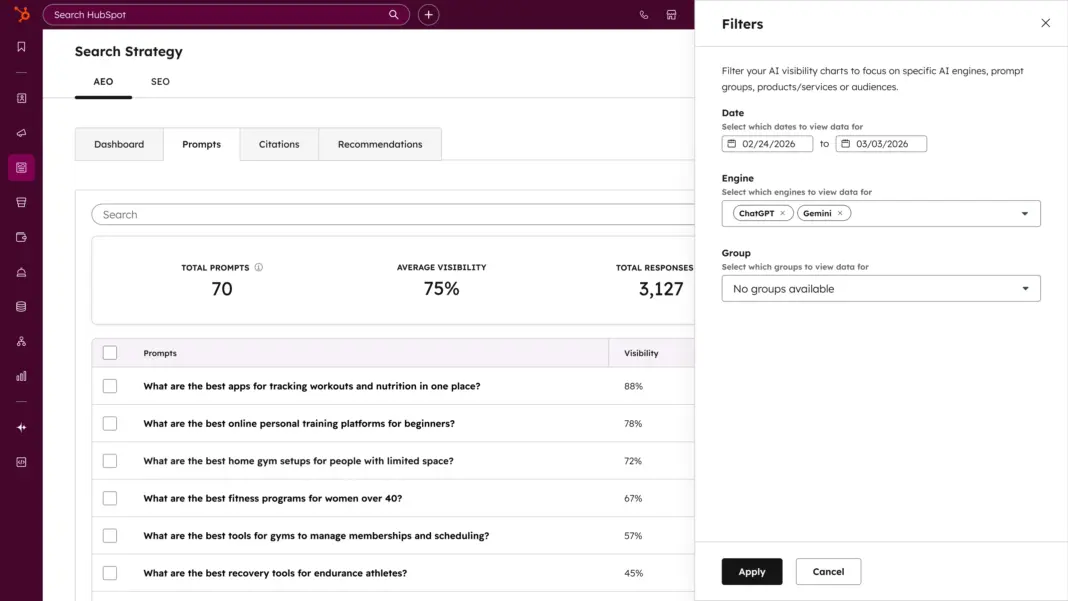
HubSpot AEO’s Brand Visibility Dashboard lets teams track which prompts surface their brand and what context surrounds those citations. Marketers can monitor how their product is described across answer engines, including mentions, how the brand is framed relative to competitors, and identify specific areas where the AI narrative doesn’t match the intended positioning.
Create authoritative owned content that shapes AI-generated descriptions.
Answer engines synthesize their responses from the sources they consider most authoritative. For product positioning, that means owned content that clearly, specifically, and credibly articulates what your product does, who it’s for, and how it compares in a structured way that’s easy for answer engines to parse and excerpt.
Product marketing teams without a systematic approach to AEO content often publish marketing-heavy pages that aren’t optimized for answer engines extracting factual claims. So answer engines skip over your content and cite competitors who publish more extractable content.

HubSpot AEO’s Recommendations tool provides specific, actionable content guidance based on your citation and visibility data. The content agent feature helps you build the customized pages and structured content that answer those queries with your positioning front and center, giving answer engines high-quality source material to draw from.
Track how improvements in AI product visibility affect pipeline quality.
Buyers who come in with accurate expectations close faster, churn less, and require less sales education. Effective AEO can shape buyer expectations before the first touchpoint, so improving product visibility in answer engines should boost both volume and pipeline quality.
But product marketing’s contribution to pipeline quality is notoriously hard to measure, and AEO is easy to deprioritize if you can’t prove the ROI. To translate visibility scores into a revenue story, you need a measurement framework that connects AI visibility improvements to pipeline metrics.
HubSpot lets you connect brand visibility data to your CRM. Once teams build the attribution view, marketers can compare pipeline velocity, close rates, and deal quality for buyers who arrived through AI-referred channels. Over time, that gives teams the data to argue that accurate AI positioning is a valuable commercial outcome, not just a visibility metric.
The proof is in the results: HubSpot research shows AEO customers generate 2.6x more leads.
For product marketers, positioning has always been shaped by sources you don’t control. What’s changed is the scale and speed at which those sources are synthesized into the first answer buyers see. Product marketing teams that build owned content designed for AI citation can take control of their brand positioning and evolve the narrative to meet customers where they’re at.