

This post was originally published on this site.
Can China target critics abroad with its new ‘ethnic unity’ law?
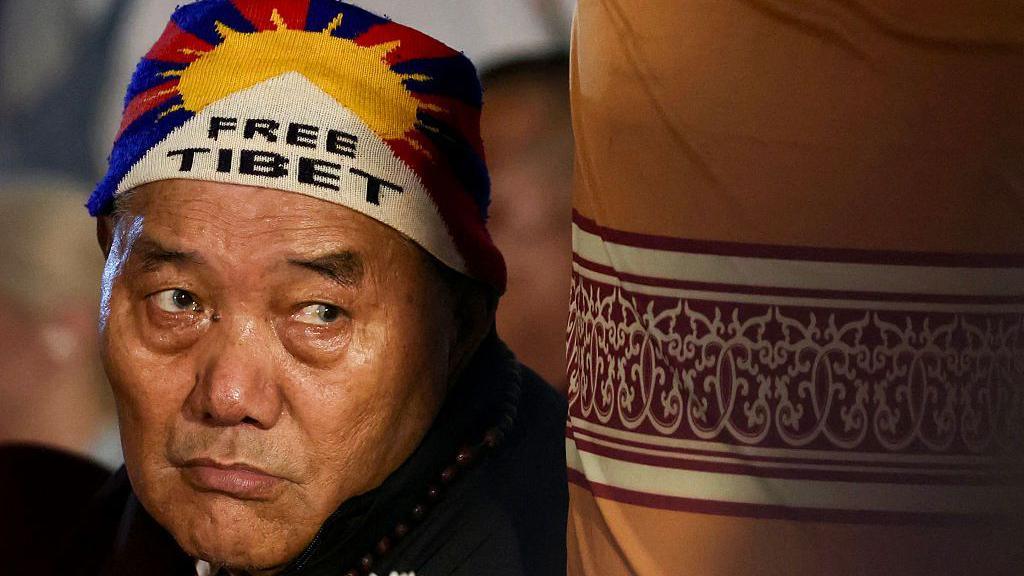 Image source, Getty Images
-
Published
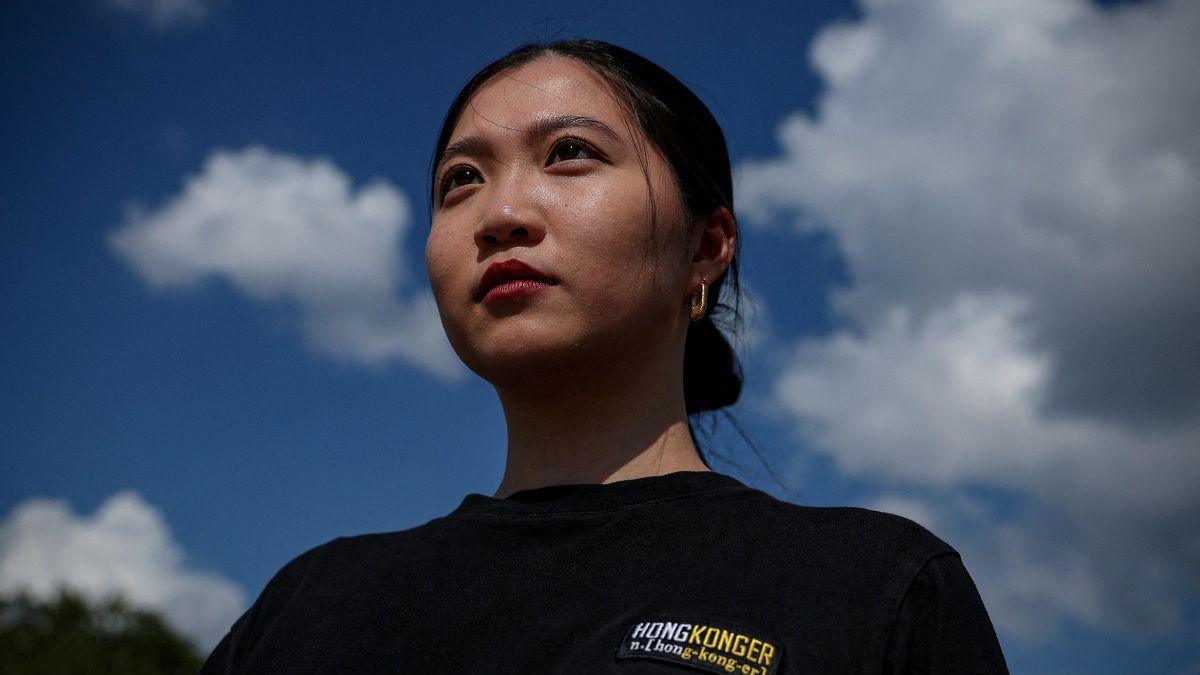
Zhang Yadi, 23, also known as Tara, is supposed to be studying at a prestigious university in the UK.
Instead she is believed to be in detention in China.
In one of her last posts on the social media platform “X”, she wished the Dalai Lama a happy 90th birthday. She had also helped edit an online Chinese language platform promoting Tibetan rights while studying in France.
Her words of support for Tibetans, posted while abroad, are believed to have put her in prison. Beijing views the exiled spiritual leader as a separatist and what it calls the Tibet Autonomous Region, which it annexed in 1950, as an integral part of China.
Tara was reportedly arrested in Shangri-La in Yunnan province in July last year while on a visit to China, and is thought to be facing charges of “inciting others to split the country and undermine national unity.”
Her story is a grave lesson in China’s tolerance for dissent, or what it sees as separatism, as a new law takes effect: one that could even give the government the right to target people outside of its own borders.
Beijing has long been accused of intimidating dissidents overseas, from pressuring Uyghur activists to tracking down government critics in exile to offering bounties for Hong Kong’s pro-democracy campaigners. But the “Ethnic Unity Law”, which comes into effect on Wednesday, will now give the Chinese government legal cover for its actions.
This comes at a time when Beijing is polishing its image abroad as it cements its role as a global power.
It is throwing open its doors to foreign leaders and tourists. Several world leaders, including US President Donald Trump and UK Prime Minister Sir Keir Starmer, have walked the red carpet outside the Great Hall of the People to shake hands with Chinese leader Xi Jinping.
Loosened visa restrictions and online campaigns encourage people from as many as 77 countries, including most of Europe, to visit China. Social media posts by influencers travelling across the country, including to tightly-controlled regions like Tibet and Xinjiang, focus on the country’s diverse geography and beauty.
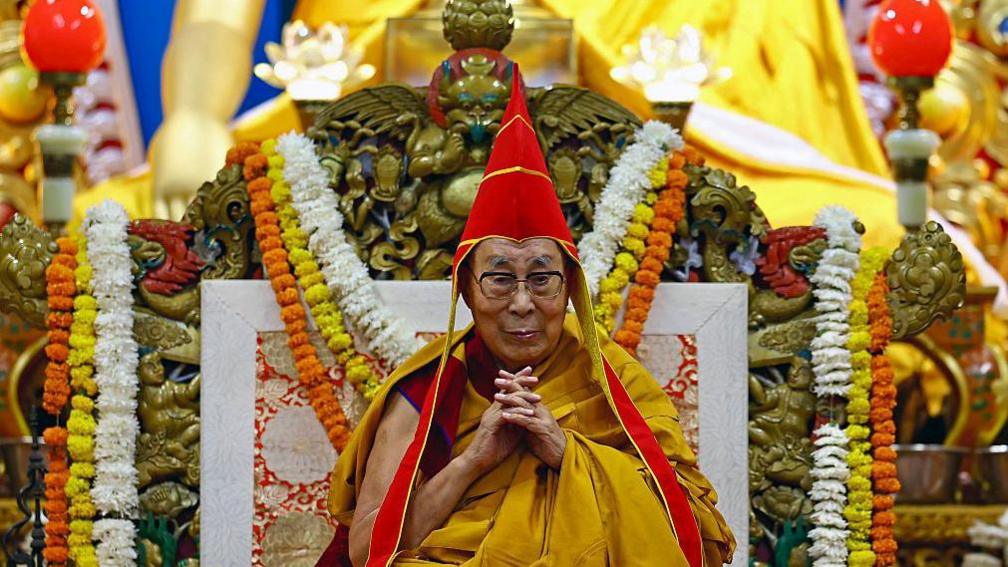 Image source, Getty Images
This new law may help Xi control China’s critics abroad, whose accounts and narratives challenge Beijing, and its own reputation. But it also has the potential to damage it.
Members of the European Parliament have already written warning member states to consider suspending extradition treaties with China and that if this law targeted European citizens, it could “lead to severe consequences for EU-China relations.”
Why are critics abroad worried?
The law on ethnic unity aims to create what it describes as “unity,” “social harmony” and a “shared” national identity among the country’s 56 ethnic groups, which include Tibetans and Uyghurs, who have in the past rebelled against Chinese rule.
But critics fear it will further erode the rights of minority groups in Tibet, Xinjiang and Inner Mongolia.
Buried in the law is a clause that is especially causing concern for many Chinese citizens overseas.
Article 63 gives Chinese authorities the right to act against organisations and individuals outside China that “undermine ethnic unity and progress or create ethnic division”. This appears to give the Chinese government the legal authority to go after advocates for ethnic minorities who live abroad.
“Rather than protecting diversity and equality, the law requires conformity,” says Amnesty International’s Deputy Regional Director Sarah Brooks.
“Peaceful advocacy for minority rights in China by anyone, anywhere could be characterised as undermining ‘ethnic unity’. This law puts a national legal framework behind policies that have already devastated the rights of Uyghurs, Tibetans and other non-Han ethnic groups.”
This law would be difficult to enforce on foreign countries, and experts believe it is likely aimed at discouraging any debate.
For prominent activists in foreign countries, who still have families in China, it is a signal that their words, even from a distance, could have real consequences for loved ones within the country. And they may never be able to safely return to their homeland.
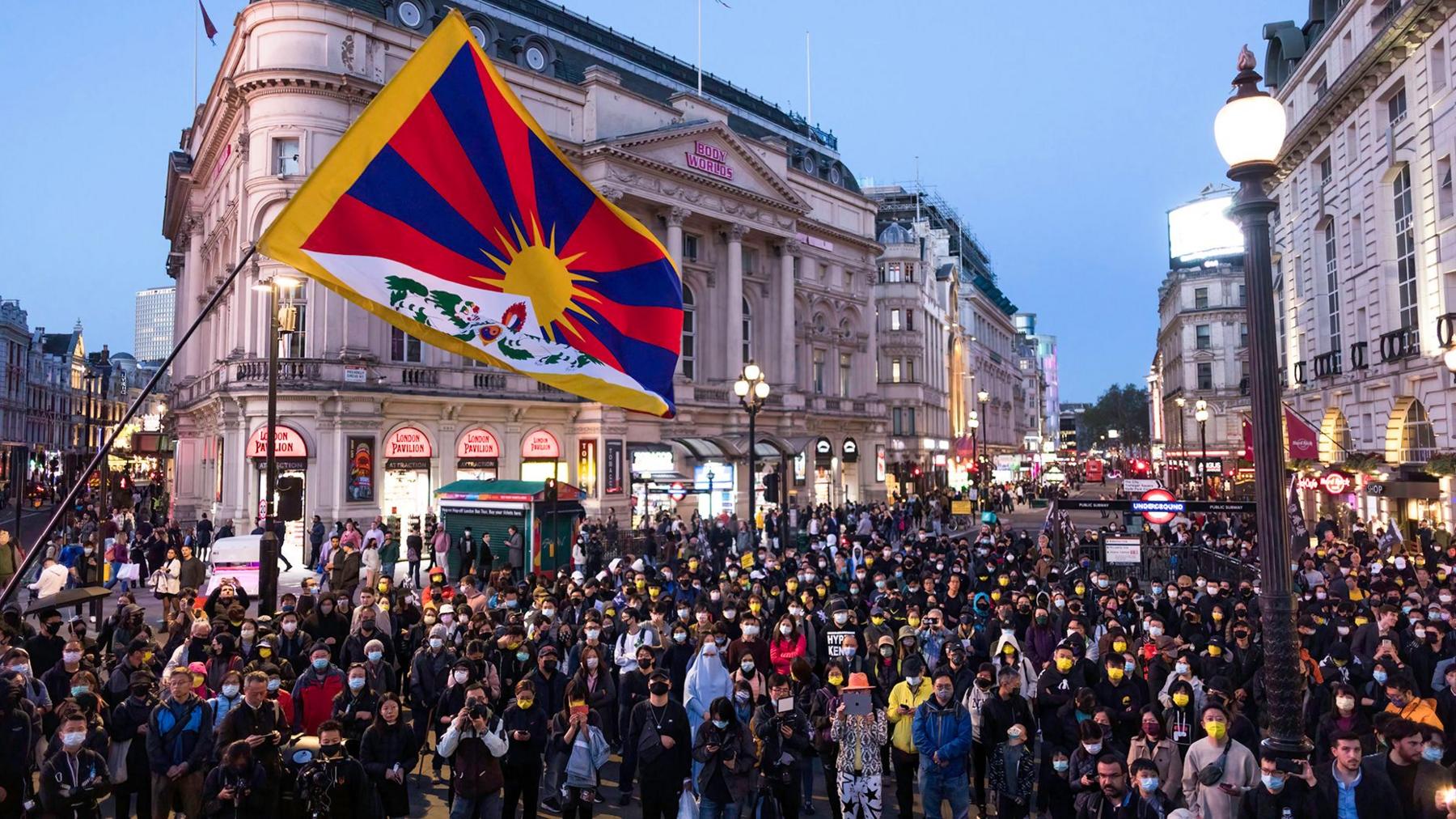 Image source, Getty Images
A number of prominent voices outside the country who have raised concerns about the Chinese government’s treatment of ethnic minorities such as Tibetans, Uyghurs and Mongolians have told rights groups that their family members in China have been increasingly threatened in the last year.
Tibetans in exile are particularly worried as this law comes into effect just days before the Dalai Lama’s 91st birthday.
‘Sinicisation’ of China
The Chinese government started to push for what it describes as the “sinicisation” of minority groups in the late 2000s. It is aimed at creating a more unified national identity by assimilating ethnic groups into the dominant Han culture. Han Chinese make up more than 90% of the country’s 1.4 billion people.
Xi himself has often urged ethnic minorities to integrate more, telling them to “hug tightly like pomegranate seeds” to create a stronger China.
This new law is part of that effort. On paper it claims it will promote more integration among ethnic groups, dominated by the Han Chinese, through education and housing. It mandates that all children should be taught Mandarin before kindergarten and up until the end of high school. Previously students could study most of the curriculum in their native language including Tibetan, Uyghur or Mongolian.
Beijing argues this is about offering the next generation an opportunity as learning Mandarin, the language used by the majority of Chinese people across all provinces, will help improve the job prospects of ethnic minorities.
But critics say assimilation has often been forced on minority groups – a state-led policy that has accelerated under Xi who has taken a harder line on dissent and protests.
In Tibet, authorities have arrested monks, and taken control of monasteries to ensure they do not worship the Dalai Lama. When the BBC visited a monastery in July last year that had once been at heart of Tibetan resistance, monks spoke of living under fear and intimidation.
In Xinjiang, human rights groups have documented the detention of a million Uyghur Muslims in what the Chinese government calls camps for “re-education”, while the UN has accused Beijing of grave human rights violations.
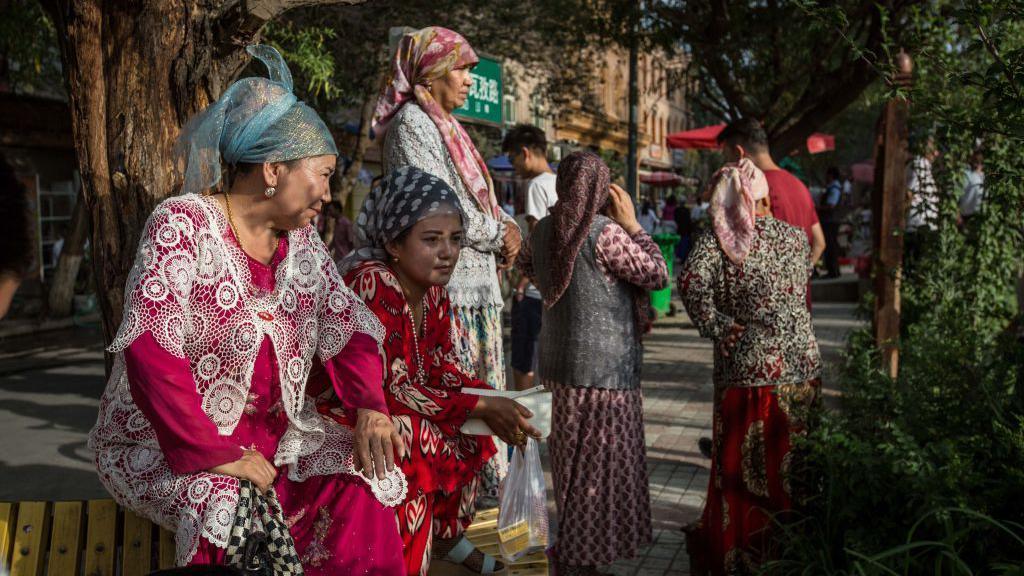 Image source, Getty Images
In 2020, ethnic Mongolians in northern China staged rare rallies against measures to reduce teaching in the Mongolian language in favour of Mandarin. Parents even held children back in protest at the policy as some ethnic Mongolians viewed the move as a threat to their cultural identity. Authorities moved quickly to crack down and the protestors fell silent.
The new law also provides a legal basis to prosecute parents or guardians who may instil what it describes as “detrimental” views in children which would affect ethnic harmony and it calls for “mutually embedded community environments”, which some analysts believe could result in the break up of minority-heavy neighbourhoods.
At a press conference last month to introduce the law deputy justice minister Hu Weilie criticised foreign media for “smearing” the law as “long-arm jurisdiction”. Instead he said it was “legitimate, lawful, necessary and a workable legal provision”.
“Safeguarding national unity, territorial integrity, and social stability falls within the sovereign rights of all countries, and is a basic principle established under international law,” he added.
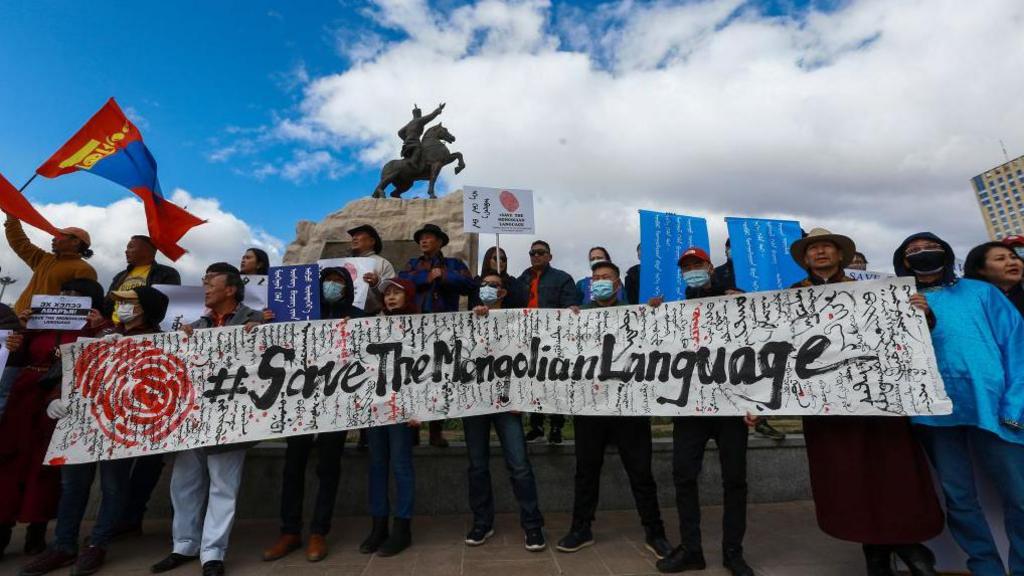 Image source, Getty Images
But critics say otherwise.
A report released earlier this year by PEN America and the Southern Mongolian Human Rights Information Center claims to document the systematic removal of Mongolian-language content from Chinese online platforms – social media groups shut down, accounts deleted, and informal digital communities dismantled.
“As the Ethnic Unity Law goes into effect, the Chinese government’s fist of repression will continue to squeeze as it unabashedly weaponises cultural institutions, technology, and the media to further dictate a state-controlled version of Mongolian culture”, says Erika Nguyen, senior manager at PEN America’s the PEN/Barbey Freedom to Write Center.
She is also the co-author of the study, “Save Our Mother Tongue”: Online Repression and Erasure of Mongolian Culture in China.
She believes Article 63 of the law should be “seen as a call to action for other countries to shore up their protection and support for the exiled Tibetan, Uyghur, and Mongolian writers, artists, journalists, and activists who continue their work at great personal risk”.
As the law takes effect, rights groups believe ethnic minority languages will be pushed out of schools and official life, and there will be even fewer places within China where they are taught or spoken. They also fear that the law will close off spaces for debate about what this means even beyond China’s borders.
-
-
Published10 March
-
-
-
Published2 July 2025
-
-
-
Published1 March 2025
-
-
-
Published26 February
-
-
-
Published1 November 2025
-