

This post was originally published on this site.
The corporate profit tax rate in the United States is currently set at 25.63%, placing it 82nd in the global rankings. This rate is designed to attract foreign investment during generating necessary government revenue. It’s crucial to recognize that the U.S. tax system includes incentives like R&D tax credits to encourage innovation. Comprehending these aspects can greatly influence strategic planning for businesses, especially as you consider how these rates might evolve in the future.
Key Takeaways
- Corporate profit tax rates vary widely by country, with the global average at 23.51% in 2024.
- Countries like Hungary (9%) and Ireland (12.5%) have notably low corporate tax rates.
- The U.S. corporate tax rate stands at 25.63%, ranking it 82nd globally.
- In 2024, Barbados increased its corporate tax rate from 5.5% to 9%.
- Understanding local tax regulations is essential for compliance and strategic business planning.
Current Corporate Profit Tax Rate Overview

When examining the current corporate profit tax rates, it’s clear that they differ widely from one country to another, reflecting diverse economic policies and priorities.
For instance, Comoros has the highest c corporation tax rates at 50%, whereas the Isle of Man offers a 0% company profit tax rate. Notably, the global average corporate tax rate has considerably decreased from 40.18% in 1980 to 23.51% in 2024, with 91% of countries imposing rates below 30%.
In 2024, Barbados raised its corporate tax rate from 5.5% to 9%, which indicates a trend of adjustments occurring across different nations. South America currently holds the highest average statutory corporate tax rate at 28.38%, compared to Asia’s lowest average rate at 19.74%.
Furthermore, 28 countries have adopted measures like the Income Inclusion Rule (IIR) and Qualified Domestic Minimum Top-Up Tax (QDMTT) to improve tax compliance and curb profit shifting.
Comparison of Corporate Tax Rates Globally

When you look at corporate tax rates around the world, you’ll notice a stark contrast between high and low rates.
For instance, as Comoros imposes a hefty 50% rate, Hungary stands out with a much lower rate of just 9%.
This disparity illustrates how countries are positioning themselves in a competitive global market, with many opting for lower rates to attract businesses.
High Tax Rate Countries
Corporate tax rates vary greatly across the globe, with some countries imposing remarkably high rates that can impact business operations and investment decisions. Puerto Rico at 37.5%. Brazil furthermore stands out with a notable rate of 34%, which includes a 25% IRPJ and a 9% CSLL. Curiously, only three jurisdictions worldwide exceed a corporate income tax rate of 35%, making such high rates quite rare. Meanwhile, the United States has a corporate tax rate of 25.63%, ranking it 82nd globally among countries where rates are typically below 30%.
[embedded content]
| Country | Corporate Tax Rate |
|---|---|
| Comoros | 50% |
| Puerto Rico | 37.5% |
| Brazil | 34% |
Low Tax Rate Countries
High corporate tax rates can greatly affect business decisions, prompting many companies to seek out more favorable environments. Countries like Hungary and Ireland offer low tax rates of 9% and 12.5%, respectively, as they implement measures such as the Qualified Domestic Minimum Top-Up Tax to keep effective rates around 15%.
The Isle of Man stands out with a remarkable 0% corporate tax rate, making it very attractive for businesses.
In Asia, the average corporate tax rate is the lowest at 19.74%, whereas South America has the highest average at 28.38%.
Recent Changes in Corporate Tax Rates
In 2024, you’ll notice some significant shifts in corporate tax rates across various countries.
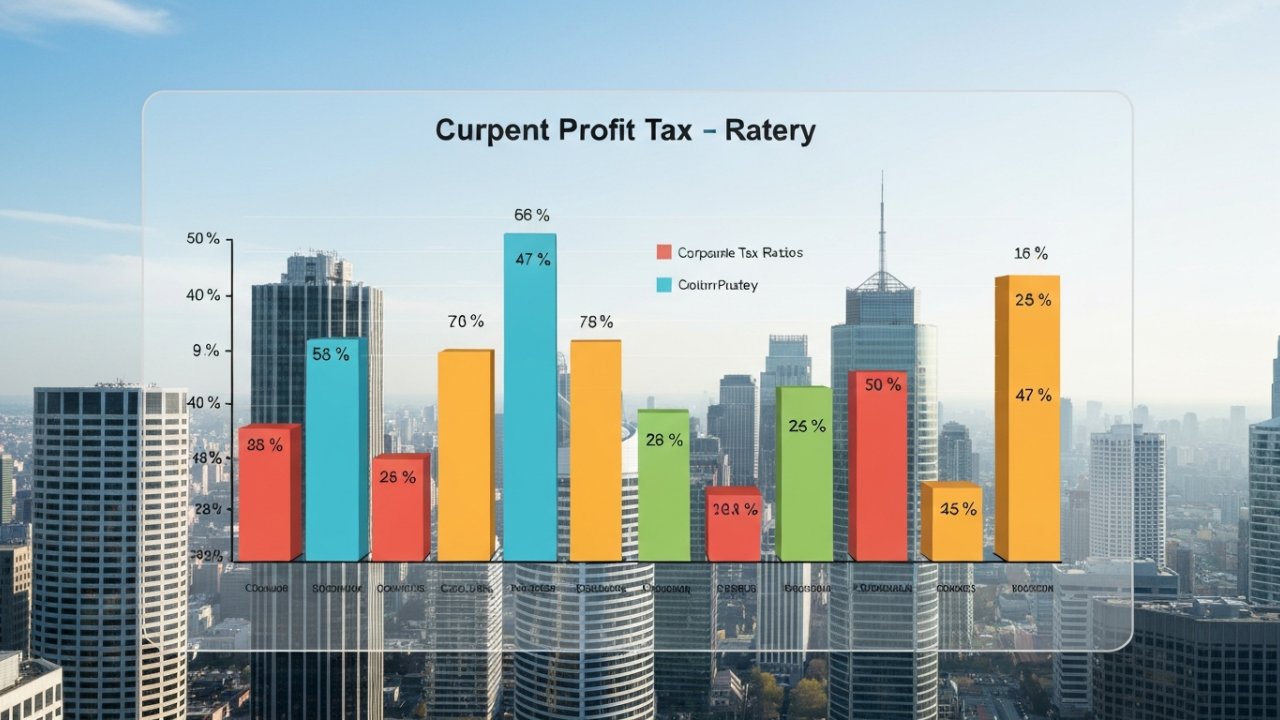
As eight countries raised their rates, including Barbados and Fiji, five nations opted for reductions, showcasing a diverse approach to taxation.
Moreover, scheduled increases in places like Estonia and Morocco highlight ongoing changes that could impact corporate financial strategies in the near future.
[embedded content]
Recent Rate Increases Noted
As countries adapt their financial strategies, several nations have recently increased their corporate tax rates, reflecting a broader trend in global taxation.
In 2024, Barbados raised its corporate tax from 5.5% to 9%, as the Czech Republic saw a jump from 19% to 22.5%.
Fiji made a significant adjustment as well, moving its rate from 20% to 25%.
Furthermore, Morocco is implementing a planned increase from 31% to 35% over three years for higher-income companies.
Estonia has announced a future rise, set to raise its corporate income tax from 20% in 2024 to 22% in 2025.
These changes indicate a shift in the direction of higher tax obligations for businesses across multiple jurisdictions.
Countries Lowering Tax Rates
As many countries are raising corporate tax rates, a notable shift is occurring as several nations move in the opposite direction by lowering their rates to stimulate economic activity and attract foreign investment.
In 2024, Austria reduced its corporate tax rate from 25% to 23% as part of recent tax reforms aimed at enhancing its economic competitiveness.
Similarly, Cabo Verde has lowered its corporate tax rate, reflecting a trend to draw more investment.
Rwanda’s decrease aligns with its ongoing efforts to improve the business environment and promote growth.
[embedded content]
Furthermore, Swaziland and the Syrian Arab Republic have likewise adjusted their rates, contributing to a global movement where countries are increasingly lowering corporate tax rates to remain competitive in the global market.
Upcoming Scheduled Changes
As several countries are adjusting their corporate tax rates, a mix of increases and decreases is shaping the global tax terrain. For instance, Barbados raised its corporate tax from 5.5% to 9% in 2024. Estonia plans to increase its rate from 20% in 2024 to 22% by 2025. Similarly, Morocco will raise its corporate tax from 31% to 35% over three years, starting in 2024. Conversely, some countries, like Austria and Rwanda, are reducing their rates. Furthermore, five nations with rates below 15% have implemented the Qualified Domestic Minimum Top-Up Tax (QDMTT) to guarantee effective rates reach 15%.
| Country | 2024 Rate | Future Rate |
|---|---|---|
| Barbados | 9% | – |
| Estonia | 20% | 22% (2025) |
| Morocco | 31% | 35% |
| Austria | Reduced | – |
Incentives and Deductions Available
Incentives and deductions play a crucial role in shaping a company’s tax strategy and overall financial health. Many countries offer R&D tax incentives, greatly lowering taxable income for businesses investing in innovation.
You might also find deductions for capital expenditures, allowing you to write off a portion of your investments in property, plant, and equipment.
If you’re running a small or medium-sized enterprise (SME), you could benefit from special regimes or reduced tax rates aimed at providing financial relief and encouraging entrepreneurship.
Moreover, various regions offer tax credits for hiring and training employees, incentivizing you to create jobs and invest in workforce development.
Finally, loss carryforwards enable you to offset future taxable income with losses from previous years, acting as a financial cushion during economic downturns.
Impact of Tax Rates on Business Investment
Tax rates considerably influence business investment decisions, shaping where companies choose to allocate their resources. Countries with lower corporate tax rates, like Ireland (12.5%) and Hungary (9%), typically attract more foreign direct investment. In fact, 91% of countries set statutory corporate tax rates below 30%, encouraging businesses to invest in regions with competitive tax structures.
Here’s a quick comparison of corporate tax rates and their investment impact:
| Region | Average Corporate Tax Rate |
|---|---|
| Europe | 22.5% |
| South America | 28.38% |
| Global Average | 23.51% |
The global average corporate tax rate has dropped from 40.18% in 1980 to 23.51% in 2024, showcasing a shift in the direction of more business-friendly policies. Furthermore, a proposed 15% global minimum tax aims to level the playing field and reduce profit shifting, further influencing investment decisions.
Regional Variations in Corporate Tax Rates

When examining corporate tax rates, regional variations reveal significant differences that can impact business strategies and decisions.
For instance, South America has the highest average statutory corporate tax rate at 28.38%, whereas Asia offers the lowest average at 19.74%. Africa’s average is slightly lower at 27.28%, and Europe follows with an average of 20.18%. North America sits at 25.59%.
The G7 countries, which include some of the world’s largest economies, have an average statutory rate of 27.15%. Significantly, 91% of countries impose a corporate tax rate below 30%, with 143 out of 225 jurisdictions maintaining rates at or below 25%.
This indicates that regional variations reflect broader global tax trends, as evidenced by 205 jurisdictions having tax rates at or below 30%. Comprehending these differences is essential for businesses planning their operations and investments across regions.
The Role of Corporate Tax in Government Revenue

Corporate taxes play a crucial role in generating revenue for governments worldwide, as they fund fundamental public services and infrastructure projects that benefit society.
Here are some key points to reflect on about corporate tax’s impact on government revenue:
- Corporate tax revenue greatly contributes to public services like education and healthcare.
- The average global corporate tax rate has decreased to 23.51% in 2024, with many countries keeping rates below 30% to promote business investment.
- Around 143 out of 225 jurisdictions impose corporate tax rates at or below 25%, reflecting a trend in the direction of lower taxation aimed at stimulating growth.
- The G7 countries maintain an average statutory corporate tax rate of 27.15%, showcasing the need for competitive rates to attract multinational companies.
Future Trends in Corporate Taxation
As governments navigate the intricacies of a global economy, future trends in corporate taxation are likely to reflect ongoing changes in fiscal policies and international agreements.
In 2024, 13 countries altered their corporate income tax rates, with eight increasing theirs, such as Barbados and Fiji. This comes as the average global tax rate has considerably dropped from 40.18% in 1980 to 23.51% now, indicating a shift toward lower taxation in many areas.
Moreover, 28 countries have embraced the OECD’s global minimum tax agreement, incorporating the Income Inclusion Rule and Qualified Domestic Minimum Top-Up Tax.
In addition, scheduled tax changes, like Estonia’s increase from 20% to 22%, highlight the fluctuating nature of tax policies.
The G7’s average rate of 27.15% underscores regional disparities as nations adapt to competitive pressures and economic shifts, suggesting that corporate taxation will continue evolving in response to both local and global influences.
Importance of Staying Informed on Tax Policies

Staying informed on tax policies is critical for businesses operating in today’s dynamic economic environment. Changes in tax rates can have significant impacts on your bottom line, and being aware of these shifts can help you strategize effectively.
Here are four key reasons to stay updated:
- Recent Changes: In 2024, 13 countries modified their corporate tax rates, with increases in places like Barbados and Fiji.
- Global Minimum Tax: Grasping the 15% minimum tax is fundamental for multinational companies to avoid unexpected liabilities.
- Competitive Terrain: With 91% of countries having rates below 30%, comparing your rate is imperative to remain competitive.
- Compliance Requirements: The Qualified Domestic Minimum Top-Up Tax (QDMTT) raises effective rates; knowing this helps with compliance.
Frequently Asked Questions

What Is the Tax Rate on Company Profits in the US?
In the U.S., the federal corporate tax rate is 21%, applicable to all companies, but state rates can add 1% to 12%.
This means your overall tax burden might be higher, depending on your state. The effective tax rate, which accounts for deductions and credits, averages around 25.63%.
The Tax Cuts and Jobs Act of 2017 lowered the previous 35% rate to boost economic growth and competitiveness for businesses.
Who Pays 37% Tax in the USA?
In the U.S., individuals with taxable incomes exceeding $578,125 for singles and $693,750 for married couples pay a 37% tax rate.
This rate applies to high earners and is part of a progressive tax system, meaning those with higher incomes pay a larger percentage.
Only about 1.8% of taxpayers fall into this category, and they may likewise face additional state and local taxes, increasing their overall tax burden.
What Is the Current Tax Rate on Companies?
The current tax rate on companies varies widely across countries, with some jurisdictions imposing rates as low as 0% and others as high as 50%.
As of 2024, the global average corporate tax rate stands at 23.51%, reflecting a significant decrease from past decades.
Most countries, about 91%, have rates below 30%.
Particularly, Europe averages 20.18%, whereas South America has the highest regional average at 28.38%, indicating diverse tax environments worldwide.
What Is the Tax Rate for a Company?
The tax rate for a company, known as the corporate income tax, varies widely across countries. As of 2024, the global average stands at approximately 23.51%.
Some countries, like Hungary, offer considerably lower rates, around 9%, whereas others, such as Comoros, impose much higher rates, up to 50%.
Most jurisdictions, about 205 out of 225, have rates at or below 30%, reflecting ongoing reforms toward a global minimum tax of 15%.
Conclusion

In summary, comprehending the current corporate profit tax rate of 25.63% in the U.S. is vital for effective business planning and compliance. As you navigate the competitive environment, consider the global context and the various incentives available to cultivate growth and innovation. Staying informed about potential changes in tax policies will help you make strategic decisions, ultimately influencing your company’s investment strategies and overall financial health. Keeping abreast of these factors is significant for long-term success.
Image via Google Gemini